
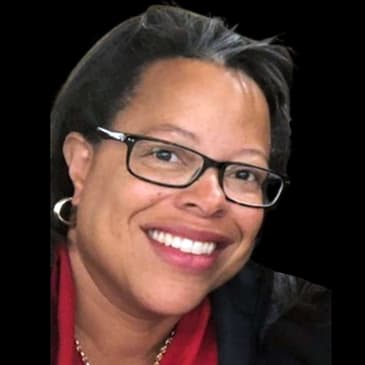
A teacher blocks Black boys from a math club, a student earns a perfect score on an international exam, and the achievement is quietly buried. That story is where our conversation with Kathy McDonald begins, and it quickly widens into a blunt look at how anti-Black racism in education can hide behind “normal” decisions that shape a child’s future. Kathy is a Peel District School Board trustee, the inaugural chair of the Black Trustee Caucus, and a relentless advocate for equity in Ontario public education.
We talk about her roots in Jamaica and her early years in Canada, then the moment volunteering with youth changed her path from science toward public leadership. Kathy explains why she calls her four children “change makers”, not just for their academic success, but for how they mentor and give back. She connects personal stories to system-wide patterns like low expectations, streaming, denial of giftedness, and the kind of language that can brand children before they have a chance to learn.
You will also hear what accountability can look like in practice: using reports and local data to force boards to face reality, pushing for recorded meetings and transparency, advocating for targeted hiring, and challenging spending that pulls money away from classrooms. Kathy shares the fight that led to a Ministry of Education review in Peel, plus practical advice for parents looking for help and students looking for confidence, mentors, and real opportunities in STEM and leadership.
If you care about public education in Canada, school board governance, and what it truly takes to dismantle systemic racism, this conversation delivers both urgency and a path forward. Subscribe, share this episode with a parent or educator, and leave a review so more people can find the show.
You can connect with Ms. Mcdonnell using the following email address: kathy.mcdonald@peelsb.com
To see the video version of this podcast, click here: https://youtu.be/UlknaSXA-iM
[00:00:00]
Ellington Brown: Welcome to SpeakUP! International with Rita Burke and Elton Brown!
Rita Burke: On SpeakUP! International, we traverse the world to find people we consider to be community builders. Today is no exception. We have with us Kathy McDonald, who is a wife and mother of four change-makers. She's resided in Brampton for nearly 30 years.
Kathy also, is also known as The General and has been revolutionizing the education system and working towards dismantling anti-Black racism in education within Ontario and Canada. She currently serves as a school board trustee for the Peel [00:01:00] District School Board, representing Brampton Wards 3 and 4, and is the inaugural chair of the Black Trustee Caucus of the Ontario Public School Boards' Association.
Kathy is the recipient of numerous awards, including the 2021 Harry Jerome Award, and was a 2022 100 ABC Women honoree. She's currently the secretary for the Canadian Congress of Black Politicians, and there's so much more I want to say about Kathy McDonald, but we'll allow her to tell her own story.
Welcome to SpeakUP International, Ms. Kathy McDonald.
Kathy McDonald: Thank you, Rita and Elton, and it's truly an honour to be here.
Ellington Brown: Boy, do we have questions for you. Where are you from originally, [00:02:00] and what inspired you to be an advocate for education?
Kathy McDonald: So I'm originally from Jamaica, but I'm half Saint Lucian, half Jamaican, um, 'cause my dad's Saint Lucian. And I alwa- always like to remember, uh, my Saint Lucian heritage.
Ellington Brown: Mm-hmm.
Kathy McDonald: And I came to Canada actually when I was six months old.
I stayed for two years because my mom just, we were in Northern Quebec at the time, and that was in the '70s, early '70s, and my mom couldn't, um, you know, get accustomed to anti-Black racism, you know, growing up in Jamaica. And then we went back home to Jamaica, and I came up here for university. I went to McGill University and met my hus- my husband and settled down in Canada.
So here I am. And it's interesting. It's, uh, I actually [00:03:00] came up here with the intention to do medicine. So if someone said to me, to my 16-year-old self, that I would be a politician, I would laugh at them because, you know, my hearts of hearts, I am a scientist. I am a data-driven person, and I just, um, had a total 360- And I guess when I went to McGill, the most shocking thing that I experienced, one, was this whole notion of being Black.
Because in Jamaica, we don't really, you know, talk ... People would even say, "Oh, the person that wears glasses," if they're describing a person. It's not about being Black. But I guess that's what happens when you grow up in a country that's basically predominantly Black, right? And I knew I was Black, but I didn't think I was Chinese, I didn't think I was another race, but it's not a label that [00:04:00] we ascribe to people back in Jamaica, back in the Caribbean.
And it was an important label. I found it, like, so much emphasis when I came here. And meeting university students, all the international students, you know, we're excited, we are gung ho, we are here in Canada, uh, to get an education. Whereas the students from North America, right, be it the US or Canada, most of them would tell you
Well, all of them would have told me, oh, they have been told in their educational journey that, oh, your kind doesn't go to university or they weren't expected to go to university, and, you know, dissuaded. So if they said they wanted to be a lawyer, there were often s- guidance counselors would tell them, "Oh, you should be a paralegal," or, you know, "You can go to college," you know, "If you want to be an engineer," or, "You could be an electrician."
And those are the experiences, and I found that fascinating. And I actually found I was volunteering, um, in the hospital, and I found that I wasn't as [00:05:00] excited. Because for me, I always wanted to do something to help children. And at the time I was a very, very good, um, student, and ... Not at the time. I still am, I think.
But, um, always interested in the sciences, and I'm from a long line of scientists in my family. But then I realized it wasn't really fulfilling my passion, and I w- got an opportunity to volunteer at SHAD Academy in Little Burgundy, and I tell you, that transformed my life, because I met 18-year-olds who were functionally illiterate, and I couldn't understand in a country like Canada how that was allowed to happen.
So my journey, um, begun in, um, I guess, be- my interest, I would say, was piqued. And so I still ... I graduated from McGill with, in, with a Bachelor of Science degree, and I was working and doing research at the University of Guelph [00:06:00] after I graduated. And when I got married, we decided, you know, to sort of go between, 'cause my husband worked at downtown Toronto, and I settled in Brampton.
Then I started having children And I was just fascinated at the experiences that, um, because I'm more, more involved and more aware, that was happening to children in the education system. And of course, my husband, he actually, um, came here at age 13, so we'd always have conversations about his educational experiences.
And when I compared my educational experiences with his, you know, with his, um, high school and formative years in Canada, I, I... The, the disparity was just shocking. You know, the comments. And it wasn't only coming from the students. It's what else? Teachers. We're supposed to care. I'm the daughter of a teacher.
I know what caring and, you know, nurturing looks like. So I guess that's how [00:07:00] my, uh, journey began. And then, you know, in terms of how I became a trustee, it was actually the encouragement of a principal, my first kid's, um, middle school principal. So after experiencing what I would call a very shocking racist experiences, experience, and one of many, um, my principal said to me, "Oh, you need to, uh, be a trustee."
I'm like, "Oh, a trustee?" And he was explaining to me, um, you know, the nuances of being a trustee, and basically that's how I ended up here today
Rita Burke: Kathy, you've, as I said at the top of the show, we prefer if people tell their own stories, and you have [00:08:00] books and books and books of a story to tell. I like the fact that you mentioned Little Burgundy.
We may have a chance to talk a little bit about that because a lot of people don't know about Little Burgundy. But I wanna go back to something that I found in your bio. You, you refer to your children as change-makers. I want you to expand on that term, please.
Kathy McDonald: Yeah So the reason I call my kids Change-makers is that I truly believe when Black children thrive in this educational system, you know, that in itself is a great achievement.
Because you're entering systems that have very low expectations of you usually. You have many people that don't believe in your success, right? And you have amazing, and I always say, you know, you have amazing educators out there, [00:09:00] people that are really, really doing the work. But it only takes one, right, or two to break children, right?
Or something to go unchecked, right? And you don't realize how huge an impact that one negative, um, individual, like supposed to be a caring adult, can break a child, right? So I look at my children and I look at all the accomplishments. I have four children. You know, among them I have one that has gotten perfect in the GAOS math exam, an international math exam, and I'll come back to that, um, later.
Then we have, you know, I have a 20-year-old that's in medical school, in his second year of medical school at Queen's University, doing amazing things. You know, going to conferences, publishing, doing research. I have another, um, baby, one of my other [00:10:00] babies just started university on a full-ride scholarship in the US, again, doing research.
She has written a book. And I have my last ki- And we say in Jamaica, the wash belly, right? She actually, uh, made history as the youngest person to address the UN, uh, in Geneva earlier this year at the Permanent Forum of the People of, of African Descent. And they have all these amazing academic accomplishments and, you know, extracurricular activities and things they have done.
But at the heart of it, they always give back to the community. They have all mentored and they tutor kids. They are so, um, inspired to ensure that other children are learning and getting opportunities. So, you know, as young, they have always been sort of- [00:11:00] Have this, and I think it's innate because I didn't have to force my kids.
They're always, you know, whatever, they have an opportunity or they know a kid is struggling in school, they're always helping and tutoring and mentoring. And I really believe that, you know, whatever path and journey they take, they will, um, change their environment. So that's why I always call them Change-makers, you know?
And going back to, um, kid number one, when he got perfect in the GAO's math exam Imagine, this is an international exam that's administered by the University of Waterloo, and at the time, the results were given to the school, were sent to the school. Usually these is, you know, you have math clubs run by teachers, and a teacher expressly said they didn't want Black boys in their math club.
And another teacher, and I always, um, like to say that, you know, [00:12:00] you do have amazing people out there because it was Josu- Joshua Goldenthal that took my son under his wings and, you know, okay, so he didn't want him in a math club, and he mentored him, found competitions for him, challenged him, and introduced him to this math exam, the Gauss math exam, and he got perfect in it.
And imagine writing a sco- an, a, a test, you get perfect in it. Almost a little under 30,000 people wrote this exam. Only 150 kids got perfect in this exam. And it was sent, the results were sent to this math teacher that was running the club, and she didn't let my son know about it. So my principal was very excited because he was going to the awards ceremony.
He thought, oh, for sure, you know, my son was going to be there, only to realize that we'd had no idea about this. And when the [00:13:00] teacher was questioned, and I'm on the other end of the phone, and the teacher just calmly says, "Oh, I didn't think they would care." And I'm like, "How could you think that someone has written this international math exam, got perfect on it, and you thought they wouldn't care?"
And I always tell people, I know we're not the Cosbys, we're not the Obamas, but you know, we're university educated, post-graduate, both my husband and I. We are hardwork, you know. And I'm thinking, not that that should, you know, really matter in terms of nurturing children, but I'm thinking what in our profile?
I was the chair of the school council. I'm always visible in the school. Like, what in my profile would make you think that our family wouldn't care about this, but except the color of our skin? And my principal was the one who suggested, "Look, you need to go in there and, and change," and he invited me to join PIC, and I joined, which is the Parent Involvement Committee, and I joined it [00:14:00] immediately, and I was selected.
The following year I became the co-chair, and then he encouraged me to run for trustee And, you know, I have been, um, working passionately to increase the outcome of, you know, and improve the educan- educational experiences of Black children, of children with special learning needs, of children living in poverty, right?
And I think, and, and math scores because again, with math I think that that was a struggle for a lot of kids and needed improvement. And so my journey began, um, um, as a trustee, as a politician, right? And luckily for me also, when I began, I got elected first in 2014 And at that time, the United Way of Canada, of...
It wasn't called of Canada. United Way of Peel at the time. It's now [00:15:00] called United Way of the GTA. But they wrote a report called the FACES Report, and it came out in, um, I think it was released ear- in the January of 2015, and I just got, um, sworn in around December, early December of 2014. And the FACES report, which is Facilitating Access, Change, and Equity in Systems, um, came out.
And, you know, ev- there was a lot of buzz about this report because it spoke about, um, barriers and anti-Black racism that Black people face. It was in, uh, health, in the justice system, in policing, and in education. And of course, everyone was up in arms, excepting Black people, because really there was nothing new in the report that we didn't know.
But it created a lot of buzz. There was a lot of pressure. And again, a big shout-out to [00:16:00] someone who I consider a hero, a shero, to Shelley White. There was a lot of pressure from all angles for her to make the report less, um, you know, truthful, to tone it down- Mm-hmm ... a bit, and she stood her ground at a cost, right?
But she stood her ground, and she made sure that it was an authentic report. And it was, um, the fuel, you know, because we had this report armed that I could take to the board- Mm-hmm ... and help them to understand some of the issues I was trying to make them aware of.
Ellington Brown: So did they understand the systemic barriers that Black students face after you had an opportunity to talk to them?
This is an extremely, an important, area in Black students' education because sometimes it's [00:17:00] under- right under the radar, where you can't they can't see it, you don't see it, you don't even feel it. But there are these barriers there that hinder Black students, in Ontario's education, system.
How do you think they can be dismantled?
Kathy McDonald: Yeah. Well, the first part is I don't think they truly understood, um, anti-Black racism in education. Because initially when I started talking about it and I would use my kids' own experiences, they would tell me, "Oh, like it only happens to your kid. It's, it's not prevalent in..."
I'm like, "No." So I got community to come and, and, you know, Rita, you have been there with me at, um, some of these committee meetings, and committee community members started, um, sharing some of their experiences, right? And then it became, "Oh, the Faces report is only a small sample in Peel, and it [00:18:00] includes all different students, but this is not happening within our board."
So then a study was commissioned, right? So they have to study, "Let's study Peel," right? And again, it didn't reveal anything different than the Faces report. But it, again, here we are. This is the Peel data that you yourself have, um, you know, commissioned. So it, it has been a journey in terms of just... And, and you still have people who will deny and, and think, oh, you know, and try and blame children for what's they are encountering too, right?
And we have situations, I tell you, as a trustee, I have encountered situations of kids as young as four years old have been labeled by educators, who are supposed to be nurturing them, as future gang leaders. Can you imagine trying to learn in a system where as four years old you're [00:19:00] told, "Well, you're gonna be a future gang leader," so they just give up.
Rita Burke: No, I can't imagine. I'm sorry, but I cannot and will not imagine that.
Kathy McDonald: Mm-hmm.
Rita Burke: But I didn't know, I, I, I guess it's based, based on naivety that teachers were still doing things like that, Kathy. Two things you said that I want to speak about. First of all, that it's really critical, and I know that and you know that, that parents are involved in their children's education, particularly Black parents- Yeah
or else they could wreak havoc with your child. And the statement that a Black child was not wanted in a math club, people are still, caring adults are still doing that? I am really, really shocked and disappointed. But I want you to share three things that you, um, admire about Kathy Macdona-
Kathy McDonald: That, okay. [00:20:00] So, um, three things that I admire about Kathy McDonald. Well, first, I would say that she's a very good mother, and I really hope my children would feel that, that they are my number one priority. I would say, another thing I would say perhaps is that I am a person that's full of integrity, so I will fight for social justice issues at a cost.
Invariably, this, um, journey of mine has come at a cost because I refuse to look the other way or be dishonest. I always, I'm a truth teller, right? So I think, um, the other thing I would admire about her that in all of this, her tenacity. [00:21:00] Like, I don't give up. Everything, every which thing has been thrown at me and, you know, I, as they say with Buster Monty, "Lick him down," and he bounce right back, right?
And, yeah, I, I just center my why, and I keep... So for every time, you know, for every attempt to sort of push me out, to frustrate me, to isolate me, to label me, I just remember my why, and it's for the kids that have nobody to advocate for them, right? Because I truly believe that education is the only way our community can do better.
Because most of us in our, in the Black community, we don't have these trust fund legacies to leave for our children. We don't... The only thing we have for our kids and we can give them is an education, right? Because even you leave them a house, you leave them money [00:22:00] behind, it'll be gone if you don't educate them how to nurture it, right?
And I think, um, yeah, those are the three things I would say I admire about Kathy.
Ellington Brown: So what advice would you give to young Black students, who aspire to become leaders and change makers, using that word, in their communities?
Kathy McDonald: So I think back to, you know, my graduation speeches that I, I would give because I try not to miss them.
There are sometimes I do eight in a day and I tell people, "I'm sorry I can't hang around," but it's like I have to go to the next, uh, graduation because I think it's so important for me to get my message of positivity and hope. Because despite all the negativity, there are amazing people that are doing the work and that, that's what [00:23:00] keeps me going too, to try and make sure we, we don't get them to tire because it's can be very frustrating work.
And that's how systems work too. They break down individuals and you, you scatter and leave and l- you literally have to start again. So I'm trying to keep those that are in there together and going, right? Because it's really hard to keep restarting, restarting. So, you know. But I tell students three things, and I think, um, the first one I would tell them is that you're not a photocopy, right?
You're uniquely and divinely made. So don't try and find and define yourselves with likes on a social media platform, right? And don't try to be other people. Just try to be yourself and find your passion, and do you because only you can do you, as I always tell the students, you know? I think the second thing I would tell them, because [00:24:00] I often quote, um, the former First Lady, um, Eleanor Roosevelt, who says, "No one can..."
Of the US I should say, right? And she says, "No one can make you feel inferior without your consent." So do not relinquish your power and give people the ability to make you feel inferior. You know, every day say positive affirmations about yourself, right? And I think the third thing I would say to, um, you know, young people is that- You have to surround yourself with like-minded people because you don't want to go and have people leading you astray so you can focus on what your passion and your fulfillment, and just go after it zealously.
And I think that when you surround yourself [00:25:00] with positive people, you know, and successful people, it breeds success. And I think you h- again, that fiber optic cable, you can't be getting your self-worth and, and opinions because y- you don't even know who is at the end of those fiber optic cables, and nobody's gonna have your interest at heart more than your parents, and in some situations if it's not your parent, that caring adult, right?
And find that caring adult who you know you can count on, who believes in you and, and really get off of, um, social media. Less focus on that, right? And more focus on self. So that, those are the three things I think I would say, you know, to young people.
Rita Burke: Surround yourself with positive people. That's why I have you in my tribe, Kathy McDonald.
Today we are speaking with Kathy McDonald, who is a mother, politician, I feel [00:26:00] huge change-maker for our community. Your daughter, you mentioned, spoke at the United Nations earlier this year. I saw that video and man, it brought tears to my eyes. Talk to us about that experience for you and for your daughter.
Kathy McDonald: Yeah. So my last kid has basically grown up with Mommy the politician. She was a little, about a year and 12 months when I started this journey. So she would come door knock with me when she could barely speak and would go knock, knock, you know? And she would just hand the flyer and say, "Vote for Mommy," right?
And I know I got votes just for the cute factor of her going out there with me campaigning. But she grew up in this, um, revolution. And I think that she has a totally different experience and lens than my other three [00:27:00] kids did, and she has been observing her bigger siblings. So my kids are really spread out, too.
So they're 15 years apart between my first and second, right? So she has seen, she has heard, you know, she has been at the protests, and there are times when, you know, she's on my back at protests or she's carrying her placard herself that's usually bigger than her. It started out being bigger than her to now she can carry it herself, right?
So I guess that is what kind of has shaped her and, and, and her kind of advocacy, um, in terms of anti-Black racism in education, and she got the opportunity to be part of the Canadian delegation. And she basically modeled her speech on her siblings' experiences. She has witnessed, you know, people telling, um, her bigger brother, "Your kind doesn't go to university," trying to dissuade him from being a [00:28:00] doctor, and same thing with her second, um, brother, too.
And when, you know, she would hear the discussion that she ... She was always a keen listener. She'd just sit and she would observe and listen. And she would hear, you know, us talking on the phone with teachers or principals, um, as parents advocating for our kids. And I remember when child number two was in grade four and they said, "Oh, he could possibly get a
He is just a disruptive and he's a troublemaker," right? And I'm not gonna let anybody label my kid because I know my kids, right? I birthed my kids. I raised my kids. So I'm like, "That's not the kid I know at home." And I insisted that they test him for giftedness because he would come home and says, "Mom, I learned nothing today.
I'm bored. They didn't teach me anything." And I'm thinking, "That's why he's talking all the time. That's why he's, you know, throwing paper planes." I mean, he's totally bored out of [00:29:00] his mind. And sure enough, he was gifted. And then I got him into a gifted program, a contained class. And when he gets there, he's told, "Oh, I didn't know Black people were smart."
Right? And then he says, "I'm gonna show you that Black people are smart." Right? And she has seen this. She saw that same, um, you know, my ... We're a spelling bee family, and we have always gotten trophies. The kids are all getting trophies. If they don't come first, second, or third, you know, they ... Some play on the platform.
And my second son one year won, when he won the spelling bee Um, the, his classmate had also entered the spelling bee, and his classmate said to him, "Oh my goodness, I'm gonna get in trouble because, not because I lost the spelling bee, but because I lost to a Black boy." Right? So just the notion of what Blackness is and, you know, she has seen the struggle and, and lived it, and she has [00:30:00] been exposed to it.
So I think that's what motivated her to get involved, and that culminated in her speech to the UN where she got a standing ovation. And, you know, she is acutely aware that her situation is very different than a lot of Black students because, you know, there are a lot of parents that don't have the advocacy skills or are just super, super busy.
You have a lot of new immigrants that don't understand the education system, and they don't realize they're not back home, right? So they don't understand how, um, traumatic it can be. So I think, um, you know, that sort of prompted her to ... And I think she was also noticing that, yes, mommy's working hard and we made gains, right?
Because we have made amazing gains. Because I always say, you know, when, um, I remember after a very, very [00:31:00] frustrating board meeting and I said, "No, this is it. I'm going to see the Minister of Education," and the following day after the meeting because, and actually I was told in a, a, an email by one of my colleagues, "You just can't always get your way.
You just, um, have to do what you need to do." And I just replied, "I will." And that point, the following day, I drove to the Ministry of Education trying to find the Minister of Education, and I arrived at about 10 o'clock downtown Toronto. I went to one building. It was under renovation. The sign said to go to some place on Front Street.
I went there. They told me, "Oh, these are administrative office to go to university." I went there. Then they said, "Oh, no, the minister is in the legislature." I went to Queen's Park. Then I- they said, "Oh, no, he's at the other office across the street, the other university office." You
Rita Burke: didn't have an appointment?
Do you mean you didn't have an appointment?
Kathy McDonald: Nope, didn't have an appointment. I-
Rita Burke: And you were just gonna barge in on him?
Kathy McDonald: I was just gonna barge in on him to get that meeting because I was so frustrated, Rita. [00:32:00] So eventually at about 4 o'clock, I'll never forget, I, uh, security guard said, "Go across the street and pick up the phone.
Somebody wants to talk to you." So I picked up the phone, and it was Nancy Naylor on the other end of the phone, the then Deputy Minister of Education, and she said to me, "Everybody's wondering who this mystery lady is who's trying to find the minister." I said, "Uh, it's not a mystery. My name is Kathy McDonald, and I'm a Peel District School Board, and I need to speak to him about the violation of the human rights of Black children in education."
I had a meeting for the following Monday, and I was okay with that, so I didn't get to speak to him that day. And my half-an-hour meeting turned into a three-and-a-half hour meeting. And every time they would come and t- the handlers would come and he says, "Oh, no," he'd find other people to go because he, and I always give kudos to who deserve kudos, right?
And, and, you know, this is not about political parties, this is about, and I've always been a people [00:33:00] person. The then Minister of Education, Stephen Lecce, at the end of our meeting said he was going to blow up Peel because he doesn't tolerate discrimination. And he was totally, um, shocked by the examples, and I brought receipts, right?
So I said, "Here are emails. Here are," you know, I brought my evidence. And, you know, then the ministry review was done, um, at Peel, and that was the first time in history that a minister of education has taken over an, uh, a board for anti-Black racism. So my daughter had witnessed all of that struggle because it came with marches.
I remember marching, like even in the time of, uh, the George Floyd, we had a huge, like 5,000 ma- people march from the courthouse in Peel all the way down Highway 10 to the Board of Education, right? So she witnessed that, and now she's coming at a time [00:34:00] where the, um, Ontario Human Rights Commission has issued its Dreams Delayed report, and it's crickets from the Minister of Education.
And we have a new Minister of Education now. So I think that was very shocking for her, so, and she was frustrated by it, and she wanted help, and she figured, you know, we're gonna go to International HELP because we need, and we, we made an agreement. We're not gonna, we're gonna leave no stone unturned. So- Because I think, you know, it's a fundamental human right, an education in Canada.
Ellington Brown: When you look back on, your life,- fantastic kids, great husband
Everything seems to be just flowing perfectly. What can you tell parents who find themselves in, systemic challenges that don't know where to go? [00:35:00]
Kathy McDonald: So I say, I would tell them, "Reach out to your trustee. Reach out to me." Right? We actually, and one of the things I'm so proud of was the formation of a Black trustee Caucus.
And again, I remember when I got elected and I went to my first Ontario Public School Board Association meeting, looking around and seeing nobody looking like me in there, right? Nobody looking even my age in there. And I caught the eye of another Black person. And you know when you're in a room, you're like, "A Black person."
We literally like went, have up and embraced each other. And that amazing, amazing individual is Patrice Barnes. And the following term, we met Dr. Elizabeth Sinclair, and, you know, we were, have been advocating for the formation and the need to have a Black Trustee Caucus. And these three amazing people, we also had, um, Chris Moise, who has since gone on to be a [00:36:00] city counselor too, um, was one of the founding members of the Black Trustee Caucus.
And also we had, may God rest her soul, Judith Brown. Um, and she was a trustee out in Kingston. And we worked really hard to form this caucus and to have a platform where parents across... Because I was getting, when, you know, as, as, as news was starting to circulate about what's happening in Peel, I'm getting calls from Ottawa, Simcoe, Saskatchewan, you know, Alberta, people are reaching out, and we realized we need a Black trustee caucus in Ontario, and we need a national, um, movement because the experience in anti-Black racism is not limited only to Ontario.
It's a national crisis, right? And I think we have to start looking at it as such. I started with the then Prime Minister, um, Justin Trudeau.
Yeah, [00:37:00] about, um, h- making this a national or putting it on the national agenda
Rita Burke: Before I ask my next question, Ms. Kathy McDonald, you didn't, you didn't mention that Ruth was a graduate of the Youth Leadership Program for Toastmasters.
Kathy McDonald: Absolutely!
Rita Burke: She was one of her first students in, in that cohort.
Kathy McDonald: Yep. Yeah.
Rita Burke: So I, I'm making that point.
Kathy McDonald: Yes.
And you know, I say-
Rita Burke: So I was proud when I saw her making her...
Kathy McDonald: Her speech, yes. And I say kudos to you, Rita. Again to parents, you know, I always say there's so many resources out there, so you have to do your homework too, right?
And get... You know, there's so many free programs, you know? You have Toastmasters, you have robotics teams. There's, uh, Umoja, a Black robotics team. You have Black Esteem. You have Shale Graham doing amazing things for Black girls. You know, she has established a partner, Black Girls Sales, a lot of STEM work.
[00:38:00] You have Sherry Lewis from ACCN, the executive director there, doing amazing programs for kids, you know, and just, um, uplifting, uh, Black students, you know? So I think you have T- um, Timbuktu Educational Services. There are so many resource- And you need to do your homework and get involved, right? And it, it's, it's work, so, you know, you may have to get up and drive them to an event.
But when you look at the successful kids, you know, these basketball stars, their parents got up early, dropped them to the rink, right? These scientists, their parents got up early, put them in programs. We need to make sure that we're invested. And I always... You know, I said it's not only in sports and entertainment.
There's a whole lot of world out there in terms of STEM. We look at what's happening in AI, um, technology, that we need to get our kids, and a lot of it is free. There are free certification, lot of mentorship programs. [00:39:00] You have Leadership by Design. That's another amazing program run by Trevor Massey and Angela Henry, right?
It just amazing, amazing programs that are out there. And Leadership by Design, for example, you start in grade 10. We have 100 Strong. You know, we have Ainslie, um, Morgan, and Donna MacLeod started this amazing program for Black boys, right? And, you know, the, the, the... When they go through these programs, your kids are transformed.
All you have to do is get up and drop them. And 100 Strong is now in Peel. It started out in Toronto. It's still there. We have it in Durham. You know, just find... I'm sure there are gonna be chapters popping up, you know? And I encourage people to volunteer too and help mentor, you know, and get involved in these programs.
Ellington Brown: You talked about your kids and- walk around like a, a rooster. You know, [00:40:00] with the chest up and, you know, the buttons popping off and everything- ... because you're so proud of your kids. , and rightfully so, you also talked about these other programs that are available to students that many Black families don't know about, but can you give us any story about any other children outside of your kids, who are fantastic, but any other kids who have gone through these programs and wound up doing amazing things at the conclusion or at the end of any of those programs?
Kathy McDonald: No, absolutely. Because you hear, for example, kids that have gone through the Toastmasters program getting the confident just to stand up and speak, and that leads to them being able to interview for scholarships and for positions, right? We have had girls who have gone [00:41:00] through Rita's program, the Echoes of Excellence, and they are in amazing schools because they have those skills of how to speak, right?
We have, um, students, for example, in 100 Strong, there was a kid that was just outside and just saw this person and said, "Boy, you look successful. How did you do this?" Right? And he's like, "Hey, I have somebody you need to meet," because they were outside a restaurant doing some etiquette training for the boys, right?
And this is a famous restaurant in Toronto, right? Very expensive. And this guy just met these, um, Donald and the other boys at 100 Strong and, you know, now you know he has a scholarship, got a scholarship to a big university all because, you know, he got involved with 100 Strong. You have a lot of these kids.
You have kids that have gotten scholarships to go to, um, St. Andrew's College, to go to Upper Canada College, right? Sake of, um, like [00:42:00] ACCN, they have this, um, ISPs called, uh, independent school program, and you have a lot of Black children who parents could not financially afford these, um, prestigious, um, independent schools that are going to these schools, right?
And I say to myself, I am a public school board trustee, but y- we have a crisis there, and parents, Black parents, are not feeling that their kids are safe, um, in these schools, right? And people say, "Oh, but independent school have racism." Yes, they may have racism in independent schools, but when you know that you won't have the teacher telling the kid you're dumb because they're Black and they won't be held accountable, right?
Because when people are paying $90,000, right, to go to a school, right, that principal is not gonna tolerate such a comment from that teacher, right? And I think that, you [00:43:00] know, we have to look at how the system is failing a lot of our kids, right? And why is there a need? 'Cause if you look, a lot of kids after COVID, a lot of Black families realized that their kids were thriving when they were online and not in this racially traumatized environment.
So a lot of them stayed home. A lot of them are homeschooling. Enrollment is down, right? And, and we have to look at the whys, right?
Rita Burke: There's so many things I want to peel off some layers. I want you to peel off some layers, Zra, but here's the one that I'm gonna ask next. Who would you say is responsible for the person that Kathy McDonald is today?
Who or what?
Kathy McDonald: Um, I'll ask answer the what first because I think becoming a mother, um, totally changed, uh, me. And I think [00:44:00] that, you know, living a life where my kids can be proud of me was very important to me. Um, I was telling them, "You don't have to choose comfort, um, over what is right and wrong," and being able to step out of your comfort zone to stand up for injustice.
So I think, and watching them and the joy of raising them because it was truly a joy. I enjoyed every moment, um, being a parent. Um, so I would say that has shaped me a lot. And I think my mom You know, my mom is one of the most tenacious people I've ever met. I remember she was in a tennis match, and that str- it's amazing the things that impact you as a kid.
She was playing tennis with a doubles partner, with my Uncle OJ. And they were down, um... It was a tournament, [00:45:00] and they were down 5-1, 40-love in tennis. And somebody walked by and made the comment, "Ugh, this game is done." And i- it was a man, and his girlfriend was one of the other players in the doubles match, right?
It was mixed doubles. And said, "Oh..." I can't remember the lady's name, but let's say she says, "Oh, you know, Ca- um, Kathy's beating up her grannies. Her granny and grandpa," right? And my mother heard that. Needless to say, my mom and Uncle OJ, who is about 20 years older than the, the other mixed couple that they were mixed doubles partners, that they were playing, came back and won that tennis match.
And if you know tennis scoring, to come back from 5-1, 40-love and win a tournament, that was the most exciting tennis match I've ever watched in my entire life. And it was funny, because after that match, my mother literally collapsed. She slept the entire day [00:46:00] after. But she didn't give up, and, you know, and she won.
And that's why I said, if you just don't give up, just hang in there. Even when everything look like it's all over, just hang in there. So I would say... And also, she was at the, one of the kindest people I've ever met. I remember she, we raised... After she became an empty nester, she took in this kid literally off the streets, just 12 years old, and poured everything.
And that little girl is now, um, has her PhD, is now married, raising her own family, has a totally different life outcome because my mother cared, and that also showed me the importance of education. She was coming from an environment, you know, with multiple... Her mom had, you know, multiple children for multiple men.
Wasn't educated, was destined [00:47:00] to be going down that pathway if it wasn't for my mother intervening, and now her pathway's totally transformed, you know? So yeah, I would say those
Ellington Brown: What would you consider being the highlight of your life? I know y- the children are like they're, they're like way up there. What's your highlight? I know, and I'm sure you can pick, you know, hundreds, but there's, I'm sure there's one that just kinda make you, what's the word I'm looking... giddy when you, when you think about that. And it doesn't have to be large.
Kathy McDonald: Outside the family obviously, right?
Ellington Brown: Like-
Kathy McDonald: So, yeah. So I'll give an example outside of my family. Um, actually, you know what? I would say meeting Ma- Nelson Mandela and spending an hour, um, with him. Because when Nelson Mandela had just been released from [00:48:00] prison, and you remember he had visited some African countries, Canada was the first country that he came to And he went to a little church in Little Burgundy, I believe it was.
And the first Black church, if not in Quebec, in Canada, right? And, or, or North America. But anyway, he went to this little Black church, and there were only, um, 30 spots available for the public. Then they had a overflow room, and then they had these big screens outside that people could watch. So I got up really early, like five o- five hours before, to join the line to go and see Nelson Mandela.
I was dressed to the nines. I had on... I, I remember my blue dress, and I had on a pink hat with my pink bag and my pink shoes, right? And I was dressed because I was gonna see Nelson Mandela. I was number 15 in the line. I'm like, "Great, I must get in." [00:49:00] But unfortunately, when the doors, how the church doors were, it opened and swung out.
So when they opened to let the public in, people who were crowding, 'cause it was m- pandemonium, and people were crowding. Even though they had the lines started this way, there was, you know. So when the doors opened out, we had to kind of go around to get in. And of course, people rushed in and ba-dup, the 30 places were gone.
I was so peeved. But I said, "Okay." So, um, they said, "Okay, if you can't get in, you can go to the overflow room." So I'm walking to the overflow room, but I was so impeccably dressed that somebody thought I was a guest. And they said, "Oh, no, madam, not for you." And they handed me a program and escorted me into the church.
And there was not a single seat available except beside Winnie Mandela. So I passed the mayor of Montreal, all these bigwigs, and they seated me [00:50:00] right beside Winnie Mandela. And at the time, Maroney and, um, Nelson Mandela didn't come, arrive yet. So I'm talking with Winnie Mandela, and I'm trying to act like I belong.
And inside, I'm just, "Oh my God, I can't believe this is happening. Oh my God." But I'm trying not to act like I don't belong, right? So I'm not taking any pictures. I'm just... And she's talking and questioning me, "Oh," you know. And then when Nelson Mandela, 'cause we're sitting behind him. He was sitting in the front with the prime minister and some, I guess some other people, right?
And then she taps him and he comes and says, "Oh, Nelson, there's this amazing girl that you have to meet." And she introduced me to him. We chat a bit. And when they're going to sign the book, she drags my hand and say, "Come, come, come, come, come." So, you know, we're signing the book, the guest book in the church, and spending, you know, about an hour with them and talking and...
So I think that is the most amazing sort of thing that happened to me. Never [00:51:00] left there thinking that I would be spending literally an hour with the, the M- uh, uh, the Mandelas, you know? And, uh, it just, and I always tell my kids, I say, "You always, always, always be prepared. Dress-"
Rita Burke: What an experience. Yeah. Am I, am I a little envious of that?
Because Winnie Mandela was one of my most favorite people. So fantastic. Here's my next question to you, Ms. Kathy McDonald If you had the opportunity, and I'm sure you've had this opportunity, to address a graduating class of teachers, what three gems would you want to leave with them?
Kathy McDonald: Okay. So a graduating class of teachers.
So the first thing I would implore teachers to do is to see the humanity in all children, and to make sure [00:52:00] they understand their, the importance that their words can have on kids', um, trajectory, because words are powerful. And oftentimes you may say something and think nothing of it, but you have either totally transformed, whether negatively or positively, a child's life.
So that's the first thing I would, um, say to teachers. Another thing I'd say to teachers is whiles I'm not saying it's an easy job, right? And, but to, to remind teachers to center their why. Why did they get into this job in the first place, right? And I hope that the reasons, at least one of the top reasons that they got into this job, was to be a change- to create change makers, right?
And [00:53:00] to make kids feel that after they have left this teacher's presence, that they can be anything they wanna be. To inspire, um, students. And the third thing I'd say to teachers is never limit, um, set limitations on any child, right? A child who has a learning disability can thrive. I know many successful nurses, lawyers, many successful people that have learning disabilities.
You know, don't limit a person because their skin color, right? Because there are many successful people with all shades, all hues. And I think, you know, to m- ensure that as a teacher, we examine our biases and reflect, you know? And also, the last thing I'd also tell teachers is you're not perfect, so if you make a mistake, just like we teach the children in [00:54:00] the classroom, you know, apologize and make a commitment to do better
Ellington Brown: That is, extremely important. I, I think for so long, Black educators have not held Black students accountable. And you hear about that when you Where kids are just passed on. So the, maybe the kid was failing in the third grade, but they just moved them right on to the fourth grade.
They don't even stop to say, "Wait, we can't move you forward because obviously there's things to learn." So how can you, help teachers identify children when they're in that position and not just say, "Okay, we're just gonna move them right on to the next, to the next grade," and before you know it, you know, they are graduated from high school, but they still have a second-grade education?[00:55:00]
Kathy McDonald: Yeah. Well, first of all, I'd say that with the current education system how it is, it's really hard to keep a kid back now, so even beyond the teacher's ability to do that. It's, it's very complicated process to keep a, let a kid repeat a grade, right? Because they claim, oh, you know, the social implications and other things.
But outside of that, I think teachers know. It's ... So I don't, I don't think teachers need help to identify the kids that need problems. They know that. What I think teachers need help with is understanding and, and, and being caring to all children. That's what they need help with. And I always say, and I remember, I'd like to quote the great Kike Ojo, one of my heroes, my sheroes, right?
A, a remarkable, fearless, um, Black woman. And ... Kike Ojo Thompson. And, you know, she said something so profound to me one day, and it's a simple [00:56:00] sentence, and we're having this very early on to my e- being elected as a trustee, and she just made a comment like, "Why are we hiring these racist people in the first place?
If we're serious about, um, about, uh, eliminating anti-Black racism, one of the first steps and the easiest step is eliminating racist teachers. And we can. If we're seriously committed as an institution, there are ways, even from in the interview, how to weed out certain people," right? When people, uh, and teachers' racist practices become apparent and are known, there are ways to deal with them too if we are serious about it.
We have the Ontario Colleges of Teachers, we have the boards have code of conducts, right? And are we even bothering to think, you know, we need to address the situation? So I think it's more about ensuring that these, [00:57:00] um, racist teachers Are kept out of our system, right? And I always tell people, "I don't really care what your personal political view is, your religious view is.
Just don't be racist to Black children," right? Don't be racist period. Don't discriminate against any kid, right? You have a job to do, just do your job, right? And see the humanity in each body that's before you, regardless of anything. Don't other them, right?
Rita Burke: I so agree. It's a human to human thing. And yes, see the humanity in everybody in front of you.
Kathy McDonald: Absolutely.
Rita Burke: Kathy, there's an election coming up. What does that mean to you?
Kathy McDonald: Well, Rita, I have done something that a lot of people think I'm crazy, and they like, "Why would you do that?" So I've been a trustee 12 years in Brampton Wards 3 and 4, [00:58:00] and, you know, I don't have any serious opponent, you know, challenging me there, and people are saying, "Oh, you got this."
But I chose to leave the comfort of a incumbency and challenge, um, one of my colleagues in Wards 1 and 5. And I did this because I see this individual as a hindrance to the progress that can be made at the board, especially around equity initiatives, right? Especially around Black children. And this individual happens to be a Black individual, and, you know, people say to me, "Oh, why you going, you going after a Black person?"
And I often tell people that if a white person was doing something harmful to a [00:59:00] Black child, we would be up in arms, we wouldn't accept it. So if I feel that a Black person is doing something harmful, in my opinion, to Black children, to the progress of dismantling anti-Black racism, right? Then why are we saying it's okay because it's a Black person, right?
And I feel very, um, strongly about, um, what has been happening. This person has been a trustee for over 23 years, I think, or so, right? And I just think that, you know, I, this move for me was what is b- what I think would be best for ensuring that Black children get the education that they're legally entitled to.
And so here I am in this journey. So it has been interesting. I am putting my record [01:00:00] up against his record. I am confident that when people are aware of what I've done in terms of like the We Rise initiative, I've increased the SciTech programs in the board. When I became a trustee, majority of all the SciTech programs were in South Mississauga.
Giftedness, could you imagine 32% of gifted designation were in basically South Mississauga, right? And you know what that means. Wealthy- White. And you're thinking, if giftedness is truly giftedness, why are we so poorly represented in Brampton, right? We have programs that were in Mississauga that h- kids would have, um, trade, and they'd get a red seal.
They would get all kind of apprenticeship opportunities. Judith Nyman in Brampton, our kids weren't getting that. There were many programs that I call the path to nothingness, right? And I'm happy to say now we actually [01:01:00] have, um, I think it was last year or the year before, the first person to graduate and get accepted to a university, right, from Judith Nyman.
And I'm thinking, you know, we have people that just feel like, "Oh, you're Black, you just come from Jamaica, you have an accent, so therefore you're, you're in a special ed class," right? Or you're from Trinidad. And that mentality still persists today, right? And whilst my children are doing well and succeeding, I know that's not the reality for all kids, right?
And I think one kid's lo- one kid lost through the cracks is one kid too much, right? So for me, and when, and when people can say in a open meeting that we don't have a problem, Black kids are fine and we don't have a problem with racism. And I said, "Don't take my word for it. Go and listen to our board meetings."
It was my motion that made board [01:02:00] meetings being recorded, because there was a lot of opposition that fight to get our meetings... And again, it's transparency. What are we hiding? It's important to let people be able to look back and say, "Hey, this is how this person is thinking. This is what this person is saying," right?
When we look, I had a motion to hire a target in hiring of Black and South Asian teachers and indigenous teachers, because they were woefully underrepresented in the board. It still hasn't happened, and I haven't gotten support from the same individual that I'm running against. Because they'll tell you, "Oh, everything is okay now."
No, it wasn't. We had a motion, and staff was directed to have a targeted hiring of Black, indigenous, and South Asian teachers. It has not happened, right? And I think that, you know, w- again, go and look on the agenda. They did a, a interview [01:03:00] with this individual And again, stated, agreed with someone who was criticizing the then Minister of Education, Stephen Lecce, for his work, his amazing work in dis- in dis- um, basically starting a framework to dismantle anti-Black racism in education.
And the person said, "Oh, you know, I don't believe," something to the effect, it's not verbatim, "I don't believe that having a Black teacher is gonna make a difference in a kid's EQAO score." And he agreed, right? And there are countless studies from Harvard to many credible institutions, right? And I say credible because people can get PhDs and studies from any univ- you know, you can buy a PhD if you want, right?
But I'm talking credible institutions that are saying that a Black child in a tea- in a Black child's life makes a difference, right? And again, don't take my word for it. Go on The Agenda and [01:04:00] you'll hear it for yourself. And I think these are the things that I think are harmful to the progress and to Black children.
So this is why I'm switching wards and I'm running in Wards 1 and 5.
Ellington Brown: I wish you the best!
Kathy McDonald: Thank you!
Ellington Brown: I hope that when this is all said and done, you will have taken this position and run with it. And when you win, which I know you will-
Kathy McDonald: Thank
Ellington Brown: you, Elton ... I want you to come back. I want you to tell us The account of, you know, okay, here we are at day one.
This is what I've been doing. I've been going out, you know, hugging, you know, l- uh, mothers and kissing babies and- ... you know, you're doing the whole nine- No, no, no. You know, you're doing the whole nine yards in order to, um, let people know humanity does exist.
Kathy McDonald: Yeah.
Ellington Brown: And it does [01:05:00] exist for Black people, not just for other people- Yeah
but for, for us. You are a change maker. Tenacity is not even a, a good word to describe who you are. But I do know that once you arrive in that position, things will change for the better for, Black and brown children- for that matter. In fact, other marginalized groups, 'cause there are others outside of Black people who are marginalized.
So they too would be you know, pulled into the family, so to speak-
Kathy McDonald: Yeah ...
Ellington Brown: in order to help them. And you know- Well,
Kathy McDonald: go ahead. Yeah. And you know, Elton, I just wanna add as you're speaking there, because other groups are marginalized too, and when I became a trustee and we started with the We Rise movement, out of that We Rise, we have an indigenous center.
They were trying to get an [01:06:00] indigenous center before I was a trustee for over 10 years, you know? Staff thanked me because they knew out of this whole, um, supervision, which started out, yes, it was because of anti-Black racism, but we now have an indigenous center doing amazing work. We have a Sikh strategy.
We have a Muslim strategy, right? And I think, you know, when you uplift, and that's what people don't realize, it's not othering other people, not the what about... You uplift one, all students get uplifted, right? I think when we look at transparency, we have situations where, you know, we say we have no money, but we're doing budget meetings at a golf course.
That, and, and you know, even the perception-
Ellington Brown: Is wrong ...
Kathy McDonald: it just doesn't look right, right? We have staff complaining to me that we're, they're not heating the buildings in the evenings. We have custodials that work, custodians, custodial staff that work in the evenings. This is Canada. How can we not heat a building, [01:07:00] right?
So I'm like, you have to fight, and it, to me, it is so illogical. We have cases where you have a foundation. You're using board resources, 'cause the Minister of Education had to say to you, "Take your things out of the portables," right? You cannot produce. He has said he had a lease. The minister, nobody at the board could find it.
He cannot produ- he says he has it. Produce it then, right? Show it. Put it on your social media. What contract did you have? Right? Because no other NGO, you're running a non-profo- profit, you get handsomely, um, compensated for it, right? But then to me, that's a conflict of interest, whether perceived or real, right?
You cannot be using board staff, board contractors, people on your foundation, and these are things that I think are muddling the waters, right? Mm-hmm. These are things, uh, and anything to me that takes resources [01:08:00] from the classroom. We have a, in, in, when I became a trustee, there were two ADs, right? Up until recently there were four And why are we ballooning?
There's so many ... Our superintendency pool grew, so many, um, positions just ballooned. Like, what do they do? We have a principal in the director's office, right? Why do us, why do we need a principal in the director's office, right? Um, and just, and we, and we say we need EAs, right? We need... And again, one of these salaried, like an AD can probably have four or five, um, educational assistants, behavioral assistants to go put into classrooms, right?
So again, I think we need to be transparent, even how people are getting raised. Money, millions. I've been trying to ascertain, for example, how much money are we spending on lawyer [01:09:00] fees where, where we're being sued for human rights violation, right? So if we stop violating people's human rights, we won't have to be paying out millions of dollars in lawyers' fees and millions of dollars in settlement, right?
Or thousands of dollars in settlement, right? We're now being sued for $7.5 million by a past employee, right? So I can't imagine the legal costs we're incurring to defend this, right? And most likely, we're gonna not be successful. I don't know, right? But we'll see how that plays out. But I think we have to stop, like, using, um, irresponsibly the taxpayer's purse, right?
On lawyer fees. We have people that are s- sent home, sitting at home. Somebody else is doing their same job. How many people are we doing that to? And this is money that comes out of the classroom, and we have to be, you know, totally transparent and hold ourselves [01:10:00] accountable.
Ellington Brown: If I had a cup- and your passion, the cup would be over- just overflowing. I mean, your, your passion knows no bounds, and we really do appreciate you spending the time, with us. I know R- Rita had talked about you off and on over the year, tr- trying to get you to, "Come on, let's talk," you know? Uh, but, and it's, and it's happened and, and I am so glad to be, uh, a part of it.
And when you win, I, I, I really want to hear- your vision. What, what is your vision for everybody? You know, who- everybody who's in that r- region, in that district, I wanna know what is your vision? I think that would be so important to our audience to have [01:11:00] an opportunity to know what that is and to also be able to, find avenues that you could provide for them to take in order for their kids to e- e- excel.
Rita, do you, have anything you wanna add to that?
Rita Burke: I want to add to that and speak directly to Kathy and say it certainly was a privilege and a delight to have you on SpeakUP! International. Your bio doesn't do you justice, and I know it's because of, it's coming from a place of humility.
But if I were to add to that bio, I'd say, "This woman is bold. This woman is fearless. This woman is passionate about representing people who aren't able to represent themselves. This woman is a trustee, yes, but she's gonna get [01:12:00] that position. And when she gets that position, she, her trajectory, I'm not gonna say it's gonna change, she's gonna change it herself."
Kathy McDonald for prime minister of Canada. It is time. Thank you so much. Thank you so much. Thank you so much.
Kathy McDonald: Thank you, thank you, thank you. It has truly been an honour!
Ellington Brown: Thank you for tuning in to SpeakUP! International. If you wish to contact our guest, Ms. Kathy McDonnell, please be prepared to submit your name, your email address, and the reason why you wish to contact Kathy Mcdonnell at Linkedin.com.
Ms. McDonald has other social media accounts that you can use to connect to her that will be listed in the description section on Spotify and other social media platforms.
Your voice has the power to [01:13:00] inspire, influence, and ignite change. We love to hear your story. We invite you to connect to us by sending a message that includes your name, company and organization name, the valuable service you offer to your community, and your email address to info@speakuppodcast.ca.
You can also find our new video podcast channel at bit.ly/speakuppodcastvideo. You can find our audio podcast at www.speakuppodcast.ca. Our logo has the woman with her finger pointing up, mouth open, speaking UP! As soon as the website passes inspection, you will be able to gain access to the audio and video versions of each podcast using the following link, www.speakuppodcast.ca.
As a member of [01:14:00] our Patreon group, you will gain access to a wide range of exciting benefits. We are working on providing you with early access to new episodes and the opportunity to suggest topics or guests for future episodes. Your contribution of two dollars monthly will not only help sustain the continuity of the podcast, but will also allow us to enhance the overall listening experience for all of our dedicated followers.
Help us help you! Don't miss our next episode. Join us again on SpeakUP! International, where we aim to inspire, to inform, educate, and entertain you!