
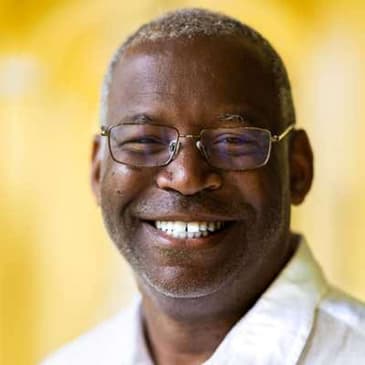
What drives a young boy from Southern California, immersed in the world of technology, to become a beacon for diversity in the tech industry? Join us on SpeakUP!International to uncover the extraordinary journey of Mr. William A. Adams. This episode promises an insightful exploration of Mr. Adams' life, from his self-taught beginnings in computer skills to he and his brother starting their own company in Silicon Valley, and his impactful 24-year tenure at Microsoft. Mr. Adams' mission is clear: to champion diversity and equity in tech, ensuring that underrepresented communities reap the benefits of this prosperous industry.
Leadership isn't just about decisions—it's about empathy, understanding, and building trust. Listen as we discuss the crucial role of empathy in leadership with Mr. Adams, who has been at the forefront of initiatives like the LEAP Engineering Acceleration Program. This program has created alternative pathways for women and minorities into tech roles, proving that diverse backgrounds enrich the tech world. Mr. Adams shares personal anecdotes about the subtle racism he faced and how these experiences shaped his commitment to fostering inclusivity.
Balancing a career in tech with tangible hobbies and the joy of mentoring is a cornerstone of Mr. Adams' philosophy. Discover the transformative power of community-driven hackathons and learn how Mr. Adams' personal influences, from his father to mentors, have shaped his journey. This conversation dives deep into the essence of living a humane life, contributing to humanity, and the significance of equity in tech. Don't miss this inspiring dialogue that calls for a more inclusive and empathetic tech industry, highlighting the profound impact of mentorship, community care, and personal growth.
Website: https://www.william-a-adams.com/
LinkedIn: https://www.linkedin.com/in/thewilliamaadams
Twitter: https://twitter.com/LeapToTech
Welcome to Speak Up International with Rifa Burke and Elton Brown.
Speaker 2:On Speak Up International, we have had conversations with people from all over the world. We've spoken to people in South Africa, in Britain, in Brazil, in quite a few states, but today we are especially honored to have Mr William A Adams who is conversing with us from Seattle. Mr William A Adams is a rare combination of engineering, sage and emphatic change leader. He is a pioneer in promoting diversity and he also believes strongly that technology exists to empower people. Mr Adams claims that he is on a mission to help women, blacks and other unserved communities to get ownership to a part of the stake in technology in companies. He is an engaging and energetic speaker and even he is a better listener. But there's so much else that I can say about Mr William A Adams, but I believe it's best when it comes directly from him. It's best when a person tells their own story, and so to our listeners on Speak Up International, I present Mr William A Adams.
Speaker 3:Hello, hello, I'm William A Adams. Hello, mr William A Adams.
Speaker 1:Hello, hello, I'm William A Adams. Hello, Mr William A Adams, we are so happy to have you here on Speak Up International. Thank you, Rita, for the lovely introduction. I want to know diversity in technology. How do you use that to help?
Speaker 3:promote individuals and companies when it comes to diversity? Big question. Huh, I'm going to start with, let's see, in the 70s. I'll go back a little bit and I'll come back forward. In the 70s I was a little black boy and, growing up in Southern California, no computers in sight, you know, because that was before the personal computer, before the IBM PC. It was right at the birth of those PCs and whatnot. And I lived in an area where it was all engineering firms like Rockwell International and Hughes and you know, lockheed Martin, because it was Southern California, it was aerospace, and it was that time when that was big. And one thing I noticed is that, whereas my neighborhood that I originally grew up in was your basic barrio Barrio is a Mexican term for you know the hood and all of our neighbors were like migrant workers and whatnot, and just you know, down the street was all these engineering companies and, lo and behold, all those companies were full of white men, because that's who the engineers were, right. So they lived a cut above where we did because they had better salaries, better jobs, they were engineering all that sort of stuff and seeing women and minorities in those roles at that time was very rare.
Speaker 3:Okay, so okay, fine, I was a precocious kid. I grew up, I got into personal computers my uncle so happened to give me one because he actually worked for the Navy at that time making weapon systems and I just taught myself. I was just one of those little geeky kids. That's like. I'm going to take this thing apart, I'm going to figure it out. Give me the books, give me the magazines. I'm just going to do my thing. Roll forward many years to the early 80s, and I'm at UC Berkeley and my brother and I were there and we started a company and this was up in Silicon Valley. And again, what you mostly saw in Silicon Valley, just like in Southern California, was a bunch of white men who started these companies and became millionaires and billionaires that we know today. Right, I had a career in tech. We had our company. It did okay and eventually I left that and I joined Microsoft in 1998. And I spent 24 years there and we can talk about some of that.
Speaker 3:History has been a primary driver of wealth development in the world, right? If you look at the top 10 billionaires in the world today, at least six of them are tech bros. Right, and Bill Gates was on the top of that list for decades two or three decades Bill Gates. Nowadays it's Elon Musk, and he trades with Jeff Bezos and Mark Zuckerberg's up there, and Steve Ballmer kind of makes an appearance, but it's all tech bros. So what that tells me is OK, these are the. I don't call them robber barons, but these are.
Speaker 3:These are the people who are going to get all the money in this century, right? Well, I want to get some from my tribe too, thank you. So how do we do that? Well, we got to get into tech, right, and in the last 20 or 20 or 30 years, that really meant get people jobs in tech, at least. At least get them to the places like Microsoft, amazon, apple, google. Get them jobs there, because then they're going to have some good salaries, they're going to get some shares of stock and the stock is very important, not just the salary, because that gives them equity.
Speaker 3:Equity means that once you stop working, you still have something of value that you can use for yourself and to pass along to your family after you're gone. Right, this is how all those other families who've been prosperous over the last few centuries do it. They build something, they're into something, whether it was the railroads, or mining, or electricity or aerospace. The men went out and did the thing. They got the shares, shares, and now they have intergenerational wealth that they get to pass along. So I just thought, okay, I'm in tech, I'm doing the Microsoft thing, I got the stock thing, let me figure out how to get more of my tribe on this train so that we can benefit too. Why do we have to be left behind? The rising tide lifts all boats. Why do we have to be stuck on the shore right? So that's the long slash, short answer to the questions like tech, equity, equity and technology is the way for intergenerational wealth at this time, and I'm just driven to get my tribe some of that.
Speaker 2:Well, I am really impressed. I'm happy and delighted that you are attempting to build your community, small and large, because I quite agree with you that the rising tide lifts all boats and let's get on that rising tide. I want to shift a little bit to your title, to a terminology that I saw in your resume. You're an empathic change leader to us about that, please of being an empathic change leader yes, please yeah.
Speaker 3:So let's start with empathy first. Um, so, uh, I try to tell people when, when we have discussions like well, first of all, what's the the difference between empathy and sympathy? Um, uh, sympathy is yeah, I, I see what's going on with you and I'm down there in the mud with you. You know, it's like I'm very sympathetic. Empathy is like I can put myself in your shoes. I'm not in your shoes and I'm not going to get in the mud with you, but I understand your perspective Right, and I care about it, you know. So I'm fairly empathetic, you know, when it comes to understanding other people's positions and situations and all that other sort of stuff. So it means that I don't just come to them and say you got to be like me, right. It's like that would be without empathy. You don't care or know about what situation they're in. You just show up and say this is the way to do it. I don't care what you have to do to get here, but you have to come here, right? That's non-empathetic. So I'm a more empathetic where I say, okay, you are where you are. Not everyone goes to a four-year college and gets a degree in computer science, but I can still get you on this tech train from where you sit, right. So that's the.
Speaker 3:And then, when it comes to leadership, it's really about, again, empathy. When I talk to people and I'm their manager or their coach or whatever, I really do listen, you know. It's like I'm not formulaic. I don't just sit down with people and like a pre-say, okay, okay, say two Hail Marys and you know, go on about your business. It's like no, no, let me really listen to what you're saying, let me reflect it back to you and let me not judge you, right, so that you feel at ease and I can I become a trusted partner in your evolution. Right? That's true leadership, and I've had people who've worked for me in the past say that to me.
Speaker 3:It's like, oh, they want to talk about their alcoholism, they want to talk about their retarded brother. I'm sorry if I'm using the wrong words. They want to talk. I'm sorry if I'm using the wrong words. They want to talk about different things. They don't want me to sit there and say so, how are you doing on the latest project and what's the schedule?
Speaker 3:It's like no, no, no, no, no. That's not coaching, that's not leadership. Leadership is listening, being firm about what your mission is certainly and I bring that clarity but certainly listening to people and showing them that you can be trusted, right? Because then they're going to deliver their best word, because it's like I will follow you to the end of the earth, mister, because you listen to me, you care about me, right? This is what the empathetic leader is it's like you listen, you care, you're not sympathetic, you're not down there in the mud with them like, yeah, yeah, it all sucks for everybody. It's like no, no, no, you have a mission, you got to get to somewhere and you can understand the people and you can understand how to talk to them to help bring them along through trust, right?
Speaker 1:So that's the short answer. We'll take the short answer. Earlier we were talking about how do marginalized individuals get their hands on some of this wealth.
Speaker 3:Yeah.
Speaker 1:What does the acronym LEAP stand for?
Speaker 3:Oh, these are different things. So LEAP was? It's an acronym for LEAP Engineering Acceleration Program and LEAP was originally created, actually in 2007 in India. I used to work in. I worked with Microsoft in India for three years to train up all their engineers and it was just a way to train up engineers who were coming in. There were like 300 college hires each summer and I had to create a program to actually just absorb them.
Speaker 3:Roll forward to 2015, and the challenge was how do you get women and minorities into Microsoft? Why aren't we hiring them? Right? Simple question why aren't we hiring them? Are we doing dribs and drabs? And I created this program, the new LEAP.
Speaker 3:So LEAP doesn't stand for anything other than LEAP, like leap of faith, and it's an apprenticeship program. Basically, where I said, the thing that's missing is when we hire people from colleges, which is mostly how you hire people in those companies. They go through internships. That's how you get them In their junior year. You sign them up as an intern and they kick the tires on you. You kick their tires and by the end of the summer, you're already offering them a job after they're done with their graduation. Well, if you're a woman, a minority, who went through a community college or not one of these top 15 schools in the engineering schools, you will never get into a company like that. There's no path, right? You didn't come through the intern program and you're not going to be hired as an industry person because you don't have 10 years of experience, right? So LEAP was essentially that.
Speaker 3:Things that broke the back of that process and said no, no, no. What we need is a different pathway for experienced people. They need an internship, essentially. And where are they? Well, those people come from coding academies, they come from community colleges. They come from just different backgrounds.
Speaker 3:I've had people who were like oh, I was a bank vice president or I was working in a biotech lab or whatever. They just I was a cook, I was a musician, you know they come from all over the place, but they share a passion for technology at least, and they train themselves up, went to a coding academy, whatever. So they got some skills and, most importantly, they have people skills. So they know how to work in a team because they're adults, not kids coming out of college. So they make great team members. So Leap was essentially just a program to get those people into companies like Microsoft, and now it's what it's 2015. So almost 10 years that program has been running and it's still running, not diminishing. And now it's worldwide and all this sort of stuff and other people in the industry are copying it. So it was a great thing.
Speaker 2:So then would you say that you are satisfied with the outcome so far of leap?
Speaker 3:yeah, because the uh, you have to go back and and figure out, well, what was the goal in the first place? Right, and when I started I mean honestly, when I started it was just to do something interesting. I mean, I asked a VP what's a big challenge? Because I'd been at the company for 20 years by that point. So I was like what's a big challenge? And he said, ah, this diversity thing, go figure that out.
Speaker 3:So initially the goal was just to do a little something, something and, you know, a side project. And then, after I did one cohort, I was like, oh, wait a minute. And I had this interesting conversation with my brother, my older brother, where we said you know what? This is kind of my civil rights moment, if you will. It's not a matter of whether I can or cannot do it, it's a matter of I must do it. So it took on a even now I'm getting goosebumps just thinking about it. It took on an air of wait.
Speaker 3:There's only so many high level black engineers in tech, right, there's only so many of us. It's not like there's tens of thousands, you know of us. It's not like there's tens of thousands, you know, at a high level there's even fewer, who are engineers, who've had 20, 30 years of experience, have been managers at a high level, have done training of adult engineers in foreign countries and have the ear of the execs at the biggest tech company on the planet. Now you're down to like two people and want to do this job of bringing people in and training them up and getting them jobs. Now you're down to zero people, so it was a matter of oh, if you don't do it, the next person who could do it is who knows?
Speaker 2:when right.
Speaker 3:Maybe never.
Speaker 2:Yeah, I want to hone in on something you said. I know Elton has a question that he really wants to ask, but you said in other countries, and you alluded to India. In other countries, and you alluded to India. Talk about the other countries, please.
Speaker 3:Oh, okay. So 2007 to 2010, I actually lived in India. My current wife is actually from India, so I met her there. So I lived in India and I was training up all these engineers.
Speaker 3:Later, post-leap, and when I was working in the office of the CTO, I had an opportunity to bring the company into Africa and create engineering groups in Africa. And it was literally, quite literally, one of the African engineers in Seattle came up to me and was introduced to me by someone else who was also from Africa and they said man, we've been trying to get engineering into Africa for the last 10 years. We've not been successful. Can you help us? And I went sure, you've been going about it the wrong way.
Speaker 3:So I took a trip to Nigeria and Kenya and I, you know it was a whirlwind tour and I said okay, while we were in Kenya, I said I'm going to go back and I'm going to hire people. And so I went back and I hired the first engineers in Kenya. You know, like that, because no one had, no one was doing that. They were like oh, I don't know, they have these executive meetings and promises, promises, but no one. You know, no one's going to give you any money. I had money, so I said I'm going to hire these engineers and that was the end of it. So, uh, now they have like 600 engineers between Kenya and Nigeria. Right, and it was. I mean, just remember what was happening in what 2018, 19, who was president and what they said about the S-hole countries in Africa, right, and I thought-.
Speaker 2:How could I ever forget that statement?
Speaker 3:Yes, and I thought well, hold on. If you project 50 years into the future, the African continent is going to be the growth engine of the world, both because of natural resources and because of their advanced birth rates, whereas Europe and Asia even are kind of dying right. They're slowing down, they're aging out. It's like, well, who do you think where are you going to get your cobalt from, you know, and who's going to take care of your old people in diapers? I mean, it's not going to be your own people. You're going to have to get people from somewhere. And who do you think is going to think all those thoughts with AI and building robotics and all the rest? It's not going to be your aging people in Europe and China. It's going to be a bunch of Africans, you know. So we better get to it.
Speaker 3:So I helped us get engineering established in Africa. So I've done India, I've done Africa, I did a brief amount of time in China. So it's just like that just spreading out. And Africa was really exciting because the attitude I went in there with was this is not a brain drain strategy, because you would think you would just pop the helicopter in classic Microsoft or classic big company helicopter in, scoop up all of the best and the brightest, take them back to Redmond. Right, I said, I actively said this. It's like we're not going to be the new colonialists, you know.
Speaker 2:I mean that's just a new slave trade, right?
Speaker 3:It's like we're going to take your best and brightest. What are you going to leave behind? How are they going to solve their problems? How are they going to fix their slums? No, so let's keep the talent here, because tech is this wealth development engine. You want that in this community so that they can have their kids in this community and the whole community will improve. Right, if you took 600 people out of that community, you just took all their best people.
Speaker 1:Now there's no wealth development just took all their best people. Now there's no wealth development. No, and that's that's not and that's not fair to the, to the community or, uh, anywhere within that, within that country. It's just not fair. You pull out yeah, it's just not fair you've drilled a hole in someone's head, yeah, and you know you haven't put a plug so that you can stop the bleeding and so yes, it's very important that that does not happen.
Speaker 1:Major companies have done that in the past. They've gone in and created towns and villages and as soon as they suck out all of the minerals or whatever they want they close all of that down and the people are left there with their hands up in the air going what just happened?
Speaker 3:And it's true for lots of different quote communities, right. The same is true of going into Oakland, california, right, I mean, I can walk into Oakland and I can drag out all the smartest kids and bring them up to Redmond, and who cares about Oakland?
Speaker 1:Right, it's like yeah, no that's not the best thing to do thing. They went out on their own and they kind of scattered out through other people's companies, you know, looking at other people's treasures, and then figure out how to draw them, you know, into Redwood City.
Speaker 3:Yeah, and for me the whole, the whole tech thing and helping our tribe, you know, is about. It's partly it's's about fairness, but really it's about competitive advantage. It's like we can't be sitting hand out waiting for things to happen for us. We got to make things happen for ourselves. So I'm part of that equation, right? It's like I am one of those change agents that has to do my change. I can't just sit back, having reached the levels that I have, and hold back and say I got my margarita, I'm on the beach, you good luck y'all. It's like that's not right. You know, you have an obligation to actually move the ball ahead so that people can stand on my back and take the next step up. Right.
Speaker 1:You were one of the first Black entrepreneurs in Silicon Valley, so can you talk to us a little bit about that experience being the first?
Speaker 3:Yeah, I mean when we were, my brother and I were there doing our thing. I mean, and some people get this, you know, wrong because we, you know there's a whole computer history museum piece done on us. It's like a seven hours of interview and people can go check that out if you want to hear the real story. But we were there doing our thing. You know, we were in with Apple when they were introducing the Mac. We were there with Steve Jobs when he created Next Computers and we're a big player in that and we were just, we were there.
Speaker 3:We didn't turn into Adobe. We were there. We didn't turn into Adobe. But if you looked around for you know companies that were led by Black people in Silicon Valley in the 80s there's maybe five, if you could count that right. So there weren't very many and we would have things where we would go to a show and maybe some young brothers would come up to us like, hey, could you sign? You know we were in magazines and stuff. Could you autograph my magazine, you know? And they look up to you because it's like, wow, you are the only ones, right, and that continued throughout my career. It's like I'm always the only black guy in whatever room there is Right. This is just the way it is.
Speaker 1:Did you find that to be lonely? I know, when I worked at Oracle, I was the only Black person only the only Black person there. And sometimes I found it to be insulting, especially when they said oh, you're so articulate, it's like excuse me.
Speaker 3:It's amazing how they train you monkeys these days.
Speaker 1:There you go yeah.
Speaker 3:Welcome to the planet of the apes. I mean it's interesting that as a child growing up, I did not grow up in I wouldn't say it was a strongly Black community. I mean, obviously my parents were Black. They came from Detroit and Indiana and were living in a Mexican community in Southern California surrounded by white people. So you know, I mean I read about Christmas addicts and we had, and we and Martin Luther King and, and those even happened during my you know, when I was born, so a lot of, and that was even happened during my you know when I was born, so a lot of. We had blackness to us and that was the time when people were rioting and getting shot with water cannons and being a sad. I mean it was all around us.
Speaker 3:But I was a child, all right, and I was a shy child and I was very precocious. So for me I was in my own little bubble, I didn't see color. Precocious. So for me I was in my own little bubble, I didn't see color, and I was called the N-word maybe once in my life when we were in Indiana, you know, walking down the street. So you know, it's like you're living with a bunch of migrant Mexicans. You're all brown to me, you know the police are going to arrest all of you. It doesn't matter.
Speaker 3:So that's how I grew up and when I went through tech and growing up and going to college and all that sort of stuff, it didn't occur to me. Now there was run-ins that we had. My brother was more aware of this stuff than I was. I was just a tech head. I mean I was probably autistic or borderline. I was just a tech head. I mean I was probably autistic or borderline. So it wasn't until we went and started our business and went to open a bank account that we ran into our first real like, well, how come you're not going to do this? It's like, well, because not, we didn't want a loan. We just went to open a bank account and this bank wouldn't do it. It's like, okay, this is kind of weird. So that was one incident. My brother had an incident where VCs told him straight up we will never lend money to people like you. I wasn't in on that meeting, so it's like, eh, it didn't affect me. So I was a tech head. I was allowed to just do my tech thing, you know, and not focus on it.
Speaker 3:It wasn't until I slowly opened up to blackness over time and it really didn't hit me until one day before I went to Microsoft, so it was probably in 96 or 97. I was in Detroit and they had this Museum of industry or whatever the heck, and I saw a train car there and outside the train car was like this wax figure of a black order right that they used to have in the train cars. And I just saw this guy standing there in his you know his porter's uniform and I thought, oh, it's kind of regal. And it just struck me at that moment, looking at that guy, and I just said I'm going to do right by you, right? And that was that would, I would say, is my turning point.
Speaker 3:Then I went back to just being my geeky self and I was never alone, being the only blah, blah, blah, because you know I'm a shy guy. What do I care? You know I don't see color, so really. So I had that one incident, that one moment in 96, where I was kind of like I felt something. It was a sense of responsibility of some sort. But then it goes dormant for the next 15 years or so. And then finally, I come back to this LEAP program. Hey, what can I do to hire more women and minorities? And then the final aha awakening of I must do this. So it wasn't until about 10 years ago, and now I'm 60 or 59. It wasn't until about 10 years ago that I finally went huh this ain't right and I need to do something about it.
Speaker 3:You know what an awakening, oh yeah.
Speaker 1:What an awakening.
Speaker 2:As I said at the top of the show, we prefer people tell their own stories because it makes it more authentic. Yeah, but something that you mentioned and I'm kind of surprised about that's because of my own internal stereotype You're a tech person.
Speaker 3:Yeah.
Speaker 2:You're into engineering, you're into technology, and yet you speak as a person who is really conscious of people skills and soft skills. Now, where did that come from?
Speaker 3:I don't know, I have to blame my mama, I mean, who knows? I mean it is very strange because, considering how shy and precocious I was as a child, it is kind of weird that I, I really, and maybe I was like that because I was so empathetic that it was painful to interact with people, you know, because you feel their pain. I mean it's, it's very challenging. Um, I mean, there's one incident I had with the, with a cat of mine, that I could tell you about, but it's like, ah, it's too involved and too psychic.
Speaker 3:So there's just something in me that core empathy. That empath was just in my core right, it's masked because you go through society and you you have to. You can't operate like that. You have to like go get educated, interact with people, get a job, make money, raise a family. So there's a lot of masking you do to hide your inner core. So it's not often that you get to let that seep through. But I've been blessed in my life that I have been allowed to have my inner core seep through and that's what's won in the end is that empathetic person. I'll tell you one thing that just shows the. I'll tell you two things. So one of the things is I have a. My best friend lives in Hawaii and she asked me once if you could have superpowers, what would they be? And I said super speed, like the flash, and super empathy. Super speed because you get to run around, do all sorts of things, but empathy is what prevents you from killing everybody and stealing their stuff.
Speaker 3:So you can't have just super speed, you also need the empathy or else you won't care about humanity. And the other thing I did was when I was 40, sitting on a beach about to go to India, and I was just kind of sitting there like, ah, I'm about to embark on this new mission, I've just been divorced. You know, it's like how am I going to leave? How am I going to live the next half of my life? Right, and I came up with this, what I call my life creed, the word I live by. And life is L is for, you know, learning. Everything in my life is about learning.
Speaker 3:I is intentional. You know, I try not to be blown by the wind all the time. F is fearless, so I'm not afraid to confront anything. And fearless is not reckless. I'm not going to jump out of an airplane without a parachute. That's reckless. Parachute, that's reckless. Fearless is I'm not afraid for you to tell me hey, you need to cut your nose hairs. You know, I'm not afraid of that. It's like OK, thank you, thank you, or hey, you did a good job. Some people are afraid of success. And the last one is empathy. So L-I-F-E right, that's how. This is what I tell myself every day and this is how I get through and do the big things that I do is because I have this life creed right and that keeps me centered.
Speaker 1:So all of us need something to keep us centered. Moving to the left too much or leading to the opposite side of things usually creates problems, so it's best to, I think, be able to engage and intentionally stay somewhere in the middle. You are a speaker. I want to know how do you engage both technical and non-technical audiences?
Speaker 3:How do I engage Through storytelling? Yeah, and even if it's a technical thing, there's always a story to be told, because humans are I mean we're story engines. Right, you will resonate, whether you're technical or not, you will resonate with a good story. So when I'm engaged with a technical audience, there's the technology of whatever the heck we're talking about and there's usually something to be said about how that thing was created, discovered, used, the pains of it. You know, because people, humans respond to viscerally to stuff like that. Like I can say, I bet you've had a time when you were trying to write some program and you could not figure out a bug for three days and how frustrated that made you feel. But if you just sit back, relax, take a dream or something, it'll come to you and you'll figure out the problem. So you know, and if it's something where I'm telling people how to start a business, we'll talk about business.
Speaker 3:I was just this weekend I was helping some people build a machine, a certain kind of machine, and there's a father and his son and his two daughters, you know, and the father was he's like I don't know, he might be 48 or something like that and he wants to talk about. I mean, we're building machines, we've got screwdrivers and motors and you know electronics. It's this thing. And it turns out he's a dreamer. He's like man, I have these dreams of you know, going to India and starting these food carts with selling pizzas and blah, blah, blah. And it's like, okay, let's talk about that and we will also talk about supply chain and trust and finance and you know all these other sorts of things.
Speaker 3:Because, like, let me meet you as a dreamer, let me not poo-poo you, because that's what everyone else around you is going to do. It's like, oh, you're just dreaming the fantasy. Stop, pull your head out of the cloud. I around you is going to do. It's like, oh, you're just dreaming the fantasy. Stop, pull your head out of the cloud. I'm like, no, no, let me meet you as a dreamer, let's dig into your dream, but let's make it practical, right, let's enable your dream, let's actually go for it. So that's how I engage with different kinds of audiences. I think it just comes back to the empathy thing and having a goal right. When you speak on something, you have a goal of sharing whatever it is you're speaking about. But you've got to read your audience right and see where they're at and then tell stories that bring them along that they're going to go uh-huh, uh-huh. Like I noticed, rita first started saying uh-huh when I said for our tribe, right, and she's writing it down, so it's like uh-huh.
Speaker 2:Everything that you say, everything that you say, I don't know if it's intentional, but it's framed in a way of thinking, of a mindset of a person who doesn't talk empathy, but it lives and walks and speaks empathy, and I think that's amazing. And again I go back to my mind that very often is stereotypical and you think empathy, I think empathy and I think people who are in the helping professions.
Speaker 3:Yeah, I feel it.
Speaker 2:People who are in the helping professions. People who are in the helping professions. Now, I was in the helping profession, one of the helping professions, and it's something that you teach as soon as the students walk in the door the importance of walking in people's shoes, shoes. But it takes a while.
Speaker 3:I believe that it takes a while for people to really understand and to separate the language, the words, from the behavior, yeah, yeah, and I think it also takes awakening of some sort. You know there's something. We're all empathetic to one degree or another. But, like I said, we oftentimes mask as much as we can because it's hard to be in that state. We oftentimes mask as much as we can because it's hard to be in that state. You're vulnerable, right, so it's a. For me it's been a combination of. It's kind of like when you're an alcoholic and you're trying to quit I'm not and you just say, well, I can't quit for all time, but I'm just going to not take this one drink, right, it's one drink at a time. So I view empathy as the same way.
Speaker 3:It's like it's hard to think that you're going to be this open, empathetic, blah, blah, blah, the entire for the rest of your life. It's like, oh, what a lot of work. But hey, just for this one moment, you know, be a little bit vulnerable and listen, and it's okay. And I think it certainly helps me. Age helps, you know, because you gain a little bit of wisdom if you're open to it. But it just helps to be able to. The fearless thing for me also helps Because I'm not afraid of what I'll find. If I open myself up like that and project myself to other people, I'm not afraid that they'll think, god, what a weirdo. You know, that was a dumb thought. It's like, oh, that's your opinion, but it's my thought. You know, I'm not afraid of what people will say or think about me at this point, so it makes you even it's even easier to be empathetic, right?
Speaker 1:So anyway, there you go you have a family life and hobbies, so how do they contribute to your overall character?
Speaker 3:um, gee whiz, I, oh, I guess there's two different buckets there. I have two young kids right now, 10 and eight, a boy and a girl. So I've got an older one who's 29 and two young ones, 10 and eight, and they, if you guys have kids I don't know if you have kids, Well, Rita does. She said that. So if you have kids, they shape you, Whether you want them to or not. Hey, you kids, I'm going to tell you. It's like no, no, they're going to tell you. So they certainly shape you, but they also give me energy, right, I mean attending an eight-year-old.
Speaker 3:I'm like I might have been thinking I'm going to drift off into a tired life and you know, just kind of go quietly into that good night. It's like no, no, you're not old man, You're going to give me some piggyback rides. So they keep you young and excited and challenged your thinking, because you still have someone that you're training, right, the things that I do, all my hobbies, are really just to keep different parts of my brain moving, right, Like I was telling you about the machines I was building with these people. I write code almost every day and I'm always thinking about things I can do to make these machines better or different applications. But I also do things like woodworking machines better or different applications. But I also do things like woodworking or I used to do baking.
Speaker 3:I don't do baking now, but woodworking, for example, is very physical, right, it's not. I mean there's. It's cerebral as well, but it's not as cerebral as coding is. And I found you need that balance because if you're in your head all the time, that could be a scary place. So you need something physical and tangible. I mean software is not tangible. I mean you eventually see an effect because I can type something here and maybe an invoice pops out of a printer over there, but 99.99% of the time, what you're writing, you never see the impact of it in the real world, right, Zero impact. So you need something physical to exercise that other part of your brain which is, you know, more tangible things. That's how it affects me is family keeps you on your toes and hobbies keeps your brain malleable, right and even.
Speaker 2:I like it that you said that children can teach lots of lessons. I learned how to be a parent through my daughter, who would just hold the mirror up in front of me and say have a look, mom, and I did not like it, but you know what? She was right. She was right. Yeah, I want us to go back and talk about the fact that you are helping people who aren't, to some degree, ready to fully help themselves. Maybe they've got the ability, but they need someone like you who's going to help them change their trajectory.
Speaker 3:Yeah, absolutely.
Speaker 2:So to some degree we can say they're standing on your shoulder, because you have stood on people's shoulders. Are you content? Are you happy with how your goals are being accomplished? Are you satisfied that you're walking people along their path?
Speaker 3:Yes, I was trying to think of what would be. The dissatisfaction in that, and typically the dissatisfaction with most people in life in general is not reaching certain levels of expectations, certain wealth levels, certain notoriety level. You know there's a lot of stuff, particularly in America goals that we set impossible, goals that we set for ourselves to keep us going until we're in the grave, and most of those things I've managed to shift to being very humanistic goals instead. Right, so I'm happy. For example, the LE, leap program that we started in 2015 in here in the States. The first person I hired, the first one of the first cohorts, first intern I hired was this, this woman named Yolanda, and from the beginning I thought you're going to run this program. Okay, so she was the first hire. After the cohort finished, I hired her and she stuck with the program for the last well, for the last nine years, and just this past week she's been made the director of that program.
Speaker 3:Okay, so her life has been completely transformed. She pings me repeatedly. It's like you've changed my life. You know, you helped me buy this house because you hired me, you believed in me, you gave me your all. It's like what more could you ask for in life than that, and there's hundreds of people like that. It was like you changed my life. I can point at the people in Africa who are, you know, engineers there. Now it's like you changed my life. It's like I can't think of a single line of code I've written in the past 40 years that has had that kind of impact.
Speaker 3:Right has had that kind of impact. Right. So it's partly to shift and say, okay, well, I'm not pursuing buying the next biggest car, I'm not pursuing getting a private jet, I'm not pursuing all those material things. We have enough and that's enough. So what else is there? Well, there's humanity. And what is your goal for humanity? Well, to live humanely Right. And I don't think it's common for us to understand what that even means Right, other than through our religious practices and whatnot. And even there I don't think most people get it. So so I'm, I'm perfectly happy living a humane life, helping my fellow man also live a humane life Right.
Speaker 1:Well, you're very much into helping your fellow man and women.
Speaker 2:I was going to say that, but I thought I better hang on to that for now.
Speaker 3:Helping my fellow humane. I don't know what you call us, my fellow people.
Speaker 1:My fellow people. Okay, good, now that we have Rita, happy, we can now move on with our conversation. And I want to know, since you talked about helping humankind, is the collaborative hackdown called the Event? Yeah, can you talk a little bit about that?
Speaker 3:Yeah, sure, so I was. This is actually before I left Microsoft. I was just thinking of different ways in which I can turn my 40 some odd years of experience in tech into things that will be useful, and one of the things I came up. One of the things I came up with is the event, and the event is it's an umbrella under which we do various kinds of things, but the basic idea is can I help a community, a self-defined community, hack something for their betterment? And the simplest example I can give is if you go to a place like in the Caribbean, us Virgin Islands, waste management okay, they've got piles of plastic, you know, just piling up in their landfill which they don't have enough land for. Can we go into a place like that and say and bring in experts in waste management, because maybe they don't have all the skills there to do it, and just brainstorm, have the experts talk their thing like a TED talk, but instead of just ideas worth sharing, it's ideas worth implementing.
Speaker 3:So you bring people together, you bring in experts, you bring local community and you come up with solutions. Oh, you could do this with a pack six. You could turn it back into oil. Actually, you could do this. Here's how you can turn it into charcoal to feed your crops.
Speaker 3:Um, so you hack solutions and it's usually a week-long sort of thing and the emphasis is that the community owns the solution so that they get benefit from if that thing turns into something. It's like hey, we came up with this super plastic recycler thing, we've got the patent, we own it. Now, if XYZ community wants to do it, it's not Monsanto that owns it, it's not DuPont, it's not some mega corporation, it's our community. We're going to get $100 for every one of those things that gets sold. So it's just helping people be like that and you leave them with an ability to hack problems.
Speaker 3:So the next problem comes along. Maybe they need to solve the problem of food scarcity or whatever else is in their community. They now know how to organize each other, they know how to set the problem up, they know how to work through a solution state right To hack their own thing. So that's what it's all about is just teaching people things that I've learned in doing hackathons and whatnot, but at a community level, such that they end up with the equity in the solution for one and they just know how to work with each other as a community right. That's what it's all about.
Speaker 3:And it takes different forms.
Speaker 2:I like that because, as I said before and I may have said several times, we talk to people on Speak Up International who we define as community builders two people on Speak Up International who we define as community builders and it seems to me as if your community is not just local but it's global, and that's what we hope to reach, because on Speak Up International we seek to inspire, to inform and to educate, and there's no question that today you're helping us to meet those objectives. I'm curious you talked about your uncle or some family member that gave you your first computer.
Speaker 3:Yeah, uncle Jim.
Speaker 2:Talk to us about who or what is responsible for the person that you are today.
Speaker 3:Oh, my goodness. Well, certainly I got to give props to my mom who passed away just a couple years ago. My father passed away when I was seven, so my, my earliest parenting. I mean, there were things I learned from my dad that I still remember, but it was pretty early on that. He left us right, but I learned I actually, yeah, the kind of thing that the empathy thing might've started with him actually. And I'll just give you a quick example.
Speaker 3:So back in the day, you know, we had the garbage man come and they pick up your garbage and you know, on the truck and they take it off. Back then you'd have a driver and two guys that are lifting the cans. Now it's all automated, so there's just a, an arm that comes out and dumps it in. But back then you had at least two guys on the back of the truck. My dad would make um hooch for them. Hooch is homemade, homemade wine, right. So he'd make some hooch for them and he'd put it out, you know, around holiday times and with a card, or maybe candies or whatever. And I'm observing this. It's like dad, oh, okay, you're supposed to treat people nice, right? He's like, okay, these guys are working hard they're brothers, you know or he'd do things like buy popsicles for the neighborhood on a hot day, right, neighborhood kids. So I've observed him and there's only two or three things like that that I can remember. Poor guy was a child. He went through World War II. He died of a stroke and a heart attack Too much stress for a man, a black man, in the 60s. It just got him. But I remember those distinct things. So he was an influence. My mom was definitely an influence as being a strong Black woman in the 60s 70s showing us the way you know, keeping us in sports and out of gangs, even though we grew up in that environment.
Speaker 3:And then there was just people who dropped in along the way. This guy, jackie robinson uh, well-named who is, uh went to uc, irvine and had. He was taking a class in fortran programming. So that was one of my first inklings that you do stuff with computers, and he showed me his printouts and his books and stuff like that. I was was only like eight or nine, okay, but I was like, yeah, yeah, this is the thing, yeah, yeah. And then later my uncle gave me the computer. So definitely my uncle, you know, being a genius that he was. This is my mom's brother. Yeah, uncle Jim's like let's go see Uncle Jim, and always having conversations about just wild tech stuff. And again, I'm not even a teenager, I'm just a little saver, right.
Speaker 3:And then there's in high school I had Dr Jim Jenkins who drove to work in the Rolls Royce, lived in Newport Beach, but he came to public school to teach us every day because he said, I grew up in the public school system, went to UC Berkeley, worked on the Manhattan Project. I grew up in the public school system. So I'm giving back, right. So it's like that's got to be in there somewhere, right, this giving back notion, no matter how well you made it. I mean, the guy's driving his Rolls Royce to school in our poor neighborhood. You know a place where it's like are you kidding? You're bringing that you better not, okay, you're crazy. So we're not going to touch your car.
Speaker 3:So you know there's influences like that. And then there's just the, the non-connected influences like, oh, nikola Tesla is a favored inventor of mine more than Edison, martin Luther King as an inspirational sort of speaker, even Malcolm X you know much later years for Malcolm X, not early years. So all of these kinds of people and I'm more hard oppressed for more recent influences. Um, certainly this manager, a couple of managers I had at microsoft who were just like oh, I believe in you, yeah, I'm gonna promote you, yeah, I'm gonna help you do that thing, yeah, I'm gonna keep paying you while you do that leap program. You know, uh, there are people like that along the way. So there's a lot of people in there, but that's probably the bulk of them.
Speaker 1:You have really given us a lot of information about you and the things that matter most, starting with your collaboration with the event and LEAP. And then there were several other programs that you were definitely involved with. In fact, you were helping a neighbor the event and LEAP and then there were several other programs that you were definitely involved with. In fact, you were helping a neighbor not too far from where you live build something.
Speaker 3:Always building something.
Speaker 1:We'll just leave it there, and the fact that your mind is always going, you're always trying to think of something else that you can do to better our tribe which is extremely important will definitely help individuals who are looking for avenues to get into tech we see that map so that they know how to actually do it without wasting too much energy. So I want to thank you very much for all that you've given us. This has been such an inspirational conversation. I'm sure our listeners will enjoy and treasure the things that they've heard today. Thank you so much.
Speaker 3:Well, it's been fun for me, so thank you for having me.
Speaker 2:Thank you so much, and I will certainly remember the importance of learning intentionally and fearlessly and shrouding oneself in empathy. Thank you so much.
Speaker 3:You're welcome.
Speaker 1:If you wish to contact Mr William A Adams, please be prepared to submit your name, your email address and the reason why you wish to contact Mr William A Adams to linkedincom. Forward slash I-N. Forward slash the. William A Adams. Are you interested in the opportunity to be interviewed and have your cause promoted by Speak Up International? We invite you to connect to us by sending a message that includes your name, company or organization name, the valuable service you offer to your community, and your email address to info at speakuppodcastca. Worried about your confidence as an interviewee? Don't fret. Speak Up International can provide you with the necessary training so you shine during an interview. To receive training information and a 10% discount about the Speak Up International's podcast interviewee training program, email us at info at speakuppodcastca. You can also reach us using Facebook, instagram, twitter and LinkedIn. Twitter and LinkedIn To connect to our podcast. Use Spotify or your favorite podcast platform and search for Speak Up International. You can also find our podcast using our web address wwwspeakuppodcastca. Our logo has the woman with her finger pointing up, mouth open, speaking up.
Speaker 1:By joining Patreon, we can offer you an exclusive opportunity to become an integral part of the continued success of our podcast. Cover the costs associated with producing high quality content, such as equipment upgrades, hosting fees and professional editing services. As a member of our Patreon group, you will gain access to a range of exciting benefits. We are working on providing you early access to new episodes and the opportunity to suggest topics or guests for future episodes. Your contribution will not only help sustain the continuity of the podcast, but also allow us to enhance the overall listening experience for all of our dedicated followers. For all of our dedicated followers, help us, help you, patreoncom forward. Slash Speak Up International. At Speak Up International, we aim to inspire, to inform and to educate.