
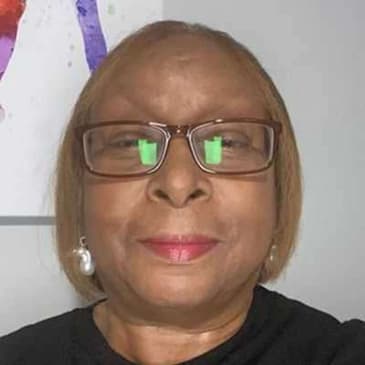
We sit down with counsellor, writer, and former teacher Kim Fraser to explore how Chandler turns lived pain into a practical anti-bullying model for kids and families. From festival wins to global pitching, we unpack de-escalation, empathy, and why change starts with choice.
• validation from awards for a universal anti-bullying story
• bullying as learned behaviour beyond childhood
• insights from MIPJunior and MIPCOM networking
• Chandler’s expansion from short to feature film
• staying authentic without glorifying violence
• empathy lessons inspired by Malaysian wildlife
• personal Bronx bullying story and safety tactics
• practical tools to defuse aggression with unexpected kindness
• teaching roots that shaped a do-first curriculum
• truth-telling as a foundation for social change
• supporting children who are not yet ready to change
• VEU platform plans and 2026 timeline
Website: https://deniseproductions.com/
Instagram: https://www.instagram.com/kem.frasier/reel/DIA6B4mAk5A/
LinkedIn: https://www.linkedin.com/in/kem-frasier-a0012173
We invite you to connect to us by sharing your message that includes your name, company name, or organization name, the valuable service you offer to your community, and your email address to info at speakuppodcast.ca
You can also find our new video podcast channel,
https://bit.ly/speakuppodcastvideo
You can find our audio podcast at www.speakuppodcast.ca
Please support our causeL Patreon.com/speakupinternational
Welcome to Speak Up International with Rita Berg and Elton Brown.
SPEAKER_02:Today we have the good fortune, the pleasure of chatting with Kim Fraser, who is the author of Chandler of the Handy.
SPEAKER_03:Ken is a former teacher and currently a writer and professional counselor. Anti-bullying is her cause, primarily because growing up in the Bronx, she was bullied. This is the second time around that we have the pleasure of having a chat with Kem on Speaker International. And uh during our conversation, she will explain why this is happening. Lots of new things have happened in her life since we last had our conversation. So welcome to Speaker International, Kem Fraser. We are more than delighted to have you here.
SPEAKER_01:Well, thank you, and I'm happy to be here.
SPEAKER_00:It's been a while, but I'm very happy to be here. I know it has been a while, but I'm glad that you remembered us and decided to come back. I think since the last time that we spoke, our short film channeler has earned several awards, and we'll get into all of that when we get into our conversation. And also that journey continues when it comes to the channeler documentary. So let's get started. Winning Best Screenplay at the Night of Short Film Festival. Now, how did that moment affirm that your voice deserved to be heard on the larger stage?
SPEAKER_01:When I think of uh filming Chandler, my first film, uh, of the 17-year-old in the Bronx at PS14, I think of a reality. I think of uh it's timeless because that same type of bullying is going on is on all over the world to some degree. So this award just validated the fact that this is on the minds of many people. People are still suffering from the effects of being bullied, and we see it in the national national uh area as well as international, and something that we need to keep in the forefront. So that award just validated, as I stated, the fact that this is a real issue.
SPEAKER_03:Yes, Pam Fraser, bullying is a real issue. When I hear the word, children come to mind, but I know it's not just children who bully each other. Do you want to talk a little bit about that, please?
SPEAKER_01:Yeah, because children only know what they see and hear in the family unit. So if they see and hear their parents or any adult solve problems by fighting or uh intimidating one another with uh threats, when they're faced with that same type of environment or situation, they will act accordingly. Because unfortunately, that negative behavior becomes learned behavior, so it becomes normal for them to retaliate and to bully other people, to build self-esteem, to make themselves feel known. Uh sometimes it comes from families that just abandon their children mentally and emotionally, so they're starving for attention, even negative attention. So that's a sad situation there.
SPEAKER_00:Talk to us about uh Mip Junior and Mipcom.
SPEAKER_01:Those were two events, festivals that I attended in October, and it was held in East Consprence, rather. It was exciting. It was my first festival that I attended. Lots of different buyers, co-production, production agents. Um, there's a lot of um collaboration between different companies, and this is international companies. You know, Japan, Tokyo, different, different nationalities were there promoting their particular artistry as well. And I was able to connect with several different um producers from Germany, from India, just from different lands. It was exciting. It was eight days of just nothing but looking at films, talking about your film, producing it, uh, putting it in front of other uh partners or prospects, and um I thought it was a valuable, valuable event. Yes.
SPEAKER_03:So while you were there, did you have to pitch your thing?
SPEAKER_01:Yes, yes. My co-producer, she pitched it as well. Um, we pitched all the films that I produced, which was only Chandler and Life Gave Me a Twist. That's the one that's coming up, the graphical documentary. But Chandler is being the script for Chandler is being written as we speak for feature film that we'll do in New York as well. That's exciting because we extend the 17-year-old Chandler into a real story, a story that has substance, a story that that uh relates to every child out there. All children feel intimidated by someone that bullies them. And it doesn't have to be a physical type um conduct, it could be a look, it could just be something that intimidates, makes the other person feel inferior because that's what bullies do because they feel inferior.
SPEAKER_00:My question is how do you remain authentic? I'm sure that there are people out there that they see your work, and of course, they've got hundreds of ideas, you know, to make it better. So, how do you stay true to your authentic voice?
SPEAKER_01:Well, it it could be challenging because also what I'm competing with is movies and stories that have a different type uh setting. Some of it is violent, you know, we got we got uh social media, you have some of the violence there, or chatrooms that are uh igniting children or young people to do things that are not good. So I'm I'm actually being challenged by those kinds of situations, but I feel like the whole world is begging for change. You know, if we don't put something in front of them, they wouldn't know that they it exists. So we don't, we're not trying to take away the other movies or or channels or or stories. We're trying to give people a choice. A choice to look at what is real, what's going on, something that they could fix. They could do something about this. But if if nothing but violence is in front of them, it becomes acceptable. And that's what I don't want. I don't want people to accept violence. I want them to have a choice.
SPEAKER_03:Of course, they if they see violence, violence, violence, it becomes it's perceived as normal now. This is violence. Exactly. But Cam. I had a situation a few years ago where I was working with a woman and I felt that she was a bit of a micromanager. I felt she was wanting me to do things that I didn't want to do. And I felt bullied. And I said to her, colitely, uh, you are bullying me. I feel bullied. And she says, I'm not bullying, and you are not bullying. Do you think bullies ever admit to being bullies?
SPEAKER_01:I don't think they can admit it because they don't know what bullying is. Because it's normal to them, they don't see it as bully. They see it as just as the way they work out problems, this is the way they communicate, and it's an accepted form of communication for them. That's what their norm is. So they don't see bullying as what it is, intimidating someone else. They won't even apologize for it because they don't see the issue. They don't see that what's wrong. That's the scary part because it becomes part of their makeup. And when that happens, it's very difficult to undo what's already done. And that's what Chandler's trying to do on a global scale. Undo all the uh learned behaviors that were incorrect that lead to violence and leads to unhappiness in the population, especially with kids.
SPEAKER_00:I've been to Malaysia. Malaysia is absolutely uh beautiful, a little hot and sticky, but hey, if I if I had a choice, I would I would be in the hot and sticky. So, all right, now you're in a different country. So what voices or perspectives do you hope this location will allow you to elevate?
SPEAKER_01:Well, in Malaysia, the there's it's the wildlife, it's the animal world that have different personalities. Different animals have different personalities. We're trying to equate the similarities between certain types of animals and their character with certain kinds of personalities that humans have, that children have. You know, how do these animals get along simultaneously together in the wildlife? What makes it such a community of animals, a community of existence? Whatever it does, whatever they're doing, whatever personality traits they are portraying, humans could portray those traits as well and see the benefit of it. When they see the animals getting along in the wildlife, not fighting over food, but sharing food, not trying to hurt one another, but care for one another. We're trying to get children to adapt those types of personalities.
SPEAKER_03:That is truly fascinating that you're looking at a model of how wildlife get on with each other, which is very organic. And trying to see if you could get children to look at that and to copy some of that. Here's a little story that I think is very funny. I was looking through my window one day and there was a bird on the ground. And then a cat came around, and I'm watching. And guess what a silly cat tries to do? The silly cat tries to catch the bird. And guess what a bird did? Fly away and the poor cat is misbarraise. Why are you running for me? So anyway, you were bullied as a child who grew up in the Bronx.
SPEAKER_04:Yes.
SPEAKER_03:Talk a little bit about that experience.
SPEAKER_01:Well, I felt bullied when there was uh a group of Spanish Puerto Rican girls who came at me, they were coming my way, but they were speaking Spanish. I don't understand Spanish, so I could feel the intimidation just the way their body language performed as they were running toward me. So the only thing I could do is act like I was having an epileptic attack in order to scare them off. And it did, it worked. They thought I was, you know, the crazy one. So it was it did the trick. But, you know, there's other measures you could use today, but forethought. You need to have forethought. And and I did that on the spur of the moment because I was thinking about my safety. Yeah.
SPEAKER_00:So what tools can one use to ward off bullyism?
SPEAKER_01:Say that again.
SPEAKER_00:I said, what can we do, or what tools do you provide to help ward off bullyism?
SPEAKER_01:Give them what they don't expect. A bully expects retaliation. Instead, just like what Chandler does, he invites them to a basketball game. So what we want to do is kind of kill them with kindness, something they're not used to. And they won't accept it right away. But if you practice that, it'll soften them because they're human beings just like us. You know, enough of the good takes away the bad.
SPEAKER_03:Most of the time, enough of the good will take away the bad. Most of the time, not sure all of the time, because there's some people who are relentless in the way that we want to do it.
SPEAKER_01:That is true. That is true.
SPEAKER_03:In another life, in a before life, you were an educator, you were a teacher. I want to hear about that experience, please.
SPEAKER_01:What a wonderful experience it was. I love teaching because I love to see minds grow. I love to see children become independent in their own thoughts and their own thinking. I like to see them have goals and aspirations that they can fulfill just by working hard. And so it was a joy actually teaching. I taught from kindergarten to 12th grade. Um, I loved every bit of it because I felt like I was helping to shape their own minds into something positive. But on the other hand, too, it also helped me to develop Chandler because I noticed that when there were difficulties between students, the first thing they want to do is pull out their fists. It's a no-win, you know, and I I thought Chandler needs to teach them another way of communicating or working problems out.
SPEAKER_00:Yeah. Okay, this is kind of like a documentary. And documentaries, they do invite vulnerability. So, what truths are you prepared to speak out loud in this next phase of the channeler story?
SPEAKER_01:What I mean, what I would like to have pronounced vehemently is that bullying is never going to be acceptable. Never. That really diminished the brain or the opportunity to use your mind to find other ways of dealing with difficulties. Because if we don't start with the kids, then these ones will come become adults not knowing how to figure things out, using violence. And where would we be? We would, you know, we wouldn't be anywhere. There would be no progress. There would be more of the same and maybe worse. So I am definitely, definitely set on bringing this message to people. And I will get some that will say, well, you know, I was taught you hit me, I hit you back. And so my question to them is where's the benefit? What have you gained from doing that? Did you gain anything positive or did you gain something negative? What was the result, the consequences of you hit me and I hit you back? Nothing good.
SPEAKER_03:I like that. But it's it's such a challenge to get people to change their mindset, mindset on that approach to anything. It's ingrained, it's tattooed on people's minds and their hearts in their souls. An adult told me that last Sunday. Yeah, that's what she tells children. And I tried to reason with her, she was not in that frame, so I kind of backed off. But I it saddened me, I'm a sudden. It saddened me. Telling me that that's what she tells children to change. Very personal. But I want to get a little bit more personal with you, Miss Miss Cam Fraser. You told me that when you went to France recently, and it was your first time. Finish the sentence to me.
SPEAKER_01:Out of the country. My first time out of the US. Yes.
SPEAKER_03:Share that with our listeners, please.
SPEAKER_01:I was just amazed at what other countries have to offer. I loved it. It was beautiful scenery, the weather was gorgeous, the people, their personality was friendly, very friendly. So it was a lot of um musical talents there. There was a lot of kind of like uh showbiz type, you know, personalities there, but a lot of people with great talent, you know, a lot of uh producers with animation, cartoons, uh, positive vibes. They had a little gala there. It was just beautiful. I loved it. Yes.
SPEAKER_00:I want to go back a little bit when we're talking about what bullies do or do not do. And what came to mind is what happens to the child that isn't physically um damaged by the bullying, but they see where the father beats the mother. And if that's not a form of bullying, I don't know, I don't know what is. So, how is the child affected when they actually witness that?
SPEAKER_01:It becomes a like a double-edged sword. They hate seeing it, but it's like osmosis because it becomes a learned behavior see if they see it enough. If they see it enough, they form uh some kind of uh opinion about how to deal with conflict, how to deal with difficulty, because it's a win or lose situation. They're looking at, oh, that's the winner. Look, she punched him out. Oh, look, he's got a black eye. She's the champion. But we don't need to champion violence. Violence is never something to be rewarded for. It's something to be changed, it's something to come away from. Because if everybody's doing that to one another, we wouldn't exist after a while. So it doesn't pay to be to have this kind of representation for your children. Remember, parents are just not people that are, you know, excluded from their children's life. Their children, no matter how young they are, is witnessing with their eyes, with their senses, what's going on in the house. So it's not like, oh, well, they're too young, they don't understand. Yes, they do. They may not understand verbally because they can't speak if they're babies, but somewhere down the line as they grow up, they're going to exhibit that same type of behavior.
SPEAKER_03:They learn more from what they see than what they hear, don't they?
SPEAKER_01:Absolutely.
SPEAKER_03:Yeah, you are quite correct. They take in other like sponges.
SPEAKER_04:Yes. Yes, they do. Yes.
SPEAKER_03:So you are also a publisher, aren't you?
SPEAKER_04:Yes, yes.
SPEAKER_03:How did you want to learn that skill?
SPEAKER_01:I think I I learned it in college. Um although I'm a teacher, I went into the teaching profession. I still had to develop my own script per se. I didn't use curriculum. Curriculum was not realistic. It wasn't practical. I used my own script so that children could learn by doing, by seeing. So writing my own lesson plans, it got me into learning how to write stories. When I taught English in college, I taught kids how to develop a story. Don't develop my story, develop your own. Because everyone has a story. Yes.
SPEAKER_00:So how do you get individuals to tell their story? Most people are, I think, by nature, more or less feel that their story isn't important and who wants to hear it anyway. So I'm just going to, you know, give that notion a rest. So how do you resurrect the motivation, internal motivation of individuals so that they feel free to tell their story just like Chandler?
SPEAKER_01:Well, I think the way to that I motivate people or children is to help them feel good about themselves. That there are no wrong answers. When you feel free that you're not being um uh graded, you're not being uh you know looked at as A, B, C, or D, then you're free to tell your story because each person's story is unique and important. And I try to get that over to children, adults, and everyone else, that everyone has something that someone else is looking for. So we can help each other by telling stories and we heal each other by telling stories, our own individual stories.
SPEAKER_03:It is really important to tell our stories, and you could never get to know a person very dumb if you don't have your survey. And uh it's so important to to see us human beings, not as fragments, but as whole people. And I think people are usually yearning to tell their stories. Yearning to tell their stories. Yeah, so it's therapy. It is very therapeutic. I agree with you. If Kim Fraser is a life were available. What three points would you wanted to include in that here? Three points.
SPEAKER_01:Well, first of all, life is filled with with a lot of challenges. That's just a fact. But all people have choices, and no one no one imprisoned or chained to follow a one particular choice or another. Making that choice takes time, it takes consideration of why you're making that choice, and it takes a positive attitude about your life, no matter how many negative things that have happened in it. It's a building block. You see, we can build from our so-called failures or struggles. We can build character, we can build answers to our problems, we can take another route. You see, it doesn't close the door. Our struggles are not the end of the story, it's just the beginning.
SPEAKER_00:What a profound statement. If I may say so myself.
SPEAKER_01:I think because of the nature of the story bullying and making people feel intimidated or uh less than, no worth, no value, inferior, it's a worldwide problem because it because it's a worldwide problem, it pertains to everyone. It's applicable and it's very uh usable in today's world in general. But in particular, the children, because when we start with the young ones, then we can change their future.
SPEAKER_03:We can change their future too, particularly when we start with the young ones or finding people to finish off the following sentence wise people will use their voices to that again, wise people will use their voices to interest to speak the truth.
SPEAKER_01:They'll use their voices to speak the truth. Truth always triumphs over anything else that's not real, it triumphs over lies, and truth is what can make us grow. It gives us a foundation.
SPEAKER_00:Looking ahead, how do you hope your work empowers others to speak up, create boldly, and own its narrative?
SPEAKER_01:I think that people are just so tired of suffering in the dark. They're so tired, they're wanting to speak out. So I would like to give them that platform to feel comfortable enough to speak out because they are ready. Everyone who has suffered all kinds of tragedy in life is ready to speak out and release them that pain that they're holding inside.
SPEAKER_03:Everyone's ready to speak out into the platform to release the chars is getting that pain that they have inside. I'm just gonna throw one word at you inside. I'm not sure if I'll say it correctly, but it's viewed. Yes. I'm throwing that word, you can do whatever you want with it.
SPEAKER_01:Yeah. VEU gives the it's a platform that's in 25 different countries. Uh it's um originated in Canada, and it will give everyone the access to how Chandler solves problems. It will educate the young people into trying to do something better with their lives, making a win-win instead of a lose-lose. So that platform is there, and that what that platform will house Chandler on January 10th of 2026, where we would be doing pre sales at that time.
SPEAKER_00:Is there something that you would like to mention before this uh conversation come to a close?
SPEAKER_01:I just would like to mention the fact that we're coming upon a new year, 2026. We can make this a better year, and it's not just a slogan. We just don't want to say things that we're not going to do. We want to be real, we want to put some real objectives out there, some real goals, something that's practical and wise and positive. That's what I'd like to say to all communities worldwide.
SPEAKER_03:I I hear that. I like it. I concur most certainly with it. And so my last question to you then is what do you do? What does Pam Fraser do to add joy to her life?
SPEAKER_01:What I do to add joy to my life is help other people. That's my joy. That's my mission in life. Uh, when I run the mental health professional, it's not clinical, it's emotional for me. It's helping people feel again and feel good. So that's my mission, is I'm a helper.
SPEAKER_00:What would you do with a child that just refuses to break that cycle? And when I say cycle, I mean they they bullied, they've been detentioned, they've been, you know, confronted by the teacher and the parents. And it just seems like it the more you try to help this person, this kid, the worse they get. Have you ever run into a child where you just say, you know, okay, you know what? I I don't, this kid is definitely on their own.
SPEAKER_01:I've never kind of given up on a child or blew my hands up because when the child is not listening, when they continue to practice these behaviors, they're not ready. You back off. You've got to know when, when to intercede, when they are ready to accept change. If they're not ready to accept change, pushing them into it just makes things worse as far as they're concerned. They will continue on and they make it even more violent, more negative. So you have to be discerning. You have to see when and how. And you watch their behaviors. You're like, okay, let me see what he really wants. Sometimes the negative behavior has to be ignored if it's not dangerous. And they that will kind of trigger them into wondering why they're not getting the attention that they're asking for. See, yeah.
SPEAKER_00:What you heard today is a powerful reminder that every voice carries value and that stories, when spoken with intention, can travel far beyond where they begin. And this conversation has definitely shown how you, Kim, have found a way to help children, parents for that matter, so that they break that cycle of bullying and become the loving and kind individuals that they are, that we all are. And so, what I'd like to suggest to our guests is to review the template, review the uh narrative that will be that's associated with this conversation, and use the links in order to continue to educate yourself about the dismal effects of bullying. It certainly doesn't help us at all. So if you are a creator, leader, change maker, you got a story, let us know. Let Speak Up International have an opportunity to talk to you because uh one step better is that starting in 2026, our podcast will be distributed in video format. So let's get everybody to tell their story, and I want to thank you for coming back to us, taking us up on our offer to uh visit us once again at Speak Up International. Rita, do you have something you want to add to that?
SPEAKER_03:Yes, I I simply want to add to what you said, Elton, and to sincerely thank our guest today, Ken Fraser, for being back with us, taking us out on the offer. When you've done something different, come back and let's have a chat, and that's what we've done in a more somicable and warm and informative and inspiring manner. So thank you, thank you, thank you so much. You certainly educated us.
SPEAKER_01:Well, thank you for having me, and I enjoyed it thoroughly and would love to appear again.
SPEAKER_00:We're gonna we're gonna hold you to that.
SPEAKER_04:Yes. You do that, please.
SPEAKER_00:Thank you for tuning in to SpeakUp Exclamation Point International. If you wish to contact our guest, Ms. M. Frazier, please be prepared to submit your name, your email address. And the reason why you wish to contact Ms. Frazier at deniseproductions.com. Ms. Frazier has other social media accounts you can use to connect to her that will be listed in the description section on Spotify and other social media platforms. Your voice has the power to inspire, influence, and ignite change. We'd love to hear your story. We invite you to connect to us by sharing your message that includes your name, company name, or organization name, the valuable service you offer to your community, and your email address to info at speakuppodcast.ca. You can also find our new video podcast channel, bitvit.ly forward slash speakup podcast video. You can find our audio podcast at www.speakuppodcast.ca. Our logo features a woman with her finger pointing up, mouth open, speaking up. As soon as the podcast passes the section, you will be able to view the video and the audio versions of each podcast using the following link www.speakuppodcast.ca. As a member of our Patreon group, you will gain access to a wide range of exciting benefits. We are providing you with early access to new episodes and the opportunity to suggest topics or guests for future episodes. Your contribution of two or five dollars a month will not only help sustain the continuity of the podcast, but will allow us to enhance the overall listening experience for all of our dedicated followers. Help us help you. Patreon.com forward slash speakup international. Don't miss our next episode. Join us again on Speak Up Exclamation Point International, where we aim to inspire, inform, educate, and entertain you.