
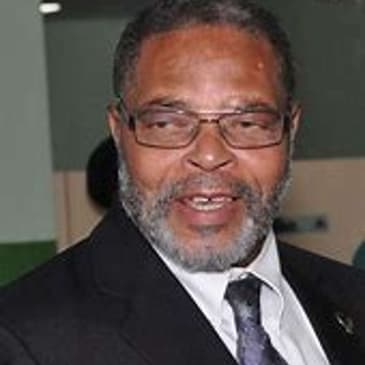
Get ready to be inspired as we sit down with social justice champion and community advocate, Kingsley Gilliam. Episode one takes us on a journey through Kingsley's incredible work in a crisis-stricken town, where he single-handedly rebuilt services and brought healing to the Ross River Indian Band. Guided by his faith and strong sense of identity, Kingsley faced head-on issues of violence, neglect, and abuse, helping the band reclaim their culture and empowering them to confront their challenges. His story is a testament to the transformative power of education, mentorship, and purpose.
We turn our attention to Kingsley Gilliam's fascinating endeavour of creating positive movements. Gilliam graciously opens up about his commitment to social justice, the role his faith and identity play in his work, and his unique approach to working with the media sans heavy advertising. His insights not only inspire but enlighten, holding out the promise that every individual has the potential to effect positive change. We can't wait for you to hear Kingsley's extraordinary story and take away the invaluable lessons he has to offer.
The wealth of information from Mr Julian's stories led us to expand the podcast into two parts. We strongly suggest you watch part one in order to get the gist of the podcast. Here is a summary of part one. Kingsley's commitment to community service and social justice was guided by his grounding in biblical teachings and a strong sense of pride. He has been actively involved in various organizations advocating for social justice, mental health care reform and addressing disparities. Kingsley's story demonstrates the potential for individuals to make a positive impact to education, mentorship and a strong sense of purpose and identity. Join us now for the second installment of the creator of Pots's Rubents, with Kingsley Julian.
Kingsley Gilliam:They hired me and I went into that place and it was in total crisis. So the first thing I did was to get acquainted with the players around and so on, and dealing with the service.
Kingsley Gilliam:All I had there was a secretary, a lovely lady Raj forget her last name but, she was an Indian woman from Punjab who came to Canada to study medicine, had her first degree from there and to come to Canada to go into medical school. But the people that then knew were in Faro, yukon, working in the mines, and so she got there and ended up getting married there, and so she worked as a secretary in there and she, we worked together and so on and built a rebuild services to the area. But what I did there was this dispute, as I said, between the management and labour, and the community was divided into segments, different people who only communicated with certain people, the people who were in the management of the mine and those in bargaining unit did not communicate, and so on, and this type of thing. So what I did? I recognised the gravity of the situation and I brought in a consultant from Edmonton, a colleague of mine from Canadian Mental Health. He was a director, but he was also a manager of social work at Alberta Hospital, edmonton. He had an MSW degree and MA in psychology, and so I brought him in and we both ran a one week workshop on crisis intervention. I handpicked the people from various segments of the community so that every element of the community would be represented in this training Because I knew that, as things develop, more and more people are going to be in crisis and they needed to have someone that they could interact with, that had the skills to assist them. And so I did that. That was the first thing, that the major thing that I did there.
Kingsley Gilliam:And then, while I did that, we ended up seeing the entire town closed down and only 50 of us left in town those who had independent housing, because all the housing was coming to the house. I saw people boarded up. When they tell you have to be out of your house by 12 o'clock, by 12 o'clock or one, the carpenters are there starting to cut and to board up to small board houses and if you are still in there, they start with you in there. And so we did. We worked through that situation and then six months later, in the middle of the winter, they reopened the town. A deal was made with another operator to come and operate mine.
Kingsley Gilliam:I was involved in that whole process to get government intervention and this type of thing which resulted in that. But this is how that part works. We got that and got that back going and then have to reopen this and to develop services as people came into town. We did that on that one front. But then the Ross River Indian Band. They had lost most of the. They had a hunting scale, the traditional hunting and gathering fields and that kind of stuff they had, but there was no ceremonial activity going on in.
Kingsley Gilliam:Ross River. So I observed that when I went there and I tried to work with them and it took six months before the band would sit down for a meeting with me officially they had a social service worker and that was who I interfaced with.
Kingsley Gilliam:They had an alcohol worker and I interfaced with that person. She didn't really want to do much with us but that was the counter. But then after six months I was able to get the band council and management to sit down with and we're talking, and then they wanted me to tell them what I thought of their community. And I told them that I come from Jamaica. I live in Southern Canada. I'm going back down there to live.
Kingsley Gilliam:I'm not here permanently. What I think of your community is not important. What you think of it is what's important and what you think of it.
Kingsley Gilliam:I can assist you to address. But I've never been driven out of town and I won't be. And after I worked with them, it was interesting when they started working on some of the issues and they talk about the violence. Most people in Ross River had scars from violent encounters. Some say it's the drinking, some say it is the child, neglect and abuse and all this and I'm listening and I'm prodding them to anything else.
Kingsley Gilliam:And then an elder lady named Dorothy Smith. She came up and she said, oh, it's the cultural breakdown. And I zeroed in on that. What do you mean by that? And she said we lost our culture because Ross River is a place where Indian affairs could take your land and they sell off the land. They can sell it to Indian people, they sell it to private, to white people, and so on. So Ross River there's a road running right through Ross River and the band is on one side and the other side of the road the better part of the land was taken by Indian affairs and subdivided and sold to private white people. So we were there dealing with and they have all these problems and so on. So all the infrastructure, the school, the police and everything else is on that white.
Rita Burke:So what a story you have to tell Kingsley Gilliam, what a wonderful story of not only living in Ontario but living across this country. Based on what you're telling us, I see you as fair less. I see you as a forever learner. I see you as a community builder. And, on behalf of Speak Up International, thank you, thank you, thank you, thank you so much.
Kingsley Gilliam:Thank you. And just one last word. When we were talking about the award, I didn't get to that one, but when I was leaving Ross River they had a resed the band council had a reception for me and they presented me with a pair of handmade moccasins and they said now that you have walked with us, you can wear our moccasins.
Rita Burke:Oh, that is special. Yeah, it's so special.
Kingsley Gilliam:And I was able to do that because I did native studies at Laurentian University and interacted with native people from all over North America, and so that prepared me for those challenges.
Rita Burke:Thank you so much.
Kingsley Gilliam:It's been a pleasure.
Rita Burke:Elton, are you still with us?
Elton Brown:Yes, I am right here, Kinsley. Thank you so much for your stories. Your life story is absolutely amazing. I found it to be fascinating and we want to have you. As I said before, we want to have you back because we know that there are many stories that you were not able to impart. Today, I am offering an invitation to you to come back to us and give us more of your motivating stories to help individuals to become inspired and enlightened.
Kingsley Gilliam:Thank you very much. It's been my pleasure and anytime at your invitation.
Rita Burke:Usually what we say to people is if you want to join us again, this time the onus is on you.
Kingsley Gilliam:Oh.
Rita Burke:Get into it with us Get into it with us. Tell us when and we'll have you back.
Kingsley Gilliam:I'll return. I don't like that onus. I don't.
Rita Burke:You don't sound to me as if you were ever afraid of anybody or anything.
Kingsley Gilliam:No, no, but I'm a person who I generally do what I do as I see fit. I do a lot of media work, but I've never I'm out. There is when I'm doing something that media gets attention of what I'm doing and not to. But I don't really market my wares as much.
Rita Burke:You mean, you're humble?
Kingsley Gilliam:I don't know how you describe it, but if you were where you shed your land, you give it some thought, and when you want to do it you just tell me. Give me some notice, I'll work with that.
Rita Burke:Thank you.
Elton Brown:Thank you so much and, yes, we do have an idea when we are going to invite you back, kingsley, and thank you, thank you, thank you so much.
Kingsley Gilliam:Okay, thank you, it's been a pleasure.
Elton Brown:Thank you for listening to Speak Up Exclamation Point International. This ends the second installment of Speak Up Exclamation Point International's podcast titled Creator of Positive Movements, featuring the noteworthy Kingsley Gilliam. If you would like to contact Kingsley Gilliam, kindly provide your name and email address and send it to info at speakuppodcastca. Please stay in your email that you wish to contact Mr Kingsley Gilliam. Would you like to be interviewed by Speak Up Exclamation Point International? Please drop us a message containing your name, company name, the service you provide to your community, and email address to info at speakuppodcastca. You can reach us by using Facebook, twitter, linkedin, instagram to connect to our podcast, use Spotify or your favorite podcast platform and search for Speak Up Exclamation Point International.
Elton Brown:You can also find our podcast using our web address wwwspeakuppodcastca. Our logo has the woman with her finger pointing up, mouth open, speaking up. You can find part one and two of this podcast on Spotify or your favorite podcast platform and search for Speak Up Exclamation Point International. At Speak Up Exclamation Point International, we aim to inspire, to inform, to educate and enlighten.