
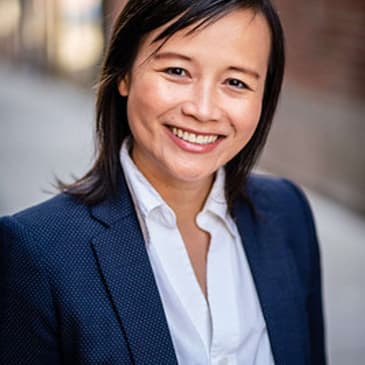
How does a South Vietnamese identity shape a career journey from academia to entrepreneurship? Join us for an enlightening conversation with Dr. Julie Pham PhD., a Vietnamese-born American and Cambridge-educated social scientist, as she shares her extraordinary path from South Vietnam to Seattle. We explore the profound impacts of her family's escape from communism, her undergraduate research on South Vietnamese veterans, and her unique entrepreneurial ventures. Dr. Pham also delves into her TEDx talk on curiosity and introduces her insightful book, "The Seven Forms of Respect," offering a fresh perspective on understanding multiple viewpoints in today's complex world.
Curiosity is more than a trait—it's a practice, and Dr. Pham exemplifies this through her various career pivots. Listen in as she shares how honing public speaking skills through feedback and Toastmasters has been instrumental in her journey from academia to business, tech, and beyond. Dr. Pham underscores the importance of embracing ambiguity, trusting oneself, and maintaining a learning mindset. She articulates how curiosity drives both personal and professional growth, leading to her unique approach of respect through curiosity, which encourages embracing multiple truths and perspectives for richer storytelling and deeper inclusion.
Storytelling is a powerful tool, and Dr. Pham masterfully intertwines writing and speaking to create dynamic narratives that foster inclusion and understanding. In this episode, we discuss intercultural communication, the sensitivity of language, and the role of intention in fostering an inclusive environment. Dr. Pham's journey offers valuable insights for aspiring authors and researchers, emphasizing the significance of setting one's own terms and the benefits of self-publishing. Through personal anecdotes and reflections, she provides listeners with actionable advice on building self-confidence and navigating cultural sensitivities, all while highlighting the essence of curiosity and respect in communication.
Connection information for Dr. Pham:
Website: https://curiositybased.com/
Facebook: https://www.facebook.com/curiositybased
LinkedIn: https://www.linkedin.com/company/curiositybased
Instagram: https://www.instagram.com/curiositybased/
Twitter: https://twitter.com/curiositybased
Welcome to Speak Up International with Rita Burke and Elton Brown.
Speaker 2:On Speak Up International. We circle the globe, Hence our name Speak Up International. We circle the globe, Hence our name Speak Up International. And today we're focusing on a person who is in Seattle. Her name is Julie Pham. Julie is a Vietnamese-born American and a Cambridge-educated social scientist. Born American and a Cambridge-educated social scientist, she's also an organizational development leader and an expert on respect. In Julie's bio, she asserts that she is capable of telling stories concisely and she's willing to admit when she is wrong. So there's so much more that I want to say about Julie today. But, as we say on Speak Up International, we prefer if our guests tell their own stories, and so today I welcome you, Julie Pham, to Speak Up International.
Speaker 3:Elton Rita, thank you so much for inviting me onto your podcast. I'm looking forward to this conversation.
Speaker 1:Me too. In fact, both of us are definitely looking forward to having a conversation with you. Thank you so much, Rita, for providing us with a comprehensive introduction for Ms Pham. Ms Pham, may I call you Julie?
Speaker 3:Yes.
Speaker 1:Perfect, now we can get comfortable. You are from South Vietnam, is that correct? Yes, yes. And how long have you been in Canada?
Speaker 3:Oh, in Seattle, in Seattle. So yes, so I was born in Vietnam in 1979, well, 1978, but we came over in 1979. I was a two-month-old boat person with my parents and and I like to now say south vietnam to emphasize that there is that the we came as political refugees. I think a lot of times people think of of vietnamese refugees as, oh, they're coming for economic reasons to pursue the american dream. Yet Yet when I say South Vietnam, it means that our country actually lost to North Vietnam and so we came to escape communism. So that's a really important part of my identity. My parents founded the first privately owned Vietnamese newspaper in the Pacific Northwest, and growing up I think of my parents as hustlers among hustlers, and growing up I think of my parents as hustlers among hustlers and growing up in that community is really important to informing and influencing who I am today.
Speaker 2:Julie, you've written and spoken publicly for a long time. Please tell our listeners about some of your speaking topics. It would be wonderful to hear about that.
Speaker 3:Well, since I just talked about being South Vietnamese, I'll actually start with that. So my undergraduate research was a study of the South Vietnamese military perspective of the Vietnam War, so I interviewed 40 South Vietnamese veterans, and so one of the things I've done is actually to share that story. So, even though I wrote that in 2001, quite a while ago the the those stories are still are still present, and it's about these veterans wanting to reclaim their history. So the first time I participated in a speaker speakers bureau was actually to share that story, and I went around the state of Washington to talk about the South Vietnamese perspective.
Speaker 3:I've also just talked about my own entrepreneurial journey as well, having grown up with entrepreneurs and then starting actually starting my own business, and I actually ended up co-owning, buying and co-owning a half the newspaper with my younger brother as well, and we did that during the great recession. And nowadays, though, I spend a lot of time talking about curiosity as a practice. That's what I gave a TEDx talk on, and a lot of people think about curiosity as a trait, as something we either have or we don't have. I think of it as a practice, something we do and sometimes we don't want to do.
Speaker 3:And then I also like to talk about my book, the Seven Forms of Respect, particularly around what I call the rubber band rule of respect.
Speaker 1:I want to go back to what you told us earlier, julie and that was about coming from South Vietnam and communism that you were basically escaping from. Do you think that motivated you to become a storyteller?
Speaker 3:I think it motivated me first to become a historian and then from being a historian to become a storyteller. I think it motivated me first to become a historian and then from being a historian to become a storyteller, and historian and storyteller is they're intertwined. And I think that when I was in college, I remember studying the Vietnam War and thinking, oh well, where is my family story in this? And because they didn't talk about the South Vietnamese perspective, they talked about this war being between Vietnam and America, but Vietnam was de facto, north Vietnam the communists. And so then I started to talk to my dad and then he was just well, that's because we're the losers and that's why our story isn't told. And so he introduced me to many other veterans.
Speaker 3:And so how that relates to storytelling is that we all have so many different stories to tell and it's not about a right or wrong, and I think sometimes there's this idea that there has to be a winner or a loser, and I think that it's more interesting to to understand that there are just multiple truths. So I'm going to give you an example April 30th April 30th in the U? S is known as the fall of Saigon. In Vietnam it's known as liberation day, the day the North liberated the South from the puppet government and for South Vietnamese like refugees, like my family, it's called the day we lost our country. All three are true and I'm not debating which one is more true. They're all equally true. It just depends on your perspective. And that's the history. Me getting interested in history and seeing, wow, there are so many different stories then, that's what led me to being a storyteller.
Speaker 1:That sounds a lot like what's going on right now with Ukraine, where Russia is saying that they're liberating Ukraine, which, depending on which side of the fence you are on, determines your your perception and they're all true, it's all yeah absolutely, yeah, yeah, yeah, freedom sorry perspective, perspective, perspective isn't that interesting, and you have to be open-minded enough to see that they're all true.
Speaker 2:You have to be open-minded enough and broad-minded enough. Now you've talked a lot about this word that I see as a very ordinary, regular word, but you have put some weight and meaning to it, this thing called respect. Talk to us about the seven forms of respect, please.
Speaker 3:So we can agree on what respect feels like to feel seen, heard, acknowledged, appreciated. What we disagree about is what does respect look like? What does it look like? Does it look like, oh, I'm going to CC you on all the emails, or I'm going to only include you on emails that you need to respond to? It doesn't mean I need to follow your instructions the way that you sent them to me, or is it just about getting the outcome and it doesn't matter how I do it?
Speaker 3:And so a lot of the times we talk about respect as if we mean the same thing. So, rita, you and I could say, I could say, rita, I need you to respect me, and you say, julie, I am respecting you. And we go back and forth. And what we're not realizing and recognizing is maybe we mean different things by that. And I'll actually tie this to my upbringing, how that influenced how I look at these, like you said, these simple words, these plain words, and yet they actually have a lot of different meaning. When I was an academic, I loved jargon, I loved big, fancy words. And then, once I came back to Seattle to help run my family's newspaper and I started working alongside my parents and I really started to appreciate, because growing up, I didn't speak Vietnamese. I only learned how to speak Vietnamese as an adult. I learned the beauty of plain language and how we can actually have so many different, different ideas of what this one thing means, just like what I said with April 30th. And so, just like with respect. And so the point is, how do we get into and have the conversation and because, and how do we move it away from disrespect versus respect? Because that's the conversation now, right, I need you to respect me. That's a lack, that's disrespectful, and I think of it as lack of respect in the forms that matter to me. Is it disrespect or is it lack of respect in the forms that matter to me? And because maybe that person just didn't know, or maybe they were doing the golden rule, they were treating you the way they wanted to be treated, right, or maybe you said it was okay. So many times, for example, maybe they keep being late to meetings and you kept saying it's okay that you're late and so they think it's okay, right, and so, in any case, uh, with with respect, the idea is that it's for us to have conversations around it. What does it mean to you and this is what it means to me, and why? Because we have going back to your theme of storytelling. People remember stories. They're not going to just remember, be punctual or follow the rules, right, it's just.
Speaker 3:I can tell you all these different stories around why this matters to me. Can I tell you why punctuality matters to me? Little story here Growing up, my mom was always late picking me up from school and I felt a lot of anxiety, right, because I had to wait. The school staff had to wait with me. They could not go home until I went home. So there I am, looking out at the parking lot Is that my mom? Is that my mom? I felt so much anxiety and I still have that anxiety.
Speaker 3:And so that's why punctuality is important to me, because I'm thinking about how it affects other people, and so if I didn't tell you that, you might just think, oh, julie's being rigid. But now that I tell you that, you understand what I actually feel. And that requires me to know why. Because a lot of times when we I talk to people about what does respect mean to you? They have to really dig in to understand their own stories, because they have actually a lot of times they haven't even. They haven't even named it or recognize it for themselves.
Speaker 1:I agree with you, julie, just by what you painted on your canvas, where you talked about the importance of words and how not using the right words could be looked at as disrespectful. Okay, I use, you know, $50 words, but you know, if the people that are buying the newspaper doesn't understand what it is that I'm trying to convey, well, I guess that means that I'm being disrespectful. And now how does that feel? So there's a combination of respect, disrespect feelings, disrespect feelings. How is it being communicated? It can become very, very complicated depending on if you buy the paper, if you buy that newspaper or not. So I can see how your parents were very cautious about the words that they were using so that they would not appear to be disrespectful. You talked about your public speaking and the differences that you have that you've noticed in engaging with audiences. Tell us a little bit about that, please.
Speaker 3:I always think of public speaking as a service for the audience. So I'm constantly thinking about how do I engage the audience, and so I do a lot of facilitation, a lot of workshop development. So my public speaking tends to be interactive, even when I'm giving a keynote speech. I actually just recently gave a keynote speech and someone said that was the first time I had an interactive keynote speech right, where I get people to get up and talk to one another and to think deeply, even if it's, even if I don't have a chance to get them to talk to one another, at least to probe some questions that make them really think.
Speaker 3:And so that's, and I always think about the particular audience and what story am I going to tell that's going to be relevant to them, which sometimes requires me then to write a whole new speech. I mean, I'll tell you, recently I spoke to an audience that was so different from the one I normally speak to. It's the Seroptimist, it's a community service organization of women, mostly white, mostly average age 65. I'm usually talking to organizations and businesses, and so I then told the story about what respect has to do with community service and how I learned so much from my community service. So I think that in giving public talks I constantly think about the audience.
Speaker 2:But also Julie. I have read research several times that says that people are petrified of public speaking. Now, how did you hone those skills? Where did you learn to become an effective public speaker?
Speaker 3:Oh, it was practice, practice, practice. So I did say first is debate. In high school I did debate and then I would just ask people to practice with me and to listen to me, because I'm actually very much about feedback. I actually did do Toastmasters for a little bit as well, and what I love about Toastmasters is that spirit of feedback. And so even when I did my TEDx talk, I had 70 people over the course of two and a half months listen to different variations.
Speaker 3:I had these public rehearsals and it wasn't just one time, it was constantly evolving, because I my philosophy is I'm going to give that talk and I want to know what I need to improve before I give the talk. So, and I want to know how it lands, and it's so fascinating how different people hear different things, and that's what I'm looking for in feedback. So I'll just give you a quick example my TEDx talk. I refer to someone who I use an initial, and in my original one I use the initial M, and then I got feedback. Oh, I don't like an initial, it's kind of distracting, can you just use a name? But I didn't want to use a name because then you can say a lot by choosing what kind of name and so. But I understood that person's critique so I ended up using a letter that could be a name. It was K. K could be a name or could be an initial, and I let the audience think about it. But just with that small piece of feedback it helped me improve the talk.
Speaker 1:Well, I guess this is the time for a Toastmaster commercial. Rita and I have been Toastmasters for years and we'll leave it. We'll leave it like that. So I noticed as soon as you said the word Toastmasters, I saw Rita kind of chuckle. So yes, rita and I both understand and know the power of Toastmasters and the power of getting instant feedback after you've given a presentation.
Speaker 3:It's a phenomenal organization and I love the learning mindset, the growth mindset of the people and so much diversity too. That's what really impressed me. It's just people from all over.
Speaker 1:I think that's what makes it powerful, because you have all of these different backgrounds all zeroing in on your presentation, and so it can't help but take your presentation and lift it to a higher level.
Speaker 3:And am I nervous? I'm always nervous. I always feel I think I going on just before, and someone told me being nervous means you care, and so I just remember that being nervous means I care, and and then, once I'm on, it's just well, I'm just doing the best that I can.
Speaker 1:There you go. So how can individuals and organizations navigate career pivots successfully? Based on your experiences and observations. Based on your experiences and observations.
Speaker 3:So I think that there's the trusting ourselves trusting ourselves that things will, that things will work out and also just embracing ambiguity, because career pivots and changes are, they're going to happen, and then it really depends on how we react to it. So I, when I made my first big pivot actually when I was finishing up my dissertation and I realized I didn't want to stay in academia anymore and I felt this calling to do business, and and so my parents have this newspaper and so I decided to come back to Seattle during the Great Recession 2008 to help run the newspaper. And so that was big going from being an academic ivory tower to doing community building in an ethnic newspaper when newspapers are dying right, that was a really big pivot. And then going from there and working at the newspaper for three years learning how to do business a lot of that was just volunteering and then uh, and then I went from the newspaper to tech.
Speaker 3:That was another big pivot, and and I think that the embracing, knowing I trusted myself that I could learn it's like I I don't know this. I know I can learn it though. And then so I spent nine years in tech. And then, uh, and then I felt another calling and that was to start my own company, and so I decided to answer that calling. I felt really compelled to to leave the best job I ever had. It was a wonderful job to start my own company in the middle of the, in the middle of the pandemic, and and that's curiosity-based and I've been having so much fun ever since.
Speaker 2:Truly amazing. Today we're having a conversation with Dr Julie Pham, who's a social scientist and a storyteller, and she spends time talking and sharing information about the word respect. It no longer is just a word, it's a phenomena to Dr Julie Pham. But the other word that I'm curious about, dr Pham, is curiosity. So tell me about curiosity and what it means for you and to you.
Speaker 3:Well, so, actually, the essence of my work is all around curiosity, so even when I think about respect, it's from this place of curiosity, one of the things, since we're talking about public speaking too. When I start a workshop or a speech, I like to ask people we do this with, actually with, with the both of you raise your hand. If you think you know how to be respectful, just raise your hand. Yeah, I don't think you know how to be respectful. I don't think you know how to be respectful. I know you know how to be respectful. I don't think you know how to be respectful. I know you know how to be respectful. And so this isn't about teaching you how to be respectful. It's actually about learning how respect, how to be curious about respect.
Speaker 3:And so, going back to that, the curiosity part is, instead of saying this is, this is right or this is wrong, it's just oh, curiosity allows us to have lots of different answers and lots of different truths, and and then there are also times, though, that I don't want to be open to a different truth.
Speaker 3:I don't want to be open to a different answer because I know the answer Right, and and so that's why I think of curiosity as a practice, because there are times where I'm just not ready to be open, maybe because I'm feeling confused or hurt or defensive or just something is going on in me. I've been hurt too many times to try to be open again right now. And so, thinking about curiosity as a practice, it allows us to have emotions in that, so that it's not just this intellectual pursuit. And a lot of times, people, when we talk about curiosity, we think about it as outward I'm going to go learn something new and I think of curiosity as both inward and outward. I had to learn about myself and about other people. So there's that self-awareness, relationship building and clear communication.
Speaker 1:It sounds a lot with having being curious also means that there is a degree of vulnerability, and I think that's one reason why some people may not be open to it. Which goes back for me when I think of Toastmasters and I give a presentation, I've really spent some time on it and I think it's really good, and then I give it and then all of a sudden, here comes the positive suggestions that they feel are going to make it better. Well, at that point I'm and sometimes I don't want to be vulnerable. Therefore, I don't want to hear someone else's perspectives on my story or my speech, however you want to word that. So how do you get individuals to a point where they do not shut down? Because you need them to be vulnerable too to a certain degree Maybe not as vulnerable as you because you're the speaker, but you do need some. You need a little bit of it, little bit of it, and so how do you get individuals to not turn off, not remain vulnerable to your personal story or the story that you're presenting?
Speaker 3:So, first is, when I say, share a personal story, it doesn't. Sometimes personal stories are still work related, because that's a big question I get oh well, do I have to talk about my family? No, if you have a story that makes that feels sensitive for you, or that there's an area for you to grow, and it's about work I mean, I could talk about many stories of feeling hurt at work it doesn't have to just be so. That's one part. It's just in terms of vulnerability. I think the biggest thing, though, is to pause.
Speaker 3:I think in our our day, to our world today, there's such an expectation go, go, go, react, react, react.
Speaker 3:And instead I just invite people hey, I'm going to ask a question, and I actually do this in even in keynotes.
Speaker 3:I want you to take a couple of minutes to think about this, and that time for self-reflection is something that people don't give themselves, and so which is why I actually put in that time, especially when I'm talking about a longer keynote I put in that time or just pause, think about this and have that answer clear for me, because if I don't have that answer clear in my mind, or at least I'm starting to think about it how can I possibly expect someone else to know?
Speaker 3:Because that's usually what's happening. I expect someone else to just know what I'm feeling, but I don't even know how I'm feeling yet, I haven't named it yet. So just to spend a little bit of practicing inward curiosity, hey, what am I feeling? Because maybe what I might say is I'm feeling angry, and yet, if I really get to it, I'm feeling embarrassed, or I'm feeling ashamed, right, and so that first feeling might feel look like anger, but it's actually something else. So, um, in terms of the invitation for vulnerability, pause, give people time, model it and also let people know that whatever you share is your story. It doesn't have to be talking about your childhood trauma.
Speaker 1:So what do you do if you don't know the answer Is this when you turn your presentation into something that's interactive, to find out the audiences, maybe they have the answer. I don't know.
Speaker 3:Oh, yes, I mean so sometimes in Q&A and I get asked a question and I don't know, I've learned to say I don't know.
Speaker 3:That's a good question, let me think about that, and then I can actually model that pausing. And because what I don't want, what I've learned, is I don't want people to have to sit through me rambling my way to an answer, so it's much better to say I don't know, and and also to say, like we, sometimes we don't know the answer until we have a conversation about it, because some people are more verbal processors, right? So we can start with hmm, this is what I think. Let me share with you what I think. And then, and so, because in the, when I do workshops and even keynotes that are allowed to be interactive, then I turn to someone and talk about it and then, through that sharing, oftentimes if someone doesn't have a story yet, but they hear someone else's story, oh, I do have a story. It's similar to that, or it's opposite of that, or it's just sparking something else in me. And that's the second part of practicing curiosity, the relationship building, that reciprocity, that back and forth prosody that back and forth.
Speaker 2:So, dr Julie Pham, based on what I'm hearing, simply saying and admitting to not knowing, is demonstrating respect. Simply saying if you want to take a few minutes to talk about this is respectful of people that are listening to you. So I see where you're going with this. I am beginning to understand Now what does the statement you've been putting into words, things that I've been feeling. How is that significant for you?
Speaker 3:Mm-hmm. So I am actually a writer first and a speaker second. My preferred mode of storytelling is to write and then. But I know that speaking is just a way to communicate that writing, and so in the writing I'll write out something that I'm feeling. That's just hard.
Speaker 3:And I'll give you an example of when I was talking about passiveness. This is a lot of people said that I talked about hey, I'm passive too, right, we talk about, oh, don't be passive, or other people are passive and yeah, it's just like. No, what are the parts of me that are passive? When am I passive? And I talked about that. And I talked about the different kinds of passiveness the way, the times we, we, we deflect, or the times where we don't say something that we, that are our true opinion, or the times when we complain about something or about someone to someone else. Right, we talk behind their backs.
Speaker 3:I've done all of those things and I remember when I wrote that article, people were just oh, you put into words how I feel and what I do, because we can just say passiveness, well, what does that mean? Right. And then from there, I then from there, I'll often take it into a speech and I think that actually what then happens is my speaking and makes my writing better. So then I go back to the writing and then I change that, or it kind of has this back and forth and when I'm writing to speak, that it actually really helps me communicate in a way that is about holding someone's attention.
Speaker 1:So you feel that writing first and then speaking is that your normal way of preparing a speech, as opposed to flipping it and speaking first and then writing down basically what you've said Mm-hmm, All right. And so this also entwines with feelings, as you said earlier. So you have the writer and then you the speaker, and then you're having to deal with your personal stories and feelings. So there is a balancing act that has to happen in order for this system to be successful. What is it?
Speaker 3:I like to think about. Well, you said successful. So this is, elton when I think about success, I think about it in terms of what does success look like and what does it feel like? And this is because a few years ago, before I started my business, a friend asked me hey, what does success look like to you? And I really struggled with that question, and and I realized I was struggling, even though I had asked that question numerous times, even though I'd answered that question numerous times. But at that point I was really struggling and I realized it's because when we talk, we often talk about what does success look like, but we don't talk about what does success feel like. And so then I started to think about them separately.
Speaker 3:So looks like it's something that's tangible, it's measurable, or it's an event right, like I'm going to run a marathon. That's an event. What does it feel like? Feels like fun, feels connected. I realized for me, when I started my business, what I wanted to feel was freedom. And so then, how to find alignment between what it looks like and what it feels like because that's it's not about looks like is more important or feels like is more important.
Speaker 3:I think that in a lot of times when people are communicating, they intuitively when they hear the word what does success mean to you, or what does success look like. They're either thinking in terms of feelings or something that's measurable, tangible, and people don't recognize that we are actually describing it differently and both ways of describing it are important. So, kind of going back to Elton, your question about the great, the grander system, is to appreciate. We communicate in different ways and both are. These different ways are important and it's about seeking alignment, because if I am making tons of money and I feel burnt out, then I am not successful, right. And um and I and I. If I am struggling to pay my bills but I'm having so much fun, then I'm also not successful, right. So it's actually about getting alignment and saying like, okay, if it's here, what do I need to do over here? Because maybe I just need to adjust some of the things I'm doing so that I can feel success in terms of feeling it, of what it looks like and what it feels like.
Speaker 2:It seems to me as if today's conversation is revolving or being framed around specific words and I think that's for me amazing and magnificent Words such as success, respect, curiosity. So why don't we keep along those lines and talk about inclusion? What does inclusion mean for you? And talk about inclusion. What does inclusion mean for you?
Speaker 3:So there's inclusion, and then there's belonging, and there's this new concept I just learned called mattering, and so the inclusion. I think those are the policies, what we do to help people feel included, and the way that I think of that is actually I call it curiosity-based inclusion, and so that it's coming from a place of, of encouraging curiosity. Uh, and so what that means is listening to one another and asking questions and feeling free to ask questions. I find nowadays people are afraid to ask questions. 70% of people say that they are afraid of asking questions or feel that there are barriers to asking questions at work, and there I've actually done an article like eight reasons on why that is could feel they're afraid of looking like they don't know, they're afraid of wasting time, afraid of, um, seeming passive. All these reasons, um so, but in any case, in terms of inclusion, that's the way I think of it as a how do we do it? From a place of curiosity and encouraging curiosity with one another, and that we can, people can ask questions, and if someone doesn't want to answer, just saying like, or they can say can I understand your question better, or I don't, I need some time to think about it, or I just don't feel comfortable asking that question Because what I see right now is people say, oh, I can't believe you asked that question, and you know what that does.
Speaker 3:Then people think, oh, I can never ask that question. So I'll give you an example of the question of where are you from. For a lot of Asian Americans they don't like that question because it's like, oh, you're othering me. For me I'm fine with that question, and how it lands is going to be different for different people. So I've had friends who say never ask an Asian American that question. But that means that you assume every Asian American feels that way and they don't. We feel differently. Going to belonging is that sense of feeling accepted in a group, and so we need to have inclusion, to have belonging. And then the last one and I just learned this is to matter, the sense of feeling like we matter at work or anywhere, that we're valued and that we will be missed if we are not there there.
Speaker 1:Well, you know, I think when I think of inclusion, I guess that's the word we seem to be using right now. It is again. We are looking at the perspectives of many people in terms of what is their definition of inclusion and how do they feel about using that word or interacting with people using that word. And we're all trying to reach a specific goal for our people. And when I say our people, I mean, if you happen to be Black, your people. When you're Brown, you're Asian, your people. So now you have to deal with all of these bubbles now competing, trying to get the prize, and that can be very, very difficult and that also slows down progress because you have all of these bubbles. So how do we get Black, brown, asian it really doesn't matter Black brown, asian, it really doesn't matter Everybody talking so that we are able to be included and or change policies so that we're able to be included.
Speaker 3:So I'll speak to two things there. One is that we belong to multiple cultures, communities and identities at the same time. So I'm Vietnamese, I'm also Asian, I'm also American, I'm also a generation Xer, I'm also a first born right. I grew up in the Pacific Northwest, I lived. I'm a global citizen because I've lived in five different countries. I'm all of those things at the same time. And I think what we need to accept is, if I am, that means other people are too, and sometimes we're only looking at one aspect of our identity and and maybe that part of me is really important, and so I expect everyone else that's equally important to everyone else. And when I say we belong to multiple communities, cultures and identities at the same time, that means that different parts of who we are are going to influence us in different ways in different times of the day, even the way I think about respect. Maybe there are times where my Vietnamese self is really high, and maybe there are times where I'm really bossy because I'm an oldest child, right, and that's just the way it is, and so that's just the way it is, and so, um. So that's, that's one part. The other thing I'll say about inclusion is that.
Speaker 3:I think that, to simplify things, people have tried to put things into boxes like oh, what race are you, what gender are you? And what I've learned in my work is that if you don't tell people what box to check off, they will tell you what's important to them and we will learn from them, and I've done. When I ask, I like to ask people who and what in your life have influenced how you think about respect, and I remember one of our clients thought it would be. They asked this question to their, to their workforce, and they were so surprised what they got because they expected to hear their employees talk about their social identity, like their race, their gender. Instead, they talked about their work function.
Speaker 3:Being a plumber is really important to me, and that includes how I think about respect. Being in customer service is really important to me, and so I think it's also allowing people to share what's important to them and to understand when are the boxes important to have and when are they not. Because I'll just say, with the US census, for example, the US census is constantly changing the categories and that's because those are tied to different policies, right? And so you actually need to have certain boxes because that will relate to how we fund health care and other things and that can change. So it's in that case. It's don't. It's not about have all the fill in the blank, because in that case boxes are important and the boxes can change too boxes, indeed, are important.
Speaker 2:There's no question about that, and my firm belief is that people should have a right to place themselves into whichever box they feel they belong, so that they could belong. But others do not have the right to put people into their boxes, and I think that tends to be, I wouldn't say, modern day way of doing things. But we have to be mindful and aware that we're not putting people into the boxes. They have a right to go into those boxes themselves. And my next question to you, dr Pham, is at what point did you realize that your parent or parents were referred to as boat?
Speaker 3:people. So being a boat people is something that growing up we called ourselves boat people and so boat people for us is not a derogatory term. It's derogatory when you use it to be derogatory, right. And yet for so, for Vietnamese refugees, we often ask how did you come here? When did you come here? Did you come here through humanitarian operation? Did you come here by boat? Did you come here in 75 by the helicopter? It's, it's just a how did it's a?
Speaker 3:It's a way of understanding one another, and to be boat people is actually to be courageous. There's a lot of risk and I remember, and I remember there's a lot of risk, and I remember, and I remember there's a poem by Warshon Shire. She's a Smalley British and she writes no one puts their child on a boat unless the water is safer than the land, profound, right, and so that, I think, really speaks to the courage. And so I, we, uh, growing up it was, it was probably.
Speaker 3:I heard it in Vietnamese before I heard it in English and people can say, oh, you're boat people and like that never offended me because yeah, I am Right and so, and this is, this is where we make the meeting of words like individuals. Each individual has to decide. And some people might say I mean, I've talked to other Vietnamese who said I didn't grow up, my parents didn't teach me that, they didn't give me that sense of pride. My parents gave me a huge sense of pride. Being a refugee is a positive thing and I know that for other people they didn't get that people.
Speaker 1:They didn't get that, you know. That goes right back to what you were saying earlier about where people come from, what they receive from their parents. Also, the outside influences also determines how an individual is molded, and so then it's all about being self-aware. And I just wanna tap into Rita's database, when she always talks a lot about Maya Angelou and I know that there is one reference where she talks about feelings it's not about if they remember the speech, it's about what they feel at the end. So that is the essence of communication. It's about how do you feel when the ball drops, as it were. So I do get that.
Speaker 1:Now, drawing the line. I think this is where a lot of people may have a problem in drawing the line, and I'm saying that in terms of OK, this is the line where I'm uncomfortable. If you cross, if you happen to call me a boat person Now for you, you don't have a problem with that. Someone else may have a definite problem with that. So how do you determine when and if you should use those types of terminology? How do you I don't want to say skirt, but to be able to have a level of discernment.
Speaker 3:So we will never avoid making mistakes. We will never. We will, we'll never avoid accidentally using the wrong, wrong word, because it totally depends on that. Using the wrong, wrong word, because it totally depends on that. That person's, the person who I'm talking to, and their whole experiences, and so it's um. So I think that that's unavoidable and I think it's more about we can even ask questions. Hey, I heard the term boat person. What does that mean? What does that mean to you? Um, so there's, there's, I think that someone I remember giving a workshop once and someone said at the end you taught us how to ask questions, but I want to know how to answer questions.
Speaker 3:And I said that's the problem of leadership, right, like there's no right answer or wrong answer, and so it's just, and I'm also really wary of censoring myself, because it's like, if I don't because relationship building takes risk and and being vulnerable, and sometimes I'm going to say the wrong thing and hopefully that person will I'll see a reaction in their face and then I can follow up, or something like that. Um, and then, and, and yeah, so I'll, I'll just say that there's no way of ever, of ever, avoiding that, because the line is different. You say Elton, you say crossing the line. The line is different for everyone. I mean even the word Oriental.
Speaker 3:In the UK they use the word Oriental. In the U? S never use the word Oriental. That's only referred to as rugs and vases and things like that. But it just depends on the context and we have to be aware of that. Like that, people don't intend to use that. Just sometimes our own upbringing, for I'll give you another example In the US I actually find this a lot with African-Americans. They'll say what's your nationality? And I know they mean ethnicity, I know they mean ethnicity because nationalities I mean I'm, I'm American. But what they're really asking me is what's my ethnicity right and why I'm not going to. Ah, it's just. Then it's a time to say, well, this is how I define the word.
Speaker 2:So that's, that's, that's a, that's a powerful, loaded, loaded statement, isn't it? Because you're quite correct. You're quite correct that people will make mistakes, but some of those mistakes are meant to hurt. But some of those mistakes are meant to hurt. You may not make that mistake with the intention of hurting someone else and making them feel like they're other, but some people I don't want to put a percentage on it Some people will do those things with the intention of harming or hurting people. So when we're raising our children, particularly people of African heritage, we have to be so, so careful to build their sense of who they are, because of those mean-spirited people and I'm not going to say many of them are, but some people are mean-spirited and I'm sure in your experience you've encountered some of those mean-spirited people. So it's important for us to teach our children how to value themselves, how to be confident in who they are and perhaps, when they're running to the people who can be mean-spirited, that they know how to manage that.
Speaker 3:And I think there's a difference between being mean-spirited and just not knowing, because if I don't know, then if I just don't know because I haven't had exposure, then that's different from I know, and I'm saying it anyway, and that's the thing I think with disrespect. Disrespect is, rita, I know you don't like it and I did it anyway. That's disrespect. But lack of respect is I didn't know. I didn't know that mattered to you. Let's talk about it. I didn't know that mattered.
Speaker 2:Indeed, indeed. Let's talk about it. And there is where respect covers everything or is intertwined into every discussion and conversation.
Speaker 3:Let's begin this conversation with the notion that we will respect each other, that's where we begin, and I think it's actually going back to curiosity, that we want to learn from one another. And I have things to learn too, because I don't want to go into this thinking I know everything. I still have so much to learn.
Speaker 1:And I agree, I'm going to tell a little story here. I was at the cottage and this is here in Canada on the East Coast, and this is here in Canada on the East Coast, and I'm sitting there talking to this gentleman and he decides to tell me about his business, which is he has these small little cottages that he rents out that are on his property, and he said you know, I rent out my properties all the time the colors, and when he said that I almost came out, I almost came out of my skin, but I but as he was talking, he was so comfortable using those words, and he, you know, said oh yeah, and the colors are so nice and you know, they don't tear up anything. And he went on and on with this thing and and it was over. But I realized in the conversation that the man was ignorant, he, he just didn't realize that what he was saying was so devastatingly wrong.
Speaker 1:And it means that we individuals who are, I guess I want to say, self-aware, have to realize that there are people that will use certain terminology that can be triggering. And it's very important that we don't jump into the lion's den because you know they always warn you about that Never go and never fight the lion in the lion's den. Never fight the lion in the lion den. So it's a. I find it extremely important that everything that we talked about today is handled with sensitivity. If it isn't handled with sensitivity, regardless of what side of the fence that you're on, cultural differences and promoting inclusion, diversity, all of that just goes right out of the window because we have no sense of sensitized communication.
Speaker 3:Well, and you know, and Elton, what you just spoke to. Words change, vocabulary changes, right. So he used a word that probably when he was growing up and maybe no one ever told him and there's probably an opportunity to say hey, ashley, I prefer this. Are you referring to people like me, Ashley? I prefer this word because I just know, 10 years ago we used the in the US, we used the word minority, and then we used the word people of color, and now we use the word BIPOC, right, it changes so often and so how?
Speaker 3:And not everyone is in a place where they're learning the latest word, so we have to have race, because I don't always know the latest words. So if I don't know and they don't know, and how do we learn from one another? Because I bet that he would probably be really embarrassed if, if you, you know, and also probably grateful in terms of, in terms of teaching too, um, and I'll just say one thing there I think sometimes we focus too much on the right words, because I can imagine someone who is um, someone who uses all the precise the latest words but they don't, who uses all the precise the latest words, but they don't. They say I'm not going to, but in their policy they don't rent to. They don't rent to black and brown folks, right, but they say they use all the right words, but if you actually look at what they do, they don't. So it's about behavior.
Speaker 3:Yeah, I think it's about behavior, behavior, more than language and words. I think some people focus too much on oh they use all the right words, but look at what they do, and you might say like they maybe don't know all the right words, but look at what they do.
Speaker 2:Yeah, but I don't remember who it was that said don't tell me what you believe your behavior shows me. I think it might have been. I don't remember someone of the American authors. Don't tell me what you believe your behavior shows me. I think it might have been. I don't remember someone of the American artists. Don't tell me what you believe. I can see through your behavior, and so I want to shift a little bit and talk about your connection to Microsoft products.
Speaker 3:So, yeah, I worked at Microsoft for about a year and I helped represent an underrepresented minority it was the Windows phone users, I think. Back then we had about 1% market share and so, yeah, and I learned a lot. Actually, I learned a lot about communication in a big corporation that I went from working with eight people Half of them had the same last name as me to over 100000 people in a multinational company, and that was I learned so much about how to be respectful and how not to be.
Speaker 1:I'm wondering about something that we talked about a little earlier this afternoon, and that is what are the ways that we want our listeners to believe and benefit about rethinking inclusion and curiosity in their daily lives? How do we get them to churn? Because I think what happens is that as soon as you start mentioning those words, they just automatically go into their definition and they don't spend that time to look at the people that maybe are sitting right next to them in terms of how do they define it sitting right next to them, in terms of how do they define it. Because I think, if you open up, your definition will automatically be modified Maybe not much, but it will be modified because all of a sudden, you for A plethora of perspectives that are different than yours.
Speaker 1:And maybe there's a word I'm going back to words, what we've been doing all since this has been going on but there may be a word that you hear that may trigger a door to be open, that may trigger a door to be open, and have you ever found that just maybe using words in your presentation is enough to trigger individuals? And secondly, do you find, when you're giving presentations, maybe you have it all prepared, you've laid it all out and you realize, as you're talking to these individuals, this is not getting through to these people, or this perspective is not what they want to hear. How do you pivot to talking about things that are relatable to your audience?
Speaker 3:I think it's with stories, right, it's being a storyteller, and once I start telling a story about my mom or about an embarrassing time I had, then people can. That resonates with people, I think, when we just speak at that abstract layer, and that's why I talk about what does respect mean to you? What does it look like? What are examples in your life? Who and what influenced you? And once we're oh well, if you were influenced by your family, well, I was influenced by my family too, and then we can relate to one another. And, elton, what you were saying, we open ourselves up to our definitions changing just a little bit, right, or sometimes a big bit because of that back and forth. And something that I've learned in my research is that the idea because really what I'm saying is respect is relative, that's my work and that's radical. I have learned that respect is relative, that's my work and that's radical, I have learned that is radical People are like no, that is, you know, respect looks like this, and I always say, okay, there's illegal. So if something's illegal, that is just, that's not just disrespectful, that's just illegal, right, like, move that over there. But then there's actually a lot of things that are actually quite ambiguous and once we and you may feel like no, that is the true thing to do. Can I give you another example here? So I remember I, oh.
Speaker 3:In my research someone said oh, you know, growing up I realized the reason why I really like instructions and rules is because growing up my I, um, I translated for my parents. They spoke limited English and there were consequences to when the instructions weren't followed. And now at work people think I'm a micromanager because I'm so clear and specific in detail. But that's because of my background. And so she realized the story that informed hers and then people could understand where she was coming from. But she had to know that story for herself too. And so that's how we remember and relate to one another and are opened up to one another. Oh, I never would have imagined that was the reason. So, and so that kind of gets it like oh, it's relative.
Speaker 3:And the fact is, sometimes you know Elton, maybe Elton and Rita you do the same thing. You send me hey Julie, here are the reminders, and I I like Elton and I don't like Rita. Elton meant well, elton's trying to look out for me. Elton's like hey, julie, just heads up that Rita's being micromanaging. Why are you keep reminding me? You think I don't remember Right and that's because of this relationship I have with you. Right, I trust Elton, I don't trust Rita. In both cases, because a lot of people say good intent, good intent. I'm not saying good intent, I'm saying learn the intent. What is the intent? If you say good intent or bad intent, actually what happens is we dismiss it, we don't look into it, we're not curious about it. How do we get curious about the intention? Because oftentimes people don't even know their intention until we start to have a conversation with them.
Speaker 2:That's so accurate. That is so accurate because there's so many layers to intention. Yes, I agree with you People don't always know what their intentions are. Dr Phan, you are an award recipient. Tell us more about that, please.
Speaker 3:So I, when I started, when I started working in my family's newspaper, I started to do a lot of volunteering, and because we're here in a community newspaper, I get people get asked to volunteer a lot, and so I started to, and, because of my background, because I could do research, because I could write, I started to advocate on behalf of my community, and so, in this case, it was on behalf of ethnic media, on behalf of the small mom and pop mostly immigrant refugee people of color owned businesses down in the area I was in, and so I started to get recognized for that work, and so that's work I'm really proud of. I've won awards for my research. The awards I'm really proud of, though, are my community organizing awards.
Speaker 2:In a sense, then, you are a community builder, just the kind of people do we speak with and speak up international. Yes, yes.
Speaker 1:So what would you tell aspiring authors and researchers, based on your journey, in terms of when they want to now write and speak? Or maybe they just want to speak, or maybe they just want to speak, or maybe they just want to write combination of the two.
Speaker 3:So I I self-published, which means I set my own terms. I think a lot of aspiring authors, they think that they need to go through this, the traditional publishing route, and that they need to get an agent and then they need to go Um, and that usually means getting chosen by an agent and then getting chosen by a publishing house, and those are lots of gates, those are lots of obstacles and for me, I believe, set your own terms. You can. If you want to write and you want to publish, you can. You don't have to wait for anyone to give you permission. And a lot of people can feel super discouraged, even like as a speaker, right, she's like oh well, I wasn't. I got rejected numerous times by TEDx before I found a TEDx, so it's just about hey, maybe you got to create your own platform, because if you have a message you want to share with the world, you don't have to wait for someone to give you permission.
Speaker 3:I mean, my father actually really encouraged me to write, to self-publish my thesis on the South Vietnamese military perspective of the Vietnam War, and I did on Amazon, and then he wanted to have a party. I didn't want to have a party, he wanted to have a party. And I said, okay, 300 people came. I didn't want to have a party. He wanted to have a party and I said, okay, 300 people came. 300 people came, 75% of them were Vietnamese.
Speaker 3:And I realized then, as I was looking at the audience, the reason why I originally didn't want to have a party was because I thought this isn't a real book, because it's not published by a traditional publisher. And I realized when I saw so many people, how, if I had waited for a traditional publisher to say you are commercially viable, I would not. That would. My message wouldn't get out. And that message meant so much to the people there. And so that's why, the second time around, with my book Seven Forms of Respect, I self-published. So my Elton, long-winded way, with some stories embedded there set your own terms. Don't ask permission. You don't have to wait to prove that you're good enough to someone else.
Speaker 1:Well, I think Rita can give us many, many, many, many stories based on that, because she is a writer, she writes children's books. So her and her husband definitely know the importance of not waiting for approval from someone. But they go forward and they produce the books that they desire and wait for no one. So for that reason alone, I'm sure Rita's ears probably perked up higher than a German shepherd's, because book writing is her thing. Did you want to say anything about that, rita?
Speaker 2:It certainly is my thing, and I agree 200%, that in this world, in this life, we need not wait for permission from any person to move ahead with our agenda. So I congratulate you for doing that. But then you're a smart woman as well, a smart person, so I could see that you wouldn't wait for people's permission. So wonderful, Glad to hear that.
Speaker 3:Well, I had to learn that, though I didn't know that in the beginning I was just following what my dad wanted, and then I kind of realized the power of that.
Speaker 1:It's so funny how we learn from our parents and the things that we learn from our parents. Sometimes they go, you know, like wow, over our heads and then there's a situation that pops up and you can hear their voice behind you saying once again that very thing that we didn't catch on to. So I I want to thank you so much for uh, visiting us this afternoon and talking about the seven forms of respect and how to develop that framework and personal passiveness, and how to take your South Vietnamese perspective and on the Vietnam War and communist historian type information to helping individuals and using that to catapult you to being a communicator and not allowing your voice to be locked down, as it were. And your book writing and reframing understanding, I think, is really, really important and forever being curious before jumping so fast to conclusions. You know, ask questions, right or wrong, and, as you said, you know we're going to make mistakes.
Speaker 1:But if we don't allow ourselves forgiveness grace, allow ourselves forgiveness grace to ask these types of questions, it makes it difficult to promote being inclusive and providing or generating diverse environments. So I want to thank you so much this afternoon for being with us and, if you happen to or I shouldn't say if, when you write your next book or if you're doing a phenomenal presentation where you're scanning the globe, please let us know. We would definitely love to have an opportunity to talk to you again, and by then we will be totally video, and so maybe you could give us a couple of clips we could show our listeners you being in action. Thank you, thank you, thank you.
Speaker 2:Thank you. You certainly brought new meaning to the words respect and curiosity for me and I certainly appreciate that. Thank you so very much.
Speaker 3:Thank you so much, Alton. Thank you so much, Rita. I really enjoyed this conversation.
Speaker 1:Thank you for listening to Speak Up International. If you wish to contact Dr Julie Pham, please be prepared to submit your name, your email address and the reason why you wish to contact Dr Pham at http//curiositybasecom. Dr Pham has other social media accounts you can utilize to connect to Dr Pham, listed in the description section on Spotify and other platforms. Are you interested in the opportunity to be interviewed and have your cause promoted by SpeakUp International? We invite you to connect to us by sending a message that includes your name, company or organization, the valuable service you offer to your community and your email address to info at speakuppodcastca. Worried about your competence as an interviewee? Don't fret. Speak Up International can provide you with the necessary training so you shine during an interview. To receive training information and a 10% discount about the Speak Up Internationals podcast interviewing training program, email us at info at speakuppodcastca. You can also reach us using Facebook, instagram, twitter and LinkedIn To connect to our podcast. Use Spotify or your favorite podcast platform and search for Speak Up International. You can also find our podcast using our web address, wwwspeakuppodcastca. Our logo has the woman with her finger pointing up, mouth open, speaking up.
Speaker 1:By joining Patreon, we can offer you an exclusive opportunity to become an integral part of the continued success of our podcast. Your financial support will enable us to cover the costs associated with producing high-quality content, such as equipment upgrades, hosting fees and professional editing services. Every member of our Patreon group, you will gain access to a range of exciting benefits. We are working on providing you an early access to new episodes and the opportunity to suggest topics or guests for future episodes. Your contribution will not only help sustain the continuity of the podcast, but will also allow us to enhance the overall listening experience for all of our dedicated followers. Help us, help you. Wwwpatreoncom. Wwwpatreoncom. Wwwpatreoncom. Wwwpatreoncom. Wwwpatreoncom. Wwwpatreoncom. Wwwpatreoncom. Wwwpatreoncom. Wwwpatreoncom. Www. International. At Speak Up International, we aim to inspire, to inform and to educate.