
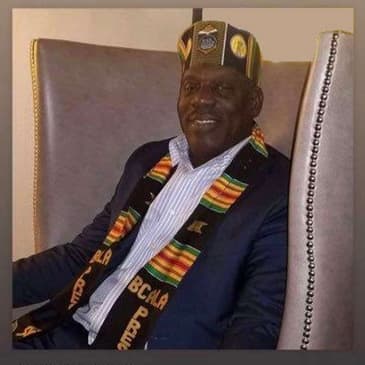
Richard E. Ashby Jr.’s sole mission through LiteracyNation is to promote justice, equity, and diversity in literacy by providing services to underserved communities of Color and supporting diverse independent booksellers and self-published authors.
Find out what great goals this organization has reached and the positive effect its hard work has on the people of Sharon Hall, Pennsylvania, USA.
Welcome to SpeakUP! International with Rita Burke and Elton Brown!
Rita Burke:Good morning to both of you. Good morning to Elton Brown and to Mr. Richard Ashby, Jr. now, while we were trying to learn a little bit about Mr. Richard Ashley Jr. He was talking to us about his past life and the career that he thought he would pursue. He was going to be a comedian because he rubbed shoulders with the likes of Eddie Murphy. Since you think you are good at giving jokes, why don't you entertain our audience for a few minutes with a joke, Mr. Richard Ashby.
Richard E. Ashby Jr.:Thank you Mr. Brown. Thank you Ms. Burke. That was a real setup he gave you there, Ms. Burke. So I'll give you a quick joke. There was a minister and he was in a hospital and he was dying and he looked up at his dear wife and he said, first lady, I need you to go get the chairman of the deacon board and the chairman of the trustees and bring them here by my side while I wait to go home in glory and the first lady said, husband dear one. Why would you want the chairman of the deacon board and the chairman of the trustees here at the hospital would you just before you go home to glory, you don't even like these fellas. And he said, first Lady, please be obedient. So as an obedient wife would do, she went out, she said to the deacon into the prestig the pastor is dying and he's getting ready to go home to glory and he wants you by his side and you need to hurry up cause he doesn't have long. And she left and the deacon and the trustee looked at each other and says, He don't even like us. Why would he want us by his side be before he go home the glory? And they said we have to go. because the first lady came in, this is what the pastor wants and when we have to be obedient. So they rushed to the hospital and the first lady let them in. When they got there, the pastor was laying in the bed, eyes closed, and the first lady said, pastor the deacon and the trustee are here to before you go home to glory and they're here to see you. And he said he tapped on the right hand side of the bed, he looked at the deacon. He said, you sit here. He tapped on the left side of the bed and he looked at the trustee and said, you sit here. And he just closed his eyes and he laid there. And finally the two men, they couldn't take it anymore, said, pastor, wow. Why do you wanna fear before you go on into glory? You don't even like us, and the pastor slowly opened his eyes and he said, that's easy. I want to die like Jesus died between two thieves.
Elton Brown:Oh, whoa.
Rita Burke:Absolutely. Perfect. That is absolutely perfect. I need to learn that one. That is perfect. Oh
Elton Brown:Hey, can I get an amen?
Rita Burke:Amen so as I told you, we aim, SpeakUP! International, we aim to inspire, to inform, to educate, and to elevate, and I think your job certainly elevated, but it also entertained us this morning.
Elton Brown:Oh yes.
Rita Burke:So to our audience, we have a librarian with us this morning, and I'll tell you a little bit about him. His name is Richard E. Ashby Jr. And he's the director of the Sharon Hill Public Library in Sharon Hill, Pennsylvania. He's the co-founder and director of LiteracyNation President, past President of New York, Black Librarian's Caucus. Past President, president of the Black Caucus of the American Library Association. Current president and co-founder of Pennsylvania, Black Librarian's Caucus Black Caucus Caucus. This Liberian 2014 Librarian of the Year, Liberian Journal. 2016 Mover and Shaker award recipient, he became a librarian in order to make a difference in the lives of everyone that he meets. But guess what? His mother is the person, his mother was his coach, his mother was his mentor. She is the one that brought him into this career. I want to hear a little bit about this woman who knew, who saw, who was a visionary and knew that you were supposed to become a librarian. Tell us a little bit about how she Influenced your life.
Richard E. Ashby Jr.:My mother had me when she was 20 years old. She had just gotten married and I grew up as her best friend, but there was a line between best friend and mother and I was I grew up in New York City, Queens, Jamaican, Queens, New York. And I was a poor reader. I was a poor student and I had a friend who used to talk about going to the library. And one day I was teasing him and joking him about why he lived, why he goes to the library on a Friday night in New York City who goes to the library on Friday night in New York City. And my mother said you need to shut up because you are gonna be a librarian one day and I was thinking to myself, this lady's crazy, but I was only think. Because you don't say that to my mother. And years later I became a librarian and the way I got to be a librarian was I had graduated college, could not find a job, and a friend came to me and he said they're hiring at the library. Oh, great. Doing what? I don't wanna be a li, I don't wanna be a librarian. He said They're hiring a security guard. And I said, security guard? I'm not gonna be a librarian. I'm not gonna work. I have a degree. My name is Richard E. Ashby, Jr. I'm not gonna work in no library. And at that time I was going through a divorce with my first wife and she was not letting me see my son. And my mother said why don't you go to work, be a li be a security guard at the library. I was like, cause I have a degree. She's but wait a minute. If you be a security guard at the library, then you can see your son because he can come to the library every afternoon after school and do his homework and you can be in his life. And so that's how I got into the library. I got into the library as a security guard in 89. In 89, so I could spend time with my son after school.
Rita Burke:What serendipitous experience. Amazing. So you were able to spend time with your son and be in the light? Yes.
Richard E. Ashby Jr.:That's how I got there. And I started out as a security guard and I, next year I got a promotion to the, to, I was promoted to the custodian. Wow. What a promotion!
Elton Brown:How many steps did you have to take before you actually became a full pledge librarian?
Richard E. Ashby Jr.:I worked as a security guard, then I worked as a custodian slash security guard. Then it was a brand new building, a brand new library, and I, it was a black man that was the director. I've never had a white man or a white woman as a white man, as a director before. And he took me in, he put me in a children's section to work as a librarian. Then he put me in the teen section. He put me behind the front desk. He put me in acquisitions. He put me all over this library for 15 years. And then he looked at me and he said, you haven't done a thing with your life in 15 years, and I'm getting ready to retire and the white librarians in this building are gonna eat you alive. So I'm gonna give you a title. Doesn't mean anything. I'm gonna give you a title just to kind keep'em off you. And he gave me a title of supervisor of oper, supervisor of. Of the, of pages, those, the people who put away the books. And I was like, supervisor, there's only one other person in here that's a page and he's 15. You're a supervisor. And it was it was in Black History month 2005. He had. He had retired. It was Black History month in 2005 and a fight broke out in the library. And since I was page security guard, custodian, I went over to break up the fight and all the white librarians were standing around. And this little girl, I think her name was Shaha, she was beating the snot outta Derek, another little black boy. She was dragging him around the building. She was killing him. And I broke up the fight and she was hysterical and he was scared, and I said, when I, the libraries was like, okay, what are you fighting for? And she wouldn't say, and he wouldn't say, they look terror, they look terrorized. And finally I looked, I said, what are you fighting for? And she said, because he called me her name. And I said what did he call you? And I said, what did he call you? And. He called me. He called me a negro and all the white libraries like, and I said, he called you a negro. She said, yes, I think in 2005. And I looked at Derek, I said, why did you call her a negro? He said, because it says so right here in the book, Dr. King and the Negroes marched and she looked like a negro. And so I said, oh, I'm crying. I was the Negro? And she said, you were, when? I said I was a negro when I was born, and then in about nineteen seventy nine, nineteen seventy, I became black. Then in about 19 78, 70 80, I became an African American. I said, I don't know what I'm gonna be next year. I said, I don't know what you are gonna be when you grow up!.
Rita Burke:What a lesson what a lesson. That's the reality...
Richard E. Ashby Jr.:just like Maria said, shut up. Get off the floor. You can't say that. And I said, why were you ever a negro? And she said, get off the floor. And I went in the back and I told one of the trustees what happened, and the trustee said, get outta my office. I said, why? She said, because that Mr. Cherry retired. I'm retiring, and now the white librarians are taking over and you're back here complaining about the white librarian, but you have. You haven't done anything with yourself? She put me outta the office the next day the church came over and shadow Baptist Church gave me a hundred dollars. The community Development Corporation came over. They gave me a hundred dollars and I said, what is this for? They said, this is seed money for you to go back to college and get you a degree in Library of Science. We need a black librarian in this community.
Rita Burke:That's amazing. I dunno, he's not gonna do anything.
Richard E. Ashby Jr.:But here it's,
Rita Burke:I don't know if you read the book, Rich dad poor dad. But when you were telling the story, I thought about what he said and what he proposed in the book is that we should build our own ladders and we shouldn't want to climb anybody else's ladder. And it sounds to me as if with your life and your story, you have built your own ladder and you are building your own ladder. And so let me ask you this question, LiteracyNation's mission statement, reads."That you aim to promote justice, equity and diversity in literacy by providing services to underserved the communities of color and supporting diverse independent book sellers and self-published authors." Would you expand on that statement for me? Please? Tell us what you think our audience should know about that statement.
Richard E. Ashby Jr.:What LiteracyNation does is that we identify and connect with communities that are underserved and underprivileged regarding to reading and literacy. My wife and I started LiteracyNation some 11 years ago, and what we do is we went out and I went out, got my certification to teach as second language to teach G.E.D.. We do programs, readathon and anything that's literacy wise, we do, we're not just talking about reading it, right? Financial literacy, medical literacy, social literacy, all the disciplines of literacy. We have programs that support this. And then we looked around and said, you know what the narrative is, there's not a lot of books. with windows and mirrors that represent our young people. So when our young people are reading books, I grew up with Dick and Jane. I thought everybody was, I just thought Dick and Jane family was fine. And Jane fought with Dick and Jane. The disconnect was, my mother's name is Jane and my father's name is Dick, and it was Dick. And I read Dick and Jane. I was like these people don't even look like my parents. So what we do is we take independent authors. And we promote them. We curate them, we teach them how to write their books, how to get their books edited how to get good illustrators. And we put these books into the library system, and that's Literacy Nation. And that's what we do for a black person, a person of color, a black person to get a book into the library. Nowadays, it's like voting in Mississippi in 1954. It just ain't gonna happen folk. And so that's what LiteracyNation does.
Elton Brown:So how many individuals have you helped produce books? and by the way, how can you tell me how many individuals have produced books in terms of children's books versus adult books? Remedial reading?
Richard E. Ashby Jr.:So we predominantly work with so the most prolific writers are people are writing children's books. So we put about 600 books into the library between 2019 and 2020. We put about 600 books into the library. Majority of those books were children's books. Some of those books were books of affirmation. Other books were one lady wrote a book about African American history. One, one sister wrote a book about vegan food and poet, and we have some prolific poets. And so now here's the rub. We as the library director, I was sending these books to the system to get cataloged into the library. Google it. The Dewey Decimal system is one of the most racist systems there is in in, in the way they catalog our books and the way the subject heading that, that are on the books. So this one young lady wrote this book, wonderful poetry book called Errrthang Black Errrthang Thing, E R T H A N G, black Errrthang Black. When the white folks got the book and they cataloged it. They cataloged it as Everything Black. And I called'em, I said, wait a minute, the book is Errrthang That's no word. I said, that's the name of the book. Who are you? Half the words in Dr. Zeus's books are not even real words. So what are you talking about? So now we got now we have a. problem that people are cataloging our books and not doing the right thing. So what do we do? What do we do? What do we do? So I said, why don't we buy our own system? So the system that books are cataloged under is called the World Cat, the World Catalog. So we went out and we purchased our own subscription to the World Catalog and now. We catalog our books ourselves and once we catalog them, they go out through the world and all the libraries are on this system. So we are no longer dependent upon somebody that is not from our culture, do not know or understand our language, either idiosyncrasies to catalog our books. And not only have we done that, We are putting together a group of ca black catalogers called Indie Cats Independent Catalogers, and we're gonna take a deep dive into this catalog and see about how are some of these books that black folks have written in the past? How are they catalogs and how can we correct it.
Rita Burke:Thank you so much. Thank you so much. Now, as a person, myself, Rita, who I have spent. over two decades connecting books to people and people to books. I see the need for representation. I see the need for us to decide what language we want to use to put in the titles of our books. We are people who have had historically, culturally, people have imposed theory on us. And so we're saying now, more, no more enough! We need to name ourself to identify ourselves, and so on and so forth. So tell me, Mr. Ashley, if an author approached you today and said to you, I've got a book, I've got a manuscript, I need to have it published, but I don't have the funds. How do you walk them through that journey, please?
Richard E. Ashby Jr.:So That's a good one, Ms. Rita? I like baseball and you just threw me a curve ball. I gotta dig into the box. So actually, if a writer came to us and said that they had a manuscript and they would like for us to and how would they get it published? We would probably take a, take that manuscript and read it and say, is this something that we want to put our name on with LiteracyNation? We have publishers, we have illustrators, we have editors. And so now here's how here's where the rubber meets the road. A lot of time authors are like my cousin Joni she edited the books. I don't need an edit. I don't need an editor because Joni edited, oh, who's Joni? She graduated first in her last of. First in the class of seven Joni's, not an editor. Joni's your cousin You need to, you have to invest in yourself, and you have to invest in yourself. And so when people say I have a book that I want, but I can't afford, then I say why can't you afford it? Why can't you afford it? You have you driving this beautiful car? Your nails are done, your hair is done. Your best of the knives. Where's the sacrifice? Where's the where's the sacrifice? Where are you investing in yourself? Everybody wants to start at the top. We're gonna have to eat some beans and rice. You're gonna have to drink some Kool-aid while you write this book and you get this book on. You have to sacrifice. So I'm not investing in you. You has to invest in yourself. I will help you. I will give you the resource. But don't tell me you can't afford to write a book then if you can't afford to write a book, then don't write it if you're not ready to invest in yourself.
Elton Brown:How much money do you have to spend on average to take the book and push it through the process? And at the end you have this beautiful finished book that's going to be cataloged through the library. How much does that cost on average?
Richard E. Ashby Jr.:Okay, let's see. You're gonna have to get it edited. Depending upon the size of the book, it can cost you from 200 to a thousand dollars to get edited. You if it's a picture book, you're gonna need an Illustrator$500,$600 to thousand dollars. To get a good illustrator, you have to get it published. A self-publisher. With LiteracyNation, we have deals with publishers that if you publish a book through LiteracyNation, You get a discount. Depending upon how many pages you have and the binding you want, do you want a hard cover? Do you want a soft cover? That depends on how much the book is gonna cost so you can get a 20% discount on that book. So it, it averages. Let's say you can get a book out there for maybe$3,000, maybe even less, but what's the quality? I always tell my children's authors put that book in hard cover. I don't like Dr. Zeus, but you can't kill a Dr. Zeus's book. You can find a Green Egg Handbook from when you was a little boy and it's still in good shape. He can't kill Dr. Zeus's book, so they have to invest in themselves in invest, do not go get a illustrator from overseas that's gonna draw your black children. We don't have big eyes and all that. Get some money. Who looks like who you want them to draw.
Rita Burke:Sounds to me like you have really given much thought and consideration to what you're doing as a librarian and as a person who wants to promote the works of independent black authors. So do you have people knocking your doors? For assistance, for resources, for assistance to get their books out there. Mr. Ashkin?
Richard E. Ashby Jr.:Yes. Yes. I have, I get emails telephone calls and inbox is on my social media. Sometime my wife is like excuse me, sir, it's 10 o'clock at night. What are you doing? I'm answering an email on, on, and I just feel compelled to answer people as quickly as possible. Ypu Know, some people are like, we'll get back to you in 48 hours. 48 hours is an eternity when you have a idea or something burning inside of you that you want to get done. 48 hours is an eternity. So the minute I see something I try, I answer it
Elton Brown:Do you support non-African American authors?
Richard E. Ashby Jr.:Yes. Yes. Yes, yes. I do. I support independent authors as a whole, but I have mo most of my clientele and most of my tribe are black authors black and brown authors, Christian, Muslims, Americans, Nigerians, Canada, you know, where ever, and we are starting to build a more a more diverse clientele also. We're about to make a gigantic announcement I guess in about a month from now. A month and 10 days from now. We're about to do something nobody's ever thought about doing before in our. With LiteracyNation and I didn't think about doing it. God thought about it. And sometimes when I was a kid, when you didn't let, wanna let me play basketball with you, I went and got my own basketball. I played baseball. I'm a prolific baseball player, and one year I didn't make the baseball team. So I went to my uncle. I said can you sponsor a team for us?. He says, sure, can you play? And I said, yeah, I can play. He sponsored a team and we won the New York City little league.
Rita Burke:Wait, again, sounds to me like you're, sounds to me like you're a very determined person. You're a very focused person. And when you want something, you go with, you go after it with passion. Yes. So tell us, in front of our audience please. Mr. Ashby, what's the best piece of advice you've ever been given?
Richard E. Ashby Jr.:Best advice ever given. Okay, this is what I, my mother gave me so much good advice. 1, 1, 1 of the best one she told me was be careful of the people you step on going up. Cause you gonna see the same people coming down. But far work goes. I've worked one of my first jobs I worked for this Jewish man on Long Island at a at a fruit market. And he said to me, Richie and my, and right now I worked anywhere I wanted to work cause my dad was a police officer and everybody wanted a police officer' son in their store. Cause he would always come by and check. And when you see policeman coming in outta the store, you're not gonna get wrong. So I was a token. I was a token employee. So anyway, he said to me, go over and take out the bag tomatoes from the bin and put'em in the box. So I went over and I was taking out the and he came over to me a hour later cause it was a big fruit market. And he said how much money do you make an hour? I said, a dollar. This is back in the seventies. I said, A dollar. He says, you just made 50 cents. He says, you've been here since nine o'clock to 10 o'clock and you've only made 50 cents. I said, what? Yeah, you told my father I make a dollar an hour. He says, I told your father he make a dollar an hour because I thought you had two hands. You've been going like this. This. Both hands is a dollar. This hand's a dollar. This hand's 50 cents. This hand is 50 cents when you work. Oh, you work with two hands for a dollar. He said when you do this, it's 50 cents. Now how much you gonna make for the rest of the day? I said A dollar, sir. And I've been working with two hands all my life now and that's how I work with two hands. And my check reflected that I got a 50 cents for that hour. The lesson was work hard when you go to work, work hard don't cheat. Don't come in here and cheat me. I'm paying you for a whole body. I'm paying you to do your job. Come in here and do your job. Don't slack.
Elton Brown:I think that was excellent advice and I'm hoping that our listeners hear that and then can pass that to their children so that they are not using just one hand. I noticed on your website that you talked about because of the pandemic that, LiteracyNation decided not to pay for memberships. So can you tell me what does paid membership entails and why did you stop? Asking for money, to, for people to acquire memberships. I know too that you're gonna start, I think it is next year.
Richard E. Ashby Jr.:Yes.
Elton Brown:That you're gonna start doing it again?
Richard E. Ashby Jr.:Yes.
Elton Brown:So tell me why you guys stopped?
Richard E. Ashby Jr.:So we suspended membership cause of the pandemic because so much is going on and, we know people are getting stimulus checks and all that kind of good. But I just, we, I just felt that this is a time just to be benevolent this is a time to reach out and give resources to people and if you didn't work and if you were an author and you didn't work, and let me help you. And so we decided to suspend the membership. And not only did we suspend the membership, we paid for 60 authors to become members of the Black Caucus of the American Library Association. We paid for 60 authors to go through the National Conference For Black Librarians. We also donated over 5,000, about$3,000 to about$5,000. Two black authors. We purchased their books. We purchased their books. We donated to their book launches and to their kickstarts. And we did all, we did anything and everything we can to support and promote and encourage our Black office.
Rita Burke:Thank you so much. Do you know. There's no question that mothers play a critical role in their children's lives, black mothers, particularly in their son's lives. And so I believe that you help us meet our goal today. And what we aim to do, as I said earlier, is to inspire we aim to inform, we aim to educate we aim to elevate and you've done all of those things, plus one you've entertained as well. You made me laugh. And so I will always see the image in my head of the pastor who's going to die and these two thieves beside him. So again, Mr. Ashby, I wanna say thank you on behalf of SpeakUP! International. Come again whenever you want. Sent us an email and I did say to Elton. I like Mr. Ashby because he responded to emails really quickly. I noticed that. So thank you so very much for joining us today.
Richard E. Ashby Jr.:Thank you for having me. I had an absolute ball. I'll come back again. We have a big announcement to make in, at the end of January. We have a huge announcement to make. And Mr. Burke, your husband, Absolutely love him. I met him years ago at a conference and this announcement that I'm gonna, that we'll be making is definitely gonna impact Mr. Burke and what he does.
Elton Brown:You must come back and tell Rita and I and the world this big announcement, I am on pins and needles right now!
Richard E. Ashby Jr.:Me too. I'm we, I'm, we just have a couple more things that to, to line up and we know God is with this. And I wanna say one thing. Our statement, our mantra for LiteracyNation is with literacy and justice for all because they're telling our people liberty and justice. But we know without literacy will receive no justice. So we push literacy instead of liberty. Cause literacy will get you liberty.
Elton Brown:I have to agree with you on that. Education is power, definitely, Rita.
Rita Burke:Thank you again, I must say to Mr. Richard Ashby, who. Does what we do at Berks Bookstore. You connect people to books and books to people, and that to me is a worthwhile cost to be living for. So thank you. Thank you. Join us again. Whenever you're ready.
Richard E. Ashby Jr.:Thank you for having me. This has been a lot of fun.
Richard E. Ashby Jr. is the Sharon Hill Public Library director in Sharon Hill, Pennsylvania. He is the co-founder and director of LiteracyNation president, and the past president of the New York Black Librarian's Caucus. If you would like to learn more about Richard E. Ashby Jr. or his organization LiteracyNation to contact him. Please forward your questions to richardashbyjr@gmail.com. Would you like to be interviewed on our podcast channel? Please send your contact information, your name, email address, and the name of your organization to info@speakuppodcast.ca. To listen to more of our podcasts, please go to www.speakuppodcast.ca. or wherever you listen to your podcast and look up, SpeakUP! International. Our logo has the lady with her finger pointing up mouth open. Speaking UP!. Thank you.