
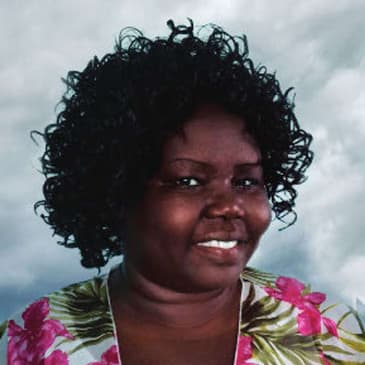
When the echoes of civil war and the sights of malnutrition could have hardened a heart, Kiden Jonathan chose to let her experiences sculpt a journey of compassion and empowerment. Our latest episode on SpeakUP! International features this incredible guest, whose tapestry of life—from nurturing children in Sudan to supporting young girls in Kenyan refugee camps and providing heartfelt nursing in Canada—unravels stories that are as moving as they are motivating. Kiden doesn't just share her professional milestones; she dives into the emotional ebbs and flows of leaving her war-torn homeland and the search for community and belonging in the bustling metropolis of Toronto.
[00:00:00] Elton Brown: Welcome to SpeakUP! International with Rita Burke and Elton Brown!
[00:00:15] Rita Burke: As this podcast is called SpeakUP! International, we have had the good fortune of
chatting with people from many corners of the globe. Today, we will be hearing part of a story from a woman who fled civil war. and has lived in a variety of countries on the coast of Africa. Our guest today is also an author. So I would like you to help me welcome our guest to SpeakUP! International, Miss Kiden Jonathan
[00:00:53] Kiden Jonathan: Thank you, Rita Burke, I'm happy to be here ever since I met you few days or few weeks ago and we connected. I just felt that there is more to that. And I'm glad to be here today with you and Elton Brown!
[00:01:11] Elton Brown: We are so happy to have you with us. You have lived in three different countries. And you've had various occupations. Can you give us light about what those occupations were and did you enjoy them? What did you learn from them?
[00:01:33] Kiden Jonathan: Yes. Uh, I have lived in three different countries. And they were Sudan, Uganda, and Kenya refugee camps.
So in Sudan, which was my country, I was a nutritionist right after finishing high school, and I was working with malnourished children, and we would register them for our feeding program. So they would get some food that is rich in iron, because most of them were lacking iron.
In Uganda, I didn't really work in Uganda, but I think it was in Kenya, that I was. Teaching. I was teaching primary school in the refugee camps and encouraging girls to go to school and stay in school because in that culture of those group of people in the camp, they encourage the kids, or they feel that kids should get married before maturity age.
They get married before 16 and that was a role that I enjoyed the most because I felt like those girls need to have life, and they need to get educated before they can mature, running their own families, and the same thing with being nutritionist as well because being a nutritionist also meant that Those kids needed me to be there because they were in dire situation of starvation.
Their mothers couldn't even feed them because they were not being nourished. And that's how I I really enjoyed those fields. Number three would be nursing in Canada. When I came to Canada, there were no jobs for me. I haven't worked a very stable job in those countries, and poverty was really the main cause of my running. and my relocation.
So I decided to take nursing school at Centennial College and I graduated. I worked with WICARE agency and I also worked at West Park Hospital and I worked at various capacities. First of all, working with the elderly, Alzheimer's patients. I also worked with private patients.
And I worked in 10 different nursing homes in Toronto, and then I acquired a full time job with West Park Healthcare Center, working with ALS patients and muscular dystrophy patients. It was complex care unit, and it made me appreciate life more and say, I have everything that I could use to my advantage.
I'm resourceful, not only because I know what to do, but physically, I can carry my body physically. My respiratory system is active, is working, and then I also did a rehab facility that one has to do with motivating people to get better and to go home after having surgeries.
[00:04:57] Rita Burke: Sounds to me, Kiden, as if you have worn quite a number of hats in this short lifetime. Now, you are also an author. I wanna hear a little bit about your writing process, not necessarily about the book, because we'll talk about the content, uh, a little later. But tell us about your writing process, please.
[00:05:20] Kiden Jonathan: With the, with the book. My writing process is that I was inspired by experiences in life and the way I write, I wrote the book was based on life, I would write, I have thoughts and ideas and concerns. So at the end of the day, I would write everything down. When I'm writing, I don't stop until my hand hurts. Then I throw down the pen and I go to bed.
So that's how I started the writing. Therapeutically, I started to get better at it. And I also like to use my senses. And I'm a student of my environment. So when I see a place, I just like, oh, I want to write this down and I write right away. I don't let it sit.
[00:06:12] Elton Brown: You talk about working with a lot of individuals at these various health institutions where their bodies were not whole and I wonder if you ever felt guilty having your body fit? You're able to work, you're able to move about easily, and some of your patients did not have that luxury. Did you ever feel guilty?
[00:06:43] Kiden Jonathan: Yes, I have felt guilty, but not as much as about the people that I cared for. My guilt came from relocating to Canada and seeing that the civil war is still going on.
While I have made it to Canada and my family is still there, uh, my people are suffering. So I think it's mostly in my country. Over here, I felt like a resource because they have the facilities to help these people, even if their situations are very hard to imagine, very hard to look at. but I can tell you, Elton, that I was emotionally broken after five years of working in a complex care unit.
Because I'm very empathetic and sometimes I find that my heart was taking me too far and that's when I had to transfer to a rehab unit called Functional Enhancement.
[00:07:48] Rita Burke: I like it how you said. What did you say was broken? Your spirit?
[00:07:54] Kiden Jonathan: I was emotionally.
[00:07:56] Rita Burke: Emotionally broken. That's really well framed. I like that. And I could just imagine you're correct. When you're in a kind of occupation or career where you're giving and giving and giving, there's no question that that will happen to you.
Now, Kiden, in your bio, you mentioned that your story is a story of running soul searching and finding self. Here's my question. Would you say that you found yourself?
[00:08:29] Kiden Jonathan: Yes, most definitely. I have, I didn't only find myself. I created a home in Toronto, Canada, five years ago when I had to perform my story, where is home.
So I did answer that question. And I wondered whether I came, I found myself first
[00:08:55] Elton Brown: You talked a little bit about war, and I want you to elaborate on the impact of war and dealing with refugee camp experiences and how that affect you and your family life.
[00:09:10] Kiden Jonathan: The refugee camp, it was in a desert. And I think my children were not affected as much as they were very young, but I was there with an intention of wanting to leave the continent. I wasn't going back anywhere to suffer any poverty because it was too much and I stick with it. And the things that I faced in the camp that was very exhausting and really This is a story that I couch in my book and I always like to talk about it.
It's when I was eight months pregnant, and I was standing at United Nations for an hour in 50 degree temperature. It was very hot, but I didn't leave the line. I was tired, but I didn't sit down. I kept standing, and I made it to the office. And the officer said to me, Kidden, you don't need to be here. It's too hot for you.
And I said to him, It's hot everywhere and he shook his head and approved my application for Canada!
[00:10:23] Rita Burke: It sounds to me, from hearing you tell your story Kiden as if you've got resilience and toughness and focus and determination carved into your DNA. So my question is going to be, why Canada?
[00:10:42] Kiden Jonathan: Why Canada? I didn't choose Canada. But how it worked was that Canadian Embassy applied for us through United Nations.
So they requested for married families and my application was already in the process. I was already on the line standing. So that's how it came about.,
[00:11:06] Elton Brown: Wow. Do you always approach everything with such determination? Standing in this line for hours, eight months pregnant, you were determined to get past this challenge, this hurdle. Is your work ethic just the same? Is that how you deal with your children, your friends? Do you carry that same type of razor sharp focus in everything that you do?
[00:11:36] Kiden Jonathan: Yes, most of the time. I think that it started with my dad. He was very tough on me and I worked very hard. He was a mechanic. We had a car at home, but he wouldn't give us a ride. So I was upset about that. But he said, you just have to get up early and walk to school yet is two miles away and back one way is two miles.
So I think I started building up my problem solving skills when I was young persistence when I was young, and also looking at things as things that can be solved. I always thought that there's always a solution to a problem. Doesn't matter what it is. There's going to be a way. So I would try from top bottom to the side, right, left, to find an answer or a solution to our problem.
[00:12:34] Elton Brown: You know, you talked about being in this refugee camp and then you finally got out of that and you moved to Canada. So how difficult was it for you to rebuild your life again and get a sense of self?
[00:12:53] Kiden Jonathan: It was difficult. Uh, the first year was A little, a little bit easier, but I think that coming to Canada was a big blessing for me and for the family, but at the same time going to school. I always like school. I like, like going to school a lot. So I enjoyed my college times. at Centennial. It was wooden campus.
They have closed it down now in Scarborough. But the challenges that I got in Canada, I think were because there was cultural clash where my ex husband and I didn't agree on me going to school. He wanted me to stay home and I'm like, no, I'm going to school. So he withdrew his support. And I think that was the stressful thing for me. Adjusting to Canadian, uh, kind of life.
[00:13:57] Rita Burke: He said, no, you're not to go to school. And I know so many women who came here and their husbands kind of got in the way. of them wanting to change the trajectory of their lives. But those women found ways around that barrier. Many of them found ways around that barrier. Now, I would like to hear, for you to share with our audience, about three significant moments that occurred in your first three years. Three moments that you can say are aha moments. That are markers for the three years you've been in Canada.
[00:14:37] Kiden Jonathan: I would say the first one was me being in school. I was upgrading my sciences and we had group assignments. And the teacher stepped away. So these other students chose themselves. And I was left on the table, at my table by myself.
That was the most humiliating thing I've ever felt or experienced. They acted as if I was not there or I didn't belong in that class. But I took it. I said, that's fine. I registered. I paid money. I'm not going to stop coming to school. So that's one of the most, to me, it just stands out. But then I would also say that I had a situation where I had to, I'm looking at my notes.
It's okay.
Yeah, so coming to Canada, I think that is one of them. The other one is. Excuse me a bit because I have a cold.
I'll talk about that over. Yeah, so I had that situation happen to me at Centennial College and then the situation of me overcoming challenges of race in school where I talked about it very strongly and I shared. Some things that people would say about me. One of them was that someone said to me, Helen, I said, my name is Helen.
And he said, Oh, Helen, you speak good English. Where did you learn it from? I said, from the airport and he was confused. He said, he just shook his head. So I just learned this sarcastic and defensive way of getting out of situations. And also as time went by. I think it's now they see the relationship with me and my ex husband started to get really bad and it got to a point where he physically hurt me and I still regret the fact that I had to listen to my parents because they said come back because of the kids.
And I went back and this time around, he decided to treat me differently, not physically, but financially, emotionally, he was just not supportive. And he would yell for no reason, or he would ask me so many questions. Where are you going? When are you coming back? Who are you going with? How long are you going for?
All those questions. And if I go somewhere, I wouldn't enjoy myself. I would be worried about coming back home, what he was going to say, and all those, uh, just songs in my head, negative songs about everything that he has planted in my head. And as time went by, I realized that I need to leave, so I just picked a few items, put in a trolley, and went to a shelter.
So, that's how I say, I would say that, uh, things have changed. I always felt like every crisis is an opportunity for me.
Looking back at my own story, and it just, it's amazing to talk about it.
[00:18:33] Elton Brown: That is one amazing story. I'm going to go out on a limb and say that many women stories are very similar to this one, where you want to upgrade yourself as continued education, and then there's the race factor. And not getting support from the individuals that you are studying with, nor getting at home, and this can be an opportunity for anyone who finds themselves in this situation.
What would you tell women who find themselves in this situation and may feel that they don't know what to do? Where do they start?
[00:19:22] Kiden Jonathan: I would say that you have to start by listening to your body. What is your body telling you? Listen to your heart. What is your heart whispering to you? And I think if you start from that, it will help. But also support. Reach out for support. Nobody can do it by themselves. Nobody. And when you're reaching for that support, make sure that you are also safe in the process of accessing the support that you want to reach for.
[00:20:14] Rita Burke: Kiden, on SpeakUP! International, we seek to inform, inspire and educate through the stories of our community builders like yourself. And I know for a fact that you're helping us to meet those goals right now. Tell our audience about your life as a teenager. What was life like for you as a teenager?
[00:20:40] Kiden Jonathan: As a teenager, I was very driven. I was focused. I was curious intellectually. Uh, it doesn't matter how old you are, I would ask questions. And... People didn't like it, but I was that kind of person until I met a charming young man who would stand by the road whenever I'm coming from school. And I wondered what he was doing, but he was hanging there every time after school and he started talking through my friends and then to me.
So I told him, I'm very young. I'm in school and leave me alone. He didn't leave me alone. He was writing letters, passing it to me. I said no. He would pass it through my friend. I still connect with my friend, my childhood friend, and I would fight my friend and say, if you want him, read the letters and reply him, because I don't want it
So he persisted. And he was just always around me and things like that. Uh, it was becoming annoying. And then when I was 15 years old. My father died of a car accident and he was 41. Uh, it was a very tragic moment for me and the family. I remember going without food, without drinking, without sleeping. And you know, we are very passionate when it comes to relationships.
We are very close people and my family is close. and also how the accident happened. It was a shock. So we were all just saturated by emotions. And, um, now it's 36 years. I have learned so much about grief. I think that we all have our time and he had his time and he helped us. There were nine of us and I was the first.
And then I think that the. Boyfriend then was afraid of my father because he was very serious man and he would just give you a glare. He doesn't have to say anything, you know, and you just have to walk away. So when my father died, I think he took advantage the way I see it and I gave in at 19. So premarital marriage was not premarital, premarital sex. were not allowed and I did. So the first time you have sex you have to surrender. And that's what I did I declare my own marriage
[00:23:59] Elton Brown: How did your parents feel about this?
They were angry. They say you are to young to be married. And this man all the time, but he doesn to you. We don't know this You are not, you did the worst thing. They were not happy. They took me back home, actually. They said, you need to get back to school. You can't, you can't stay with him.
[00:24:25] Rita Burke: It sounds to me as if you grew up in a household of very caring and responsible adults. And then here you are in beautiful Canada. trying to begin life for yourself and then you end up in a shelter. What was shelter life? What was shelter experience like? Share with our audience, please.
[00:24:53] Kiden Jonathan: Sure. Uh, the shelter experience was one of growth, I was able to self reflect to conceptualized, but also challenge in ways of being exposed to the downtown of Toronto, different lifestyles, different personalities, different behaviors
and cultures.
And I think that I have two stories that I would say about the shelter. The first one was a little girl. When I just went in, my hair was standing up crazy like spikes. And this girl ran to me. And she looked up and said, your hair is messy. And I never forget what she said. I just went and I sat down. I said, I need to eat breakfast because this girl has just prophesied something that I had never seen in myself.
So that was one of the things that I heard there. And I like the honesty that children have. They just say whatever. They say it as they say it. And then the second story was, I think I was watching TV, and we share living space, and then someone walked in and wanted to change the channel. And I told her, No, don't change it.
I'm watching. If you want to watch with me, fine. Otherwise, I have to finish it. Then you can change to something else. And she got mad. She said, Oh, you think you are the big person here, you monkey, and I'm gonna report you. This TV is not yours. So she went to the office. And I don't know what she said, but I continued to watch it because if I don't, she's gonna come back and watch whatever I'm watching.
So I'm just like, whatever you're doing. So when the evening cooled down, everybody left. Someone I went to the office, so I get part of my story. And I didn't see her from there. From there on, she just, she was, she had to be relocated, and I liked the action that the shelter took.
[00:27:32] Elton Brown: Well, good for you.! That you were able to stand up for yourself and set boundaries for yourself, even if you were in a communal environment. You worked with the shoe project and tell us. What did you contribute to it?
[00:27:52] Kiden Jonathan: The shoe project was, how can I say? I'm very, I'm passionate, I'm very passionate about learning and especially in areas of immigration. And just seeing immigrant women coming together and talking about their stories of triumphs, their stories of trials and treasure. was very humbling to me. Uh, how I contributed to the organization was that I love to speak about my experiences and they like my stories.
They also like the fact that I'm from South Sudan, because we South Sudanese, we are the darkest people, but because we stand out, it's not a bad thing, but we stand out, and people would be like, oh, South Sudan, we want to hear it. But also because of the civil war that has been going on, ethnic violence, um, civil unrest, it's just different terminologies, but it's all violence.
And those stories spark the audience and they like listening to it. That's why I contributed four stories all about shoes, uh, four pairs of shoes. I happen to be a sleeper writer. I have four pairs of sleepers and tall, my brown tall winter boots. Those were my fourth story for where is
[00:29:23] Rita Burke: home.
If we had time, we would have invited you to read one of your stories, but the next time you come back on SpeakUP! International, I would love for you to share with our listeners a little bit of that shoe story, one of the shoe stories. Now, are you content with how your life has turned out so far?
[00:29:47] Kiden Jonathan: Yes, I am. I have never felt so secure, so grounded, so rooted, so certain in uncertain times. Because my life has always been about uncertainty, poverty, civil war, running, searching, and I think I have reached that point of saying, you know what, life is beautiful. It doesn't matter what happens to you, you can overcome, and you can reach to a place where you find your footing, you find peace, you find rooting, you find certainty yourself,
[00:30:27] Elton Brown: No wiser words spoken. You are a leader, a speaker, and a writer, even within South Sudan. How did you use those skills when you moved to Canada?
[00:30:43] Kiden Jonathan: I used those skills. In the community because I was a chair lady in my ethnic community here in Toronto, in uh, Ontario, actually the Hall of Ontario. So in 2017 and 2018, I was a leader of that organization. It's called Cuckoo Community Association for Development. C. K. C. A. D. And I was so blessed with the resources to be able to have my own people so that they're not relaxed to say, Oh, we're in Canada.
Now our dreams have been we have achieved our dreams. No, we still have more to do. Our Children are having struggles in the streets. They are not. They don't know themselves. They come home, they don't talk to you, but you are the father, the mother. There's no communication. And why is that? Because they're learning something different in school.
And you may be teaching something different at home. Then they get lost. So I didn't know that identity issue has to do with only young people. I didn't know myself either. So I needed to support these young people and families. That are going through marrying the two cultures, your own home and life here in Canada as well while raising your family.
[00:32:14] Rita Burke: Awesome. Awesome. So you led on the continent of Africa, regardless of if you were living a quote unquote normal life. Or if you were in one of the refugee camps and you came to Canada and you were able to make those skills portable and bring them here and translate them into leadership roles and that's truly fascinating.
Now before we let you go, Kitten, I would like to ask you, where do you see yourself in the next five years? I want you to prophesize, so to speak. Where do you see yourself in the next five years?
[00:32:54] Kiden Jonathan: In the next five years, I want to see myself as somebody who is teaching, building a website that talks about my experience and my stories in a slide, online slides program.
[00:33:11] Elton Brown: How do you see those goals that you just mentioned, helping immigrants to Canada.
[00:33:21] Kiden Jonathan: Uh, can you repeat the question?
[00:33:24] Elton Brown: I you talked about building websites. That was one of the examples that you just talked about and on this website, having an opportunity to tell your story. And I'm saying, asking you, how do you see that helping women immigrants when they come to Canada? Or any country for that matter.
[00:33:47] Kiden Jonathan: Yeah, I think that those, um, that content or lectures will help immigrant women to be aware of what to expect coming to Canada through my own experiences and also what kind of, um, values or work ethics they need for them to step up their skills, their careers. in Canada.
Why taking care of family? I think that's most of the challenges we have as women is we are so close to our babies, our Children. And because of that, it's hard for us to say I need to do careers. But I also need to take care of my Children because we need support and we need to have a voice to be able to ask for that support.
Thank you. We don't have to fight for it, but we need to ask for it and make sure that we are given that support that our voice are heard and validated.
[00:34:50] Elton Brown: I agree with you 100%. We have talked about years of your life, starting when you were back at home and how you progressed or moved from point A to B, which is Canada. And then your challenges here in Canada to where you are today. And some of the things that you dealt with would have shook other individuals to their knees.
School, where you were treated unfairly, and then just the basic conversations about race, and the not getting the support that you needed. initially to move you and your family forward. All of these things you overcame, and I feel that your story is going to help many women and men be able to see that if you were able to do it.
So can they. So thank you so much for giving us the time to have this wonderful conversation with you, and we are looking forward to having you back at SpeakUP! International in the future. Thank you. Thank you.
[00:36:16] Rita Burke: I echo what Elton said, and I want to put a plug in for your book that's called Resilience, the Journey of Self Discovering, written by your guest today, Kitten Jonathan. Again, the book is called Resilience, The Journey of Self Discovery.
[00:36:35] Kiden Jonathan: Thank you so much, Elton and Rita. I really appreciate this opportunity.
[00:36:41] Elton Brown: One more thing, sorry. So how would people get your book? Is there a website that they will go to?
Or is there a store that they could go to get your book? Can you tell us that before we say goodbye?
[00:36:54] Kiden Jonathan: Yeah, I've shared a book link with Rita, but my website was taken down and I'm going to reactivate it and then I'll send it to you, but it's also on Amazon. Perfect.
[00:37:09] Elton Brown: So our guests know to go to Amazon for right now to be able to get your Thank you.
Thank you so much for all of the time that you spent with us. We really do appreciate it. And we hope to see you again really, really soon.
[00:37:27] Kiden Jonathan: Thank you. Thank you so much. All the best.
[00:37:31] Elton Brown: Thank you for listening to SpeakUP! International. If you wish to contact Ms. Kiden, Jonathan, please leave your name, your email address, and the reason why you wish to contact Ms. Jonathan to info@speakuppodcase.ca. Are you interested in the opportunity to be interviewed and have your cause promoted by SpeakUP! International? We invite you to connect with us by sending a message that includes your name. company or organization name the valuable service you offer to your community and your email address to info@speakuppodcasts.ca.
Worried about your confidence as an interviewee? Don't fret! SpeakUP! International can provide you with the necessary training so that you shine during an interview. To receive additional information about SpeakUP! International's podcast interviewing program, email us at info@speakuppodcast.ca. You can also reach us using Facebook, Instagram, Twitter, and LinkedIn.
To connect to our podcasts use Spotify or you our favorite podcast platform and search for SpeakUP! International. You can also find our podcasts using our web address, www.speakuppodcast.ca our logo has the woman with her finger pointing up mouth open, speaking UP!
At SpeakUP! International, we aim to inspire to inform and to educate.