
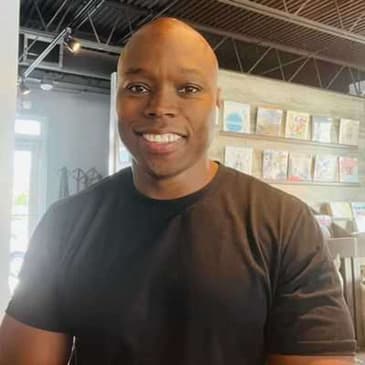
What happens when life throws insurmountable obstacles your way? Join us on this inspiring episode of SpeakUP! International as we uncover the deeply moving journey of Rahz Slaughter, a motivational speaker and co-author of "Student Success Secrets." Born with a physical disability and raised by a young, single mother battling addiction, Rahz's story is one of remarkable resilience. He shares how his grandmother's growth mindset helped him navigate his father's absence and his tumultuous adolescent years. At 18, a single book, "The Magic of Thinking Big," sparked a transformation that steered him toward personal growth and self-improvement.
In our concluding segments, we delve into empowering parents and teens through a structured approach to personal development. Learn how clarity, communication, and confidence form the cornerstone of this journey, and discover the power behind the motivational acronym "boom," which stands for "building open-minded, optimistic, motivated teens." We also touch on the importance of balancing personal interests, such as fitness, and the vital lesson that effort often trumps grades. Wrapping up, we reflect on the value of resilience and recovering quickly from failure, offering an uplifting reminder that we are the authors of our own life stories. Join us for this heartfelt conversation that aims to inspire and uplift, providing actionable insights for both parents and teens.
Connect with Rahz on:
Website: https://www.unstoppableteenager.com/
Facebook: https://www.facebook.com/rahz.slaughter/
LinkedIn: https://www.linkedin.com/in/rahzmotivates/
YouTube: https://www.youtube.com/@RahzSlaughterTeenLifeCoach
Instagram: https://www.instagram.com/rahzslaughter/
Twitter: https://twitter.com/RahzSlaughter
[00:00:00] Ellington Brown: Welcome to SpeakUP! International with Rita Burke and Elton Brown!
[00:00:14] Rita Burke: We have the distinct pleasure of having a conversation today with Rahz Slaughter. He is currently in Florida. But Rahz is a dynamic motivational speaker with 24 years of experience. He helps parents and teens to transform their mindset and take control of their lives.
Rahz is the He is the co author of the best selling book, Student Success Secrets. In his bio, he states that he was born with a physical disability, however, he was able to defy expectations and embrace a growth mindset. And this growth mindset has allowed him to create a life beyond his disability.
Limitations. Today, it is certainly with delight and pleasure that I introduce Mr. Rahz Slaughter to our listeners. Welcome on board, Rahz!
[00:01:27] Rahz Slaugther: Thank you for having me, Rita! Thank you for having me, Elton! Pleasure to be here. Looking forward to a great show!
[00:01:31] Ellington Brown: That's the only kind that we have. Yeah. We don't have anything but great shows. I want to start near the beginning, your early life and challenges that Rita kind of brought that up a little bit. What was the most challenging aspect of your childhood and how did it shape your perspectives on life?
[00:01:53] Rahz Slaugther: That's a great question. I think I mean, it starts with birth.
I was born with a physical disability to a mother who was 19 years old when she had me and she was still young and maturing into her own self as well. And to have a child have a disability was definitely a struggle on her emotionally. And I felt that emotion through just the relationship that we developed.
Uh, I had to have several different surgeries as a young child, and I feel that she just did not have some of the skills that they really helped navigate me through that process smoothly. But I and that's where I think my resilience and my growth mind started because I was crawling and I had a cast as a young baby for the first four years of my life, and I was breaking those casts and falling down and trying to do things that all the other kids were doing.
But I was doing it with a little bit of a challenge and I had to overcome that challenge at a young age. And thankfully I had a grandmother who had a growth mindset who never allowed my limitations to be who I was going to become. She always said, Hey, you know what, if you want to play, play, if you want to play in the dirt with the other kids, go do that and have fun and just be the young kid that you are.
So that's where it started really early in my childhood, adolescent life.
[00:03:12] Rita Burke: Sounds like. A wonderful beginning to learning how to overcome to overcome there. I see. So Rahz, you mentioned in your bio that your early life seemed destined for struggle. Talk about that.
[00:03:32] Rahz Slaugther: Yeah. It, it, I mean, when you have, like I said in the, in the first way, my mom was young, a young mother.
Um, a single mother. Uh, I didn't have a father. My father left my mother while she was in the, in labor and disappeared. So I never met my father and, you know, we were, uh, she was young and we were definitely, we moved from Long Island to Utica, New York, upstate New York at an early age. So she was single, small apartment, young, trying to figure out motherhood.
And as a child that needed some extra attention, um, it was a struggle, but I, I, I never, I look back today and I know that my mother was doing the best she could from where she was. And I have no, um, feelings towards that are negative because I understand as a parent today, we do the best we can from where we are.
[00:04:23] Ellington Brown: Abandonment issues. I don't know why that popped in my head but growing up, did you have abandonment, struggles, , that were caused by your father leaving, , your mother is, ,had addiction issues
How did you as a kid handle this? I know grandma was there. So can you paint us a picture?
[00:04:50] Rahz Slaugther: Absolutely. You know, I mean, I do have a understanding of psychology and adolescent development currently, but when I was in it, I didn't know. Um, you know, what we. As kids, we can create our own reality.
And I don't look back and think that it was so, I guess, tumultuous and so challenging. As an adult, I know what it was now. But as a kid, in the moment, in that present moment, I was doing what my mom and everyone else were doing. We were in a community. with, you know, I had some cousins, a couple aunts, and they all were going through the same struggle.
So I didn't know the struggle was any different than anyone else's. Um, I later did understand when I moved from Utica to Long Island, that I did feel that abandonment when you can see other models of traditional families, father, mother, Um, that nucleus, that love, that attachment I didn't have. I was, I can tell you that I have insecure attachment as an adult and had to overcome that because, um, I didn't have that initial love and connection with two loving, that caring parents and it made me, it made my adulthood a little bit harder because I didn't trust.
I didn't love as openly. Uh, and I've done the work so that I can release that pain and I could heal from inside.
[00:06:12] Rita Burke: I like that statement. And not only do I like that statement, I like the tone and the tenor with which it comes across. I've done the work. Talk to us about the work.
[00:06:26] Rahz Slaugther: Yeah. See, uh, I'm a firm believer that we are, um, we are the authors of our own life story.
We could be a victor or we could be a victim and we get to choose that narrative each and every day. We are blessed to wake up. So, for me, it started at 18 where a gentleman blessed me with a book called The Magic of Thinking Big by David Schwartz and that book changed my life because at that moment of 18, I was lost.
I was always very close to becoming a statistic in our community. And the reason being is that I hadn't read a book my entire life. I got through high school by just taking notes and navigating and just staying, playing on the above water, not just floating. And this book opened my eyes to the power of personal growth.
It opened my eyes to the power of our minds and the six inches between our ears and how it truly dictates our future. If we think positive thoughts, we can chat, attract, Positive results and up into that point in my life. I wasn't thinking positive. I was just really reveling in. Oh, I don't have this. And whoa, look at my leg.
And my grandmother has a 2nd grade education. My mom rejected me. My dad left me and I was being that victim and thankfully for this gentleman passing those those wise wisdom of words to me, it transformed transferred into me and transform my mind.
[00:07:49] Ellington Brown: Wow, this book must have really turned you around. You decided that you were going to move academically. And I want to know if that book motivated you to improve your GPA.
[00:08:06] Rahz Slaugther: So did it motivate me? Not in that instant, what it did motivate me was it was the seed that I can, that I can become more. I could do more and have more.
It was the seed that says, you know what? You're not that kid with a 1. 62 GPA. You're not just a kid who struggled with reading and math. You are a kid who is bright and you have to figure your own academic path. Um, I had some, I had two years of college education at the time when I dropped out originally, and I dropped out because I had to get a job and take care of my grandmother who had double breast.
She had breast cancer and liver cancer, and I was forced to make this decision. And that decision led me to fitness. It was the one thing I knew really well. It was the one thing that I could transfer a positive energy to someone else and receive a financial reward. And I started personal training and then I started reading books and and attracting mentors like Tony Robbins, Brian Tracy, Zig Ziglar, you know, you name the, the Jim Rohn to name a few.
And that was, that book was the catalyst for me to look and seek out more information to empower me.
[00:09:22] Ellington Brown: Rita, before you ask your, question. I wanna know what happened then between the time that you first read your book when you were 21, how did you navigate that? Without reading any, any books? I need you to tell our audience how did you do that?
[00:09:41] Rahz Slaugther: That's a great question. Now that I, the way I did it was I learned to listen. I really listened to what people were saying. I learned to read their body language because when it came to books, I could look at a book and no one knew I couldn't read it, but I would skip the words because I certain words, the big words I couldn't pronunciate.
That was my challenge. I later learned that it was dyslexic. And I know that as an adult, and when you have dyslexia, the way the phonics that you the way you speak doesn't always sound the same way. So I would look at a word like Massachusetts, and I couldn't say it, or I would, I couldn't say integrate.
And when you can't read the word, it lowers your comprehension. Once I figured that out, I realized, okay, I have to really pay attention. I have to take great notes. And that was the strategy I started to cope. And I didn't realize at that time that I was just really learning my own learning pathway. Now that I'm currently re entered in college, and I'm doing different things, I've learned how to learn and read, and I am a very avid reader, and I believe that reading is so fundamental.
I know that sounds cliche, But it is so important to every person, the listeners, the young, all, because when you read, you are empowered to change.
[00:10:56] Rita Burke: You said a few things that are very important, that are critical for success and for people to thrive. The importance of reading and the importance of listening, I concur with you strongly.
I want to know about this hero's journey. Walk us through. I know it's not going to be possible to tell us the entire path or journey. Talk to us about the hero's journey, please.
[00:11:24] Rahz Slaugther: Sure. So when you think about the hero's journey, a lot of people know Joseph Campbell's book, you know, and I think that what I like to share is that for me, It really start with a my why and my why was I promised my grandmother that she would never, ever have to see me wear handcuffs.
She would never have to come to the courthouse and, and, and bail me out. And that was my wife for getting a job, doing the right things, building core values. And those core values have transitioned into when I told you guys, I became a personal trainer in 2008, I walked away from my job and became a entrepreneur.
I opened my first personal training studio and this personal training studio went on to become one of the top personal training studios on Long Island for over a decade. And it was called MetaBurn Fitness. And I wanted to create a unique style of training that no one had experienced. So I took the traditional model.
One hour personal training one on one. I cut it to 30 minutes and I did it in small groups so that I could leverage the power of my time. In doing so, I built a brand and I had to learn, okay, I knew that I had no, no role models, no business people in my family, no one to show me how to go. So I had to become really astute at business, sales, marketing, operations, customer service, All of the things that finance that you needed to know.
And I became that, that voracious person of, if I know it, I can do it. And now, you know, and that's fast forward. You take that. I took that business. I moved to Florida in 2018 with my amazing wife and two step boys. And, you know, and Then COVID happened and it changed the world, you know, and so just as I thought I had figured it out and I had made it and I had businesses running and I was doing well and this is the kid with the 1.
62 GPA who went on to do a multiple six figures business and have a passive income. What happened was. COVID and I had to lean back on my foundation. So when we're taking this hero's journey, just so you know, it's never a straight trajectory to the top of the mountain. Sometimes you're going to hit flat line and you're going to find yourself stuck.
That's when you're going to have to re evaluate what you know, who you are and lean into your core values. And I lean into my core back, hard work, hustle, commitment, Integrity, honesty, and those are the ones that a foundation that led me to creating the business I have today, which is more about impacting the lives of young youth and their parents
[00:14:06] Ellington Brown: Business, you talked a little bit about these businesses that you open, which I think is great. Tell us a little bit about the empowered mindset system.
[00:14:18] Rahz Slaugther: Okay, so the empowered mindset system is the current process I use when I take a teenager anywhere from 12 to 20, and I help them shape their mind and it start and I love like, oh, I'm super wise. All I've done is on the shoulders of the leaders that come before me have allowed me to take information and disseminate it down to a way that anyone could understand it.
The empowered system is basically mastering the six inches between your ears, your belief systems, your attitude, and your self talk. When you understand your belief systems, where they came from, why you have them, why you stand on them, it allows for you to open up your mind to to new possibilities. Your attitude dictates your altitude, right?
We've heard that before. If you have a positive attitude, you're going to be able to attract amazing people like you. You guys allow me to come on your platform and share my story and we get to be a conduit for change for this world. Right? And then that self talk. What are you saying to yourself every single day?
Is it empowering or disempowering? That is a question that the listeners have to ask because if you're not where you want to be in life, if you're not showing up in the way that you want to shine, it's probably because of the thoughts you have, which are creating the emotions, which are leading to the results that you're getting.
That is the empowered mind. It's changing that B A S system. And that is how you become empowered and inspired to go out and do be and have whatever it is. Your goals are set.
[00:15:50] Rita Burke: You mentioned earlier, and in your bio, that you did not read until you were 21, and I am really curious about what that felt like. Is it because you could not, or you just did not?
[00:16:09] Rahz Slaugther: It's not that I could not. It's the, you know, we all are. Sometimes if we have an experience, an adverse childhood experience, it can be traumatic. And for me, reading was traumatic. When you're in school as a young boy, and the teacher calls you on your name, and you have that book in front of you, as I have a book right here, and you open up those pages, and you try to read, you And you, you skip words and, and then all the kids make fun of you.
And, and, and then now you become like, Oh, so when I say I couldn't read, I could read. I understood how to look at words and, and pronunciate them and sound them out. But I didn't have the confidence. In my reading ability to read out loud and actually say, Hey, you know what? I will take that paragraph. I'll take that dialogue monologue and read it to you.
And that was a struggle for me. And that's one of the things that, and if you're listeners, we all know we had to take these reading comprehension tests back in the day and that you'd read this paragraph and then you have to answer. I did all one of those because no one was helping me understand that I was different.
I learned differently and the teachers weren't assisting me in that process either.
[00:17:16] Ellington Brown: You work with individuals that, well, I should say kids, can you give us a story, a success story of a teen who benefited significantly from the, empowered mindset system?
[00:17:31] Rahz Slaugther: Absolutely. I do. Just so we have clarification for your audience. I work with teams and the parents because it's a collaboration. It's a team effort. I'm not a babysitter. I can't. I'm not a miracle work. I can't get your kid and change them. If you're not willing to do the work, right? Rita it. Like I said, I believe in doing the work.
So, what a story that I'd love to share is a story. His name is Jackson and Jackson just when he came to me very early in this pivot of this business. He has cerebral palsy. And his mother said he was in a dark place at that time, and he was only about 10 years old at this time. But when you have a disability, um, and that's just because that's what other people put the label on you, but he felt that energy.
We started to coach and right away, we formed a bond. That was just amazing because I was just willing to have a conversation with him. I let his mother know. Hey, I don't know any more that, you know, I don't have any special powers, but I'm willing to connect and build. Or with your child and help teach them some of the things that I believe that if it was instilled in me at a younger age, I would have had more success like the B. A. S. system, right? Like affirmations, like being mindful how, you know, someone else's opinion of you. Is it your opinion of yourself? And Jackson went on to say, I mean, he started walking and he started to do things that he, his mother never believed, you know, he might not do. And within a short period of time, he was in school and he, he did this contest where you had to walk around the entire gymnasium with a Walker, mind you, and he was with other able kids.
He did it more than any other kid. And when the teacher asked him, how did he do it? He said, mindset. Yeah. and that was just, it blew my mind because I was like, wow, this kid's getting it. Here's a kid who struggles with communication and speaking clearly. If you know CP, it's a struggle with it, you know, with the motor system, motor, neuron system.
And he won this contest and won a free, he won tickets to a Carolina Panthers game here, a football game in the states. He invited me his parents invited me to meet them and go and meet him in person because everything is done through Zoom. And it was just the most amazing story to see him so happy to share this moment of victory that he won internally.
And just about two and a half, three months ago, after three years of coaching, he made the decision that he didn't need his mentor anymore. Like how amazing is that when he can look, he looked me in the camera and said, you know what, this is going to be our last. Session and I'm getting chills sharing that with you because I knew he had he had reached this level where he understood positivity mindset and he could control his outcomes
[00:20:23] Rita Burke: You know, there are some threads and some themes running through this conversation and I'm hearing mindset and I'm hearing confidence and I'm hearing collaboration and I'm hearing the importance of R E A D I N G because I am passionate as well and I see the importance of reading.
And so I want you to tell us about three titles that you've got on your bookshelf now, three of the books you've got on your bookshelves and how they have impacted your life.
[00:21:00] Rahz Slaugther: Uh, well, you can only see a couple behind me, but I have a garage full. If I will share with the audience, there's, if you were to take everything from me.
Money, home, car, everything. And there was one thing I got to keep, it would be my books. Because anytime I'm feeling a little bit off, a little bit low in energy, I can turn to my bookshelf, I can look behind me, above me, and there's a book that will kind of fall off the shelf and give me inspiration. One book that I know that is definitely, can't hurt me.
Like David Goggins, David Goggins is a Navy SEAL who, you know, inspired me because as an African American, I didn't grow up in the round water. I didn't have a pool. I didn't have all of these things. So I didn't swimming was not something that came natural. And I also created some negative beliefs about it.
Oh, black people don't swim. We don't do that. Well, and I'm sure some listeners probably can relate. Well, David Goggins, being a black man who went through some challenges, learned that he couldn't allow that to be his reality because he wanted to be a Navy SEAL. And so he inspired me to get in the water, learn how to swim.
I hired a coach and became an avid swimmer. Now, I'm a strong swimmer. I can go out in the ocean and do it all because of the shift that that book allowed me. Another book I would say that really was impactful for me is the E Myth by Michael Gerber. Um, anybody who is in business understands that we can all have this entrepreneurial seizure.
I'm gonna leave my job, have my Jerry Maguire moment, that enough is enough. But what happens there is that you need to learn some skill sets in order to pay the bills. And that book really assisted me in understanding the mindset of an entrepreneur. What I could not have all of the, I couldn't spin all the plates and think that I wasn't going to drop.
And he teaches systems in that book, and you need to collaborate with other people in order for you to really thrive. And then I would say the final of the three books would probably be the millionaire mindset and that book really T Harv Ecker. And, and the reason that one brings up is that growing up in a.
Affluent area, but being very poor. I always saw money, houses, watches, clothes, as the thing, as the prize. But I realized as an adult, and I teach now that that's not the prize. The prize is understanding that you can't have a poverty consciousness. You need to have a prosperity consciousness, which will allow you to attract the things that you need in your life, the people in your life, the people to assist you to become and do more.
So those are the three books that I think that I will share. David Goggins, Can't Hurt Me, The E Myth, In the millionaire master millionaire mindset,
[00:23:52] Ellington Brown: I think that the books you've read definitely help you as a motivational speaker and a coach. So what is your core message that you deliver to the parents and teens?
[00:24:08] Rahz Slaugther: My core message is that we are the authors of our life story. So if you want to, to change, you have to be willing to change. If you're a parent and you don't like the results that your child is creating, you have to look inwardly.
And ask yourself, what are you not doing to mop for your child to model? See, a lot of times parents want our kids to be A students. They want our kids to be thriving. They want our kids to be respectful. They want our kids to be, but they're not leading and by example. So my core message is that if you want, you have to be willing to educate yourself as a parent so that you can empower your child and elevate your family.
[00:24:52] Rita Burke: I concur with what you're saying about modeling values and core messages for parents to show their children how best to show up in the world. Talk to us a little bit about the process. Thanks. Talk to us about, you take a parent, you take a family, step one, step two, step three, walk us through please.
[00:25:19] Rahz Slaugther: No problem.
So when I first meet a parent, the first step is, it's, I call, and I'm a big proponent of frameworks, because it allows us to really connect with what they, how, what are the steps. Step one, clarity. You have to understand clarity. Who am I? And the question for a parent is what is my parenting style? Where did I get my parenting programming from?
Because if you are using programming that you were parented, like, then a lot of times you're just basically transferring that energy to your child. Like my parents were yellers, right? So I don't want to be a yeller. I don't want to be someone who uses my tonality. As a way to show my authority. Um, so clarity is key when it comes to working with a kid.
Clarity is who am I? What are my strengths? What are my limitations? What are my aspirations? What are my fears? When you help a child understand that framework, that clarity, then they no longer fear being, they're not going to be bullied. They're not going to be, um, impressioned by other people with peer pressure.
And that leads to the second C, which is communication. So you got clarity and communication. Communication. Step two is what is that dialogue, right? Like, what are you saying to yourself every day? What are you saying to the world? If you show up in this world and we are for the viewers who can't see, they're going to be listening.
We're a brown, black and brown skin. So if you're running around and you're communicating a image of being a thug, then that's what they're going to look at you as. And I keep it real with people because I'm like, Hey, it Pull your pants up. You got it. You're communicating whether you're speaking or not.
And, and that it's so crucial that young people specifically understand that we don't get the opportunity to simply just be, we have to step up and become more. And then that leads to confidence. What is confidence? So often people think confidence is bravado and arrogance. No, confidence is silence and security.
You're self aware of who you are, what you can deliver and provide this world, and you're willing to do whatever it takes for you to reach your goals. That is confidence. When you put those three C's together, I can empower, educate, and inspire any parent couple to thrive and not just survive because they have clarity in who they are.
They know how to communicate their message, their inner feelings, and they stand on their personality, who they are.
[00:27:46] Ellington Brown: I must say that your way of delivering your message is based on, communication. Two questions I want to ask. One is, what does the word Boom mean to you? And the reason I'm bringing it up is because when we were conversing via Instagram, one of the messages that you sent me, the last word in it was Boom, and on your t shirt, for our audience who can't see that, the word Boom is there.
. And my second, uh, question, I should say part two, is what are your personal interests when you're not doing this? instructing people, you're motivating people, you're trying to gain clarity, not only for yourself, but for the individuals that you're, supporting. What do you do? You cycle. I know you have personal training. I know that's one, but tell us, A little more about you now.
[00:28:54] Rahz Slaugther: Absolutely. So, uh, the word boom was something that came up. It changes. So it's got a lot of different meanings to me. One goes back to neural linguistic programming and having your power move. If anyone, if the listeners are familiar with Tony Robbin.
He does. Yes. Yes. Yes. Right. That gets him. It changes his physical state. So I started to use boom as my go to word before I go on stage. It gets me in the right frame of mind, and then it turned into an acronym, building open minded, optimistic, motivated teens. So I wanted something that teens could relate to that energy that could change your state and all of my coaching sessions.
I go three, two, one, and then I go like this. I put my arms in the air and the power pose and my students say boom. So that's a way of closure. That's the way that ending the conversation at a high note. Now Elton, some of the things that I, I am truly a person that believes in balance. It's not all work and no play. So, um, I believe that your physical body will allow you to do more than anything else.
So I work out 5 days a week. Um, I spend at least about 20 to 25 minutes doing cardiovascular training and strength training. Um, I just completed one of my big goals, which was to do what's called the century ride, which is 100 miles. Now I'll tell your audience, remember I have one leg, I, my right leg is shorter than any other.
I have no quadriceps or hamstrings. My right leg. There's a 3. 5 inch difference between my right and my left leg. I don't share that with you to impress you, but to impress upon you that again, my message is that you can do anything you want. You have the mindset to believe in it and set the goal and have a why I believe that.
You're going to eradicate multiple sclerosis. So I rode my bike 100 miles in 1 day, 8 hours on the saddle, just about April 6th date of that. And that was amazing. That was just something that I couldn't ever aspire to do because I didn't know I could do it. You know, when you think about, you're going to get on a bike and ride in the hot sun for 8 hours.
It's not something that comes to mind, but once you do it, and I crossed the finish line. It was an amazing feat. I love spending time watching sports with my sons, um, and spending time with my wife. You know, we, we lived this world where we do, do, do, but I also know how to put my feet up and just kind of kick back and relax and smile and, and be grateful for all the things that God has blessed me with.
[00:31:33] Rita Burke: Now that we are in the boom mood. And I guess by the end of this, we'll all be saying a boom. Tell us about the seven secrets for developing success driven teens, the seven secrets.
[00:31:50] Rahz Slaugther: Sure. Um, uh, that is the seven secrets is the book that I wrote, um, back in 2020. And it's the reason I wrote that book, Rita, it was that.
I went back to a point in my life when I was 12 or 13 years old and I said, if I'm going to read a book, what book would that be? And why would I want to read it? And what would the book say? And these are the seven secrets that I really thought, Hmm, these are the things that I needed. Number one, a powerful mindset, right?
What does that mean? That's part of that BAS system. Number two choice. What are the choices am I making daily that are they conducive to my goals, right? Number three is goal setting and being courageous. That was something like I heard everyone talk about goal setting, but I wanted to explain goal setting to a 13, 14, 15 year old kid and give them the step by step process to not just setting smart goals, but understanding that when you set a goal, there's going to be Mr.
Murphy Murphy's law is going to come out of nowhere. And when it derails you, what do you do that in that chapter? I talk about that. Then we talk about the power of habits. Habits are important, right? Like simple habit. I make my bed every single morning, right? I brush my teeth. These are positive habits that we need to instill for good hygiene, for good practice.
Then we have communication, of course, and I teach them in that chapter, I give them 10 specific communication secrets that they can use to to not only connect with teachers, mentors, future employers, their peers, their siblings, but so that because we talk about communication, but so often nobody teaches us what that really means and looks like.
Then we have discipline. Nobody really loves discipline. They think discipline is a negative word. Well, I have it tattooed on my arm here. Why? Because I understand that as a young boy becoming a man, we need to understand what is discipline. Discipline is doing the things you know you need to do long after the moment you said them in has passed.
So often I'm going to do my homework, but then I get distracted and I don't do it. You need to have the discipline and you need to instill that in your, in your children at a young enough age. And then the final secret number seven is action and the power of action, having the ability to move, to break inertia.
So often procrastination sits in and the reason that I made action of last secret was because I wanted them to take secrets one through six, and now put it all into action, put it to work, implement these secrets to start to chip away at some of the discomfort that they had, whether it's academics, whether they wanted to become a better sports performance, whether they wanted to be able to connect with friends and build relationships.
They had the seven secrets to actually change their lives because I knew the power of the magic of thinking big what it did for me. And I wanted to write a book for a future child or teen who needed that book, who will be on a podcast 20, 30 years from today, sharing the power of the catalyst that it was a catalyst for their change.
[00:35:09] Ellington Brown: I don't know about you, but all of those points you said, excellent in my house, they were all boiled down to one thing and that was the strap. So we were motivated that way, and we received all those seven points while we were getting this, getting distracted. But those are different days, different times, and different ways of communicating.
Can you tell us how you embody resilience? And perseverance in your life and work.
[00:35:45] Rahz Slaugther: Absolutely. Uh, I think that I, I, when I realized what resilience was, was that I understand that no matter how blessed your life is, No matter how affluent your parents are or your family, you're going to have some setbacks.
And how you handle those setbacks will dictate your future success. And so early on, like I've shared with your listeners, you know, um, being born with a disability, that was a setback. Having academic challenges at an early age, getting left back in school, that was a challenge. Being bullied, that was a challenge.
And each and every one of those opportunities created a, a opportunity for me to grow, for me to learn, and for me to adapt. So I've instilled resilience down to learning, adapting, and evolving. That is the framework for becoming resilient. You got to take every experience you have and ask yourself, what are the lessons I'm learning from this situation?
And then you, once you get the lessons, then you got to move to how will I adapt those lessons to my life to keep stepping forward. If you're dealing with addiction and drinking, you need to dig one day at a time, right? You can't look into so far in the future that you say, oh, it's impossible. So you take those lessons and then you go.
Who am I going to evolve into tomorrow? Resilience is becoming better than you were tomorrow than you were today. And I know that all of us, we are better today than we were tomorrow. And as long as we're blessed to wake up, we have to push ourselves to becoming better each and every day.
[00:37:31] Rita Burke: Earlier, you mentioned that when you were a child, that you didn't understand the theories, the ideas behind psychology. Today, you understand it better. And so, You could apply some of some of the ideas some of the notions in psychology to your own life. Talk about how you how you started learning about psychology.
[00:38:05] Rahz Slaugther: I guess I started learning about psychology through pain, and I had to learn how to read people and and understand what people were saying when they weren't speaking. So one of the first things I learned is a system called neural linguistic programming. And I became certified in an NLP because I wanted to be able to read people's minds and, and, and it's not truly reading their minds.
But if you ask them using language and words, you can actually learn what people were thinking. And, and that was one of the things that I started to get in just enthralled with psychology, and it inspired me back when my youngest. who was actually good. He had just graduated. He was going to college. And then my oldest was going to college as well.
And my wife was going back for her master's. And I said, you know what, I think I'm gonna go for my psychology degree. And I re enrolled back in college. Um, I am now a junior in my third year heading towards my master's degree in psychology and human services. And the reason, and now, you know, academics is not.
You know, it's not easy, but I understand the value. So, for the listeners who may have children out there, I'm not this guy that says, it's all about the a, it's about the effort. So, when you understand psychology, you can understand how to navigate this world. In a way that you're no longer going to see yourself as just a black or brown or, or a race or a sexuality or whatever it is, you become an individual because you control your thoughts and you don't allow external influences to dictate how you feel as an individual.
That is what psychology means.
[00:39:51] Rita Burke: Before Elton begins with his question, I could feel it. Hence my question, it's oozing from your entire body, this whole psychological way of looking at life and human behavior. So thank you so much.
[00:40:07] Rahz Slaugther: Thank you.
[00:40:09] Ellington Brown: Our people, some, not all, feel sorry for themselves. And they slipped into this, I call it quicksand, where, oh, everything is. Somebody else's fault. Oh, it's the white man and everything that they, that doesn't happen. It's somebody else's fault. How do you grab hold of, the parents who have that type of mentality and pull them out from the quicksand and put them on the Path of success?
[00:40:50] Rahz Slaugther: Great question. The first thing I let people know is that I'm just, I'm just, I'm going to keep it real with people, you know, and it doesn't matter who it is when we have to release that we're no longer the victims. Um, and when you have that conversation with anyone, I'm specifically talking to a young black male, you know, I don't want you to tell me about what you don't get what you deserve what someone should give you, you know, I want you to tell me what you're willing to earn what who you're willing to become what you're willing to do.
Get up early. Stay up late. And become the thing that you want. If that's something, if you want to have a big house, you got to go and have big dreams, big whys, and most importantly, it got to be willing to put big work in, right? And longer those days where we can settle for, oh, well, it's because. You know what?
I understand our history. I understand that, you know, I was born with some strikes. I understand all of that. But what I won't accept is a negative belief about what you have to just become because, you know, and, and we too long have we held on to these negative beliefs. I mean, we're not getting 40 acres and there's no mules for any of us.
So the fact of the matter is that we got to go out and start to do some new things so we can have some new things.
[00:42:11] Rita Burke: And I, I believe that our ancestors are proud of many generations. They're proud of my generation. They're proud of the generation before me. And I'm sure they're proud of your generation.
And, and, and so we have to keep on striving to make them proud because they have done the work on our behalf. They've done the work on our behalf. And so my next question to you is, let's suppose You had an opportunity to talk to a graduating class of women, and this time I will say Black women. Share with our audience three core points, three important points that you would like to leave with that graduating class of Black women.
[00:43:07] Rahz Slaugther: Beautiful question. That's I would say the first point I'd say you have to be willing to accept your beauty. You have to be willing to accept who you are at your core and never try to become something that we aren't. I see so many beautiful black women who are not proud of their features. We're not proud of their hair.
We're not proud of the way their body is. Stand in your power because when you embrace your power, everyone else will embrace you. The second thing I would say. is adapt a new philosophy. This philosophy changed my life. It's called Kaizen, constantly and always improving. When you have a belief system that you're constantly always improving, the person that you are today is done when you lay your head down and you wake up the next day and you become something more.
And the final point I would say is something that Helen Keller said, life is either a daring adventure. or nothing at all. You have to be willing to create the life you want to have. Live a daring adventure. Be bold. Step up and be willing to fall down and fail forward.
[00:44:30] Ellington Brown: That's, something that my dad used to tell me all the time. He would always tell me, doesn't matter how many times you fall down, it's how quickly you can recover. And that was the thing that I always remember. So if I fell or I didn't do well in something, I just knew to get back up, dust myself off, either try it again or move on to the next step and then come back sometimes and get that, uh, piece that I missed.
So it's very important that people understand that it is okay to fail. This has been one roller coaster of an interview! And I just want to thank you so much. We covered so much about you, your early life challenges, the your educational journey, turning point and transformation. We talked a little bit about the empowered mind system, professional achievements and philosophy.
I'm sure we weighed down the internet just trying to capture all of the information that you were freely giving us. Within the last 45 minutes, and I just want to say thank you so much. It was well worth the wait. I'm sure that our audience is going to love you! And I'm going to make sure they're going to be able to access you through your web addresses.
And we hope in the future that we're able to have you again, maybe on a day when we are, well, I'll say for myself, when I'm down and out and I feel like, Oh, I just can't go on another day.
And thank you so much.
[00:46:15] Rita Burke: Thank you so much. And boom to you.
[00:46:19] Rahz Slaugther: Thank you, Rita. Thank you, Elton. I am. I'm just I truly am grateful that you guys allow me to be on your platform and to share my message and to your listeners. I just wish you all the best. Be grateful and three, two, one Boom Boom !
[00:46:35] Ellington Brown: Thank you for listening to SpeakUP! Exclamation Point International. If you wish to contact Mr. Ross Slaughter, please be prepared to submit your name, your email address, and the reason why you wish to contact Mr. Slaughter. to www. unstoppableteenager. com
Are you interested in the opportunity to be interviewed and have your cause promoted by SpeakUP! International? We invite you to connect to us by sending a message that includes your name, company or organization name, the valuable service you offer to your community, and your email address to info@speakuppodcast.ca
Worried about your confidence as an interviewee? Don't fret! SpeakUP! Exclamation Point International can provide you with the necessary training so you shine during an interview. To receive training information and a 2 percent discount about the SpeakUP! Podcast Interviewee Trainee Program, email us at info@speakuppodcast.ca.
You can also reach us using Facebook, Instagram, Twitter, and LinkedIn.
To connect to our podcast, use Spotify or your favorite podcast platform and search for SpeakUP! International. You can also find our podcast using our web address www. SpeakUP!Podcast. ca. Our logo has the woman with her finger pointing up, mouth open, speaking UP!
By joining Patreon, we can offer you an exclusive opportunity to become an integral part of the continued success of our podcast. Your financial support will enable us to cover the costs associated with producing high quality content such as equipment upgrades, hosting fees, and professional editing services.
As a member of our Patreon group, you will gain access to a range of exciting benefits. We are working on providing you early access to new episodes, the opportunity to suggest topics or guests for future episodes. Your contribution will not only sustain the continuity of the podcast, but also allow us to enhance the overall listening experience for all of our dedicated followers .
Help us help you. www.patrion.com/speakupinternational.
At SpeakUP! International, we aim to inspire, to inform, and to educate.