
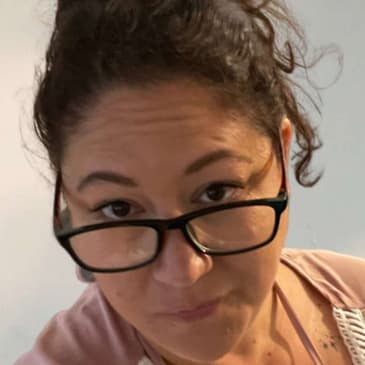
What if embracing body positivity and menstrual cycle awareness became a norm rather than an exception? What if every woman felt empowered, loved and accepted in her skin? When Jesica Medellin had her daughter's first menstruation as a catalyst, she set out to flip the script on this narrative, inspiring women globally with her forthcoming book, "First Moon."
Join us in this heartfelt conversation as Jesica shares the motivation behind her book, a beautiful ensemble of letters, art, and poetry. Born out of love for her daughter, "First Moon" aims to empower young girls to establish a positive relationship with their menstrual cycles. We journey through Jessica's admirable advocacy work, from empowering Hispanic students in Ogden, Utah, to fearlessly stepping away from a job that clashed with her values. We also spotlight her prolific influence on educational institutions through her extensive experience in grant management.
Throughout the episode, Jesica accentuates the importance of creating safe spaces for women to share and learn about their bodies. Delving into her unique teaching methods, she emphasizes the need for a future-focused education that fosters problem-solvers and creative thinkers. We explore her role in the Utah Humanities Bookfest, celebrating the joy of inspiring others, and conclude with her compelling advice: "Let it be easy" and "Do it anyway." This episode champions love, acceptance, and the power of community, underlining Jessica’s belief that positive change is within everyone's reach. Join us and be a part of this empowering conversation.
You can reach Jesica Medellin via her website: https://www.jmmedellin.com/
[00:00:00] Elton Brown: Welcome to SpeakUP! International with Rita Burke and Elton Brown!
[00:00:09] Rita Burke: As our name implies, SpeakUP! International has had the opportunity of speaking to people from all over the world. We've interviewed people from Brazil, from Mexico, from England, from South Africa, from Canada. Today we are going to be speaking to a woman from Texas in the United States of America. Her name is Jesica Medellin.
I would like Jesica today to tell us in about five sentences about Jesica.
[00:00:45] Jesica Medellin: Okay, my name is Jesica Medellin. I am from Galveston, Texas, and I live there with my husband of 22 years and our three children. One is 22, so he's actually living in Utah right now. My other daughter is 16 and my youngest son is 10. I have a master's degree in Curriculum and instruction design and for Weber State University in Argonne, Utah.
And, um, I'm an advocate for women. I've been in the education business for near 15 years and I'm just excited to be here and talk to you.
[00:01:24] Rita Burke: Wonderful. Thank you. So you, you completed the circle for us in terms of your bio.
Jesica, your bio says that you are involved with body positivity. You're an advocate.
[00:01:38] Jesica Medellin: Yes.
[00:01:39] Rita Burke: Please tell us what that means.
[00:01:42] Jesica Medellin: I think that, um, we have lived in a society that puts a lot of pressure on the way that women look and the way that they feel about themselves in terms of many things to include motherhood, um, our involvement in community, and just the way we look period.
And I would like to, uh, create a world where we just. Are able to love ourselves where women are just able to love ourselves. And I think that true like self love and body positivity comes with the embodiment of loving your menstrual cycle. And I don't think that they'll ever be like balloons and celebration around your menstrual cycle, but I do believe that it's an important part part of being a woman.
And, um, in a part, an important part of being able to love yourself completely.
[00:02:31] Elton Brown: So, how many years have you been part of this project?
[00:02:36] Jesica Medellin: Okay, so, I think that I have been an advocate. For a lot of years of my education degree and, and my, and in teaching, I was always trying to help my own students just find a way to navigate. I, I worked with special education students, um, those students with what society calls a disability.
Um, and I always wanted to let them see that they had so much more about them. They were, they were artists and they were builders and they were thinkers and that their disability. Their disability didn't define them in that it's led me kind of on this path of, um, encouraging women to love their, their bodies wholly, because I would see the girls and they would be shamed or they'd be, you know, nervous, they would hide their pads or hide their tampons or, um, Be afraid to talk about what they were going through.
Um, I heard many teachers talk about like, Oh, they're just using it as an excuse. And I hate that we haven't created enough comfort around menstruation that it's looked at like that. Like it's just an excuse that women go through, you know, a time of the month where they're shedding whining of their insides and they, they aren't giving enough grace in America.
I don't, I'm not sure about other countries. But they're not given enough grace in other, in America for these things.
[00:04:05] Rita Burke: Well, Jesica , I certainly applaud you for taking on that subject matter. So, I need to ask about your book, First Moon. What inspired the writing, please?
[00:04:23] Jesica Medellin: My own daughter inspired it. So, um, in April 2020, we were in COVID and she had her first menstruation.
Um, she was 13 at the time and I knew that I wanted her to have just such a vastly different experience than I did when it came to menstruation. I had a very hard relationship with my own menstrual cycle. Um, as I grew up and as I was an adult even, uh. They were, my cycle was irregular, heavy, um, I had issues getting pregnant, just so many things.
And so I wanted to, from the beginning, create a positive place for her to land and for her to feel accepted and loved and for her to just really create a really good relationship with her menstrual cycle. And in doing that, um, I reached out to family and friends for letters of advice during COVID so people couldn't just come by and, you know.
Be with her. So we created these letters and as we got the letters, we sat there and we, we read, we read these letters and we cried. We just cried when the advice came in from her family and our friends. It was so incredibly magical. And as I sat there and I saw her getting emotional over just the support that she was feeling, I just knew that I wanted every young female to feel that way.
I wanted every young girl to feel that she was loved and supported and, and held in this space and that it was okay that this is something that happens to 50 percent of the population, either. Will have, has, or has had a period, and I wanted every girl to feel that way, and that's why I started the first Moon Manual.
[00:06:20] Elton Brown: There were, correct me if I'm wrong, it's a collection of stories by many, I won't say many, but by several women, if I'm correct. Is that correct?
[00:06:34] Jesica Medellin: Correct.
[00:06:34] Elton Brown: Can you tell us a little bit about the other women that helped produce this book, like you don't have to give me their, you don't have to give me their names or anything like that.
[00:06:43] Jesica Medellin: Absolutely. Um, so I think maybe something I like that inspired me when I was writing this and compiling and thinking about it was Chicken Soup for the Soul. Do you guys remember those books? There's, there's hundreds of them now, Chicken Soup for the Soul, and a collection of stories by other people that are inspiring and loving.
And that's what really inspired me, but I wanted to make it more interactive and I wanted to include other things like parts, because I love spaces where there is art, and there is words and it all just flows together. So the first manual has letters, art and poetry. By 24 amazing women, and I wanted to make sure that it looked, um, that any girl who picked it up was able to feel like it included her.
So it's diverse, the women who contributed are diverse. Some were teachers. One's an administration poet, one is a typewriter poet who creates poems on her typewriter, and then the third is a spoken word poet, and Uh, she, the year, June 22nd in June of 2022 is when I released the book and that same month she was named poet laureate of Ogden, Utah. So, um, it was just really, yeah, it was just really cool.
And Akemi, the artist, uh, she's the one who gave us all the art and it's, and she has an affirmation word. So I wrote the affirmation to go with it and, um, her art is just beautiful. She creates very empowering, beautiful art. And yeah, it just, it's like, feels so magical, uh, after every letter, there's a reflection space with a question, um, I know it's hard to see, but this, this reflection says, how does it feel to know my body and my cycle mirrors the moon?
Um, and then there's creative space where they can draw and. So many incredible women contributed to this. I mean, they're just so, the words that came together from this, some of the, um, the advice, some of the, the love, it's just incredible.
It's hard to, it's hard to put it into words, you know, it's hard to talk about it because it's so moving. One of the, um, One of the letters says that, you know, if I ever forget how capable, wonderful I am, I look in the mirror and say, I'm the miracle my mom needed. I'm the life force that broke through all odds to be here.
I will continue to make the impossible possible. Like, how powerful is that, right? Like, I will continue to make the impossible possible. And that was from a daycare owner.
[00:09:23] Elton Brown: How do these women feel? After they had written their contribution to this book, what did they feel was most beneficial?
[00:09:36] Jesica Medellin: So, that is the magical part that happened.
So, I got so much feedback. Every, every woman who sent me a letter said a few things. One was that it helped them feel a part of themselves that they didn't even know they needed to feel, which was incredible. Another, you know, another person said... What I asked one from a person who didn't have any daughter and she said, I don't have anything to say.
And I'm like, well, maybe if you did, and she didn't, she wrote the most beautiful letter about how, um, how she, she was told she was supposed to be a woman, you know, and she had her menstrual cycle at like 10 and she's like, what did that even mean? And for a long time, she was, uh, a tomboy and just kind of.
hated her cycle and just tried to push that part off. But when she finally accepted her femininity and accepted that as part of herself, it's when she really grew into the person that she is. And so every, every person who contributed has been incredibly grateful and excited. And, and I think that it's a really cool thing because.
Anytime this is like tagged on social media or it and they're tagged in it, they're holding space for the women who are reading it. Right? So they're reminded and I think they think about it often anyways, but I think it reminds them and then all of a sudden they're holding space. So imagine you have 24 women holding space for you at any given time. Like, isn't that an incredible Thing?.
[00:11:02] Rita Burke: Certainly awesome! Certainly awesome! I would say. Now, Jessica, based on your bio, you studied journalism. Have you ever pursued that? As a career?
[00:11:13] Jesica Medellin: Um, I did not pursue it. I, I did the Crime Beat for a radio station, um, as an internship.
2006, it was right before my husband got deployed and once he got deployed a 5 year old son at the time with him, our oldest son and and as I moved back on my gravel under the foundations of homes at that time. I always, when I pursued my journalism degree, I was the features editor for our college newspaper, Weber State University, and I won awards for the design aspect of how I would design together in our feature section.
That was really, I think it was always there, but it didn't seem like a possibility. And it's one of the things that I'm trying to encourage my own children to follow whatever they want to do and not think that something's not a possibility. Because I, I was told so much that, oh, if you're in journalism, you want my fee money and these people don't pay me.
How can we do anything? And, um, our family business during the, the housing market, Bus back in 2009 ended up taking our family business under and I got into education and through education, I found a new calling, right? It was just the desire to help student. Um, I worked in Ogden, Utah, and we had a majority of Hispanic students in 2010, my thoughts are that they were misunderstood.
My husband was Hispanic, but he would tell me, you know, we were in a mostly white population in Utah. Um, and he would tell me how hard it was and he would explain things to me. And so I started to advocate for our Hispanic students. And from there, I think it just grew. I, I wanted to advocate for students with disabilities because they're so misunderstood.
And. Then I just stepped into this, um, career of, or this passion, this purpose of connecting people in a way that supports other women, right?
[00:13:23] Elton Brown: And when you make these connections, either for yourself or for other women to connect. What is the benefit for those types of
[00:13:36] Jesica Medellin: connections? That's such a great question.
Um, in this world, we're more connected than we've ever been, it feels like. Um, but yet we're also so very alone. So we have the ability to um, be on social media and see people from all over the world. Yet, we're still sitting kind of alone in our homes and, uh, scrolling through our phones and, uh, kind of where our connection is.
So, the purpose of this is, is to hold a space for women where they feel like they're actually really connected to, like, a tribe or a community. And, um, and the reflection space allows them to connect with themselves. And I do think that we're very disconnected from ourselves these days.
[00:14:28] Rita Burke: I like that statement, Jennifer, when you said, Even though we're connected, sometimes we're still disconnected, and I think it's so important for us to keep that in mind. We need to be intentional about that. Now, do you remember a time when you had to say, enough? Could you share that with our
[00:14:53] Jesica Medellin: listeners, please?
A time when I have a say enough just to anybody or to anybody or about anything. Okay. Um, yeah, I, my most recent position
things happen that didn't align with my moral, my value in that situation. And I had to come to the decision to resign my position. And I did that last year, um, in June of 2022. I loved the position I had. I was an administrator for an afterschool program. So I had six schools under me. I worked with six site coordinators.
They went to the schools. They did the program. I connected. That's where I found my love of connecting community. Um, I would connect, you know, the little red box, which was like a grocery, like low income grocery to, um, to our chefs and our chefs would do a Zoom. So, and the parents would all get a bag of groceries.
Uh, that included all the ingredients for that night and they would be able to cook with a chef that was on Galveston, um, from a, from a restaurant. So it was like this really cool connection of people and, and resources. And so leaving that position was extremely hard. But I was losing sleep, you know, I was, I was literally so incredibly stressed out because I knew that while I wasn't, nothing was affecting me.
Like, head on, but it was affecting the people around me. It was affecting our students. And to me, it wasn't the right thing. So, that's when I finally said enough, and I just pursued creating this manual, well, publishing the manual last year, June of 2022. And then, um, took a little bit of a hibernation to raise my family, because I had been working full time. And then my husband got the story, and now here we are!
[00:16:47] Elton Brown: So, how has... Your extensive experience in grant management shaped your vision for improving educational institutions.
[00:16:56] Jesica Medellin: That's a deep one. So, um, I'm not sure my calling is to be in educational institutions anymore. I have very strong feelings about how the educational institutions are being run right now. And I'm unsure that this is the appropriate platform to talk about that. That being said, I really think that our students need to be taught for a future and we seem to be teaching from the past.
We're not using technology in a way that's educating students. We're still punishing them for their technology. And, um, it's really hard because I feel like my, my own children sometimes will ask me something like, why don't you just Google it. Right. And they're like, what do you mean? Like, just tell me the answer and I'm, and I'm just blown away that they're still depending on me, but they're like supposed to be the technology, you know, um, generation.
I think that. It's difficult because my I'm very tech savvy. I can, I can figure things out most of the time. And so it's frustrating to me to watch them sit in classes all day and still do wrote memorization and I've watched the grant. I used my platform with a grant to. That are not only the students, but the community around me, um, and I've watched other grants not do that.
So it's very difficult to be watching that. And I just don't know if I answered your question.
[00:18:18] Elton Brown: I think you answered the question. So. I know that you have a passion for empowering children and supporting your community because you just said that. So how does that align with your career aspirations in education leadership?
[00:18:36] Jesica Medellin: Um, I think I've a little bit, again, gotten away from the education leadership and I am really Focused on the 1st, new manual, the 1st, new manual, the 1st, and many manuals that I am hoping to develop, um, I would like to do support manuals for people going through hard things at this moment. They're focused on women.
So, um, new moms. Parenting is a hard thing when you have a child, especially when you have six weeks or less of maternity leave here in the U. S. Um, the lack of sleep and trying to take care of a baby and trying to juggle your career is just a difficult thing. So I'd like to make a manual, you know, with experience and love.
Surrounded around that. One on new marriages. I've been married 22 years. It has not always been easy. Marriage is a, is a full time job. It's something that has been a challenge and I want to support young couples on that so that they don't feel like they have to give up. You know, or that's their only choice.
Um, I would like to write a manual, um, supporting divorce. I've met a lot of divorcees and they're struggling and they're hurting right now. And I want to ensure that we're empowering them. To feel loved and that they're not failures and menopause is a huge topic right now that many women have come to me about and they want a manual supporting in the menopause, there's not a lot of information about that.
I think when it comes to educational leadership, what I'm doing is I'm hoping to educate people, but in an emotional and mental health way. And in a way that just empowers them to just love themselves so much more.
[00:20:07] Elton Brown: I saw a film that, uh, portrayed Indian women who lived in shame. And when they had their period, they were more or less pushed into a room and closed the door.
And they were considered unclean until they finished or got through their cycle. And the one gentleman who actually created a cheaper pad for women was basically thrown out of India because everyone was stuck to that old belief. So I'm just wondering, when you are dealing with individuals, do you ever find, uh, women, do you ever find them stuck and you've got to I don't know, bring them up to the 21st century and say, Hey, you know, you don't have to live in a, in a cave, you know, while you're going through your cycle.
[00:21:00] Jesica Medellin: I've been very blessed that the women that have come into my life, um, have been very excited about this. They do. Um, I think it gives them a space to talk about their shame and the things that they've been through.
Um, I've had many women around my age, a little bit older. Even 10 years younger say, yeah, I felt so ashamed. I just felt dirty. I didn't know what to do. Nobody talked to me about it. So I think that they're It's still relevant right now. Um, I'm very blessed that my daughter is very open with me and she talks to me a lot about it and she says, well, now we're fine.
We're like, yeah, I'm just on my period and it's okay. And I think the tide is changing. And I think that's what the women who were, who felt like they didn't have acceptance when they were young to change it. And they're having those conversations. So then how to bring anybody into the 21st century. Um, and I've even had men.
Who've been really excited about talking about this and that I have a book on it. Um, they think that it's a really good platform. They're there for as well. I haven't had anyone who's been antiquated talk to me yet. Knock on wood.
[00:22:05] Rita Burke: It sounds to me as if you are providing a healthy forum for people to talk about issues that are very important for them and to them, and it's bringing our world into a different century.
And I'm really impressed with that. Now, way back, as we started to talk, you expressed some concerns about teaching from the past as opposed to teaching in the future. Could you expand on that statement for me, please?
[00:22:37] Jesica Medellin: Yes, ma'am, I can. So, um, there are so many countries who are leading education right now.
Finland is one of them, right? And they don't require homework and they have breaks and they have kids move, but we're still in the classroom. If you walk into a classroom, children are still being told to sit down and be quiet and don't talk to each other. If you think about, Yeah. If you think about the world we live in, I mean, how often are you just sitting down being quiet and listening to somebody so often, even in the workplace, we have to work with other people.
We have to collaborate. We need to be talking. We need to be figuring problems out together. You're very. Very few people are figuring out problems alone. Um, also, when it comes to things like math, there's so much math I don't know, but I can go straight online. And now, especially with the new AI that's been coming out, I can come out and I can figure out any math problem that there is.
Or at least figure out how to figure it out by, by looking that up. So, what are we doing in our schools? We're still saying, memorize these spelling words. Memorize your, your times table and we're not, to me, again, this is just my humble opinion. To me, we're not teaching in a way that is creating a future leader.
When we have AI that comes in and starts taking over many of these jobs, um, and many of the things that people have been doing, we're creating a space for people to do more to, to really solve world problems, to solve hunger, to solve, um, The homeless situation to solve housing issues to solve all these things, but are we creating a generation of children who, in the future can think about solving those things if they are so busy still memorizing their time.
[00:24:26] Rita Burke: Yes, it certainly does answer my question. Thank you. I wasn't sure what you meant by that. Jesica sounds to me as if she is a budding social activist. So, who's responsible for who you are today? Who or what? Is responsible for who you are today?
[00:24:45] Jesica Medellin: Who's responsible for going through? Um, I would say, of course, um, my parents definitely had a hand in that, especially my mom. Um, this is kind of a funny side story. I hope we have time for it. Um, When I first started my period, I was in about junior high, so seventh or eighth grade, and I went into the school gym locker room, and a girl came in, it was kind of the mean girl of the school, and she made a comment about how she could smell that somebody was on their period.
And I was mortified. Now, looking back, I can say like probably half of the girls on their period, right, or at least a quarter or, you know. And, um, but I was mortified. And so I refused to dress out for me anymore because I didn't want to be embarrassed by, um, by this mean girl. So when my mom asked me why I did not dress up for PE and failed PE, because that's what happens when you don't dress out, you fail, even though I still participated, I failed for not dressing up.
Um, I said, I thought the money should be spent on books and art. And not, not on sports because enough money went to sports. So I was making a stand and she was like, okay, you're making a stand. So I think that. While I can't remember an exact moment or something that she did, she obviously believed me at that point.
And she was the one who had given me the voice to believe in books and art. So I, so she has the, you know, my mom. And then I think that my husband and my kids are also responsible for who I am. I. Um, I've had this, I have mom guilt, you know, I'm a 22 year old son and I had him when I was 22. Um, and my husband was deployed the first of the first six years of his life.
He was out of the country for years of that off an arm. And, um, so it wasn't the best mom and I had a lot of guilt around that. Until I really started to think about, like, I'm a cycle breaker, and my husband's a cycle breaker. My husband's a first generation high school graduate, college graduate, and now master's degree, you know, he's a first generation like homeowner, like, so.
When I think of the cycles we broke, I had all the skills because I'm a way better mom to my 16 year old and my 10 year old than I was to my 22 year old. But I really had to think about that and I was like, you know, I was still busy breaking cycles. I was breaking the alcoholism cycle. I was breaking the, you know, cigarette smoking cycle.
I was breaking the drug addiction cycle. I was breaking the college, no college cycle. So all these things. That I know that I'm a better mom now and I wasn't a great mom back then, but I was so busy breaking cycles and trying to better myself and all that's due to him, like. He was my first and he made me want to be a better person, you know, and as I had more children, I wanted to be better for them. So they're responsible for who I am.
[00:27:32] Elton Brown: Jesica, how long have you been living in Texas?
[00:27:36] Jesica Medellin: We moved here in 2018. So I was, we were living in Utah. From 2007 to 2018, and in 2018, we moved to Galveston, Texas. My husband's from Galveston, originally. Um, so we moved back to be around family. So we've been here for five years.
[00:27:55] Elton Brown: And do you prefer living in Texas as opposed to where you were living before?
[00:28:01] Jesica Medellin: I definitely prefer the weather, even though sometimes it's a little bit too hot. Uh, I do not. So we were in Ogden, Utah, and it was cold and snowy, and I do not like the snow. I don't ski or do any winter sports, and I do not like being cold.
So I definitely prefer being here when it's warmer or in the winter when there's no snow. That being said, I mean, Utah has some very beautiful places. Uh, I've been very blessed in where I was. So the mountains in Utah are so gorgeous. I was just speaking at the, um, Utah humanities book fest, uh, October 13th.
And I got to see the colors and, you know, the colors are just so beautiful in the trees and it's just amazing. It's just like the mountains are on fire, but they're just so beautiful. But then I get to live in Galveston, Texas. I get to live in Galveston, Texas. Where we have the Gulf of Mexico and it's the ocean and it's beautiful and it's just this really nice big body of water and it's an island so there's palm trees and so I, I don't think I prefer one or the other. I think I just love everywhere!
[00:29:01] Elton Brown: So you mentioned about the book fair. Can you give us a little more information about the book fair and what were you doing there?
[00:29:11] Jesica Medellin: Yeah, the Utah humanities book fest is a book festival every year and they bring in different authors to speak about their book. Um, I, the poet who was the poet laureate who's the poet laureate of Ogden right now. I connected with her back in July and she's on the book fest committee. And she mentioned that they were looking for speakers and authors and I looked at her and she's like, I didn't even think it was like, okay, so she, um, yeah. Connected me with the coordinator. Him and I had a Zoom meeting. We talked about the book and what my mission was and he was so, um, he was so supportive.
As a matter of fact, they don't usually buy authors books, but they purchased books because they didn't want any girl to walk out of there without one not telling for and he thought this was so I got to go up to Ogden. And like I said, my son's living there, so I was able to visit my son and his, uh, his partner and their.
His stepdaughter, her daughter, and, um, and I got to speak, and I had some of my former students who showed up, and former colleagues, and it was really nice to stand up and talk about what inspired me, and how it is to create community, and just all the great things that I believe First Moon Manual does.
[00:30:23] Elton Brown: You know, inspiration is a wonderful gift to give to other individuals. What would you think, or what would you say is the benefit for passing or giving such gifts?
[00:30:37] Jesica Medellin: Well, I think that so often, like I said, I was kind of, I was kind of told when I was younger, like writing wasn't really a career or it wasn't going to make me any money. And the problem is, is that's not the truth. And when people really live their purpose and their passion, whatever that is, it took me a long time to really figure mine out.
And I think I really only needled it out like two months ago, completely, um, but when you inspire other people to live their purpose and their passion, I mean, lives change the world changes. Right. Because that's what we do. We serve others. My book isn't about selling books. It's about changing the narrative around the stigma, right?
So it's about serving other people. It's about allowing girls to be who they are and to love who they are and to love every piece of themselves, not just most of themselves, but not that part. Right. So I think that when we inspire other people to really live their purpose and their passion, we are.
Changing the world. We're allowing people to serve and love and to be who they really are.
[00:31:40] Rita Burke: I like what you said about your book and the rationale or intent behind it to help. inspire people. Now on SpeakUP! International, we seek to inform, to inspire, and to educate. And I think listening to your story certainly is helping us to meet those goals. Now, could you think of the advice or counsel that you would consider to be the best piece of advice you've ever been given?
[00:32:14] Jesica Medellin: Um, there's so much. There's so much. Um,
one of the Best pieces that I'm living my life by right now is let it be easy. So anything that seems hard, I don't need to fight for it. I can just let things flow. Um, I also think that do it anyway is one of the best pieces of love life. So not everybody, you could be the juiciest peach in the world. I don't know what they say, but not everybody likes peaches and that's okay.
And I had to really, um, had a lot of fear when I was doing this book about what people would say and how I'd be received and any, um, negative feedback that would come because it just does, because we have a lot of people who are living in a place that I believe they're not truly happy. And so they go and they attack other people.
So, especially people who are living their best lives. And spreading messages and really trying to help people. So you always have someone who's going to say something either. They won't like the layout or the design or the way it was done or the letters or who contributed or whatever. And, um, so, yeah, so just do it anyway, uh, let it be easy.
Do it anyway. And just, it's okay. It's just okay. I'm enough.
[00:33:31] Elton Brown: Hey, you know, I'm a strong believer in, you know, do it anyway. And why not? Because if you don't, who will? And I want to say thank you so much, Jesica, for Allowing us to spend some time together, even though we are in Canada and you are in Texas, the beauty of Zoom is that there is no bounds in terms of where we can connect.
And I can see through your use of higher education, you've been able to connect with children, females. Uh, to be exact, in order to take away the stigma and the shame of going through something so natural as their, their period. The fact that, uh, you have a book out and that you have been, uh, pushing the book to answer a lot of other questions that other women may have about the process a woman goes through monthly.
I think the book is extremely beneficial to most women and to men, because a lot of men have no clue, even though they've been married to a woman for years, they really don't have a clue in terms of what actually is happening. During this time, so I could see how that book would be extremely beneficial for men to gain a clue.
So I want to thank you so, so much, Jesica for spending time with us on SpeakUP! International. And when you are ready, and you have some new developments. Please let us know because we would definitely want to know what they are. Thank you.
[00:35:22] Rita Burke: Thank you so much.
[00:35:25] Elton Brown: Thank you so much.
Thank you for listening to SpeakUP! International! If you would like to contact Jesica Medellin, please visit her website at https://www.jmmedellin.com/ where you can leave your contact information.
Would you like to be interviewed and your casue promoted by SpeakUP! International? Please drop us a message containing your name, company name, the service you provide to your community and email address to info@speakuppodcast.ca.
You can reach us using Facebook, Instagram, Twitter, and LinkedIn. To connect to our podcasts use Spotify or your favorite podcast platform and search for SpeakUP! International. You can also find our podcasts, using our web address www.speakuppodcast.ca. Our logo has the woman with her finger pointing up mouth open, speaking UP!
At SpeakUP! International, we aim to inspire, to inform and to educate.