
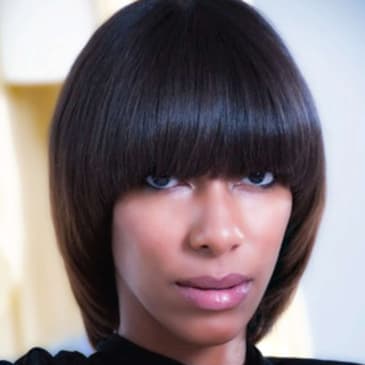
Imagine stepping into the vibrant, pulsating world of fashion at the tender age of 13 and carving your way to the top. That's the riveting journey of our guest, Kendra Francis, a Toronto-based fashionista who's built a name for herself in the luxury apparel space with her label, Frankie. Kendra unveils the threads of her journey, recounting tales of sewing lessons from her father and uncles and the gruelling yet rewarding journey at Ryerson University that honed her skills and imbibed in her a relentless pursuit for perfection.
The runway of Kendra's career hasn't been without bumps. She was the sole Black female designer showcasing during Toronto Fashion Week, a distinction met with unnecessary backlash from the FDCC. But Kendra, being the powerhouse she is, tackled these hurdles with creative strategies and an undying spirit. She divulged how she stirred up buzz for her off-site shows, proving her resilience in facing adversities.
From the triumph of opening her own boutique on Queen Street West to the joy of launching her children's line, Petits Genoux, Kendra's journey is a testament to her versatility. The episode takes a profound turn as she reflects on the impact of motherhood on her work. We also delve into the evolution of her brand, Frankie, with its timeless style and unique appeal. To wrap up, Kendra gives us wisdom on instilling confidence in others and creating a positive aura. Get ready to explore the riveting world of fashion, resilience, and creativity with Kendra Francis!
To receive more information about Kendra Francis, please visit her website: https://www.petitsgenoux.com/
[00:00:00] Elton Brown: Welcome to SpeakUP! International with Rita Burke and Elton Brown!
[00:00:09] Rita Burke: Today, it gives me great pleasure to introduce a homegrown, and I say international designer, Kendra Francis. Now, Kendra began her career at the age of 13 and was self-taught. So by the time she started at Rarson, she was on her way to fashion designing. She's currently the brain and name behind Frankie, which is a luxury apparel label and is considered one of Toronto's hottest respected designers.
To our listeners, meet Miss Kendra Francis!
[00:00:53] Kendra Francis: Hello everyone. Hi. How are you?
[00:00:55] Elton Brown: I think we're doing well. Thank you for asking and welcome to SpeakUP! International.!
[00:01:01] Kendra Francis: Thank you for having me!
[00:01:03] Elton Brown: Right off of that. What is your signature style as a fashion designer?
[00:01:09] Kendra Francis: Um, for me, I enjoy tailoring or enjoy menswear tailoring, and that's probably because.
I learned a lot from my father, who, who, uh, learned from his father, who was a tailor. So my look would be, uh, modern contemporary. I like the tailoring. I like the form-fitting style, but very chic. Um, in the luxury space, like upscale day wear to, to evening wear.
That's where I fit in, in the women's wear, in the women's wear side. But I also have a children's line as well. So that children's line is, is more, um, classic styles. It's not sweats. It's not trendy. It's like classic bonnets and rompers, stuff that would more be along the lines of a heirloom sort of piece that you can pass on and every baby looks cute and it goes from zero to 24 months.
So, you know, you always have those cute, before they can decide what they want to wear before they're telling you they don't want to wear it. Yeah.
[00:02:18] Rita Burke: Sounds exciting. When I have my children, of course, there was no, there was no children's line. You went somewhere, you bought clothes for children. Right.
But I have a question. You said in your bio, Kendra, that sewing is in your blood. It's in your DNA. I want you to explain that statement for us, please.
[00:02:38] Kendra Francis: Um, So firstly, my grandfather was a tailor and my father is from Dominica and his dad was a tailor in their town and he made all the uniforms for the fire department and for the police department.
And through, you know, the tales of, you know, our uncles and everybody, a lot of my uncles and my dad's. They came up sort of interning in the tailor shop. So a lot of them know how to sew and to tailor. My dad's brother actually was a tailor by trade. My dad wasn't, but he knew how to sew. Um, he knew he was the perfect presser, you know, he knew how to do the perfect welt pocket.
So as I discovered fashion design, and then I had my, my uncles, well, my first cousins, my uncle, who was a tailor, his daughters, they would sell their own clothes and they'd come home with their Vogue patterns and they'd make their dresses to go to church and they'd make their dresses for different, you know, events and stuff like that.
So I took that on and I used to take Vogue patterns and cut them and. You know, re, repurpose them. I'd always, Kensington Market was a big haunt for me and picking clothes apart and seeing how they're made inside and then remake, making them to fit myself. So that's how I taught myself. My dad was always there to help me.
He had the big sewing machine at home. My mom used to make clothes for me as well. Um, and, uh, You know, when I had my fashion shows, my parents would be there backstage, clipping threads. My dad would be pressing everything to perfection. My dad would, you know, be the one helping me make the perfect welt pocket on a, on a suit or a pant.
That's why I mean it's like in my blood, like I've been watching it and participating it for as long as I remember.
[00:04:27] Elton Brown: Wow, that is absolutely amazing. I think in our culture, a lot of things are passed down. They're not some type of formal education, and we learn from doing. Which I think in a lot of ways is far, better to learn that way as opposed to having books and having to learn all this theory.
[00:04:49] Kendra Francis: Yeah, practical learning, I mean, then it just becomes muscle memory, you know, you see, you feel, you touch, you can activate the process and then, and you learn that way.
[00:05:00] Elton Brown: Speaking of learning, you went to Ryerson. So what did you take away from that experience?
[00:05:08] Kendra Francis: Fashion school is, you know, it sounds, Oh, school for fashion.
I don't know what the average person thinks about it, but it's very demanding. We actually had more in class hours than the engineering program. And we were there day. And night and they were hard and they were exacting, you know, you do your shirt sample for class. So the project is assignment is a shirt.
And that red marker would come out, and every little one eighth of an inch off, he'd circle it, circle it in front of the class next, and just be destroying your work. It's like architecture, especially when you're doing pattern making. Everything is to the exacting. You take off an eighth of an inch, an eighth of an inch, if you're off.
Then you're what you're working on does not work out. So the hand right learning to hand, right learning graphic design, learning perspective, learning all the different classes we have. I just I just knew how specific how tight how. exacting it has to be, how much of an art it actually is in that way. So it just sort of amped up how, you know, precise and how clean and how, um, perfect I knew I had to be in order to put out the piece the best work.
[00:06:29] Rita Burke: You have to be perfect to put out the best work. I like that. It's called Excellence. I'm not sure if we can label it Black Excellence or perhaps we can. So, were there many people that looked like you? In that designing course at Ryerson.?
[00:06:46] Kendra Francis: There were a few, not a lot. I remember one girl named Karen. There was, there was a few, but not definitely not, not a lot. And because of the intensity of the program, you know, we had 70 percent dropout rate by Christmas. You know, because it is hard. It's long. I was like, when you have to hand in an assignment. You know, you have to hand it on the hour and people would be helping each other that couldn't finish and there'd be a line from the door where you had to throw your work in and everyone would be passing and you'd just like throw it in the door because she would shut that door right on the hour and if it wasn't in, like, then that was a fail.
[00:07:28] Rita Burke: Was it a challenge? Was the program a challenge?
[00:07:30] Kendra Francis: It was a challenge. Yeah.
[00:07:32] Rita Burke: Why did you stay?
[00:07:33] Kendra Francis: Because that's all I wanted to do. I grew up, like, Sunday mornings, we'd go into my parents room, and we'd watch Ginger Rogers, Fred Astaire. We'd watch all those old movies and I was just fascinated by their dresses and their wardrobe and their handbags and I just, that was the world. I watched, um, you know, I was obsessed with fashion television.
I videotaped it. We had VHS back then. So, videotaping all the time. PBS used to have documentaries on Coco Chanel and Dior, all in black and white. You know, um. All those things I videotaped, any kind of information on fashion, that's, that's all I wanted to do. I knew that's what I wanted to do. My, my parents, even though I sewed and they, they saw me, like, you know, I made my own prom dress, I made everything.
They were surprised that I was going to fashion, because I also was good in biology and science, and so I had extra credit. That's the science when they wanted me to go to Queens and do science. I applied to Ryerson in secret off to the side, put together my portfolio secretly, um, woke up super early in the morning, had my boyfriend drive me down flying on the, on the Gardner to get me to my interview.
And I did all that in secret and got accepted. To Ryerson because for them, tailoring was not a career, they didn't see it as that, you know, um, and yeah, and that's how I got into Ryerson on the, the, I still did the whole thing, like applied to Queens, applied to Western, went to see the campuses and everything, but I knew that's, that's not where I wanted to go.
[00:09:28] Elton Brown: Can you tell us a little bit about the SS04 collection? And how that lifted your career?
[00:09:37] Kendra Francis: Spring/Summer 2004. Um, that one was done, it got me on the cover of the Toronto Star Fashion section. So back then, for all the young people listening, we did not have Instagram. We had to wait a week.
To get the review and you would cross your fingers and hope you would get a review. There's only like four pages in the fashion section, so there's only, you know, a certain amount of slots, people that would actually get that accreditation, you know, and I very rarely showed in the tent in Toronto for the fashion.
I showed in my shop. So I had my own shop, and I would do my own private showings there, because the price to pay to show for the FTTC was, um, very expensive, so I would produce, do the show in my shop, and I made it on the front cover of the paper, and the major editor at that time, or fashion editor, Bernadette Morrow, published it.
Um, the whole front page of the fashion section was my collection in the store, beautiful photograph, and it was Fashion Week, Toronto Fashion Week. This got me in a lot of trouble though. Toronto Fashion Week is no longer week, W E A K. Because of Kendra Francis. And that was amazing for me, but I got a lot of backlash from the FDCC at that time.
And I had to like, call, and they wanted an apology, and I was like, I didn't write it, like that wasn't something I said, that was something that was written about me. But, yes, I got a lot of backlash from that. And, and to your question about a lot of, of people like me in the program, there were not a lot of people like me showing in Fashion Week.
It was myself. I was the only Black female designer for a long time. I did a reality TV show. I did Project Runway, the first season of Project Runway Canada, where Iman was the host. And there was another, um, Black designer, um, Charnette, and she was not from Toronto. I believe she was from another province.
Sorry, I can't remember exactly. And until I did that show, and then she sort of moved to Toronto and opened a boutique, I was the only black female designer showing during the calendar for my entire career.
[00:12:07] Rita Burke: And what was that like for you to be the only Black designer?
[00:12:11] Kendra Francis: Um, well it doesn't matter now. Back then I got a lot of backlash because I spoke up about a lot of things.
I spoke up about, um, you know, the cost of showing a fashion week was exorbitant for someone who didn't. But then a lot of the top designers who I knew, who graduated from Ryerson as well, who were sort of my elders at that time, senior, more senior than me, they weren't... Asked to pay because they were bigger names.
So some people got their spots comped. Some people didn't have to pay. Some people, there was all, you know, different sort of relationships going on. And, um, I remember speaking about it in an article. I think they called me from one of the publications. I'm not too sure which one. And oh my goodness. I got calls because I was on, I had just done project for my cat, I got calls from Brian Bailey, from different people, just like, why did you say that?
Like, why are you talking to the, uh, the head of the FBCC, um, was very upset with me. So the next show. You know, L'Oreal was the huge sponsor. Then she pulled my makeup and she pulled my hair. She wouldn't allow L'Oreal to do my makeup and she wouldn't allow the sponsor hair team to work on my hair. And at the last minute I had to decide, Oh my gosh, okay, I got to make hats.
I got, I got to do something cause I couldn't find a hair team in time to do the hair. My show was offsite. She wouldn't allow them to cough up. The one good thing is, and I, and it's so long ago, I don't remember her name, but I remember the head, the person who was in charge of L'Oreal cosmetics, who was heading the team for the fashion week.
She called me and she said, we are here for the designers. I don't care what they're saying. We're here to help you guys and we will be at your show. To do the makeup. So that saved me, but, um, yeah, I had to find very creative ways to get people to come to my show, you know, I would get, one time I had a sponsor, I think, it's not Uber, what was it called?
Those cars where you kind of pay, like if you live in the city and you don't, um, own a car, you can, you know, rent a car for a few moments, you know, you go pick them up at the lot, those things, it was just coming into the, Into the city, and they sponsored, and so we would send those cars to pick up the editors from their show to just to make it convenient to come to my show, and then, because it was off site, and then they could take those same cars and go to the next show, just to ensure that we would get people, you know, tried to get the creative director of, uh, Renfrew to come, you know, so it was hard to get those people to come.
[00:14:56] Rita Burke: I hear determination. I hear resilience. I hear pluck. I hear confidence. Were you always like this or where did you learn those traits?
[00:15:07] Kendra Francis: You know, it's so funny because I wouldn't, you know, at those times I wouldn't be like, Oh, I was the most confident. I don't. I don't think I felt that way, but I was just, this is what I was doing.
So I just had to find a way to do it. Um, one time Holt Renfrew, at the beginning of every fashion week, they would have like a brunch, a breakfast. The Holt, was the Holt Renfrew breakfast in their department store on Bloor Street. And so this one season I couldn't afford to do an actual show. So I got these Brazilian drummers.
There were friends of mine. They had a Brazilian drum squad. I got some models, dressed up, hair and makeup. We had the van around the corner. And we had the, there used to be Ashley, at the man, like, on Bloor Street, across from Holt Renfrew. And I think it's called the Manulife Center. Not what it's called?
Yeah, the Manulife Center. And I had the models parading as the editors and stuff were coming into, quote, Renfrew. I had the drummers drumming and the models parading up and down on Bloor Street in front of Ashley to create some sort of attention. I think I had seen something like that happen in New York City, so I was like, okay, I'll try that.
You know, I tried any form of trying to get people to see That's when I had energy and chutzpah. I don't know if I would say those things now, but I had a lot of energy, a lot of chutzpah, and a lot of imagination!
[00:16:39] Elton Brown: I know that probably was a attention grabber. To say, to say the least, what celebrities were you able to work with under your brand?
[00:16:54] Kendra Francis: So back then, getting celebrities was mostly, if I, if I knew, um, some people, we didn't really have, I didn't really have that sort of like PR connection. You know, um, it was just, just people that I knew that would just reach out and call me because they had heard of me. So I worked with a lot of up and coming artists.
I worked a lot with the talent from much music, like the VJs. So, you know, the award seasons, I would dress them. There's a few, um, there's an actress now. Her name is Yaya Da Costa, but back then she was. New and fresh. Um, so I just her for for the red carpet. Uh, you know, Canadian Sarah Polly, who's a legend here in Toronto.
So she was on the on the voting committee for the content festival. So I made some clothing for her to go to con. Um, There's a young, um, she's like Korean and black R& B artist named A. Marie, um, and then a lot of people would pull stuff for photo shoots. I remember one of my dresses, um, Karen Kane, our, you know, our Canadian ballerina, and she wore my dress on the cover of, you know, A magazine.
So a lot, just, you know, more like local Canadian celebrities and stuff like that, that people would call me to dress and clothing for editorials for magazine shoots and stuff.
[00:18:18] Elton Brown: Can you tell me a little bit about your relationship with the shopping channel?
[00:18:23] Kendra Francis: So the shopping channel came out as a result of me being on Project Runway Canada and the mentor on Project Runway was Brian Bailey and my store. Was on on Queen Street West was probably 10 stores away from Brian Bailey's store as well. And after the opportunity of being on project runway. He was, he was helping a lot of us.
He was very helpful to me. He, he, he purchased my first industrial sewing machine for me. And, uh, you know, some of the other designers were getting, he was working with the shopping channel cause he has his collection on the shopping channel and he got us the ability to, so that. The ability to work there as well.
So that process is really interesting, producing something from mass production and working with them. And, you know, the costing of something in that way versus was much different than me just pricing something for my own boutique, you know, and working on it. So it was like finding a manufacturer and working with the manufacturing team and doing my technical sheets and going in there and, you know, being on production, my mom and my second mom, which is our neighbor that we grew up with, they would come to the factory and we'd be making sure that the stickers were on the packaging. It was just, it was just a different process, like how you label it, how you get it to, you know, the shopping channel on time. The purchase order, the quantity was huge, all the sewers working, you know, how you had to compromise your design a bit because.
You know, you have to fit into a pricing and what their customer would want. So the collection wasn't really my signature look because it had to fit into what the shopping channels customer based was. Um, but that whole process was a big learning in order to get to the level of mass, you know, production and producing things. Um, not on such a small scale.
[00:20:20] Rita Burke: Kendra. Frances, Sneak Up International seeks to inspire, to inform, and to educate, and there's no question that your story, your story is doing all of those things. Now, here you are, a designer, a black woman, with a business on Queen Street West. Talk about that for, talk about that for our listeners, please.
[00:20:45] Kendra Francis: So that was a big, that was like a very ballsy move because I didn't have any money. So it was like, I found this space and you know, you just have all these like, Oh, I'll just open up my own boutique and this is a great space. You know, it was a new up and coming neighborhood. The Drake hadn't been built yet.
Um, so many things hadn't been built yet, but I found this shop and I just I don't know. I just wanted it. So I put together a presentation. It's so funny that I say this because I'm just realizing my son does this to me now when he wants something he puts together a PowerPoint presentation to convince me of what he wants.
And I've never told them this, but I did the same thing for my parents. I like, and I did the same thing for the landlord at the time because I was no, I was just a girl that just wanted to design, you know, there was, I didn't have any history of ownership or anything like that. And so I put together the presentation, I put together, um, a mood board of how I wanted to look and the concept and the style of the whole thing and what I wanted to generate from this shop.
And I presented it to the landlord, it was like five pages, and I presented it to my parents to convince them to give me the money to Open up the shop. So everyone got convinced by that present because the landlord said yes, and he's like, oh we have like 27 applications for this place But because of what you the concept or what you presented, you know We love it and his wife was into fashion.
And so she loved the idea And then my parents took a little longer to be convinced. It wasn't that easy, but hey, you know They put up the money, and I opened up this shop, and every creative thing I could possibly do in that store, I did. It was like, almost like a creative hub, not just a store. In the, I redid the basement.
So I lived in the basement, my dad helped me, we built theater lined closets, because we built a bedroom, I had washer dryer, I had my studio downstairs in the basement, and you could enter from the back in the laneway. And then the store was just my creative... outlet. I would write quotes from Machiavelli on the window, you know, and I'd have my boyfriend at that time out there just putting, I'd be like, nope, this way, like find the quote and he'd have to perfectly paint it onto the window.
Um, and, and they garnered so much attention, people would stop. I think I got written up in the Globe and Mail for the quotes that I had on the window. Um, like I said, I would do my showcases in the boutique. Um, I opened up a day Beneath so my clients could get like manicure pedicure. So we used to do bridesmaids and bridal parties in their Sex in the city was big at the time.
So I used to get copies of the episode Like a week after it came out in the states because it wasn't like now where you can get obviously there's no streaming You couldn't get it right away. It was on hbo so I get a copy of it from a friend of mine and play it and we'd have like Cocktails and manicures in the shop and clients could get discounts.
So I was actually one of the first people to create that to, you know, do that concept of in store sort of activations. It was experiential, like everything that they have, you know, that they say now experiential, you know, activations. I was doing that then, which was like 2000 to get people to come into the store.
So there's always something happening there. And then, and there was one other girl, her name was Alexia, black girl, amazing girl. She had a store. So there was two of, she was further east. So she was more in the busy section and she had a store where she was selling various designers. And so there was the two of us.
On the street. We were, we were pretty far apart. We weren't, she was closer to Bathurst, and I was like Queen and Shaw, and so there were the two of us on the street, on the strip, you know that Queen Street strip. Um, but as far as designer, I was the only one. And then after a while, I was there for five years.
Yeah, people didn't, some people didn't love it because someone sent the police over one time. And he came in plain clothes. So I didn't know he was spying, right? And he was just like, Oh, so what are you doing here? Oh, you're serving, you know, alcohol. And the restaurant next door, because you know, when you're in those small strips, you make friends with all the owners.
So the next door neighbor was a really popular Italian restaurant and their family was great. And so they would, you know, they would provide the alcohol. Everything was up front, but someone was not happy and sending. You know, the police over to sort of try and, and shut me down. And then, um, people started to keep someone, I shouldn't even say this, but someone would have the audacity was like, Oh, you're running a brothel.
Because I had the spa downstairs and I had people coming to get manicures or pedicures. And I was like, how is that? You know, someone was like, Oh, it's a cover. It was like, it's a cover for something. This is not a real store. It's a cover. So I did get all those.
Um, and so I was there to make it more challenging, which I, I don't think someone would say that if there was, you know, to another store owner. It's just so random. Like, I'm throwing a brothel, like I'm selling illegal substances. You know, it's just like, really? I'm selling clothing. So, yeah.
[00:26:19] Elton Brown: Can you tell me how your Caribbean and African heritage influenced your, your designs?
[00:26:27] Kendra Francis: Um, my parents, um, so my dad moved to England, I think at the age of 16, he was in the army, and then he lived there for quite, and he was a very, and both my parents were very super stylish and super dapper, like you see the pictures of my dad, it's just like, He was super stylist, you know, and, um, and so was my mom.
And, um, you know, we always had to have our hair done. So that sort of Caribbean way of being that formality of dressing mixed with what I was inspired by with those old movies, you know, that was what sort of, I love that. I love the, you know, my grandmother was Venezuelan. And just sort of that energy of being dressed and, you know, having your earrings and having on a tailored suit or having on a beautiful coat, you know, how Westings love to dress for an occasion, you know, even now, you know, which is what I love about our culture, because we will always be the most dressed and people be casual.
Like if we went to the theater, you know what I mean? Like Canadians would be casual, you know what I mean? And we're like dressed to the nines, but That part of, you know, getting dressed and doing your hair and always putting an earring on or always, you know, a little bit of perfume and having your beautiful dress, like, that's what, that's the part of my culture that, um, you know, I wasn't designing tracksuits and t shirts, that wasn't, Um, what I was drawing was more of the form, the formal dressing was what I loved.
[00:28:01] Rita Burke: So Myles is in your life. He's been in your life for a while now.
Tell me how Myles coming into your life has changed it. How have you changed it?
[00:28:17] Kendra Francis: Well, that's a whole other podcast. Um, when I had Myles, I was doing my last collection when I found out I was having Myles. So I did my final collection. I think I was three months pregnant and knew no one knew at that time.
So it was and at that that collection, I actually did a presentation of a recap of my. history of all my collections. I presented, and I presented a new collection. And then after that, Miles came and, you know, people say, Oh, you're going to be more creative, you know, being pregnant. No, I was exhausted and I was not creative at all.
I lost all my creativity. I was exhausted and it made me re start to reevaluate. It was sort of like, what am I now? I'm not a designer. I'm like all those questions come out of I find when you have a baby and you become a different person in a way. Um, and then you have to sort of reevaluate what you are, who you are, what you stand for.
Um, so I took a break from designing. I was producing fashion shows and doing other things in the space. And then I met, um, um, At his preschool, I met another mom, another stylish mom. She wasn't into fashion, but she was, she was very social and she was a connector and she liked fashion and stuff. And she was, she had one in preschool and then she was pregnant with her second.
And then after he was born, she would bring fabric. She was like, I Googled you. And can you make this, do you think like, what could you do with this fabric? I was thinking this bonnet and this. And so we only had a few hours in between drop off and pick up and we would look at fabrics and she'd show up with a fabric and we sort of, do you want to do a bond?
What about a romper like this? And then after a couple months, we had like, And we were like, is this something? Is this a, what is this? Should we do something with this? And they were cute and they were basically sort of those classic styles that you see. And so we took it to a friend of hers who had a beautiful children's boutique in Summerhill.
And they were like, Oh, this is great! You know, we'll put it in order and you can launch at our shop and we'll give you the window window. And yeah, you have like, there was like five weeks or something. We're like, what, like, we don't have a bank. It wasn't a business. Do you know what I mean? And it's like, we had to get a bank account.
We had to like, okay, we need labels. Okay. We, we need a patterns. We like, you know, it just came. Like that, that, that's how that came about. So that was sort of unexpected twist, um, but it gave me something to generate and it gave me that boost to start creating again. Like it brought me back to life in the fashion space to, to develop Petit Genou.
And that's how that came about. It was exciting. I mean, the day of our launch, she was at the store greeting guests, and I was still, like, sewing pieces. I had someone driving them to the store and coming back. Yeah, it was, you know, fashion magic. We made it happen. You know,
[00:31:42] Elton Brown: I saw your website, and I want to say it's a beautiful thing.
It really is very light, very airy. I didn't feel constrained in any way. I love the way the babies are all laid out and they all look very contented and happy. So we know that nothing bad happened to the kids while they were modeling these.
[00:32:08] Kendra Francis: No, no, everyone had their mom there and those pictures are like captured in between half crying breastfeeding.
It's like a lot going on. And we get those few moments where the babies are, are happy. Yeah. Yeah.
[00:32:24] Elton Brown: So what notable recognitions have you received in the fashion and design industry, and how have they impacted your career?
[00:32:34] Kendra Francis: I think the number one thing is that I've Always, even when I'm not looking for it or not doing much, I'm always consistently getting press, which I find amazing and great.
You know what I mean? Um, you know, all the, all the magazines I can name, I guess, Elle, Fashion, Flair, Toronto Life, the Globe and Mail, Hello Magazine, um, the Toronto Star, Globe and Mail, like, you know, all of them have I've been recognized over the course of my career many, many, many, many, many times. Um, and I think that's just because I've been doing it for so long.
That's all I've ever done. In between, you know, like if there's a slump, I'll take some other work doing dialing or whatever. But I've always gotten, I, um,
and what they do is they just keep me in people's minds. They know what I'm doing, you know. Um. I'm not too much for the awards and now I've become not a total recluse but almost a little bit of a recluse where I'm, you know, back then I was out and about and doing all those things all the time. And now I sort of just design and create under the radar, just because it's like what I like to do and what I'm good at, you know, um, it's spread into interior design now as well, but, um, always being in the mind's eye and present, you know, in these publications, I think I have something coming out in El Quebec for Petit Genou in a couple weeks.
But yeah, it just keeps me relevant, I would say, which is a good thing.
[00:34:18] Rita Burke: Well, I'm curious. I'm curious. Who is Frankie? What is Frankie?
[00:34:22] Kendra Francis: So Frankie is what I created when I opened the boutique. And it's Kendra Francis in reverse. It's the K E from Kendra and the Fran from Francis. So it's just a little flippy flip of that.
And, you know, so many people just... Remember it. And every time I post something about Frankie, then I could see like the activations on my Facebook that this people are looking for. So, you know, I do feel like there's a space to bring her back to life in some form, which I am working on right now. And so Frankie is, um, I think people used to call me Frankie too, even though it's not my name.
So when I had the shop, people would call me Frankie. So there are people that know me as Frankie. Frankie. They don't know me as Kendra. Um, but it's, it's an energy. It's a style. It's a flavor that I created, um, way back when. And it's just sort of alive. It's, it's chic. It's stylist, stylish. Um, it's, it's subtle.
You know, I really think that when you're wearing something, it shouldn't take over who you are. It should just accentuate who you are. You know, accentuate the positives and stuff like that. It's not really trendy. It's not trendy. You know, it's relevant, but it's not trendy. If you know what I mean, you know, if the trend doesn't fit you, then don't put it on.
[00:35:48] Elton Brown: You're talking, you're talking timeless wear. Timeless. Contemporary wear. Yes. That you could wear today and 15 years later, you can still put it on and still feel relevant.
[00:36:04] Kendra Francis: My sister and my niece are curators. I mean, my niece, I'll see her in something that I... That was the Ryerson project. She, she, they still have every single piece and she can wear them and she wears them like, Oh, that's, I was like, is that mine?
Did I make that, you know, she's wearing stuff. That's 30, 35 years old, 40 years old, and she's still wearing it. So it's very exciting. I should actually try and collect all those stuff and just see what it looks like.
[00:36:32] Elton Brown: How has social media helped your business, your influence?
[00:36:38] Kendra Francis: Um, social media is, um, it's not as easy as it seems.
I mean, it's great. It keeps, again, it just keeps you relevant. It keeps you in the, in the minds of people, in the eyesights of people. Um, during, you know, lockdown and during the whole BLM movement, that was very helpful because people were out there looking, you know, obviously that's dwindled now, but that sort of brought awareness to the brand a lot more, uh, during that time.
And so it was, it was, but it's, it's not that easy to maneuver, I find. Um, I'm not on there all the time, posting, posting, posting like I should be. But it gives you, um, a space for people to see you internationally, for people to see all over the world.
It's your calling card. Um, I need to figure out a way to use it better. I have to be honest. And to be more active on it. But it's a whole other job. Um, it's a whole other job. My son is like, Mommy, I'm gonna do your social media. So he's great. You know, tens of thousands of followers on his, on his, I don't know how he does it, but, um, he's, you know, he has a job. He has a job to work on my social media. It's a great tool.
[00:37:56] Rita Burke: So, is there anything that you want to share with our audience that we haven't asked you or that you haven't spoken about? The mic is yours now.
[00:38:06] Kendra Francis: Um, I would just say that throughout the entire history, there's so many parts of fashion that I've touched. You know, I used to teach at the, um, for TFI at 555 Richmond.
I used to teach a fashion program for about five or six years, fashion 101. That was a program that was funded by the government. Um, so that was a great experience. I had experiences where, um, I did a television show for the W network where we were. Making over people, you know, giving them like a makeover and but it was that was a such a positive experience because it just gave me it give me the understanding that when people the confidence builder that it can be, it took it out of the superficial space of fashion and trends and the runway and when you see people glow from the inside when they see themselves and they're like, Oh, yeah.
You know, and it's not, you're not changing them, this is not cosmetic surgery, this is not saying, oh, you need to change this or fix that, you know, it's just a matter of like, oh, no, you can wear this. It was surprising to me how many people walk around and don't think they can just walk into any store that they want to.
You know, they're like, Oh, no, that's not for me. Oh, no, that's too fancy for me. Oh, no, I can't. You know, some women we have to like drag. They're like, Oh, I would never come in here. I would, I would never like, you know, um, and then they leave with the second level of like confidence where they're like, Oh, okay, I can do this.
So, I mean, that is the best part of fashion for me. That's where it can bring light to someone. So. That's more what I'm focused on now, and that's why, um, even taking my aesthetic into the home, just showing people, like, when beauty, when you're surrounded by beautiful things, and beautiful things don't have to be superficial things, you know, when you're surrounded by some sort of form of, like, organization and, you know, a beautiful pillow or something that's light or, or, or lack of clutter, all those things bring it.
A good energy to your life. So that's more of what I'm pursuing now. Fashion as a way of, um, positive energy, positive environment, you know, boosting and building, um, your inner self.
[00:40:37] Elton Brown: Thank you so much. We learned so much about you. You are a community builder, a confidence builder. You are all over the place in fashion design, not only just in.
Material, but also uplifting individuals, homes, your son obviously takes a lot after his, after his mother, PowerPoint presentations, that's a new, that is a new one, if I've ever heard,
[00:41:08] Kendra Francis: but all of these things
[00:41:09] Elton Brown: make you who you, who you are, Kendra, and I just have to say that it was an absolute delight.
Having a conversation with you today, and you know, the next time you come up with your next collection, whether it's fashion or if it happens to be things for the home, please let us know because we would love to hear about your journey.
[00:41:38] Kendra Francis: I will. I will. I will. Thank you guys so much. This was lovely. You guys are lovely. I appreciate you guys having me.
[00:41:46] Rita Burke: It's a delight. It's a pleasure. I thoroughly, thoroughly enjoyed having you on SpeakUP! International and as Elton said, let us know when you want to talk with us again.
[00:41:57] Kendra Francis: I will. I will. Thank you guys so much.
[00:42:00] Elton Brown: Thank you for listening to SpeakUP! International. If you would like to contact fashion designer, Kendra Francis, kindly go to her website. www.petitsgenoux.com/. That's spelled P E T I T S G E N O U X. Dot com, C O M. Would you like to be interviewed by SpeakUP! International? Please drop us a nessage with containing your name, company, name. The service you provide to your community and an email address to info@speakuppodcast.ca.
You can reach us using Facebook, Instagram, Twitter, and LinkedIn.
To connect to our podcast use Spotify, or your favorite podcast platform and search for SpeakUP! International. You can also find our podcasts. using our web address,. www.speakuppodcast.ca. Our logo has the woman with her finger pointing up, mouth open, speaking UP!
At SpeakUP! International, we aim to inspire, to inform and to educate.