
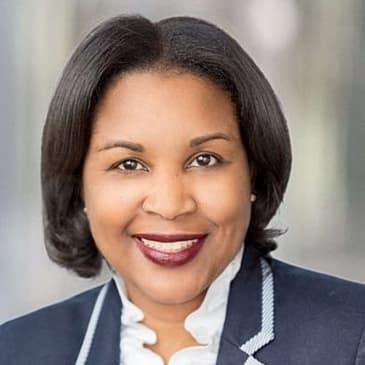
Velma Morgan, a distinguished educator, policy-maker, and chair of Operation Black Vote Canada, is a treasure trove of insights from years of advocating for gender and cultural representation in government. She offers a unique perspective on the critical role of intentional efforts in facilitating inclusion for the black community in government spaces.
Velma's noteworthy journey extends beyond policy-making. She shares her exhilarating experiences, from creating pavilions for Latin American and Caribbean countries to receiving prestigious awards like the Municipal World Award and the Bob Marley Humanitarian Award. Her unwavering commitment to community empowerment shines through as she discusses her work with the 1834 Initiative and a sports plan that includes women. Listen in, and you'll not only be informed but also inspired to make a tangible impact within your communities.
[00:00:00] Elton Brown: Welcome to SpeakUP! International with Rita Burke and Elton Brown!
[00:00:05] Rita Burke: On SpeakUP! International, we seek to inform, to educate, and to inspire through the stories of people we refer to as community builders. Today we are speaking with Velma Morgan, who is an educator.
Who has experience creating and implementing public policies and programs in the , provincial government. Velma is also the chair of Operation Black vote Canada and an advocate for gender and cultural representation and inclusion in the government. Today on SpeakUP! International, please welcome Miss Velma Morgan.
[00:00:44] Velma Morgan: Thank you for welcoming me. I appreciate it!
[00:00:46] Elton Brown: It is definitely our pleasure! Tell us about your position or positions that you were in previous to where you are now.
[00:00:56] Velma Morgan: Let me talk about the government, working in the government?
[00:00:58] Elton Brown: Yes. Yes.
[00:01:00] Velma Morgan: I have had the privilege to working in the government for several years for several different cabinet ministers in four, actually five different ministries.
And. I think the way I see the world and the way I see the world and the reason why I'm a part of Operation Backbone is because of my experience that I had in government. I working in government made me realize that in order to change. To make real systemic change that you have to do through public policy.
And when I worked in government, I was Director of Policy. I was also Stakeholder Relations. I've done a whole lot of positions in government. I worked my way up. And my last position that I had when I left government was Director of Policy, for the Ministry of Tourism, Culture, and Sport.
[00:01:41] Rita Burke: Who would you say is responsible for the person that you are today?
[00:01:45] Velma Morgan: Oh wow, actually a couple people are responsible for the person I am today. The first two are my parents. I think they they instilled a healthy dose of self confidence in me telling me that I could do and be anything I wanted to be there.
There was nothing that. I said, I wanted to do this. So they know you can't do that because you're black or female was like, yes, you could do it. Let's figure out how you can do it. And because of the confidence that they instilled in me, I think I'm able to to have confidence in going out and helping other people and what I'm doing in terms of operation blackboard and the different initiatives that I'm involved in.
And then another person, I have to who actually changed the trajectory of my life would be a lady called Isabel Bassett. I met Isabel Bassett when I was about 17 years old and at that point she was running for elected office. And she asked me to work on her campaign. And when I worked on her campaign.
And after the campaign, she said, will you come and work for me? At that point, she was the the president of the Canadian Club. So I got to see a totally different world out there. And she helped change the way I saw the world. Before I met her, I knew I lived. In a neighborhood that was very diverse, and that was my viewpoint of the world, and she opened up a whole new world for me in terms of politics and she started my journey onto politics.
[00:03:08] Rita Burke: What did you say her name was?
[00:03:11] Velma Morgan: Isabelle Batson.
[00:03:12] Rita Burke: Oh, okay, I got you.
[00:03:13] Elton Brown: How do you advocate for gender cultural representation and inclusion? In government policies, you mentioned the word, policies earlier.
[00:03:25] Velma Morgan: Yes.
[00:03:26] Elton Brown: And so how do you go about doing that?
[00:03:29] Velma Morgan: When I worked in government it was a matter of me just providing access.
To different communities, in particular, the black community when I worked in government, the black community wasn't really connected to the government, except for when something went wrong and they needed money, but there's other ways of connecting to the government by coming to budget consultations.
By coming to meetings, being on agencies, boards, and commissions. And when I was there, I would actually tell people that we have these things called agencies, boards, and commissions that are arm's length to the government, but also informs the government on government policies. And those are good ways of being part of the government.
You get paid for it. So we, I did workshops for our community. Whenever there was a position available, I would advertise it to our community and say, you should go onto the website and see what, which one of these vacancies fit something that you would like to do we would also have celebrations and invite the community to please part.
I think it's important for our community to be in those spaces and being those spaces, not when there's an issue, but being those spaces when you need to celebrate just to have a feel of the of the environment. And we would invite back the black community and others and other racialized community and women to come in as stakeholders to come and talk to us about issues that was related to our particular file.
And not only go to the same old stakeholders that were there for years and years, we brought in different stakeholders.
[00:04:55] Rita Burke: So am I hearing then that this was intentionally building bridges? To include our community?
[00:05:04] Velma Morgan: It was intentional. Yes, it was. Yes. I was, I think when I was there, I was one of maybe I want to say.
15, and that might be a lot of black political staffers, not in the bureaucracy, but political staffers out of maybe 300. And I was maybe 1 of maybe 5 that was from Toronto and the GTA, so new to communities. There are others from different parts of Ontario. But I was always very involved in my community, so I knew a lot of people going into Queens Park.
And so I brought those people along with me, whether. To put them on agencies, boards and commissions to, to come in beyond committees to come and meet the minister or um, come to an event. It was intentional because they needed to be in those spaces because they were not in those spaces and they were not invited in those spaces.
At Queens Park, there's tons of lists just on every level of government. There's lists for, for budgets, there's lists for the opening of the house. There was tons of lists that a lot of our community members names were not on and so we ensured that they were put on those lists so they could get invited to participate in government as everybody else was.
[00:06:13] Elton Brown: What is your role as the chair of Operation Black Vote Canada?
[00:06:20] Velma Morgan: Operation Black Vote Canada. Is an organization that was created 20 years ago by Dolores Lawrence, Hamlin grains, Cynthia Reyes, Denim Jolly and Rick Gosling and it was created because of Gene Augustine um, something Gene Augustine was not put into cabinets when a new leader came in and the community was extremely upset because of that.
So they decided to do something about it other than write letters, which they did. But they created this organization to because we didn't have an organization that would speak up for our community when it came to political issues. Operation Black Vote was created to was created to connect our community with government.
And created to ensure that we have more elected officials at all orders of government. And perhaps provide some training on how to become elected. A lot of people want to get elected. They don't know where the door is. They don't know what's the first thing to do. So that's what Operation Blackboard does.
We do a lot of training for people in general, but in particular Black women who want to run at all levels of all orders of government. So my role is basically to facilitate all these initiatives. I'm also the spokesperson for Operation Black Vote Canada, and I took over in 2017, and since then we've seen a major increase in Black Canadians running for office and all orders of government, because we've made it more accessible.
We made it more visible, and I think more people are understanding how government works.
[00:07:51] Rita Burke: Thanks to people like you, Ms. Velma Morgan, how does a woman who starts as an educator transitions or seg way into leading a group, an organization responsible for black people interested in getting involved in the political system? Long winded, I'm sorry, I hope you got it.
[00:08:15] Velma Morgan: Yes, I actually started in politics and then went into education. I'm just coming back to my, my, my first love. And I think, as I said, I understand from working at Queens Park the importance of being politically engaged, the importance of having a seat at the table, the importance of policy and legislation.
And I think one of my goal is to also make our community understand the importance of being engaged, the importance of participating and ensuring that we have the right policies and right legislation that's going to make us thrive, not just survive, but make us thrive. And I think a lot of times our community, we lobby for more money, for more programs, but we forget that the key thing that actually changes.
Behavior that changes systemic and that's policy legislation. We can't make people like us, but we can say, if you do something to harm us because you don't like us, there's some consequences, and that's through legislation and through government policy. And I think we need to transition to that.
And start creating start lobbying government, um, to create policies to protect us. To make our lives better and for us to thrive,
[00:09:31] Elton Brown: We talked to an individual not too long ago who was actually talking about these systems that are in place and how these systems are not broken at all.
They're just meant not to include us in them. So When you hit on that one word policy, it just brought me right back to the conversation that we had with this professor and she really drilled that into to our heads. People want to be in politics, where do they go to actually start?
[00:10:07] Velma Morgan: I think I guess the first thing is What they want to do, do they want if you want to run, there's a starting place for that. But if you just want to be involved, if you want to just to participate at the provincial and federal level, there are things called the riding associations for each riding.
You could, be on the riding association, you get to determine who is your representative for that particular riding. If you want to run, then, we have lots of workshops about how to run. There is also a, as I mentioned earlier, agencies, boards and commissions, and these are these are bodies that are arm's length to both all orders of government that basically informs government and government policy and legislation and you get paid for those.
iT all depends on where you want to want to enter. I say, as a community, we are political already. I remember going to hairdressers or going into, grocery stores and the topic is politics all the time. We're talking politics all the time. From where you're from, what island or country you're from, or politics, our politics in Canada.
We just need to move that out of the personal realm or community realm and move it outside, to where we're able to use what we know to influence the public domain in a positive way.
[00:11:26] Rita Burke: It's interesting that you mentioned that we are political, we're political beings. I remember in George Frazer's book, Success runs in Our Race, he alluded to that. He said that around the kitchen table, we're, we're doing our politics. Obviously in the churches, we do our politics. I ran a book club in my bookstore and people came to talk about a book, but guess what?
What was happening in the political world always inadvertently came up, there's no question about that.
[00:12:01] Velma Morgan: I don't think about my teaching. It's interesting because teaching for me is. The job that I, the job and the politics is where I spent, where I shine and where I thrive.
And I don't even, I don't even, I don't even think about teaching
[00:12:16] Elton Brown: Understood.
[00:12:16] Velma Morgan: But I wanted to pick up on the politics part if I could, if I may.
[00:12:20] Elton Brown: Yeah.
[00:12:21] Velma Morgan: When we talked about, I often talk to folks and they say to me that, I'm not political. And I'm like, you are political because everything that we do is political. The fact that.
You, we shop on a Sunday was a political decision. The fact that, we can't have noise after 11 o'clock is a political decision. The fact that your garbage gets taken on Tuesday, Wednesday and Thursday, everything in our lives is political. And if you don't start realizing that politics is in you and you need to be in politics, then we're going to just get left behind, you're going to get left behind but then our community is going to be left behind.
And that's why I think. I at Operation Blackfoot, we fight so hard to try to get people connected to government in some way, shape or form whether it is running for election or just participating in, in, in elections, whether it's we do debates for municipal debates, and the reason why we do debates is because when we look at the regular debates that happen throughout an election cycle and I look at the audience, I don't see many people that look like us and we don't go to those debates because our issues aren't Coming up and I say our issues now that we have different issues from other people.
It's just that because of systemic racism, those issues affect us differently. What are you, what are politicians going to do to ensure that whatever solution they have doesn't adversely affect our community um, as done in the past? We have our own debates where we bring them to our community and we say, okay, the audience is basically all black.
We want you to answer these questions. What are you going to do if elected? And answer those questions based on the Black community.
[00:13:59] Elton Brown: I can definitely understand that, and that makes total sense to me. What about the Pan American games? That was a huge undertaking in terms of coordinating that and getting the buses to and from the different stadiums.
Can you tell us what was your contribution during the games?
[00:14:22] Velma Morgan: I, I was in the particular ministry the year leading up to the games. All the heavy lifting was already done. All of that was, everything was, all the courting, coordination, all that was done. The year leading up.
The Pan Ampere Pan Games is basically Latin American and Caribbean countries that are coming to compete. What we realized, or what I realized during that time is that we had all these different pavilions, but we didn't have a pavilion for Latin America or the Caribbean.
After speaking with the minister and the bureaucracy they were able to find funds to ensure that there would be these two pavilions. So I guess my contribution was seeing that gap, which should not have been a gap. It should have been something that was like done The first, there was, they should be the first pavilion 'cause they're the people who are coming to Canada to compete.
So we were able to find funds to create these two pavilions. And both these pavilions were at this distillery in the distillery district. And it was overwhelming. The athletes came out and came to the. The Caribbean pavilion and Latin American pavilion, they're basically right beside each other.
And that was something that I thought that was that was basically. I guess I can say 1 of my contribution in highlighting that was something that was needed. Needed now, I also highlight that because it's interesting. That nobody else thought that was something that would. Should have been needed and, being, a black person from the Caribbean.
I guess I saw myself missing from all the pavilions, and so I was able to say we need to have these pavilions simply because these are the nations that are coming to Ontario to participate in this Pan Am Games.
[00:16:08] Rita Burke: Sounds like you take on a lot of challenges with gusto and determination.
[00:16:17] Velma Morgan: I think when I look back they might have been challenges.
In, in, in the moment, it's just this is something we need to do. So let's do it. And let's figure out how we're going to do it. It's interesting. I have another story. I worked at Citizenship and and Immigration. And every time I would come off the elevators, there were these pictures and the pictures were just of white people.
And I was just like, this is Citizenship and Immigration. Why are these pictures of only white people? So I said, we need to change these pictures. And what came back was that, these pictures were they had that a category. And so these are these all of these people fit in these categories.
So I've been thinking, how do you solve this problem? Just change the category so we can have more inclusivity, right? But it took a year. For me, keep asking, when are the pictures going to change? When are the pictures going to change? And so one day, I walked off the elevator, and I saw, oh, my gosh, there was a diversity of pictures.
This ministry called citizenship and immigration. And but when I was doing, it was just like, no, this is just something that I think needs to be done. If I noticed it, other people coming might notice the same thing to that at a ministry where diversity is basically in his name.
Why isn't the pictures. On the walls reflected the diversity that we're supposed to be including and diversity is our strength, but it took a year of me just keep asking and asking until eventually it was done now when I was doing, it was just like, no, it just has to be done.
That's just a solution to the problem. But when I look back at it, I'm thinking, like, why did it take? Why did it take so long? Why did it take so many asks? buT I just think that sometimes people just like doing the same old thing. And when you ask them to change, it becomes a problem.
And we just have to keep up with the times, that's all.
[00:18:00] Rita Burke: So the argument is, according to some people, if it's not broken, why do you have to fix it?
[00:18:08] Velma Morgan: Yes.
[00:18:08] Rita Burke: On Speak UP!International, we seek to inform, to inspire, and to educate through the stories of community builders. Now, at the beginning of our chat, Velma, you said that your career crossed five ministries.
Pick one and talk about it. One of those five. And probably one that brought you the most joy.
[00:18:31] Velma Morgan: Oh my goodness. I really can't pick one. Because each ministry had different Elements to it um, when I was at Citizenship and Immigration, we were able to speak to, new immigrants who wanted Canada, in particular, Ontario to be their own and was so happy to be here. We were able to give out the order of Ontario to people and in that we, part of my job was doing appointments at that point.
And, we made sure that, our community knew when the the deadline was and sent out the packages to people in our community. So we could have more order of Ontario's recipients while we were there. And I think we did, I think we met our goal of having every time there was an order of Ontario ceremony, we had at least 2 or 3 black Ontarians who are well deserving of it, but just note.
A lot of times we don't even know that the application even exists to even put people's name forward. So we've made sure that the information was out in the community. When I was at Citizenship and Immigrate and Tourism, Culture and Sports. I was able to help create the 1st ever, not 1st ever, the 1st sports plan in 20 years that include women and They include women as a focal point in the plan.
So I think, I think it depends on which ministry, but I, regardless of which ministry I was in, I ensured that our community our communities, our Black communities, because there's not just one, came along for the ride, and whatever opportunities that there were for for our, for Canadian citizens, I made sure that our community had the information so they could also be a part of it.
[00:20:08] Elton Brown: Wow, that is absolutely amazing. And I can see how you probably received much satisfaction for participating in the community in that way. Speaking of receiving, can you tell us some of the awards and recognitions that you've received for your community service?
[00:20:31] Velma Morgan: Yes, so I just I'm going to go from the most recent because that's what I remember.
So I just received honorary mention for the Municipal World Award for women in women influencing municipal politics. I received the Harry Drome Award I think it was in 2021, for community service and also the Bob Marley Humanitarian Award. 100 Black Women to Watch Award. And um, 100 ABC African African and black Canadian women award which I think they're all very lovely.
And and I'm very appreciative of being recognized for something that I do innately. I just, something that I, and I love to do. So being recognized for those things that I would be doing regardless. Is something that I'm very appreciative of. And that, most of it almost all of them have come from the community.
That makes me happy as well.
[00:21:32] Rita Burke: Velma, tell our listeners about a time when you had to throw your hands up and say, enough.
[00:21:42] Velma Morgan: Enough. Of what?
[00:21:44] Rita Burke: Your choice, enough.
[00:21:46] Velma Morgan: I've never thrown my hands up to say enough. I'm done or enough. I've given up. I've thrown out my hands to say enough. We need to change things. And I think um, right now it's the municipal government incumbency basically rules.
So for municipal government, there's no party. You're on your own, your name recognition. So if you're elected, chances are you're going to get reelected over and over again. There's there's a city councilor in Toronto, who's been the same city has been a city council since I was in like high school.
That's ridiculous. And so I said enough of that. And, we're lobbying for term limits for municipal government. We think 3 terms consecutively, which is 12 years is good enough for you to make any kind of change or influence. And not to say that you can't run again, but you have to sit out the next election.
You could run again after. But and the reason why we know that this. Is a good idea is because in the last municipal election the seats that had no incumbents elected either women or racialized people. So we know that if somebody if the seat is empty that we're going to be elected if it's not elected.
Is if it's not empty, the same person to keep winning over and over and over again. So municipal government is local. It has a lot of influence on our lives and, for the for a very long time. You only had 1 black municipal counselor. That was Michael Thompson.
Now we have 4 and again um, 2 or those 4. Was because the seats were empty, right? Michael was an incumbent and then Amber Murley, just basically, she was an anomaly. She knocked out a 20 year incumbent, right? Which was great. And she was also part of our seat at the table. Series, but I think is enough, right?
Throw my hands up to say we need to be at those decision making tables and we can't have the same people making the same decisions because things aren't changing for us fast enough, you
[00:23:52] Elton Brown: know, I think we have 3 kind of groups. One being rationalized communities, and there's the youth, and then there is the government.
So from your position, how have you helped collaborative streams to happen between those three units?
[00:24:17] Velma Morgan: With the youth. We have the 1834 initiatives, which is no longer a part of Operation Black Belt. We just moved them out to the 1834 Foundation, which is a charity that we created. But for the last 4 years, 1834 initiative and 1834 was name in honor of the year that slavery was abolished in the British Empire was a public policy program for black youth 18 to 25 who wanted to enter public policy.
We understand that there's a gap of black policymakers. And we wanted to ensure that we had black youth who could take those positions. When I was in high school, no one told me that I could be. A a policymaker, a stakeholder relations, a community, a communications advisor to a cabinet minister to an MP or to an MPP.
It was doctor, lawyer, teacher, these jobs are not advertised to our community. And if you don't know somebody in those positions, you don't even know those jobs exist. And these are jobs that actually influence. Government influence public policy. So what we've done is we've brought these jobs to our community across Canada because this program is for black Canadians black youth across Canada.
And so far we've put we've had 88. Go through our program. And we have several who are tour road scholars ones at Oxford right now, and we have several working in governments. And hopefully, in the next 10 years, we'll see more of them working in government, more of them at decision making tables as deputy ministers.
Maybe some will run for office, but at least. Now, our community, our young people are understanding that these jobs also exist and they also belong in those spaces as well.
[00:25:58] Rita Burke: So you can say you're a trailblazer to some degree, aren't you?
[00:26:02] Velma Morgan: I wouldn't say that, no. I think what I'm trying to do is, I, like, when we create this, the our programs and when we create the initiatives, I always think to myself, what would I have needed when I was that age?
And so that's what we try to do. So they don't have to realize that these jobs exist or there's something they could do. 10 years out, they're going to have it when they need to make decisions about their career. And, for some of them, they've gone through a program and they think this is where I want to be.
And for others are like, no, but at least they have the information and they had the access if they wanted.
[00:26:39] Rita Burke: So come out east with us. You worked on a project in Nova Scotia. Talk to us about that, please.
[00:26:48] Velma Morgan: I worked on a project in Nova Scotia?
[00:26:49] Rita Burke: To do with black political leaders?
[00:26:53] Velma Morgan: I was working at Queens Park and I happen to be working for a black cabinet minister and at that point, I believe there was about, um, about 9 black elected. Folks provincially and federally and so they wanted to come together as a group to discuss the black community. So I was, I had the opportunity to, along with a minister from Nova Scotia, his. Chief of staff to work on bringing these elected officials to Nova Scotia.
And it just happened to coincide in the opening of the African Museum in Nova Scotia. And so we had 9, actually, I think there's maybe about 11, including 2 senators that came with us and it was 2 days of in camera meeting talking about the the black community and across Canada and what are some commonalities that people were hearing across the country and how could those political leaders who most of them were cabinet ministers sitting at decision making tables, what could they do in their particular province to address these issues.
[00:28:05] Elton Brown: You worked on the Ontario Immigration Act and also the Ontario Black History Month. Can you tell us the significance of those two projects?
[00:28:21] Velma Morgan: This is when I, yeah, so the Immigration Act was, this is, It was a symbolic legislation and basically, there's a lot of things in there, but 1 of the main point was to outline basically the type of immigrants that we wanted coming into Ontario.
And so it was very broad and very inclusive. I'm not quite sure we're. If it's been implemented yet, because again, it was very symbolic. Now, again, the Black History Month act was also symbolic simply because we do have the Black History Month legislation that's federal, but we wanted to create the Black History Month legislation for Ontario.
To ensure that no future government could come in and say, you know what, we're not celebrating Black History Month. So it's in legislation. As I said, if you want to change behavior, you want to change systemic issues, you put in the legislation because it's harder to unlock the legislation. So we made Black History month.
Recognized in Ontario in legislation as a symbolic symbolically, but also to ensure that it wouldn't be somebody wouldn't come by and say, a government wouldn't come by and say we're not going to we're not going to celebrate Black History month this February. Basically.
[00:29:40] Rita Burke: Where do you find the time to do all that you do? You teach and you are deeply entrenched in not just local politics, but politics generally.
[00:29:55] Velma Morgan: There's 24 hours in the day, I find the time.
[00:30:00] Rita Burke: You carve out the time because you're passionate about it, I see.
[00:30:04] Velma Morgan: Not only that I'm passionate about it, but I understand how crucial it is for these things to happen. I think, it's crucial that we're sitting at every decision making table in all ways of government. We need to be there. It is crucial that our young people understand, and everybody else in our community understands how the system works.
it Is crucial that our young people get involved in politics in some way, shape, or form. And I see how other communities are a little bit further along because of their political engagement. And for me, it's an urgency. It's an urgency that that we must be at the decision making table.
[00:30:46] Elton Brown: You are in everything. You're all over the place. It is absolutely commendable.
[00:30:52] Velma Morgan: Thank you!
[00:30:52] Elton Brown: So what do you do to relax? Do you have hobbies? Do you like cooking? Hanging out with friends?
[00:31:00] Velma Morgan: It's interesting hanging out with friends. All the friends that I have are political, so that's not even, all we do is talk politics, right? I relax by reading. I read a lot. I try to read at least one book a month. so That relaxes me, reading.
[00:31:17] Rita Burke: So tell our audience, tell us, what's the best piece of advice you've ever been given?
[00:31:25] Velma Morgan: Oh my goodness.
Okay, yes, I got it. This advice was for my father and he said, whenever there is chaos around you or you feel chaotic, just to stand still or sit still um, because that will basically just balance you. And sometimes there is when I'm in an event or there's something going on, I have to remember just to in order to bring everybody back or everything back to balance just to sit still or to stand still and let everything come into focus,
and that's helped me a lot in so many ways, whether it's in teaching or in, the volunteer work that I do or in any aspect of my life, whenever I find that things are getting chaotic or just too busy um, I just try to be still.
[00:32:15] Elton Brown: This has been one rollercoaster ride of a conversation.!
[00:32:21] Velma Morgan: It has, yeah.
[00:32:23] Elton Brown: We talked about your collaborative ties between racialized communities. We talked about the Black Vote Canada initiative, which I found to be fascinating. And we also talked a little bit about. The Pan Am Games, by the way, I did go to them and I found it to be quite enjoyable, and the purpose of having Black political leaders on the rise, ready to take charge, because this is the only way that we're going to get any kind of changes made is through our policy makers.
The significance of having a Black History Month and Ontario Immigration Act. These are projects that you worked on, which I think are significant to black communities.
And a lot of these things that you worked on were not just for black communities, but for any marginalized communities, youth. So I want to thank you so much for giving us moments of your time so that we would be able to have an opportunity to talk to you. And this will definitely be added in our list of community builders.
[00:33:50] Rita Burke: Before you go, is there anything that we did not ask you that you want to tell our audience?
[00:33:57] Velma Morgan: No I think we're good.
[00:33:58] Rita Burke: Thank you for being our guest on SpeakUP! International. This thoroughly informative, I believe inspiring.
And if you feel you want to come back and talk to us about any topic that's dear to your heart, just let us know. Thank you so very much.
[00:34:17] Velma Morgan: Thank you! Thank you for having me. I really appreciate it. Got me thinking about a lot of things. I appreciate you jotting my memory and this is good.
[00:34:26] Rita Burke: Your parents will be proud.
[00:34:27] Velma Morgan: Yeah. Having role models like you (Velma is talking about Rita) in the community helps. A lot. So there you go.
[00:34:34] Elton Brown: Thank you for listening to SpeakUP! International. If you wish to connect to Ms. Morgan, please leave your name, your email address, and the reason why you wish to contact Ms. Morgan to info@speakuppodcasts.ca.
Are you interested in the opportunity to be interviewed and have your cause promoted by SpeakUP! International? We invite you to connect with us by sending a message, including your name, company or organization name, the valuable service you offered to your community and your email address to info@speakuppodcast.ca. Worried about your confidence as an interviewee? Don't fret. SpeakUP! International can provide you with the necessary training so that you shine during the interview. You can reach us using Facebook, Instagram, Twitter and LinkedIn.
To connect to our podcast, Spotify or your favorite podcast platform and search for SpeakUP! International. You can also find our podcast using our web address, www.speakuppodcast.ca. Our logo has the woman with her finger pointing up mouth open. speaking UP!
At SpeakUP! International, we aim to inspire, to inform and to educate!