
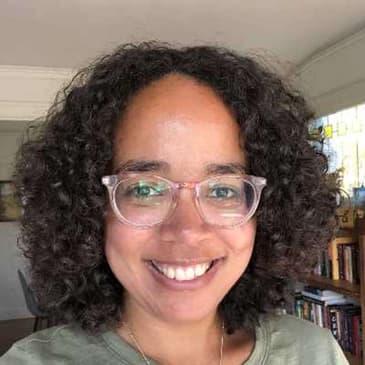
As a mentor and beacon of inspiration, Josee Smith joins us to unravel her transformative journey from reader to published author. Facing down the specters of perfectionism and self-doubt, she shares how the solitude of the pandemic became the crucible for her anticipated novel's creation. Her candid reflection resonates deeply, especially for black and brown working moms she now guides towards their literary aspirations, punctuating the necessity of perseverance in the writing craft.
In the heart of our conversation, we probe the mysteries of crafting suspenseful narratives and the vital role of community within them. We reveal tactics to sidestep the paralysis by analysis that besieges many writers, underscoring the power of setting achievable goals and allowing imperfection in early drafts—a nod to author Rachel Heron's wisdom. We also celebrate the rich tapestry diversity weaves into literature, with stories of authors like a Nigerian novelist who boldly threads her heritage into her work, championing the unique voices that need to be heard and read.
Motherhood, often a delicate dance with personal identity, emerges as a theme relatable to many. We share stories of reclaiming our writer's voice amidst the chaos and joy of parenting, and the role therapy can play in nurturing creativity. We then navigate the nuances of the writer-editor relationship—a journey across emotional landscapes as raw drafts evolve into polished masterpieces. Anyone looking to elevate their community cause, take note: SpeakUP! International awaits to amplify your voice, with training sessions ready to polish your story for the world's stage. Join us for an episode that not only lights the path for writers at various stages but also honors the relentless spirit of storytelling.
Josee Smith's web site: https://www.joseesmithbookcoach.com/
Josee Smith's Instagram page: https://www.instagram.com/joseesmithbookcoach/
[00:00:00] Ellington Brown: Welcome to SpeakUP! International with Rita Burke and Elton Brown!
[00:00:14] Rita Burke: We're having a conversation today with an individual who is currently based in California. So what's new? On SpeakUP! International, we have chatted, we've had interviews with people from South Africa, from England, from Brazil, from all over the world.
And so this fits beautifully into our title, SpeakUP! International. Now, Josee Smith. Josee is an author who has written six novels, and that means that she fully understands that there could be internal hurdles preventing would be authors from attaining their goals. So Josee helps writers go from doubting their stories to being confident that the world needs to hear what they have to say.
And so she defines herself as a book coach. for Black and Brown working moms who want to complete their novel. They want to complete the novel of their dreams. Josee is a new mom, and she is busy with her job, and so she fully understands how the schedule can become busy for moms. She fully understands that there can be challenges managing it all.
And so it was, it is with great pleasure that I introduce our listeners today to Josee Smith. Welcome to SpeakUP! International.
[00:01:56] Josee Smith: Thank you so much. I'm excited to be here.
[00:02:00] Ellington Brown: I know someone who is a perfectionist, and he painted his living room. He could not get the color right because when the light moved from, one window to the next, it changed the color of the paint. Before he got the paint color right so it wouldn't do that, he had to paint the room seven times.
So, what inspired you to start writing novels, and how did you overcome the internal hurdles like perfectionism and self doubt?
[00:02:35] Josee Smith: Yes, no, that's a great a great question and a great story to accompany that question. I am not a visual artist because I have those perfectionist tendencies and I think would struggle to, make something that I feel good about.
So I have always been a reader ever since I was a little girl and Part of being a reader was me being inspired and wanting to write my own stories kind of based off of the things that I was reading. I've always, written little stories attempted novels as a young kid and, throughout high school was writing a lot, in college was writing.
I never really saw it as, it never felt like fully attainable to have a book on a bookshelf, but it was always something I enjoyed doing so I kept up with it. And then just a few years ago, around 2019 I started to see, I learned about indie publishing, like self publishing, and the different ways that people can put their books out into the world, that doesn't just have to be the sort of traditional, you get an agent and then a publishing deal, I discovered that there were other ways to put your books out into the world and so I really kind of around that time double down on, actually committing to my work and trying to finish a novel.
It was extremely hard because I'd never done that before. So it was, challenging to actually sit down and believe that I could do it. And then in 2020, we all know what happened then. And I really had a sort of, A moment of being stuck in my house with my husband at the time and our dog and our cat and just being like what do I want to do with this time that I have, we at the time didn't have kids.
So my weekends are very free. And I was like, I want to actually finish this book. I want to finish something that I can put out into the world and be proud of. And so I, took about a year, a lot of ups and downs, but I, was able to finish something that I could then. Yeah. Put out, onto Amazon and start selling to the world.
And I continue to write some other books. I think the, I definitely dealt with a lot of those inner hurdles, perfectionism, doubting, is this going to be any good? Is anyone going to want to read it? And I think what helped. For me was definitely like being in the pandemic and sort of just being like, well, the world is the way that it is now.
No one really knows what's going to happen in the future. So, like, why not spend my time doing this? I'm no longer going out to see friends in the same way. I'm not, socializing or having all of these trips. So I have this time. Like, why not commit to something that I, that I enjoy doing.
have been so passionate about for so long and haven't actually been able to, to kind of work through. So that, just kind of was like a kick in the pants of let's try to make this happen. And then in terms of, yeah, perfectionism was a big thing. Doubting that, was anyone going to like my story?
I, it really helped for me to start to hear. The voices of other authors who were doing this work. So I listened to a lot of podcasts and found writing groups and just, started to learn that my feelings about this, we're very common for writers. It's very common to have these doubts.
And I could if other authors could find a way to push past those doubts and finish their novels, I believe that I could as well. And that, really ties into what I do as a book coach, because I feel that, I was able to make this happen. I see other writers making this happen. I believe that anyone who wants to write a book and is, determined to do it can do it.
And there are different strategies and things we can do to kind of face those internal, blockers or things that are holding us back. But, I think if you have the right kind of support and motivation and are committed to it, I think it's possible for everyone. So, having written all of these books and putting them out to the world, I now want to help other people, achieve the same childhood dream and see their stories come to life.
And so that's kind of how I've, then ended up becoming a book coach because I want to help other people also achieve this goal.
[00:06:06] Rita Burke: Sounds like a wonderful experience! It was your childhood dream to write, and here you are, you've written six novels. Now, would you say that there is a common thread or theme running through your books?
[00:06:23] Josee Smith: I think so, yeah. And I don't know how intentional. I was initially, but I think as I was writing them, it started to come out around connection and belonging. So I write cozy mysteries and I actually write under a pen name under the pen name, Josephine Smith. Just personal preference, put them under a pen name and they're mystery novels, but they're, centered on a small town where there happens to be quite a bit of murder.
But I'm the common sort of theme running through them is connection within this town. It's very much a place where, readers feel like they want to visit. They want to live in because there's this really kind of, strong connection between everyone in the town.
And there's this really strong connection of belonging and sort of feeling like this is a place where you could be happy even with, you know, all these murders. It's always funny to talk about because I write these really sort of pleasant place to live, but there also is like murder happening at the same time.
It's, just, I like mystery novels. So, that's what I tend to write. But I think even with the mystery. It's, the stories always start with some kind of disruption to the peace of the town. There's been this murder that's been committed and now everything is turned on its head.
And so my protagonist, her job in each of the books is to figure out what happened and try to restore the town back to its, sense of peace and sense of belonging where everyone can be happy. And. I was able to kind of go on with their lives. And I always try to have a little bit of, with the murderers in the story.
I like to add a little depth to them and not just have it be like, oh, they murdered just because they're a bad person, but rather they experienced some disruption or they had some kind of, like you can. Kind of relate. I don't want to say relate to you, but you can, sort of see like they're, why they felt that they were in this position to have to respond this way.
And I think it's, because their lives were disrupted in some way and they responded a certain way. So I think that I feel like I sort of. I was able to identify that theme after I had written the first couple, and then with the next few became more intentional with weaving that in. But I think that's the kind of theme that I like to read in books as well, sort of feeling like you have this space where you're welcome and you belong and you have these connections to other people in this kind of like small town environment.
And so I find that I kind of weave that in naturally and also find ways to weave it in intentionally as well.
[00:08:34] Ellington Brown: You help other writers get over their doubt, help them feel confident. So what type of techniques do you use to help them?
[00:08:45] Josee Smith: Yeah I first really try to understand their motivation for wanting to write.
Cause I think once why you're motivated to do this. It'll help you stay committed and excited about the novel as you're working on it. So understanding your why I think is really important and having that why be validated. Often with writing, it's a very solitary, experience that we're doing alone at our computers or with our notebook.
And so with my, with, my clients, I want them to share with me what is motivating them? Why are they writing the story and then validate that. That is, a completely valid reason to be writing this and that they should hold on tightly to that reason. I find that, that for me has been really helpful of just reminding myself of my reason why.
And I think for others it can help to ground in that, this is why we are doing this. And then along with that, some other tactics and strategies. A novel is a really long, they're really long in general. It's a really long process to write one. It can feel very daunting when you're first setting out to do it.
So, finding ways to kind of slowly each day work on the novel, not expect that you're going to be done in a month, two months, three months, but, know that it's going to take a long time, but if you chip away a little bit every single day, you will eventually end up with something that you love by the end of, six months, a year, whatever.
So I think setting kind of small daily expectations for yourself can be really helpful of. You don't have to sit down every day and write for eight hours in order to be a writer or finish your novel. You can spend, an hour, half an hour, even less sometimes. As a new mom I have, and with a day job, I've had to sometimes just like 15 minutes a day and I'm not getting a ton done, but I know that after a month, two months, three months, I'll have a lot of words written as long as I stick with it.
So setting those really small, expectations can be helpful. And then I think also. Understanding that it's hard to assess if the story is quote unquote good when you're in the middle of writing it. The first draft is very much discovering the story and discovering what you want to write.
And we tend to be our most critical of ourselves at the very early stage. The most well, this is horrible or no one's going to want to read it or it's exactly the same as something else and so therefore it's not good. And so instead just kind of understanding Just let the story come out in whatever way it comes out and you can go back and revise it and make it better.
But the creative like writer brain is different from like the editing revising brain. And it's important to just let your creativity flow when you first start out and then allow yourself to look at it more critically as you're editing rather than trying to criticize it early on when it's still this like kind of nugget of an idea.
So I think for writers, if you could kind of get into that mindset of I'm just going to put out this first draft and I'm capable of fixing it later, you'll be able to make it, to the end and actually finish something that you can then look at more critically and then revise and edit.
[00:11:33] Rita Burke: Is there anyone, any author in particular that you would say Has influenced your writing style, or has given you that encouragement, or has stoked your passion? Tell us about that. Who that person may be.
[00:11:50] Josee Smith: Yeah. So there is one author in particular. Her name is Rachel Herron and R-A-C-H-A-E-L spelled a little differently. She has a podcast and has also written several books and does a lot of, offers, a lot of support for other writers. I found her podcast in 2019, kind of timeframe when I was getting serious about writing and just having her voice in my, ears on a weekly basis where she was talking about what it actually meant to be a working writer, how she was showing up for her writing the challenges of, that she was facing, even though she, at that time was like, 10 years into her writing career, she still had a lot of doubt that came up.
She still had, these challenges that she would face. Just hearing her like normalize that and normalize that those feelings are just what is going to happen as a writer, it never really goes away. Has been super motivating for me to, just help me see okay, these things are normal and I can get past this.
So I, yeah, I would say she, she continues to be a source of inspiration for me now. We've had a chance to chat a couple of times and kind of talk about writing. And I think she, does really great things for the writing community and also writes, really good books. Yeah. And I think that's also something that I would recommend to writers is finding other writers who are doing this work that you resonate with.
Maybe you like their books, maybe just want to learn, like, how do they actually do this? I think that can be a motivator and help you see what does it actually look like to be a writer? It can, help you realize that some things are normal and just surrounding yourself with those different voices I think can help, newer writers kind of stay on track.
[00:13:25] Ellington Brown: You've published six novels. Can you give us an overview of the process of publishing these novels?
[00:13:35] Josee Smith: Yeah. So, I, will write a first draft. I'll then edit that first draft a few times myself. And because I have self published, I, do the whole process myself before putting it out to the world versus.
Working with a traditional publisher, getting an agent. That's like a whole, separate thing. But for me I'll go through my own edits and then I have worked with beta readers in the past who will do sort of like from a reader's perspective, they'll read and give you feedback and help you see, kind of what's going on.
Overall, does the story work? And then I hire a couple editors to do some edits on it as well. So a big kind of like story overview, does this make sense from a story perspective? Are you missing anything? Is there anything that's confusing? And then also editing kind of at the sentence level, like making sure things make sense at the sentence level, typos, that kind of stuff.
So I'll do a couple rounds of editing and then you end up with, like a document that you have to, then get ready to upload to the different platforms where books can be sold. So, I use a formatting service to format the books into kind of for eBooks and actually paperbacks, you have to do some formatting for them.
So, there's formatting involved and then right now, my books are only available on Amazon. You can upload them to other places and have them be distributed in other places and available for purchase in more places. I just currently only have them on Amazon. So, it's relatively simple process to then upload the final file onto Amazon.
And then you can do both eBooks paperbacks. You could do audio books as well. That's another process that I don't personally do. But you know, there's different ways that you can. Get your books out into the world. I think it, it's not a, I think it's a relatively straightforward one step, two step, three step.
It can feel daunting to people, but I think once you kind of do some, studying of the process and understand each of the steps, it becomes relatively straightforward. And like now it's, very simple to, to get the books out into the world. So if you're, Looking into self publishing and feeling intimidated because it seems like a really complicated process.
Just know that it's, can be straightforward. It is something that I think anyone is able to do as long as you can Google things and kind of, read instructions. And I think it's also very, it's very freeing being able to just put my books out into the world myself to not have to, go through a process with a company or, kind of have someone else decide that my book is worth being sold or put out into the world.
I love that I was able to put these books onto Amazon myself and then have copies sent to me. I now have copies of my books on my bookshelf. I think it's just very it opens up a lot of possibilities. Opportunities and ways for you to get your words out into the world. So I definitely encourage folks to, consider this as an option and figure out, how to make it work for you.
[00:16:11] Rita Burke: It sounds to me as if being an independent author has been very liberating and freeing and empowering for you. That's what is coming true in what you're saying to us. You talked in your bio about the importance of representation. Expand on what that term means for you, please.
[00:16:34] Josee Smith: Ah so, growing up reading a lot of books I didn't necessarily see a lot of characters that looked like me.
I have, Darker skin, I have curly hair. I, didn't read books, didn't read a ton of books about little black girls. That wasn't necessarily something that I got a lot of as a kid. And so when I set out to write my novel, it was important for me to just write something that like, felt like a reflection of my life and my, sort of lived experience.
So, I just kind of. Wove in like how I would describe myself. I would describe my sister, just like how I see other people out in the world. And then I also really try to represent LGBTQ characters in my books as well. I'm not a part of that community, but I have a lot of friends are and that are part of that community.
And. I just found it important to feel like I was representing different identities, different, kind of storylines. And so for me, it's just really about representing my lived experience and the kind of, life that I have lived. And I really encourage other writers to also, represent their own lived experience in the books that they are writing.
Just because I think, you Yeah, it's important for all of us to feel like we can put our stories out to the world and that we don't have to censor ourselves or, change how we think of something just because certain books get published over others. I think that also ties back to the freedom with independent publishing because I didn't have to like, have someone tell me that it was okay to publish a certain way.
I didn't have someone saying oh, I think this character should be, a different race or a different gender. What I was able to make those decisions and make it exactly how I wanted it to be. So there's definitely that, that freedom as well of just being able to represent whatever I want in the books that I'm writing.
[00:18:16] Ellington Brown: Can you share a success story from one of the writers you coached and how, did that help them achieve their dream of being a writer, finishing a novel?
[00:18:29] Josee Smith: Yeah that the biggest thing with the writers that I work with around like success is Just affirming what they're doing and affirming them that, because a lot of people will come to me and say I have this dream, but I don't know if it's possible.
I don't know if anyone's going to care. And so just being able to affirm them and say hey, no, this is important. This does matter. And knowing that they will keep showing up for their work because of that affirmation has just been really, kind of, inspiring for me. Kind of related to our last question about representation there's one writer in particular that I worked with last summer.
She had finished a draft of her novel and had done some editing herself and was looking for kind of an overview of the story of what was working, what she could improve in it. And she was living in the U. S. but was from Nigeria originally and so her story, she and she told me this when we first started working together, she wanted to incorporate a lot of her Nigerian culture in the novel the novel was set in Nigeria it was like someone going from the U. S. back to their family in Nigeria for a trip and so that was really important to her to, kind of weave in more of her culture, but she was also a little, Hesitant's not the word, but, she was like, not totally sure if she was doing it right, or if there was too much of it, or, just she wanted some feedback on that specifically, like how it was doing and as I was reading through the manuscript, I found myself really drawn in by the ways that she described different places in Nigeria in particular, the food that she would describe, the, The novel ended up having a lot of food, just kind of naturally in it.
There was a food festival and family was cooking food. And so I, after I was reading it, I was like, I want more of Nigeria in this novel. I think you can do more of this. And so our conversation was around like, Hey, I think you've made a good start in terms of weaving in your culture, but let's do more, let's put more of that in here because I think there's a way to make this even more of a visual experience for someone reading it.
of just, weaving in your own experiences into this novel. And so, she's actually continuing to work on that novel. She hasn't, fully finished it where she's putting it out into the world yet, but I know that affirming for her that the way that she was putting in her culture and the way that she should put in more of it was really validating for her and really helped her see that, she could write something that she could put out into the world and people would enjoy reading because she was making it.
So it was like from her heart, from her soul the story that she was creating. And so it's moments like that where I can just affirm another writer and say Hey, what you're doing is good. It's needed in the world and do more of that. I find that to be just like really, successful for me and, kind of heartwarming.
[00:20:59] Rita Burke: On SpeakUP! International we seek to inspire, to inform, and to educate, and today we're chatting with Josee Smith, who's telling us about her work as an author, and I'm sure your story will inform, will inspire, and will educate. Josee, was there ever a time in your life when you had to say enough?
[00:21:28] Josee Smith: Yeah I think this is a great question.
I think for me, it was that moment in 2020 where I, had spent all of these years trying to be a writer, not quite, getting to the point where I wanted to be starting novels and, abandoning them trying to edit, just not being able to. And then, 2020 was the way that it was.
And I was just like, I think, I probably said yeah, it's, this is enough. I want to finish a novel. I want to achieve this dream of mine. I want to actually make this happen. And so, yeah, I think that was a moment of, Just kind of being like, yeah, this is something that I want to commit to.
And I want to actually see it come to life. And just knowing that happens, that I was able to, finish finish that novel, finish several novels. I think about it and just get like chill sometimes. Cause I'm just like, I can't believe I actually achieved this childhood dream. And I think it was just, yeah, being in that time, in that place of 2020, not knowing what was going to happen next.
And just kind of saying Yeah I want to, in this lifetime, I want to have finished a novel and put it out into the world and just see what comes next.
[00:22:33] Ellington Brown: Do you. help moms rediscover their creativity and do you provide a supportive environment?
[00:22:41] Josee Smith: Yeah. So, as I said, I'm a new mom. My son was born last August. And I found, and becoming a mom and especially having a newborn in those early, days and weeks and months.
It I became so focused on keeping him alive, feeding him, helping him get to sleep, dealing with him when he would just scream and scream, because that's what newborns do, they scream all the time. I figured out ways to like breastfeed, to help him get to sleep, to, keep him generally happy.
And then in the times when he didn't need me, when he was maybe sleeping or my husband was with him I found myself kind of feeling like I'd lost my sense of identity, like I, I just sort of felt like I was like drifting through our house, not really sure what to do when I didn't have to be responsible for my son.
And I wasn't working at the time because I'd taken time off from work and I just, felt like I don't exactly know what I'm doing with myself right now. And I had paused my writing while I was pregnant just because I it was just too hard to write and be creative while also dealing with pregnancy.
It was like too many things to balance. So I wasn't writing at the time and I Sat down one day and just started thinking about like, why do I feel this way? Why do I feel like not quite like myself? I feel adrift. Like I don't, know what I'm doing. And I realized that I, yeah, had kind of lost my sense of self in becoming a mom and I realized that writing was something that I am so passionate about that I wanted to go back to it.
I wanted to return to it and get back into my novels and get back into writing. So I started writing, I think he was like six months or six weeks old and I like started writing again. And I've continued to keep it up since then. And I really appreciate that I have started to figure out what does my writing routine look like with a son now?
Because I've figured out kind of how to balance everything and how to still show up for the work and show up for him. And so because of that experience of kind of feeling like a loss of identity and then coming back to my writing that's something that I hear a lot of other moms talk about, of sort of feeling like they've lost themselves in motherhood or that being a mom is kind of, A major part of their identity now and obviously, my son is the most important thing to me, but there are also other sides of me and I still want to nourish those and allow myself to be, myself along with being a mom and part of myself as being a writer.
So it's important for me to. Find a way to kind of balance all of those things. And so with other moms, I hear a lot of them, people who are interested in writing have become a mom and then are struggling to sort of balance those two identities. I want to help them see, there is a way to still show up as a mom and also do your writing in a way that you feel good about.
It's not selfish to take time to focus on your writing and then have time with your kids it's important for you to still prioritize the things that are important to you and to show to your children that you aren't prioritizing certain things, because I think it teaches them the importance of prioritizing for themselves and the importance of not just doing only what other people want us to do So I, once I had that experience for myself, I became very motivated in wanting to help other moms who, feel like they've lost themselves and think that creativity is something that, maybe they did it in the past and I've stopped doing it or they're, have always wanted to write a novel, but struggle to figure out how to balance that with kids.
I want to help them see. that it is important to prioritize that side of yourself and that you can still do it even while, raising raising kids, having a family, having a job, all of these things.
[00:26:02] Rita Burke: So we're having this wonderful conversation with Josee Smith, who is an accomplished author, novelist.
She's a mom. She also has a day job. And then she coaches. She coaches other moms who also want to write. Josee, tell our audience who or what is responsible for the person that you are today.
[00:26:28] Josee Smith: I think a good therapist is responsible for who I am. I'm a big therapist. Proponent of therapy have been, with different therapists over the years.
In 2020 when, we were kind of dealing with the pandemic and the world was crazy. I had been in therapy previously, kind of paused it for a bit and then got back into it. For like other reasons. And then that therapist ended up really helping me, nourish my creativity in 2020 and figure out like, how can I actually finish this novel?
She was very encouraging there. I also have a therapist who's helped me with the sort of mom identity and figuring out, how I want to show up as a mom. So I think, yeah, for me, like having that. Kind of objective third party to talk things through to, our sessions are only focused on me and I'm able to work through whatever's going on internally has definitely been very, yeah, helped turn me into the person I am today.
[00:27:19] Ellington Brown: Therapy is good! I will definitely attest to that! We've talked about struggles. I don't want to say it's as an identity crisis, but it's does lead to concern when mothers, they have all of these other things in their lives going on before the child was born and now all of a sudden, you're a mother and you have a job, you're also a wife and God knows how many other things that you are.
And those are struggles, but one struggle that we haven't really touched on, if I remember correctly, and that is what advice would you give someone who's struggling with the fear of not being good enough to write a novel?
[00:28:05] Josee Smith: I would say that writing is a skill. It's a practice. It's something that you can improve on.
I think often people who want to write are readers, and when we read, beautiful novels that are published, and they look gorgeous, and they're, hardcover, and then we try to write, and we compare our first draft to this published novel Has likely gone through many rounds of editing before, it's on the bookshelf.
And so, yeah I think that's why the fear tends to come up because, our first draft is not going to be as good as that finished novel. And so I think it's important to realize that, realize like what that difference is. And then, Start to believe that you can learn the skills to become a better writer.
You can learn the skills to make your first draft better. That's what editing is. It's, putting out a messy first draft that doesn't quite make sense, and then going back over it with a more critical eye. And improving it and making it better. So I think sometimes people just don't fully realize like what the process actually is.
And the fact that, the books that you have loved to read likely went through multiple drafts before they got into that finished format. So, I believe that, if you are motivated and excited about writing and, want to finish a novel. All it takes is just commitment of showing up and being willing to take feedback, learn, grow.
But I think, it is very possible to do. And it is a skill that you can get better and better at, but it's always going to be, this process that you have to go through. We're never going to reach a point where, you put out a first draft that's perfect.
0. 00%, 0. 001 percent of writers are able to do that, like the, very rare people can do that and so just knowing that your first draft is not going to be perfect, but you can make it better and you can make it into something that someone else is going to love to read I think is really important for newer writers to know and to understand.
[00:30:01] Rita Burke: So on a scale of 1 to 10, how content, how satisfied are you with the editors that you have worked with?
A scale of one to ten. I mean, very content. So like an eight, maybe. I, yeah, I love my editors. I think. I have one editor that I've worked with for all of the six books that have been published. And then I have a couple drafts that I haven't published yet, but that she has also given me feedback on and I think because we've worked together for a while she understands my style and what I'm trying to do with these books and is able to give me feedback that helps to, amplify my voice and my message and what I'm trying to do.
[00:30:47] Josee Smith: So I'm, yeah very pleased with that relationship. And I think it's when you're getting feedback, it can be very scary, especially doing it for the first time, putting your, yeah sending your story to someone, asking them to tell you okay, what's bad about this?
It, it can be very scary. The first day that I got I'd sent it off to her, the first novel, and then she three weeks later, a month later, she sent me an email with, her edits on it and like an editorial letter kind of going over all of her feedback. I couldn't look at it for a day just didn't want to, because I was like, terrified about what she was going to tell me.
I was terrified that the story was just, horrible. There's no way to fix it. It was just going to be awful. And eventually I did sit down with it and read it. And it was amazing to see Someone take these ideas that I had and figure out, like, how do we make this even better? How do we expand on this?
How do we deepen, certain things? It was just, amazing to see that she could identify things that I hadn't seen in my own editing to make it even better. So I think if you can, find someone who understands what you're trying to do with your novel and who is supportive and knows how to communicate with writers and like understands that it is a scary thing to do to share your work with someone else I think it's an amazing relationship that, can only get deeper and better as we continue to work together.
[00:32:02] Rita Burke: Did you agree with everything you were told?
[00:32:05] Josee Smith: With that first one, I think, well, I feel like with the first one, I was just so happy that she liked, had parts that she liked about it, that I was like, okay, everything else, sure, yes, I agree, let me figure this out I think probably over time I've maybe gotten a little more discerning, but honestly in, in particular because those six books are part of a series, so they're all kind of related, and by the time we got to the third book, she would say Oh, I don't think the protagonist would actually do this because she didn't do these things in the first two books.
And I was like, Oh, yeah, you're right. It's I think that kind of thing. I was like, Yes, I agree with you. I'm sure there are things I've disagreed with. And that's also the important, an important thing to keep in mind is that as the writer you are the owner of the story. You can decide, what feedback to listen to and what feedback not to listen to.
For me personally, I think I've agreed with most of what she's shared, but there's probably some things I'm like, or like she might make a suggestion and I'm like, I don't think that's exactly right. So I'm going to do something a little bit differently. It is ultimately, up to the writer to decide what to do, but getting that outside perspective, I think is so important because it's difficult for us to be fully objective with the story and fully, sort of separate from it.
So having another perspective on it, I think only makes it better.
[00:33:09] Ellington Brown: Yes, I think it makes it better. We have another set of eyes look at it. I think when you write like the very first draft, it's exciting, your head is swirling because you see all of these other images that you're going to put in this novel, all of these other words, captions.
And it's time now to put all of this stuff into the Book and then you send it to someone. So now your passion is running high and so is your imagination When you send it to your, , editors and they come back with, well, we think what you have in chapter one should probably be in chapter four.
It just doesn't make any sense where you have it. Do you find that those types of observations, even though they're meant to be good to the book, to the reader. Do you find that it ever dampens your passion, your excitement about the book? I'm not saying you're saying, Oh, it's horrible.
No. If you thought that you would've never sent it to the editor. To the editor, but no, sometimes it's, I dunno.
. ,
[00:34:30] Ellington Brown: Shoot, I thought, I knocked it out of the ballpark!. .
[00:34:33] Josee Smith: Yeah. I have had the experience of she'll say maybe the character motivation isn't quite there, or, because I write mystery novels, she's this, the reveal of the murder doesn't make any sense, or this clue, it doesn't make any sense, I don't understand why the police would do X, Y, Z and so for me, I find what happens is She's basically given me a challenge because there's something that she's identified as oh, this doesn't totally make sense.
And so now I have to figure out how to fix it to make it make sense. So that tends to be the thing for me where I can, my, my motivation can maybe dip a little bit. Cause I'm like, shoot, I see what she's saying and now I have to figure out like how to make this better. But I think, a good editor will have a good balance of positive feedback, and positive hey, this is great, keep going, mixed with the, sort of constructive I think we could use some improvement here, or this, alibi doesn't make any sense, you have to fix that.
And so whenever I find myself kind of getting down about oh man, I have no clue how to justify, why this character was seen in one place when they needed to be somewhere else, I'll go back to the positive feedback and just kind of be like, okay, she fully believes in this story and has just pointed out some areas that don't quite make sense.
And it's now my job to make it make sense. It's not, she's not questioning like me or my ability or, and she actually thinks that I am capable of fixing it and improving it. And. Making it, kind of a more cohesive story. I also just really trust her judgment at this point. So, I've had to sort of over time hear her feedback and kind of make that judgment call of okay, yes, do I think this is right?
Or do I think it's not quite right? And now I know when I get feedback from her that. Nearly like 95 percent of it is going to be perfect. And I'm like, yes, I will figure this out because I believe I trust that know what you're saying and are taking a good look at this. So I think that again, the long relationship with her has really helped make it easier.
It is still, a challenge when I have to be like, Shoot. I have no clue how to fix this. So let me just think about it for a few days. And eventually I always, figure something out. But that tends to be the big challenge for me. It's just she called me out on something that I'm not sure what to do about.
[00:36:37] Rita Burke: Sounds like you work well as a team. There's an element of collaboration which is good and my reason for asking a question about editing is because I know someone who's just written a book. She's trying to write a book. She's got a manuscript and she had it cleaned up and cleaned up and then she sent it to an official editor who, from my perspective, changed the entire tone and tenor of her story, and I was disappointed for her that I saw the editor's personality in the book, and this woman's personality was totally removed.
So I guess one has to be very careful to retain their voice, because it's your story. So that's my questions about editing. Let's suppose you were invited and you may very well have been to talk to a group of graduating high school students that want to write.
Share with our audience at least three nuggets that you would want to deliver or you want to leave with these would be, these wanna be authors, please.
[00:37:50] Josee Smith: Yeah. First, I would share that, your story matters. Yeah, your story matters. Put it out into the world. Writing a novel is a long and hard process, but you are absolutely capable of doing it and figuring out how to do it.
And find, yeah, find other writers, other published authors that you resonate with and that you can connect with to really see what it is to live this dream that you're so passionate about. I think. Being able to see what we're striving for makes it easier for us to get to that goal. So seek out those people who can be a motivation for you either someone in person or in a podcast or whatever.
But I think that, being able to see that goal you're trying to get to will help keep you motivated.
[00:38:38] Ellington Brown: Where do ideas for books or you could be writing a book, but you're looking for content. Where does these ideas normally hit you?
[00:38:52] Josee Smith: I think just having read so many books and consumed movies and TV, it all just sort of percolates in my head, and then when I decide to write something, it's all it's challenging for me to point to this was the inspiration for something, because I can't quite tell you exactly where it came from, but I can see how it's been written.
And yeah. When I get to the end result, I can see how it's been infused by, the books that I have loved to read the TV shows, all of that sometimes I'll just visualize something like a scene that, I find really engaging or interesting. And I then decide okay, I want to, write this down and put this on the page.
I think, yeah, as I'm trying to generate ideas, I think about what would I most love to read within the kind of story that I've set out to do? What would be most exciting for me to read that then, kind of leads to an idea that's a combination of a bunch of different things.
So, yeah, I think it just kind of comes through, I don't know, osmosis and just putting it out into the world.
[00:39:49] Rita Burke: Do you know that I am fascinated with Toni Morrison's works, and given the fact that you said that you are an avid reader, obviously you've read some of her stuff. Am I correct?
[00:40:05] Josee Smith: I think, I believe so, probably like in school.
[00:40:08] Rita Burke: Yes yes. She is, well, she is well known all over the world for the stuff she's written, and she's written quite a number of books as well. She's written quite, quite a number of books as well. Is there anything that you want to tell our listeners that we have not given you a chance to say?
[00:40:34] Josee Smith: I think just reiterating that, if you are Drawn to writing a novel, if it's been a dream of yours and you have some of that fear, you're, not quite sure if you can do it. I just really want to encourage you to do it. I think it's absolutely possible for anyone who's motivated to make this happen.
And so I really encourage anyone who's considering it or who has resonated, with what I've shared today. I believe in you. I want you to finish your novel. I'd love to help you do that as well. If you want to, you can find me on Instagram. But yeah I think we need more stories out in the world.
We need different stories and. I think writing creativity can be so fulfilling and so, motivating just kind of in our lives. And so I really encourage anyone who is drawn to this to, yeah, make it happen.
[00:41:20] Ellington Brown: So what is your Instagram handle? Now that you've offered your service. You might as well get your Instagram handle.
[00:41:30] Josee Smith: Yes, absolutely. So it's Josee Smith book coach. And that's Josee spelled J O S E E. Yeah, you can find me on Instagram. I'd love to chat. I, share different tips for writers, different ways that I am a writer and the challenges that I face.
And we can talk about my coaching program and the ways that I support writers, from the. Very early stages of an idea all the way through the end. I can share tips and ideas on self-publishing, traditional publishing, the whole thing. Yeah, I'd love to help any of your listeners who have been interested in this conversation and inspired and want to finish their novel.
[00:42:05] Ellington Brown: I can definitely say that I've found this conversation with you, Josee, to be quite interesting and relaxing and fun! That's what I think a podcast should be. We talked about the struggles that you and the individuals that you help with their books get published and get past all of the fears and the insecurities and gain confidence and you finding balance being a mom and you have a busy job and you're writing novels and you're able to do all of that with grace which is great because it allows you to lead by example.
You're able to show other individuals how it's done and you share your techniques with other people. Writers so that they can do what you've done. I don't know if they're going to be able to create six novels, but at least, they'll have the confidence to, to complete at least one. What more can you can, you ask for.
And then the common themes of your messages in your novel, since your six novels, they more or less are linked together.
[00:43:25] Josee Smith: Yeah. Yeah.
[00:43:26] Ellington Brown: Which is great, reading for whoever decides to grab hold of your novels, and they can do that on Amazon. I guess I should say that. It's another commercial.
And we really do appreciate you taking the time to be with us from sunny California. We just hope that we can get back with you again, maybe after you finished your seventh book. Your seventh novel, and then you can actually show it to our audience, and maybe we can get you to read an excerpt from your novel. I think that would be a very good thing, and thank you so much.
[00:44:10] Josee Smith: Thank you. Yeah, this was great. I really appreciate this chance to talk to you and your audience. And yes, would love to come back.
[00:44:16] Rita Burke: I echo everything that Elton has said. It certainly has been a delight chatting with you and I know that your story and your work will certainly inspire, inform, and educate our listeners and SpeakUP! International.
Thank you so very much.
[00:44:35] Josee Smith: Thank you.
[00:44:37] Ellington Brown: Thank you for listening to SpeakUP! International. If you wish to contact Ms. Josie, spelled J O S E E, Smith, please be prepared to leave your name, your email address, and the reason why we wish to contact Ms. Smith to https://www.joseesmithbookcoach.com/.
Are you interested in the opportunity to be interviewed and have your cause promoted by SpeakUP! International? We invite you to contact us by sending a message that includes your name. company or organization name the valuable service you offer to your community and your email address to: info@speakuppodcast.ca.
Worried about your confidence as an interviewee? I don't fret! Speak up exclamation point international can provide you with the necessary training so you shine during an interview! To receive training information and a 10% discount about the SpeakUP! International's Podcasts Interviewee Training Program email us info@info@speakuppodcast.ca. You can also reach us by using Facebook, Instagram, Twitter, and LinkedIn. To connect to our podcasts, use Spotify or your favorite podcast platform and search for SpeakUP! International.
You can also find our podcasts using our web address: speakuppodcast.ca. Our logo has the woman with her finger pointing up mouth open, speaking UP!
At SpeakUP! International, we aim to inspire, to inform and to educate!
Josee Smith's web site: https://www.joseesmithbookcoach.com/
Josee Smith's Instagram page: https://www.instagram.com/joseesmithbookcoach/