
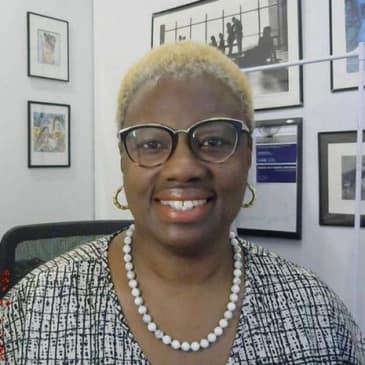
Curious about the transformative power of midwifery and its role in achieving reproductive justice? Join us on SpeakUP! International as we welcome Karlline Wilson-Mitchell, the trailblazing first Black Canadian midwifery education professor. Carlene takes us through her remarkable career, shedding light on the pivotal role midwives play as community advocates and the systemic racism that Black individuals face within the healthcare system. Her compelling stories and profound insights will open your eyes to the pressing need for equitable and respectful maternity care.
Our conversation delves into the challenges the academic sector has faced in the wake of COVID-19 and the innovative solutions that emerged from it. Discover the inspiration behind the new course on Black birthing and health equity at TMU, a collaborative effort that aims to humanize healthcare and champion reproductive justice. We also unpack the roots of reproductive justice activism and its essential role in creating inclusive healthcare outcomes, driven by a determined community of diverse professionals and students.
We also reflect on the impactful events organized by the Color of Birth team, which honor those lost to childbirth-related complications and highlight the ongoing struggles Black families face in healthcare. Hear personal stories that underscore the importance of race-based data collection in Canada to address and combat healthcare disparities. From panel discussions to memorial marches, these events illustrate the urgent need for justice and equity in the healthcare system. Join us for an episode that promises to inform, inspire, and advocate for change.
You can reach out to Karlline Wilson-Mitchell using the following email address: https://womenshealthresearch.ubc.ca/people/karline-wilson-mitchell
[00:00:00] Ellington Brown: Welcome to SpeakUP! International with Rita Burke and Elton Brown!
[00:00:16] Rita Burke: On SpeakUP! International, we crisscrossed the world to find people we consider to be community builders. Today is no exception. We have with us Karlline Wilson-Mitchell. She is the first and only Black Canadian midwifery education professor.
She was the director of the TMU midwifery department between the 2018 and 2024. Karlline is passionate about reproductive justice that informs midwifery education, healthcare, and global partnerships. She has worked as a midwife in urban and rural settings in the U. S. and Canada. Karlline has a new course called Black Birthing and Health Equity.
It examines African diasporic traditions. around family and perinatal care. There's so much more that I want to tell you about Karlline Wilson-Mitchell, but on SpeakUP! International, we prefer if our guests tell their own stories. And so today I welcome you, Karlline Wilson-Mitchell, to SpeakUP! International!
[00:01:48] Karlline Wilson-Mitchell: It's my pleasure to be here. Thank you so much for the invitation Rita and Elton!
[00:01:54] Ellington Brown: We're glad that you accepted . If not, we wouldn't be able to have this wonderful conversation with you, Karlline. Can you tell me what got you involved in this Canadian Education?
[00:02:11] Karlline Wilson-Mitchell: Um, as an educator, it's important for me to not only practice as a midwife, and I've been doing that since 1992, but also to teach what I know, not only that, but to equip students to have success.
And I'm especially concerned about students from the African diaspora, whether they're from the Caribbean, their first or second generation Canadians. Um, or they are new immigrants from the continent, from South America, North America, the Caribbean. It's important for me to help to position them for success.
There are a lot of, um, obstacles sometimes in the way to their success. Some of it has to do with structural racism. Some of it has to do with our very complex, um, sometimes unjust and unfair healthcare system. Uh, so that's my role to just be an advocate. I want to be able to tell each and every student and client that I take care of that.
I see you like the Zulu, um, expression of Sawabana. I see you. I value you. You're important.
[00:03:21] Rita Burke: Karlline, Wilson, Michelle, not only do I see you, but I hear you and I feel you. So, what I'd like for you to do is to tell us your why for your entry into Midwifery please.
[00:03:38] Karlline Wilson-Mitchell: Um, Midwifery was, um, a way that I could really be an ally and an advocate for clients everywhere.
Um, My journey had been long. I started off thinking I wanted to be a nutritionist and then I went into nursing and pursued that. In fact, my doctorate is in nursing, but I really found my home in midwifery because social justice is so important everywhere in the world that I've ever worked, whether it's Tanzania, Zambia, Jamaica, wherever I've worked.
Um, midwives have been advocates in the community. They've been community leaders. Um, they've been someone that you can trust. And I wanted to become that person when I met my first midwife, um, right here in Toronto in labour and delivery.
One of the things that I've heard people say to me over the 35 years that I practiced as a midwife, that really, I guess, catapulted me into the reproductive justice and human rights research that I do. And my whole practice and way of building curriculum wherever I go to teach or develop curriculum.
Some of the things that I hear people still saying are, why can't my family member be with me in the labor room? Why can't my partner stay with me in the labor room? We know that that's one of the cornerstones of respectful maternity care. Why are Black folks still being excluded. Um, they didn't believe me, so I had to catch my own baby.
In other words, they were neglected. They tell me things like, I need my mother here, or, ouch, I can feel the knife that you're using while you're starting my cesarean section. In other words, you're not believing me when I tell you I don't have enough anesthetic. Or they'll say to me during, um, difficult times of civil unrest in the United States, you're We would have patients saying to us, Yes, I'm in labor, but I'm afraid to drive to the birthing center because a policeman may stop us and me or my teenage son or my partner might be dead.
So I'm going to stay home and deliver the baby myself all alone because I'm so afraid for my safety, or they'll be in the hospital, and just two hours after having a blood transfusion, they're sent home where they die. That's bad care. That's malpractice. Why is it happening to our family members, even if they're well educated, they'll say to me, why don't you believe me?
I'm well educated. I'm not lying. I'm not making this up. So I'm hearing these things over and over again. People who are telling you they can't breathe. People are saying they're in pain. People who are discharged and end up having to deliver their baby in the parking lot because people are not believing them when they say, I'm in labor or visiting their baby in NICU and dying from a blood clot or preeclampsia right in the front of the nurses.
In NICU. Why could that not have been avoided? Why couldn't they be treated? Those are the kinds of questions my research is trying to ask, and I'm trying to ask my students to anticipate so they can learn to be an advocate and augment the voice of their clients.
[00:07:09] Ellington Brown: This is not one of these things that hasn't happened for the last 20 years.
Where a black person can be in the hospital, and they're requesting medication to ease the pain, but the doctor says, Oh, , you're used to. , having pain. So we're not, , we're only going to give you a little bit. , and that's it. As opposed to someone else, another color, will get all the medication they possibly could want.
They'll be slobbering because they've, , they've been given enough to put them in a place where they're not dealing with the pain. And I don't know, for some reason, it appears that black people go unnoticed, unseen. You worked in many countries, Jamaica, Zimbabwe, Zambia, South Sudan. What are the differences in these countries when it comes to natural childbirth?
[00:08:18] Karlline Wilson-Mitchell: You know, somebody may think that even in a country where the majority of the people have dark melanated skin, just like yours. That there would be no problems. But everywhere we go in the world, there are power differentials, there are injustices, people can be othered because they have another ethnic group, another language.
So sometimes we see neglect and abuse happening in the global South as well. And so that's why we are really making a strong effort to teach some of those soft skills, those essential skills of respectful maternity care. What does that mean? It's not just being nice. This is evidence proven methods of ensuring high quality care, which means having, um, someone who's a desired support person in labor.
It means having the highest quality care, which means sterilization of the instruments. It means having a structure everything properly, which means using all of the most current evidence to treat someone, not just going by what you've always done, but what is current and effective. It means having a structure where you have enough supplies.
It means all of those things have to be sustainable. And so um, having communication, having, um, actual, you know, involvement of the family. And so having those kinds of things need to be taught all around the world, not just in Canada or United States, but all around the world. And that's one of the things that the International Confederation of Midwives does.
The World Health Organization, um, all of these different folks are trying to promote, and certainly the Canadian Association of Midwives is promoting respectful care.
[00:10:05] Rita Burke: That is the bottom line, isn't it? In offering care, or in speaking on behalf of healthcare workers, the first word that should come to mind is respect, respect, respect. So I hear you, I hear you. We're speaking with Karlline Wilson-Mitchell on SpeakUP! International. And as you know, on SpeakUP! International, we aim to inspire, educate, and inform. And so, Karlline, according to your bio, you held the position of the director. of midwifery at TMU. Please walk us through what that experience was like for you.
[00:10:55] Karlline Wilson-Mitchell: Toronto Metropolitan University, which was previously Ryerson University, was actually my alma mater. I graduated from nursing school 35 years ago, and it was some of my mentorship in those years that inspired me to continue to pursue maternity care, reproductive care, and what brought me to go to graduate school in the United States.
When I returned in 2008, um, I was recruited to come back after working for 20 years in the United States. Our sons and grandchildren are still in the United States. Um, and I, I continued to, you know, support the midwives there. Uh, but when I came back in 2008, it was to try to diversify our mi midwifery workforce.
Um, overall in, uh, across Canada, the black population is about 5%. Um, but we only have two to 3%. of black midwives out of the total midwives in Canada. The same can be said for Ontario. Um, that has an even higher percentage of black population. So we're not representative by being there. I attempted to recruit.
Um, to support encourage mentor support, um, students who could apply into the program and be more successful. And then once they got into the program graduate, and we've now increased our cadre of black midwives. Um, uh, racialized midwives in general, so that it's much more representative. We know that culturally concordant care.
In other words, the same ethnicity of the provider as the same as the patient doesn't always guarantee that you're going to have an effective, respectful relationship. In fact, there's sometimes assumptions made that make it disrespectful where people are giving care without consent. Where they're not really informing the client of all of the risks and benefits, but in fact, if what we do is try to ensure that every midwife, regardless of how melanated their skin is or is not.
Learns respectful maternity care, learns how to be an advocate, a leader, someone who communicates effectively, using culturally sensitive terms, someone who's collegial, someone who's a team player, who knows that in this very complex, fraught healthcare system, Things aren't perfect, but they consider the cup is half full, not half empty.
They want to be part of the solution. And so that's why I believe they recruited me. That has been my focus in the university. Um, when I became director, um, it was just prior to the pandemic. So in 2019, we had moved into a brand new building on 288 Church street. Um, we then shortly after that. Had to absorb 50 percent of the student body that used to go to Laurentian University.
And unfortunately, that university school, midwifery school was closed. We're so sad about that and still trying to look for a partner to help us with francophone students and students in the north, many of whom are black students or racialized students, by the way, because the population in the Black Diaspora is just mushrooming in the north and Thunder Bay and North Bay and also in the east in Ottawa in Kingston and so on.
So we definitely need more black midwives throughout Ontario throughout Canada. Um, and so what I was doing was just really trying to hold us together. And then we launched into the pandemic where you had to learn all sorts of different creative, um, student focused ways of delivering our curriculum. So we had to learn how to be hybrid and do blended teaching where you're in person or online, where you use simulation, where you develop modules so that students can self serve whenever they finished managing their family and taking care of things, they can now focus on learning.
So it's asynchronous. It's not always the student directly in front of you, but you have a smorgasbord or a buffet. Okay. Of tools that you can use to learn and then we're on call basically for students when they go into placement, anything can happen. If something an adverse outcome happens or something is challenging, or there's a conflict we as instructors and midwifery are on call for our students.
So that they have someone to call in the middle of the night. Someone to page. We are the midwife for the student. In other words, um, that has really continued even under challenging circumstances throughout the pandemic. And then, even now, we know it's going to take 5 to 7 years before the whole world sort of recovers from the pandemic.
We're still going through it and so we're trying to help pick up the pieces. Um, so my, my goal was really to steer this ship. And avoid the iceberg. Uh, there was times when it felt like the Titanic, but we survived. And, um, I'm really proud of our graduates. We have, um, been responsible for for admitting and graduating 45 full time equivalents of students every year.
Um, that is our responsibility to the Ministry of Health and the Ministry of Colleges and Universities in Ontario. And we've been able to achieve that. And I'm so proud of all the students who hung in there, even though family members were sick, you know, these are real people. They have families, they have bills to pay.
There, many of them are mature students. English might be a second or third language, all these different things. They may have different learning styles, different You know, there's diversity in the way people learn and we have to be able to manage and meet their needs and advocate for those who are diverse learners. So, um, that was my job.
[00:16:45] Rita Burke: It sounds to me, Carlene, as if you rose way above the challenge of that position. My question then is Did you experience any joy as the head of that department?
[00:17:03] Karlline Wilson-Mitchell: Tremendous joy! I felt as though, really, it's I guess a maternal feeling. It feels as though all of the birds are ready to leave the nest.
They're ready to fly. And I felt that every time they succeeded with an exam, every time we went through an evaluation and they were winning, they were winning. It was like an Olympian event that never stopped. It was four years, sometimes seven years, eight years of this Olympic event. And I was cheering for them the whole time.
So there's a lot of joy. There's a lot of frustration because you're having to deal with very limited resources. And do more with it. You're dealing with limited numbers of staff and faculty, and yet you have to get more out of that limited number. The whole academic sector is facing this, you know, tightening the belt, it's across Ontario, it's across Canada, we are facing a difficult time, um, but it did help. I think both faculty, staff and students to be resilient. They've proven themselves to be what our university is made of. And that's grit. They definitely have grit!
[00:18:11] Ellington Brown: I think as a people, we've always been resourceful and we've always figured out to take what little we have and make. It worked, as my mom would say, take, , make something out of nothing.
And I think that is one thing that we're good at. There are two things that you mentioned. One was about COVID. And I agree with you. COVID was definitely one of those horrible things that popped up, which cause the world to spin in the opposite direction and that was a very sad thing. We lost , many people because of it.
And I hope that we never have to go through that again. But on a lighter note. Can you tell us a little bit about your Black Birthing and Health Equity that I guess you started in this year, 2024, January?
[00:19:09] Karlline Wilson-Mitchell: Yeah, yeah, we launched it in January 2024. This course I am so proud of because this course was birthed by our students.
Um, and I'm going to start with over the last 16 years that I have been at TMU. I have heard from our students. Why is there nothing said about racialized midwives in the history of midwifery in terms of the literature and the academic record in terms of our curriculum in the school? No one is talking about it.
It's as though racialized midwives never exist. Never were part of the nation building that made this country You know, it's as if they, they didn't see themselves represented. I heard this over and over and over again. Um, this student generated, um, indigenous, black and people of color student collective that is part of our student union made this something that they kept asking and they kept asking me even before I became director.
Certainly after I became director, the ask was elevated and out of that, um, there were a team I was able to apply for a grant. And a team of our student body and myself who are members of the, um, student union, um, and they had various fantastic skills, you know, organizational skills, research skills, and you must realize that many of our midwifery students come from other careers.
This might be their second or third career. They might have been a social worker, a physician, a teacher. A kinesiologist. They, they could have a number of different backgrounds, but they brought all of those skills with them for us to craft a course. We had consultation with, um, Reproductive Health and Black Equity midwifery specialists, um, across the continent.
We, um, were able to have a really robust reading list and we had, um, uh, members of the midwifery, international midwifery community community. From the African diaspora in Belize in Alabama or Oregon or Georgia or the Virgin Islands joined us. We had, um, even a time for dance and using dance to be able to heal ourselves as students as instructors as black professionals.
We had, um, uh, the first launch included actually, um, a class that was. Um, multi racial. Our students are all interested in this. Not only the black students or brown students, but all of our students are interested in black midwifery history, black health equity. Um, it seems to resonate with everybody because it's just being human.
It's humanizing healthcare, humanizing learning, humanizing the way we create methods and systems of delivering service in the community. So it was a fantastic, um, first run, uh, we want to open it up now to, um, have more of a hybrid offering so that you don't have to only be in person. Um, my dream one day is that it will not just be for students in our university, but that we can also have master classes for those in the community who are interested.
So please go to the mid or free education program website. You know, that's TorontoMU.ca/midwifery, M I D W I F E R Y. I know it sounds like midwifery, but it's really midwifery, because midwifery is a Latin word, but we're hoping that there will be engagement in the community that you will want to hear a midwifery perspective of anything, whether it's history, whether it's advocacy, whether it's health care. Um, and we hope to have more kinds of, um, offerings in the future. So this was an exciting course.
[00:23:12] Rita Burke: Yeah, it's too late for me now, though, I must say, even though I did health care, I studied health care in England, many women like me entered midwifery and were interested. I chose mental health instead of midwifery, but I fully understand that kind of system and understand the importance of Black health equity.
Now. In your bio, you mentioned that you're passionate about reproductive justice. I understand what reproductive justice means. Could you elaborate a little bit more on that concept for our listeners, please?
[00:23:58] Karlline Wilson-Mitchell: Um, it is human rights and just put it into a childbirth perspective. So it could also be considered childbirth rights, but it's not only maternity or the pregnant year.
It's also what happens preconceptually. It's what happens with family planning and your, your decisions about when to be pregnant, when to be a parent and how, um, it embraces diversity, equity, inclusion and accessibility. Uh, the whole idea of reproductive justice came from Sister Song, a group of black activists, um, in the early 20th century that coined this whole, uh, concept of reproductive justice.
And I'm grateful to sister song. In fact, they are mentioned as one of the resources in our course. So it is advocacy. It is justice, which means trying to write something that is wrong because it is unfair, trying to provide the same not equality, not well equality under the law, meaning equal access to the law.
But equity means that you're trying to achieve. Same good positive outcomes by any means necessary. That means you may, may need to give someone more time in order for them to achieve the same outcome as their peer. If I'm giving equitable healthcare, it means that with one client who maybe, um, uh, needs to have, you know, 10 hours of me.
Is just as deserving of that 10 hours as this other client who only needs seven hours of me. Both are deserving because our goal is equity and that means we may have to treat them differently to accommodate their needs. Um, that's something that is not well understood in education, um, throughout education, equity wasn't considered.
Equality was considered and so you treat every student the same way. Now, every parent knows you don't treat all of your children the same way. Yes, all 3 came out of your body, but they're all different and their learning styles are different. What they need to achieve success is different. Same thing with the reproductive body and our child bearing,
[00:26:28] Ellington Brown: You mentioned earlier about communication between the midwife and the patient and sometimes that just does not work out well. I have two questions. The first question is, does the midwife and the patient meet before the actual process of birthing begins? And my second part of the question is, how do you, on your scholarship that you have, address these health disparities?
[00:27:10] Karlline Wilson-Mitchell: Um, the model of midwifery in Canada, um, and in some parts of the world, they share the same model, um, is that midwives are one of three primary health care providers that can admit into the hospital, can act, Uh, pregnant women. Autonomously on their own orders to care for pregnant people throughout their pregnancy.
Until six to eight weeks after the pregnancy is over. And also take care of the newborn. So we need our clients. If you have a 40 week pregnancy, we may meet them. Very early at nine weeks, 10 weeks, 12 weeks. And continue with them throughout their pregnancy, whether it's 38 weeks or 40 weeks or 42 weeks of pregnancy.
And then they have a known provider who understands them, who knows their history, who speaks their language, basically, and can advocate for them, who has consented to everything that's going to happen at the birth, who has been well informed of what to expect, and has made their own decision about what they want and what they don't want, even in terms of which test they want, Or where they deliver their baby, all things being equal.
If this is a safe, healthy baby and person, they can deliver either at home at a birth center or at a hospital in Canada, midwives are the only health care providers that are credentialed to conduct planned out of hospital births. Paramedics do it in an emergency, but not planned. Physicians, do it in an emergency, but not planned.
Midwives are the only ones. That's our bailiwick. That's our specialty. Another specialty is our ability to be lactation specialists. And so, um, we are very interested in infant nutrition and in optimizing this parent's ability to, um, give them their baby's human milk. And then we continue till 68 weeks afterwards, helping them to recover, helping them to learn what they need to do to take care of this baby, and also making sure.
That the baby is taken care of, whether they need phototherapy for jaundice or whether they need vaccinations or whether they need to have screening for cardiac anomalies or complications. So, we're constantly screening coming up with a diagnosis if we need to order medication, diagnostic testing, um, or if we need to, um.
Um, we may not consult with the larger group because we work with a team as well. And so we may contact one of our colleagues who's a consultant at the hospital. Just the same way a family physician would contact an obstetrician or a pediatrician to consult midwives also do that. So we have very similar, um, we, there are parts of our work that are common in each of those three groups, family physicians, obstetricians, midwives.
So we have some common skill sets. But then we also have some specialties that the others do not have, and we work together as a team so that the care is integrated and not fragmented. And the client doesn't think like you're looking after my uterus. You're looking after my diabetes. You're looking after my blood pressure.
No, the client says the team is looking after my whole body and my baby, you know, we don't want care fragmented. Um, I'm really excited because Toronto Metropolitan University has really taken on the whole idea of team primary care and that's going to be a strong focus. In the new medical school that's opening up in 2025, midwifery and medicine are going to be working together so that all of our students respect each other, work collegially, and know how to work as a team.
Because it's like playing soccer. You have to pass the ball to the one who is closest to the goal and you know, the forward, maybe not the same person as the center. You all have a role to play, but you're on the same team trying to get, um, a win. And for us, the win is the client's help. And we're looking after two clients, the baby and the parent.
Um, in the system of. You're the boss, and the person you're caring for is, um, a lower, you know, priority or, um, less powerful member. Uh, we use the word patient, but you'll find midwives in Canada using the word client, not because it's like you're, you know, you're contracting with someone like an architect or contractor to build your house.
It's not that kind of a client. It is a contractual relationship, but they use the word client to sort of say, you know what? You, you as a parent, you're part of the team. Your grandmother and the other family members. They are part of the team. Their voice matters. So we use the word client. Maybe there's a better word we should use in the future.
I don't know, but you'll find many professionals are straying away from the word patient. That means you're subservient to me. I have the power. I make the decisions. And now we're more embracing this whole idea of shared decision making and that sometimes the client has something so crucial to say. that we better listen or else the team could go really wrong.
[00:32:38] Rita Burke: So, so I'm hearing then that it's a collaborative effort, that the person that's being offered care and assistance is just as important as the healthcare practitioner. And I like that. Obviously healthcare is moving in, in the right direction. But I'm chomping at the bits to ask you about the symposium that you launched.
Earlier this year.
[00:33:08] Karlline Wilson-Mitchell: Oh, thank you! That was an exciting time! February 1st and 2nd we wanted to as the colour of
birth team. Um, and this team is, um, coming out of the work I did for the Canadian Midwives of Color History Project that was funded by Shirk, um, the Social Sciences and, and Humanities Research Council of Canada. Um, we wanted to share some of our findings and also, um, invite some healthcare providers, researchers to come to the table and have three panel discussions.
We also had an exhibition where. This is the Black art that depicted the Black family, Black glory, and Black history was displayed. We had a fashion show and a silent memorial march. Um, it was a silent march for all of the parents and babies who have died of childbirth related, um, complications and pregnancy or after the pregnancy in Canada, and that was the silent march, and it was a beautiful presentation!
We had, um, a DJ playing. We had the, um, presentations from the, uh, Queen Fessy and company modeling company and the designs. Um, we're fantastic. Uh, we, we also had, um, uh, Dr, um, Dr. Emily, uh, Jabon, um, a Haitian dancer who is Um, just amazing in the way, uh, um, just the emotions of birth and of loss and of struggle is depicted in the dance.
So it was a fantastic presentation. It was at TMU, the first and the second. And this was our way of celebrating. The final year in the, um, U. N. Appointed, um, decade of people of African descent. Um, we know that this is the final year of this decade to focus on the African diaspora. But that doesn't mean that the problems of the black family and health care and the black family are going to go away after 2000 and 24 ends.
So yes, we highlighted it for this decade and we wanted to give a special shout out on February 1st and 2nd during Black History Month at TMU.
[00:35:27] Ellington Brown: Can you tell me the impact of racism on health and What aspects of self care to do you emphasize for black individuals and you were telling us some stories before we actually started the podcast and I think it would be great if you were able to bring one of those stories in, just so that individuals understand the seriousness of The impact of racism races them on health.
[00:36:06] Karlline Wilson-Mitchell: Um, this is really sad. All of us. As black Healthcare providers are grieving what we continue to see in the healthcare system. We are grieving what our family members and friends and colleagues are continuing to experience in the healthcare system. We're noticing that there's neglect. Um, I was with um, A community member yesterday who shared with me and horror.
What it was like to have a niece who she has raised as her own daughter, who is an appointed diplomat for Canada, um, an international diplomat, had just finished her three month contract or her term there and returned to the country and was sick. Something was definitely wrong. They're taught to be polite.
They're taught to be quiet. They're taught to be, you know, old school. Um, maybe not as noisy as I would be. But they quietly, patiently waited in the emergency room until she died, they had to do a cold blue. She was ignored. She was told to wait her turn. She was told that basically you couldn't be as bad as somebody else.
I'm not going to put you at the front of the triage line. Because they didn't know how to read her. They didn't know how to read the fact that she barely walked into the ER. She should have been carried in. But her pride, perhaps, she felt that she should walk in. She should have been carried in. She should have been in a wheelchair or a stretcher.
She was severely anemic. She got a blood transfusion and was sent home. She should have been hospitalized. She came back in within 24 hours. Something continued to be wrong. And she was coded. About two, three minutes after finally them agreeing to see her, she coded this young 48 year old at the prime of her life should not have died.
Yes, there's an autopsy. Yes, there is, you know, going to be investigation, but it's too late for the loss of that family. Um, a member of the team, another instructor who is in our color of birth team, as we were trying to plan for the symposium and trying to contact all the people and apply for grants.
shared with me. You know why I want to work with you, Karlline? I want to work with you because this topic touches me. I lost my sister last year. She, well educated, you know, all of these colleagues I'm telling you about, they're very well educated. Some of them with doctorates. They've done significant research.
They are well respected in academic circles. They're well respected by the government of Canada. They come into the hospital and they are treated. Like you wouldn't want anybody to be treated. This person came in, delivered a baby at 32 weeks, which is very common in the Black community. We're learning it's because of epigenetic stresses.
Our parents, grandparents, great great grandparents, the genetics and the DNA and our physiology and our response to stress has changed in a way that now is harmful to us. It maybe helped our ancestors to survive slavery, But right now it's giving us hypertension, diabetes, preeclampsia, where we have seizures sometimes, and it's eclamptic seizures in pregnancy, where we have premature babies.
We see the statistics in the United States, the UK, because we count race in those countries. In Canada, the only industrialized country in the world, we do not collect race based epidemiological statistics. So we didn't know that the person in the emergency room was black. All we know is that the color of the blanket that covered them on the stretcher was blue.
The blue blanket was recorded. The black race, the melanated skin, is not recorded in our records. I'm very grateful to Dr. Cynthia Maxwell. She is one of the members of the Reproductive Working Group of the Black Health Alliance. We are an interdisciplinary group that is trying to promote justice. She is trying to help us, along with many others in the team, um, to, uh, Dr.
Tundevas, um, and many of the other physicians, um, Uh, my colleague, um, Remy Ejeomi, um, we are trying to help the government realize that we need to make it easier to count race so that we can find out if there are any equity variables like race, socioeconomic status, disability status, if any of those variables have a correlation, not a cause, but a correlation.
With poor outcomes. So my colleague, her sister thinks everything's right. I'm in one of the leading hospitals in Canada. I'm here in NICU. Is there any safer place to be? Here in NICU, visiting my premature baby. If I collapse and have a stroke or a heart attack or a blood clot to my heart, which is very common, and we have a higher risk as black parents.
That's just the fact we have a higher risk. So she goes in to visit her baby and she collapses in the NICU and she dies. You're right here in the seat of knowledge, academia, a level three hospital. Are we supposed to be dying? Just as though we were out in a rural area where there was no high tech, where we were, you know, in a, you know, a remote area, but yet what's happening is whether we're in a remote area or whether we're in a level three hospitals, black people are dying and nobody is counting it.
I am one of the researchers that is starting to count it. And many of the colleagues that were presenting in the symposium in our three, um, panel discussions, uh, looked at the importance of counting, looked at the points of looking at historical records, looked at the importance of coming up with, um, evidence that would support change in our policies.
So that was what, uh, we talked about in the symposium. These stories hurt. They're my friends. They're my family members. They're my colleagues. They've lost someone because we need to do better. And because we count, we need to be counted.
[00:43:15] Rita Burke: You very neatly, and perhaps sadly, summed up your telling of these stories by saying that that's just a fact and these stories hurt.
And because these stories hurt, I would like us to take a second and pause in silence because of how these stories hurt. Before I ask my next question, let's just pause for a second.
Thank you. Now, Karlene Wilson Michell, I would like to ask you, who or what is responsible for the person that you are today?
[00:44:16] Karlline Wilson-Mitchell: Well, that's easy. I can answer that question. And there are a number of people. One is my mother. Um, She is resting in heaven now. Um, she passed away a couple of years ago, but my mother's Salome Aslan Miller emigrated to Canada 1959 1960.
I emigrated three years later or four years later in 1964 is a three and a half year old. Um, but as a nurse for over 50 years, and she was a mental health nurse. Um, And someone who inspired me who actually suggested, why don't you choose nursing and then nursing became a stepping stone to midwifery for me, um, her principles, her integrity, her drive for education and knowledge, um, her love of serving in the community, even after she retired.
She decided to go to Jamaica and serve in the hospitals there and help them out in the emergency room. This is a retired person who's supposed to be resting and she's, she's started all kinds of, um, activities for children in the community who are poor. Um, another person who really, um, has inspired me a lot is my husband, um, uh, Reverend Fred Mitchell.
He, um, came from a very humble beginning in Jamaica and came to the United States and basically worked really hard, um, to make a name for himself. But his humility in being able to say, you know what, I can't do this without, um, knowing my spiritual bearings. I need to have, I need to know my, my spiritual anchor here.
I need to have that anchor. And, um, his vision, his drive. Um, is part of the reason why I think I've gotten a chance to travel to all of these countries. Um, and he's one of um, he'd want to take me along. And when he's traveling, I end up going as part of the health team. And, um, you know, deliver health care and our health fairs and so on.
So he's inspirational to me and basically so many, many, many friends of mine. Um, one of my dearest friends and she was one of my best friends growing up in grade school. Uh, Denise Cole, who now, um, works for the government. And even after so many, many years. Um, and I think it's been one of the best moments of me working and living in the United States, um, coming back and reconnecting with her.
Um, and even though many of my friends, I don't get a chance to see them on a regular basis because I'm sometimes I think there are 28 hours in the day and I'm working all 28 hours. Um, Uh, but I hope to catch up this year now that I'm on sabbatical. I hope to spend a lot more, um, good quality time with all the friends and family members.
One of my dearest, um, I guess confidants and friends has been, um, uh, Silveira Daly Kennedy, um, another teacher who, who's taught for decades, um, uh, teaching early, um, childhood Education and, uh, and also, um, my cousin, I guess, so I've got a lot of good friends and relatives who have been inspiring who have commiserated with me when I've been frustrated or tired or, or sad.
Um, and so, yeah, a lot of people I can't name all of them.
[00:47:38] Ellington Brown: What is your role in the Women's Health Research Cluster?
[00:47:45] Karlline Wilson-Mitchell: Um, I think that many of us are there to connect with each other and, um, to publish together, to collaborate together, and I'm one of those collaborators.
Um, I like to be present as a representative of the black community is as a black health care provider. Um, my work in, um, and scholarship and, and writing journal articles really started with my mentor, um, which is, um, you know, someone who taught me from nursing school 35 years ago, who I should have mentioned was an influencer as well.
But Dr. Enid Collins, who taught at Ryerson University for decades. Um, one of my colleagues and it was working on a journal article with her that actually I guess introduce me to the whole world of scholarship and writing. Some of us, you know, we spend so much time doing, we don't write what we've done or, you know, write anything for posterity.
And so this health, women's health cluster is for that reason. We need to write, we need to disseminate information, we need to translate information, mobilize information so that the public can use it, so that policymakers can use it. So that's, that's my role there.
[00:49:02] Ellington Brown: You are one busy. Doctor, to say the least, we covered huge amounts of land, this morning, talking about your professional background and how you've worked in various countries. And we talked about the differences. With that, which are subtle, but significant.
We also got an opportunity to address health disparities and things that can be done to rectify at least some of it, maybe not all of it, but at least some of it and it seems like we're racing against time. It seems like you can't keep moving fast enough. I guess this is one reason why you're working 28 hours a day trying to keep up.
We talked about the impact of racism on health and how that doesn't just happen in, your, , specialty, , but it also is across the board. It doesn't even matter w why you're sick or what's wrong. These disparities seem to continue to happen, so I, I, we could talk to you for hours, absolutely hours.
Your, book of Life has so many chapters in it till we could just. Maybe talk for another two or three hours, but as we were saying earlier, all good things must come to an end. And I want to say thank you so much for, , shedding light on this very, , sensitive, , topic and, I see you, I feel you, I understand you and the responsibility that you have, , Black families and to marginalized, , individuals.
[00:51:14] Karlline Wilson-Mitchell: It has been such a pleasure to be here. Um, I want to leave on a happy note that, um, yes, the journey's not over and I just want to inspire and encourage all of the listeners to realize that The cup is half full. It's not half empty. Um, I've done part of my journey. We will all have journeys, um, and then someone will pick up the pieces, you know, and we'll pass on the baton to someone else.
Um, it's okay that it takes a long time for change to come, but it will come. I am hopeful.
[00:51:47] Rita Burke: What is important is that there are people like you who are making an effort, a tremendous effort, to bring about that positive change. And for that, I say thank you, thank you, thank you.
[00:52:03] Karlline Wilson-Mitchell: My pleasure.
[00:52:13] Ellington Brown: Thank you for listening to the SpeakUP! International. If you wish to contact Ms. Karlline Wilson-Mitchell. Please be prepared to submit your name, your email address, and the reason why you wish to contact Ms. Wilson-Mitchell. At
https://womenshealthresearch.ubc.ca/people/karline-wilson-mitchell
Ms. Wilson-Mitchell has other social media accounts you can use to connect to her listed in the description section on Spotify and other social media platforms.
Are you interested in the opportunity to be interviewed and have your cause promoted by SpeakUP! International? We invite you to connect to us by sending a message that includes your name, company, or organization name, the valuable service you offer to your community and your email address to info@speakuppodcast.ca.
Worried about your confidence as an interviewee. Don't fret! SpeakUP! International can provides you with the necessary training so you shine during an interview. To receive training information and a 10% discount about the SpeakUP! International's Podcast Interviewee Trainee Program, email us at info@speakuppodcast.ca.
You can also reach us using Facebook, Instagram, Twitter, and LinkedIn.
To connect to our podcast use Spotify or your favorite podcast platform and search for a SpeakUP! International. You can also find our podcasts using our web address, www.speakuppodcast.ca. Our logo has the woman with her finger pointing up mouth open speaking UP!
By joining Patrion, we can offer you an exclusive opportunity to become an integral part of the continued success of our podcast. Your financial support will enable us to cover the costs associated with producing high quality content such as equipment upgrades, hosting fees and professional editing services.
As a member of our Patrion group, you will gain access to a large range of exciting benefits . We are working on providing early access to new episodes and the opportunity to suggest topics or guests for future episodes. Your contribution will not only help substain the continuity of the podcast, but also allow us to enhance the overall listening experience. For all of our dedicated followers. Help us help you! https://www.patreon.com/speakupinternational.
At SpeakUP! International we aim to inspire to inform and to educate.