
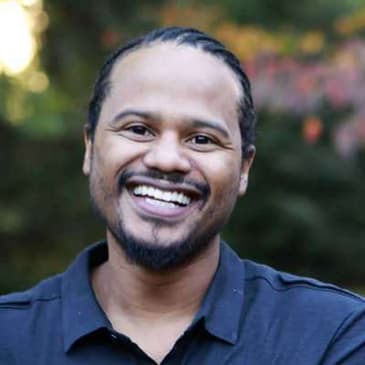
How can effective communication redefine the preteen years for both parents and children? Join us as we sit down with Marcus Higgs, a communication coach who has dedicated his life to helping parents navigate the complexities of their children's formative years. Marcus's journey from missionary teacher to founder of Searching Future Press is nothing short of inspiring! He sheds light on the critical challenges of preteen years, such as identity breaking, collaborative mistrust, and emotional management, and offers invaluable strategies for parents to support their children during these crucial times.
Imagine fostering a relationship with your preteen that is built on trust and mutual growth—this is the essence of interdependence in human development. Marcus highlights the importance of self-regulation for effective parenting, using the metaphor of "putting on your own oxygen mask first." We dive into common hurdles parents face, from managing expectations to building trust, and explore how genuine faith and relationship-building can create lasting connections. Marcus's experiences as a missionary teacher offer rich insights into how parents can guide their children through adolescence with authenticity and care.
Change is the only constant, and Marcus Higgs encourages us to embrace it, both in life and in parenting. Through his work with Searching Future Press, he emphasizes the importance of writing one's life story and leveraging technology to document personal growth. We discuss ancient wisdom and modern science, touching on the significance of community, music, and regularity in processing trauma and fostering well-being.
Website: https://marcushiggs.com/
Facebook: https://www.facebook.com/marcusahiggs/
LinkedIn: https://www.linkedin.com/in/marcushiggs/
[00:00:00] Ellington Brown: Welcome to SpeakUP! International with Rita Burke and Elton Brown!
[00:00:14] Rita Burke: This week, we are living up to our name, SpeakUP! International, because earlier this week we spoke to someone from Seattle, and then we went to California. This morning, we spoke to someone in Atlanta, and here we are, our guest, who is Mr. Marcus Higgs is in the Bahamas. So Marcus Higgs is a communication coach for parents of preteens.
He began his journey as a missionary teacher. Who is driven by a desire to help people thrive. Marcus is currently the founder and owner of Searching Future Press, which is an organization dedicated to creating strong connections within families and communities through character development. I can say so much more about Marcus Higgs, but as we are fully aware, stories are best told by the people who live them.
And so help me welcome Marcus Higgs to SpeakUP! International welcome. Welcome, welcome.
[00:01:40] Marcus Higgs: Thank you, Rita. Thank you, Elton. It's wonderful to be here.
[00:01:45] Ellington Brown: Thank you so much for joining us this afternoon. I know this has been kind of a hop, skip and a jump, but we do appreciate you hanging in there with us and getting us to this, this point. What inspired you to become a communication coach for parents of preteens teens?
[00:02:05] Marcus Higgs: Hey. All right. Um, there's three different origin stories and I'll choose one that's close to my heart.
Um, so I was born in California, but as I told you, my mother and my father, my mother's from the Philippines and my dad is from the Bahamas. And when I was 12 years old, I actually moved to the Bahamas with my father. And he showed up as best as he could. Um, he was in academia, went on to become president of the college of Bahamas.
And as a single father, he, um, he, he was a man who loved education, surrounded himself with books, but there was a disconnect in our communication to say the least. I mean, any 12 year old, any father, you know, that is a, the breaking point. And when we're exploring our identities. Um, as. As the adult in the room, I would say there would be a lot more expected of him, but, you know, I knew that in the moment as an adolescent, but then after growing up in retrospective, like looking at it in retrospect, I understood he showed up as best as he could.
And I now equipping parents with those communication skills, um, helping them. I also served as a high school English language arts teacher. So then knowing what, knowing what was happening inside of those parent teacher conversations, I used to think like, Hey, this is all communication. I studied communication in college also, journalism, um, before I went abroad.
And then finally, uh, after teaching high school, I also did some time with, um, elementary students. And the reason for preteens is because this is that this is a I call it the first identity breaking, and if you can catch them there, meaning kids, you can set them on a trajectory. Like, this is the place where it's fertile ground, formative years, and if you plant the right seeds, it can really, really affect their lives.
So, um, this is the most influential part, and I want to help parents do that. I want to, I want to help parents connect with their kids at this age. So I guess I did just give you three reasons.
[00:04:33] Rita Burke: You certainly have a powerful or I should say powerful origin stories. Now, tell us, who do you serve globally in your role as an educator? Who do you serve?
[00:04:54] Marcus Higgs: Yes. Who do I serve now? Um, you know, as an educator, for me, it was always. We create the context for learning to take place. I've always been a person who loves people, and I do have a set of skills to bring out, cultivate, to, um, that's what education means.
It means to bring forth. That's also what parenting means. Um, who do I serve? I now serve parents to bring out their communication skills. Specifically with their kids, but before now, I worked as, um, as I told you, an English language arts teacher and before then, I worked in what we used to call like, um, institutes or hagwons with teaching people language, teaching them language skills.
One, one thing I'll add to this is I remember one time coming out of class one time and I told my chairman, I said, um, my chairperson, I said, you know, class feels a lot like therapy. And he said, you know, it's because we're teaching them. It's called the humanities, Marcus, because we're teaching them to be human.
So, so Rita, to answer your question, I think right now I work with parents to help them put on their oxygen mask first and help them through this time, this tumultuous time as their, their child is going through adolescence, the first stages of adolescence.
[00:06:29] Ellington Brown: Can you elaborate on that phrase, identity breaking that, preteens go through?
[00:06:38] Marcus Higgs: Yes. Um, everything that eventually grows must first break. Okay. That is what I believe. And life is continually asking you, who are you? Because all of our actions come from a place of identity. Now, when you think about children, they're growing up dependent on their parents. And of course, they're very self centered because the world literally revolves around them from their point of view.
So they're thinking about themselves, their parents are coddling them. And I call it the maternal energy that says, I love you. You're supported. It's nurturing and it brings you close. Yet, the adolescent stage, it's a very natural part of life, they're supposed to break away, they're supposed to be independent, and the parental energy, um, the paternal energy rather, the father energy, pushes them away, and it says you're loved, you're supported, and I need you to be independent.
And they're, they're, they're sitting there thinking, well, who am I? I'm not a child and I'm not quite yet an adult yet, but who am I? And this is the first time in their life when they really have to ask that question and they're thinking, is the world against me? And that's when they go through three things I call identity breaking.
And the other one is collaborative mistrust. And the other one is emotional management. They don't know how to manage their emotions yet. Um, we are always breaking our identity going through life. We're always asking who am I to show up. But this is the first time when they really have to answer that for themselves.
And that's why they need, um, they need support. And they also need to learn how to do it. They need skills to do it.
[00:08:29] Rita Burke: The question. Who am I? That's a powerful question. And do they ultimately come up with. Answers as to who they are. Do you find that in your experience?
[00:08:42] Marcus Higgs: I, I, I, I have an answer. And I know on this call, the three of us, we have a lived experience. Um, in my answer, it's, it's yes. Everybody, everybody, all of us are continually answering. I am, by the way, we show up in life. Uh, I would like to, I would, I would like to, um, I wonder what you think. I'm curious about what you think.
Because I think
we're answering it even if we can't definitively say it. Like kids, they don't have the vocabulary yet. Or they don't have the life experience to understand their different things in which they can be. But I think they're answering as best they can. I am fill in the blank. But I'm curious, what are your thoughts?
[00:09:44] Rita Burke: I believe it's It's, it's content constantly evolving and changing the who am I, but I don't want to be the center of this conversations but but in response to your question I will say. It changes almost every day. I'm a preteen. I'm a boy. I'm a girl. I'm a son. I'm a something until that person moves along to, shall we say, actualization, which I'm not sure that we ever hit that ceiling of actualization.
I hope I've responded to your question appropriately.
[00:10:26] Marcus Higgs: Yes, I'm very satisfied. And I agree with you. Um, the only constant in life is change. And there's so many different perspectives of which we can look at this present moment. But they say, no person steps into the same river twice, for by the time they've taken the second step, both the river and the person have changed.
But that river is also our stream of consciousness or our stream of experience. So you're perfectly right in saying that it's continually changing. And then I think there, well, the one thing that does not change that I feel is absolute is the I am. The awareness of it, and that's the whole another philosophical conversation.
But, um, yes, yes, yes to it all.
[00:11:09] Ellington Brown: I think that is the part that's most confusing to kids because if kids ask you who you are and you give them an answer and the parents does things. that doesn't seem to adhere to the definition that was given to the kids from the parent, then the kid wants to say, but you know, you didn't say that.
You didn't say, tell me that you were, you know, a kid who likes reading children's books. You didn't tell us that. You told me that you were an adult. And so it becomes very confusing For Children to understand their parents. And I think that's one of the reasons why communication breakdowns happen because the kids feel that, you know, there's a level of mistrust that happens because, well, you know, every time I ask you something, you tell me one thing, but I see, something else.
And while we're at it, can you tell me about the show up framework? Can you tell us a little bit about that?
[00:12:24] Marcus Higgs: For sure, for sure. Uh, just to touch on your point really quick, right before I jump into the show up framework, um, kids start to get skeptical at 12 because they start to see discrepancies in the world of what the world is and what you're saying.
However, they don't develop nuances until about 18. And nuances to say, Oh yeah, you're saying this and it is your truth, but there's also this and we can't hold two things that are both true, but not the same. So you're perfectly right again to agree with that, Elton. Um, the show up framework is a framework that deals with those three things.
Identity breaking, the, uh, The communicative, um, collaborative mistrust, and the emotional management that kids go through. These are the big problems that are happening in their life. And like I say, I work with the parents of preteens. So, helping them be a trustworthy, present parent. That's what I call it.
Trustworthy, present parent. Because right now, these kids don't know what to put their trust in. And you put your trust in things that are regular. that are regulated. The sun rises at this time, the tide comes in, the tide goes out. So, you know, it's faithful. So it's just like, I know I can trust it and I know it's working for my wellbeing.
So in the show up framework, it's an acronym of, um, S start with a strong identity. You're letting the kid know, first of all, you're starting with a family identity, family identity, it's family culture or collective identity. And what culture is culture says people like us do things like this. Um, We have identity of our family, we have identity of our city, our state, country, could be any social group you're a part of, but again, it's letting them know, hey, you're going to form your own identity.
However, these are some characteristic things that, these are virtues and values that I hold, and I'm sharing it with you, but these are yours also. And it's where we go through the 24, um, VIA, Character Strengths or Virtues in Action. Have you heard of this before? for listening. Okay. Um, these are 24 character traits that are in all cultures, ancient, present, they're in all religions, all faiths.
And really it's what it means to be human. And all humans have these. Five of them are expressed more. Um, but we're, they're all with us and some examples of them are perseverance, humor, um, gratitude, um, and so on and so on. But if you look it up, VIA, virtues in action, when I was a mentor, I would go with these, go through these with my, um, students.
The reason is, is because I would speak to these. Whenever they're going through problems or how are we going to show up with these characters because we're living a story and we are characters and it's just like, okay, so what are your virtues? And then what are your values? What's important to you? And we're starting with a strong character identity.
The H's hold space for collaboration. Oftentimes when kids are going through problems, they're wondering what's wrong with me. But when we hold space for collaboration, we're helping to think through their problems by first actively listening to them and then saying, okay, let's go side by side to understand how we can solve this together.
Okay. O is opening up communication. Again, there are different frameworks by which we can connect with them because oftentimes they want to pull away at this age. So how can we open up communication? And then the W is wonder and explore this world together. This is working on projects so that we can bring them back into conversation.
So that we can bring their awareness to their character strengths. And when you do this, you unveil their potential. You and your child are leveling up together because in the show up framework, you are there as a model, um, as a trustworthy present parent doing your thing of self actualizing, as Rita spoke about, and you're, you're being there as an example for your child.
So that's that's what the framework is about. Yeah,
[00:17:00] Rita Burke: You mentioned that you work with the parents, and then the expectation is it for the parents then go work with the the children?
[00:17:10] Marcus Higgs: So, um, yes, the simple answer is yes. And the only reason I hesitate is because I feel in, in, in all of life, the work we're supposed to do is the work with ourself. And then it resonates to those whom we serve in the communities that we're a part of. And that's why I use the metaphor of putting your oxygen mask on first.
Because if you're not regulated, you can't expect that. To help regulate another person. When I was a teacher, I had to make sure that I was regulated as I went into a dysregulated environment to, to set the vibe, to be, um, to create the residence. So to parent literally means to bring forth. And if you're going to do that effectively, you, I'm going to work with you and your communication, how you eat, how you move, how you sleep, how, and then give you an understanding of how the communication, um, patterns are expected at this age.
[00:18:13] Ellington Brown: So in other words, the parents and the children, they're both learning because it appears that the parent who, let's face it, there is no instruction manual in terms of how to be a parent. So these parents are learning about themselves as they are trying to be the guiding light for their, their children.
So what are some of the common challenges that parents face? When they are trying to connect with their children.
[00:18:48] Marcus Higgs: Yeah, specifically at this age too. Um, I always had a friend who whenever he heard, there is no manual to be a parent, he's like, yeah, there are many, many manuals, there are many books. But I mean, they're just books, you know what I mean?
Because every context is different. Culturally, we're different and then expectations are different, but there are some common things. There are some common grounds, um, some common problems, as you asked, is when
this is just a common thing of all people, right of humanity, when what we're experiencing on the outside does not match our expectations in our head, we feel confused. We feel like we don't have any control in the world. Um, I don't use this, I use this word lightly. I don't like it, but we feel crazy when our experience is not matching our reality.
And really that's, that's what a kid is going through, um, in their head. Physically, this comes from Dan Siegel's work, um, the whole brain child or Um, and the power of being present, a present parent, but what a child is doing is they're, they're a sponge gathering all this information, soaking up all this information.
When you come to the beginning of adolescence, you actually start to purge your brain and you're specializing and there are parts of your brain that are actually breaking away, but you start to actually hyper focus and you start to, um, come very interested in one particular thing. And one other major thing worth mentioning is.
You don't know which person to trust at this age. And when we're as parents, or as adults, we're hyper tuned to it, like, we can, we know, okay, is this person logically, can I follow this person's way of thinking? Do they really care about me? Are they authentic? Right? We're tuned to that. But you have to understand, this kid, this is their first time doing this.
And their world isn't matching their expectation, They don't know what's right or wrong and they're trying to navigate this world. They're still trying to figure out, which adult do I trust? And then, and that's actually sending off, um, indicators in their head of, of creating anxiety and so on. And which is why I, I want to ground you as a trustworthy present parent.
Because they're, they're building narratives inside their head, even if you are showing up as such. But that's the thing about it. You have to, trust is built over time. And the beautiful thing about trust is. Where the beautiful thing about they're breaking into independence is if you do it well, there's a part where they're adults and it's interdependent.
That's actually the final form of human development, interdependent. I promise to take care of me to be in service to you if you promise to take care of you to be in service to me. We are independent but we're in service to each other and that's how we grow into something bigger.
[00:22:17] Rita Burke: I like that, the notion, the concept of interdependence, because it speaks to me of human to human relationships, which is what we live, to navigate a way through the world that we live in. And sometimes, People, individuals, children, parents have a challenge, have a hard time coming to terms with that concept of interdependence.
They behave as if each person Is an island, so to speak, and it certainly doesn't work, but I want to hone in on the fact that you were a missionary teacher. Talk to us, talk to our audience about that experience for you being a missionary teacher, please.
[00:23:14] Marcus Higgs: Sure, sure. I, I grew up as a Seventh day Adventist.
If you may have heard of it, um, I've always been sincere in my faith and what I believe and my, my parents did mission work. And when I, I went to Oakwood College in Huntsville, Alabama, um, popular school there. And I went abroad to Korea to be a Bible teacher who taught English and the, and the students knew it.
So we went into language institutes and. We were missionaries, um, and again, always sincere and religion has never been a burden for me, so we would hold, um, and in the same way, in the same right, I never made religion a burden for somebody else. It was rather, this is my relationship that I have with my creator, and I'm sharing with you the joy that has been brought into my life, and I'm open to that conversation, but I'm never going to be overbearing and like push it on you, and I respect how you're showing up in life.
And we would have conversations man, like the, that's, that's a beautiful thing when you come one authentically, and then two with no pretense of trying to change another person, but just presenting what you know is to be true. In the same spirit that works in me will work itself will do its work in you, you know, um, and that's a conversation between you and your maker.
And, and I say it as such, because while I was there, um, My worldviews change still a connection with the divine and no animosity towards a church, but just gained a new understanding of, of what that relationship was. And, and that's, yeah, I'm always open to speak about that journey, as I said, sincere because you have to be.
You have to be sincere with yourself and with I still believe in higher forces and greater powers. And that's the way by which I move and navigate this world. And actually, that's what I think the 24 character strengths are, because I'm looking for that in other people. And that's what I connect with.
[00:25:27] Ellington Brown: I definitely agree with you on that statement of you were talking earlier about the breaking away, and I'm sure that must be true. I'm going to use that word that you hesitated to use earlier, which is crazy. The parents are trying to hold on to their children, but the children appear to be rebellious.
There's a sense of anger that the kids displays, not necessarily anger, but it's just the fact that they're at a point in life where they're beginning to. Take the training wheels off. I wonder how do you console the parent who is desperately trying to hold on to their children, but and you're saying, you know, maybe you should, you know, take one hand, you know, off the off the bike and let them see if they can, they can handle it.
[00:26:33] Marcus Higgs: That's actually, um, yeah, one of the hardest parts of parenting to understand that you do have to let go for them to be independent. Now, I'll use a metaphor. It's like, I had a friend who is very well off in life financially. And, He had a son who he gave an allowance to for the work that he did, but his son blew all of his money, right?
And it was only like ten dollars or something and then his son came asking him for some more money and he says no I'm it's it's not like that and In the friend group were just like you have so much money and like you couldn't give him Just that of what he was asking for that little bit and he said well You know, I want to teach him at a young age when the risk is low Um, to get them training so that when it comes to hundreds or thousands of dollars and tens and thousands of dollars, that same principle is there.
My point being, you want to train them when the stakes are low, when there's little bit to lose or to gain. Um, because if you train them from that age on how to think and their approach to thinking as such, they'll have that train of thought of self regulation. That's another character strength of how to manage that when the stakes get higher.
Now, this is the thing. In teenage years or adolescence, Risk is a part of it. There's healthy risk and there's not healthy risk. And to use another example, um, it's something that it was Elon Musk or Peter Thiel. I can't remember one of the two. He said, it was Jeff Bezos. He said, you want to take risk in revolving doors.
Meaning if you go through it, you can come back, but then there's some one way doors that, you know, if I go through this risk, I can't come back. And it's helping your child to think through healthy risk and not healthy risk. And giving them options because they have all that pent up energy that they want to direct somewhere.
So that's why we wonder and explore this world together. You help them direct it into healthy risk taking that actually helps them grow their character. So you, you don't have to take your, like release the handles, but you do have to give space to be like, Hey, I need you to express yourself. I'm still here.
I'm just, you still have a secure place with me, but if I want you to fly, this is what you needed to do. And I, and I need you to trust yourself. There's still confidence there. And you know what? Trust means it's confidence. Confidere. Okay. With the trust. I'm going to hold this trust for you, outside of you, until you develop it inside yourself.
If you want to grow resilient kids who trust themselves, you will let go of them. And, and I trust you as a parent to figure out when that is, there are going to be moments when you hesitate, but I want to be here as a coach to like, let you know, this is how it goes. This is what the next step is.
[00:29:41] Rita Burke: You're listening to SpeakUP! International and our guest today is Marcus Higgs. And as you know, we aim to inspire, educate and inform. And I believe today we're hearing a story that certainly. Helps us to meet those goals. Now, one of the things you do, Marcus Higgs, is that you help people thrive. Explain to our audience what thrive looks like and sounds like and behaves like, please.
[00:30:20] Marcus Higgs: Hey, all right. Um, I mentioned it earlier where I said, well, the first steps of it, everything that eventually grows must first break. I think it's a, it's a feature of life. It's called stress progressive. When something is stressed, it grows. Nassim Toghali called it, um, anti fragile, meaning that, you know, when you stress it, it actually grows, but I don't call it what it's not, I call it what it is, it's called stress progressive.
And what do I mean by this? If we look at an egg, for the shell to break, there's either death or there's either life. If the shell breaks from the inside, There's life. If we break the shell from the outside, there's death, um, for a tree to grow, it is pushing through this through the soil. It is pushing its roots down.
It's always against resistance. But everything that grows has to go through resistance. And that's what thriving is. It's not just surviving of staying alive, but rather to thrive means to push against the resistance for expansion. And when people say this universe is continually expanding, and you are the universe experiencing itself, but if we're saying this universe is continually expanding, is it being pushed out from the middle, or is it being pulled on the edges?
And I, and I say, yes, like to thrive means all of that is happening, and it is emergent. I believe that it is emergent. It is not us placing something for something to thrive, but rather it is opening up. It is blossoming against the resistance for something new, something beautiful that we've yet to see.
For me, that's what thrive means.
[00:32:20] Ellington Brown: Thriving and expanding. These words seem to bounce around as if we were playing pool on a pool table. Can you tell us a little bit of how the Certain Future Press supports expanding and thriving character development within families and communities?
[00:32:44] Marcus Higgs: Sure, sure. Um, Certain Future Press, it is based around literacy and books, because our words create our world.
I love words. Um, the lines connect themselves when you look back, and I'll get to Certain Future, but even looking at my origin, I wrote a poem when I was 16 years old that I say, Every week, if not every day, but it's, it's, I am, and that's why I say it starts with identity. It goes, I am a messenger, sanctified to speak with a divine voice, and though it was not of my own choice, rather, God's will be done, because I am part of a chosen generation, a royal priesthood, a holy nation, a special person used to proclaim the praise of Him who called me out of darkness into the marvelous light.
You see, I am the might, and the Lord is my controller, and it goes on and on and on, right?
I named my company Certain Future because the only certainty of future, the only certain thing is change. And change, that's what creates a story. Change happens, and we give it meaning. Now, are we the objects of change, meaning change happens to us, or is it that we, we're the agents of change? We create change to happen.
That comes from our character. Like, you, you, I believe that's in your control as a creator. I believe you are a creator. Um, And you're an agent of change, like, like you cannot not create. So the only certain thing is that change will happen, but you, it's, it's very uncertain of how it's going to happen, but you have to control what you can control.
And that is your attention, your perceptions and your actions. It's those three things that as you show up with those, you can create the most beautiful story ever told.
[00:34:45] Rita Burke: To go back to Elton's question about Certain Future Press, does it mean. Then that you publish books, you distribute books, you write books, expand on that for me, please.
[00:34:59] Marcus Higgs: Yes. Um, all my books focus on character development. There's a poetry book that I am publishing. Um, there's a, there's a personal poetry book of my own that I have published dedicated to my ninth graders and Where I see the future going, this is the vision that I hold.
So I'm, I'm named after Marcus Aurelius. He is a person who wrote Meditations. It's a book that I always keep with me. And it was his journal as he was going through life. And it's a practice of the Stoics. I, I do practice Stoicism. But it's to reflect on your actions after you set a plan. And it's, it's just the cadence of that, the regularity of that.
Now where I see the future going is that people will be able to record their life going forward. And they can make plans to actually meet those marks or those goals going forward, and they'll have a life story. And the dots will connect themselves as they look back on their life to understand where they are.
And when you see a congruent through line, or when you see it all connect, that's where it makes sense. So, the intentions of Certain Future Press, yes, we do put out books for character development, but where I see the bigger vision is with the technology that's there now. you writing your life story as you've lived it through from a young age.
Your parents are going to give you some books based on character development. You're going to write some books yourself. The greatest book is not the book you read, it's the book that you write. And when you're the author, the actor, and the audience all in the same, that's a beautiful story. And that's what I envision my company doing.
[00:37:00] Ellington Brown: You have a very diverse background in education and entrepreneurship, social impact. How does all of that shape your coaching methods?
[00:37:12] Marcus Higgs: When I draw on my life experience to meet somebody, I think I'm able to meet, or I know I'm able to meet people. One, where they are, and two, towards what they want. In my lived experience, writing stories and crafting messages is a big part. Like, communication all through it is all through my life. And when I'm coaching, I meet people as a blank slate.
And I meet people as a character, actually, trying to help them craft their life. I'm collaborating with them, and I'm co writing with them, along with higher powers and greater forces, to help them bring out their best. Uh, that, that's I hear you say a diversity in my, my background and my story and you're right.
Absolutely. And I think it's from that diverse background that I'm able to meet people where they are in their individual story.
[00:38:16] Rita Burke: So am I hearing then that at almost everything that you do is coming from a place of deep intention.
[00:38:31] Marcus Higgs: I didn't hear that, but I, I, I heard the intention, but is it deep intention or
[00:38:36] Rita Burke: deep. I'm sorry.
[00:38:37] Marcus Higgs: Oh,
[00:38:37] Rita Burke: deep intention,
[00:38:37] Marcus Higgs: deep intention.
Yes. Every, everything that I do comes from the place of,
I hear you say deep intention. And also to simplify it to know, know myself, know thyself, and you'll understand the secrets of the universe. But, um, my intention is to know myself and the way you know yourself is yeah, by, by shaking yourself up. That is always my intention. Know myself. Yeah. And, and that's what also influences me to get to be curious and get to know you, to get to know other stories, to get to know a diverse perspective.
I'm very intentional on just being aware of other people and my story.
[00:39:26] Ellington Brown: You have. ancient wisdom, then there's modern science. And so I'm assuming that you take, and I know what they say about assuming, uh, strategies that are created from those two pieces of wisdom, I'm going to call both of them.
[00:39:46] Marcus Higgs: Sure.
[00:39:47] Ellington Brown: How do you use these strategies to help you, well, actually to help parents maintain a meaningful relationship with their preteens?
[00:39:57] Marcus Higgs: Hey, hearing that question. The first thing that came to mind was regularity or regulation. Have you heard of the book? What happened to you by Bruce Perry and Oprah Winfrey? Okay. Okay, so they looked at. Ancient, not, not even ancient, but tribal nations, like, um, they looked at First Nations in, in Canada, they looked at Native Americans, they looked at some tribes in Africa, and the Maori people in New Zealand and so on, and they said, these people go through trauma, but they don't bear the same trauma, like the modern man, people in modern society.
Why is that? Bruce Perry asked, and he said, there are four things that All of these people do that helps them shake off the trauma, if you will. Because all of them deal with vibrations, but, um, the word I'm going to use is regulation. The first one was community. In conversations like this, that's why podcasts are, I feel, um, contributing to the well being of people.
Because we're processing the stress and thoughts that we have, we're getting perspective from our elders, from our peers, and for the next generation right?. Um, the second one was vibrations of music, of our body. The drum circle, right? To dance, to be in connection with other people. Then we have drum circles.
Then we had, um, rituals. Rituals were things people like us do together, again, consistently at this set of time. Some every week, some in our lives. Those are milestones that gave our lives meaning. And the fourth one was, uh, plant based medicine. You'd go off into the bushes with a shaman or so, and then that's its own vibrations, if you will.
Now, how does it influence how, or how does it show up inside my coaching, this ancient knowledge and this present knowledge? We're still human, and we still need to be regulated. As we're regulated with the things that we show up in our lives to do, um, meeting the resistance, that's how you meet the resistance, through regularity, through your schedule, and that's just to maintain.
And then there's resistance that hits you out of nowhere, surprise, you have to be ready for that, that's what we train for. And then, the regularity to expand because we're trying to grow again.
It, it, it, it informs my coaching by helping the parent be regulated so that they can meet the stressors in life.
[00:42:43] Ellington Brown: I say challenges and changes. These things come with raising these preteens and Well, you don't want the parents to look at this as a drudgery, but as an opportunity for growth. How do you do that?
[00:43:01] Marcus Higgs: Uh, it's to go to scripture, but for the joy set before him, he endured. When you understand on the other side of all of this, there's, there's something beautiful.
There's something wonderful. Um, there will be, there, there will be stressors in life. That is the truth. Yet, when you meet them with your character's strengths, because you know that you understand that you're a part, you're able to meet it, and you, you're able, and you're supported, um,
it's, I, I hear you say you don't want it to be a drudgery. Drudgery is in our perspective, which is in our control. So the whole idea then is, well, how is this working towards your favor? Whenever you're going through a funky feeling, um, and I acknowledge them, they're, they're real, they're real. But that's life asking us the question, one, what am I not willing to accept?
And then you learn to, to either accept it or you accept also that you're able to change things. You accept that you're a creator in this life. And then two, um, what do I want in life? And am I worthy of what I want, and am I able to put in the work to create what I want? And, and, and I hear effort in that, and I hear, um, stresses in that and everything.
But it's when you embrace these, when you start to put those, align those pieces. And maybe this narrative doesn't align with everybody. I understand that. But this is what has given my life meaning, this is what I've seen the ancients gain meaning from. And this is what I find in my studies of modern day positive psychology, along with other narrative theory and so on.
Um. There's, there's beauty on the other end of it. It's, it's worth it. Oh, it's worth it. Even if you don't get to that moment, someone said, and I'll end the question with this, Martin Luther King, well, you could even say Moses, Moses didn't get into the promised land, but he saw it from a precipice. He looked into it.
Um, Martin Luther King, he died living in his values. And if you, if you die in progress towards what you're going towards, for me, that's a win. Yes, there is something in your vision of what you're moving towards, but as long as you're continually moving towards it. Because the funny thing is, you can actually get it, but you're going to see there are many more mountains beyond that, and that's just life.
That's just life. It's how do you find joy in the climb again, and again, and again.
[00:45:44] Rita Burke: So in essence then, what I'm hearing, you never hit the ceiling, you never actualize, you're constantly evolving and growing in every dimension of life. Spiritual, social, even physical and emotional, those kinds of things. You coach parents on helping their children to show up with certain character traits.
Am I correct? So, how willing are those parents to, to embrace, to come on board with you in what you teach them?
[00:46:32] Marcus Higgs: Thank you. I would, I would phrase it just a little bit differently in the sense of
those character traits are already with us, all of us. It's bringing our awareness to them, right? And the beauty of those character traits is it's what makes us human. It's what's make it's what makes us individuals. Um, to bring a parent along. First of all, I work with people who I'm in alignment with.
And what I mean by that is you have to believe there's beauty in your child. You have to believe there's grace in your child. Like you have to believe there's, there's these character traits in your child. That, that is what actually what we're creating the environment to bring forth. Um, the easiest way to help convince a person of this, and, and, and I, I don't fight to convince a person of this quite honestly, because character strengths is a big part of, um, BIA, positive psychology.
So I usually work with those parents. However. The best way to help somebody see this is by helping them see it inside themselves.
You're more inclined to, um, to show up as that trustworthy present parent for your child when you realize other people showed up for you like that. Again, this is the cycle of life. And when I bring your awareness to everybody who is poured into your life, the gratitude and the grace that was given to you, that creates the virtuous cycle of, Oh yeah, now I want to pour out.
We act from a place of gratitude, and when you act from a place of gratitude, that's where the love just overflows and pours out, right?
[00:48:24] Ellington Brown: This has been a educational moment, or I should say moments, this afternoon. All of the good things are inside of our children. It's just a matter of how do we distribute love in order to bring forth those traits so that they can be human. Communication is definitely a key parents need to be able to talk to their children in a way so that they're able to.
understand what they're trying to say without being, , triggering. I thought that was really great. The concept of identity breaking, the Show Up Framework, the Certain Future Press, all of these tools help parents And those that motivate them to be able to become the cornerstones of their family and allow their kids to, for what it's worth, to be tethered as long as the kid needs it, so that when the kid's ready to say, okay, I'm going to break this tethering, I've had enough of it, that the parent doesn't freak out.
And realize that, okay, they're off and running, but the kid knows that if something bad happens, that they can always return to the source and receive nourishment and healing so that they can, again, move forward, maybe farther away the next time, as opposed to where they wound up the first. I , really want things to thank you so much, Marcus, for spending the time talking to us about this , very important concept, because as Black families evolve, they need to make sure that they have the tools in order to do it, because if they have funky foundation, then they're going to have problems with their children when they reach that preteen age.
And I think from what we talked about today is definitely going to help individuals in our audience with preteens be able to raise them intentionally. I really thank you for it!
[00:50:47] Marcus Higgs: It's been a pleasure. It's been a wonderful.
[00:50:51] Rita Burke: I echo what Elton says and something that will tattoo itself in my mind is the term, the term identity breaking.
I think it's really important. I think it's critical. And I think it's something that people who are working with children need to frame whatever they do in. So thank you so very much. I appreciate your being here with us and SpeakUP! International.
[00:51:25] Marcus Higgs: Yes. It's, it's worth mentioning, um, with, with the words and vibrations, the whole thing about identity breaking is, and we are made stronger in the broken places.
And this is how we grow and let's be mindful of the words we use with children for in time that becomes the words they use with themselves. So it's, it's been a pleasure and thank you for your gracious hosting.
[00:51:48] Ellington Brown: Thank you for listening to SpeakUP! International. If you wish to contact Mr. Marcus Higgs, please be prepared to submit your name, your email address, and the reason why you wish to contact Mr. Higgs to https://marcushiggs.com/.
Are you interested in the opportunity to be interviewed and have your cause promoted by SpeakUP! International? We invite you to connect to us by sending a message that includes your name, company, or organization name, the valuable service you offer to your community, and your email address to info@speakuppodcast.ca.
Worried about your confidence as an interviewee? Don't fret! SpeakUP! International can provide you with the necessary training, so you shine during an interview! To receive training information and a 10% discount about the SpeakUP! International's podcast. training program, email us at info@speakuppodcast.ca.
You can also reach us using Facebook, Instagram, Twitter, and LinkedIn.
To connect to our podcast, use Spotify, or your favorite podcast platform and search for SpeakUP! International. You can also find our podcast using our web address www.speakuppodcast.ca. our, logo has the woman with her finger pointing up mouth open, speaking UP!
At SpeakUP! International, we aim to inspire to inform, and to educate.