
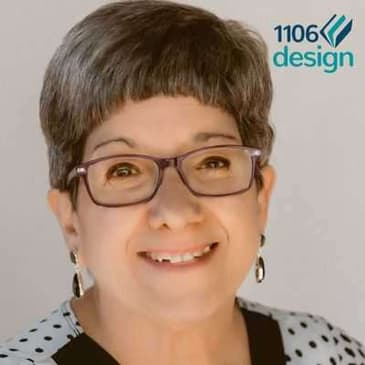
How can self-published authors navigate the complex landscape of modern publishing and retain control over their creative works? Get ready to discover the secrets of successful self-publishing as Michelle DeFilippo, a veteran with over 50 years of experience, joins us on Speak Up International. From her early days at Crown Publishers in New York to founding 1106 Design, Michelle reveals how authors can maintain their rights and maximize earnings through self-publishing. Learn about the pivotal moments in publishing history and how the advent of desktop publishing changed the game forever.
Join us as we break down the self-publishing process with Michelle, who provides invaluable insights into every step, from editorial evaluations to final uploads on print-on-demand platforms. Michelle explains the distinction between true self-publishing and DIY methods, stressing the importance of professional help to achieve high-quality results. She shares her expertise on how 1106 Design supports authors throughout, ensuring their books meet industry standards while allowing them full control over their work and revenue.
The episode also covers the editing challenges authors face and the crucial role of skilled editors in preserving an author’s voice. Michelle sheds light on her own experiences with difficult authorial overreach and the importance of maintaining professional standards. We wrap up with a deep dive into effective book marketing strategies, emphasizing the need to understand your target audience and leverage both social media and traditional marketing channels for success. Whether you’re a seasoned author or just starting, this episode is packed with practical advice and inspirational stories to guide you on your self-publishing journey.
Connection information for Michelle DeFilippo:
Website: https://1106design.com/
Facebook: https://facebook.com/1106design
Twitter: https://twitter.com/1106design
LinkedIn: https://www.linkedin.com/in/michele-defilippo-824247/
Welcome to Speak Up International with Rita Burke and Elton Brown.
Speaker 2:On Speak Up International, we seek to inspire, to educate and to inform through the stories of our amazing guests. Today, we will be having a conversation with Michelle DeFilippo, who is a person with more than 50 years' experience in the publishing business. Now her company, 1106 Design, makes it easy for authors to release top quality books, keep control of it and earn more money every time they sell a copy. There is so much more that I could tell you, bert-michel, but, as you know, on Speak Up International, we prefer for our guests to tell their own stories, and so today we welcome you, michelle, to Speak Up International.
Speaker 3:Thank you so much. It's a pleasure to be here with you today.
Speaker 1:We're going to talk a lot about books, and that's okay with me. I don't have a problem with that. If it wasn't for books, would I know how to read? That's right. You help power authors so that they're able to retain control over their work through self-publishing. Can you give us a slight overview of how that works?
Speaker 3:Sure, everyone is familiar with traditional publishing. We grew up learning about that and reading the books from traditional publishers. And in that business model, the publisher would buy the rights to produce the manuscript from the author. The publisher would hire the experts to produce a top quality book. Author. The publisher would hire the experts to produce a top quality book and the author would then be paid a small royalty every time a book was sold. The publisher, because they made that investment, would keep the lion's share of sales revenue when a book is sold. So that was always a fair business model. The author didn't have to pay anything, but the author also gave up control of their book to the publisher. It was no longer their book, it belonged to the publisher. So when Amazon came on the scene, all of a sudden it was possible for authors to distribute their books all over the world without a middleman publisher involved. So that was the best thing that anybody had ever heard of. The idea at the beginning of self-publishing was that the author would be the publisher of the book. The author would hire the experts to produce the book and the author would get all of the money from sales when a book was sold.
Speaker 3:Somewhere along the line. Everything got really, really confused, and that's why I'm doing these podcasts now, because there's a lot of misinformation out there. In the last 20 years or so, we've seen self-publishing companies come into the space, we've seen hybrid publishers, we've seen independent publishing companies, whatever they call themselves. The model is a blending of traditional publishing and what self-publishing originally meant.
Speaker 3:What these intermediate publishers do now is they charge the author to produce the book and they keep a lot of the revenue from sales when a book is sold. So that's advantageous to them, right? I mean, if you're a business owner and you can get your customers to pay all of your expenses and you still make money when a book is sold, that's a pretty good deal for the business. It's not such a good deal for the author, and so we still collectively have a mindset that when a manuscript is finished, we have to look for a publisher, but that really is not the case. So what I can talk about today is what independent publishing was meant to be and still can be if people ask the right questions.
Speaker 2:Michelle DeFilippo. We are talking about a topic that is dear to my heart and sometimes I believe that authors feel that they are elevated Somehow. They work and they as authors when they use a traditional model for getting their books to the market. But I want to begin at the beginning. Tell our audience, tell our listeners, what drew you to book publishing.
Speaker 3:Well, I wish I could tell you I had a plan, but I was living in New York City at the time and I graduated from a two-year community college program that majored in advertising art, and so I was all set to go into the advertising agency arena. But I happened to get an interview with Crown Publishers in New York and they offered me a job, and so I needed the job and I took it. So that's how I got into publishing at the very beginning. That was way back in 1972.
Speaker 2:We've got a lot in common. I was married in 72. Good year, it sure is.
Speaker 1:So what is the primary mission of 1106 Design and when did this organization company came into existence?
Speaker 3:Well, as you can imagine, with 50 years of publishing experience, I've been on quite a rollercoaster ride. So I started out at Crown Publishing in New York in 1972. And then, in 1976, my husband and I decided to move to Phoenix, arizona, where my grandparents had retired, and we just loved it and we moved out here without really thinking too much about it. I just assumed that finding a job would be as easy as finding a job in New York City, but that didn't turn out to be true. I was working at all kinds of jobs where I couldn't make more than minimum wage, so I decided that was not going to fly. So I wound up opening a typesetting business in order to make more money in Phoenix, and that worked out really well. I did that for 13 years.
Speaker 3:And then Steve Jobs invented the Macintosh and put all of us out of business because people started doing their own typesetting at home on the desktop, and so I went back to freelancing for a while. And then around 2000, 2001 is when Amazon came on the scene and all of a sudden people were talking about self-publishing and I found a brochure in the library about the Arizona Book Publishing Association and I went to a meeting and I learned how fast this field was growing and I thought to myself well, okay, I've been in publishing before, I know how to type, I can do this. And I just kind of morphed into 1106 Design from there and it's been great.
Speaker 2:That was in 2001 when we formed Sounds like it's been a roller coaster indeed, but with lots of joyous moments in between. Now you claim to advocate on behalf of independent authors. Talk a little bit about that.
Speaker 3:Yes, in my opinion, I don't think there's enough transparency in the marketplace. A lot of the companies are really good at internet marketing and they use high pressure tactics. I talk to people all the time who say I'm so glad you don't give us those high pressure tactics. We really don't like that at all, and so what I want to do is genuinely serve authors, because I know how hard they work on their books and how long they as much about their book as they do.
Speaker 3:So we offer high-level services. I will tell you they're not cheap because it takes a long time to produce a book to traditional publisher quality and we just work with them step-by-step, email-by-email, until that book is done to a high standard. And the reason we keep to that high standard it would be very easy to put out low quality books, but the reason we don't do that is because buyers know the difference. When you buy a book and it's filled with typos or it's poorly edited or it's poorly designed or typeset, you know and you're disappointed and you remember and you never go to that author again. So we want to give authors the best chance to sell books, not only the first time, but maybe future books that they write. We want to give the buyers and the authors value for their money.
Speaker 1:Do you provide workshops or what?
Speaker 3:type of educational support do you give to authors that come to you to be assisted? Well, I don't do workshops. This podcasting is pretty new for me. I've only been doing it a couple of months.
Speaker 3:But when an author comes to us, there's some things we won't do. We won't send you three emails a day when we first learn your name. We don't bother people in that way just because I don't like being bothered in that way. But when we begin the project, we just answer questions as they come up when the author asks them. I don't like it when I ask a question of a company and they give me a list of 20 FAQs to read. That drives me nuts, so I don't do that to my clients. If you have a question, we'll answer it right then and there we may need a day or two to get back to you, because we want to give you a complete answer, not a scripted reply. We want to make sure that we read every word of your question and we're going to answer that question in a way that provides the value that you need from our answer.
Speaker 2:From what I'm hearing, then it sounds as if you keep this a human-to-human transaction, what you do with your independent authors and your publishing house. It's human to human relationships that I think we still need in this world, in spite of technology.
Speaker 3:Yeah, I think it's common sense. I mean, you know, there's a lot of companies that are larger than us and they kind of have an automated system or just steps that everybody goes through, regardless of the nature of their book or even their own personality. So we want to keep it more human, not just for the author but for ourselves. We want to enjoy our day's work, we want to put out good books, we genuinely want to help people Like they say to make it organic.
Speaker 2:Yes, yes, yes, yes, yes.
Speaker 1:Yeah, so there is a difference between self-publishing and traditional. Do you provide self-publishing only or do you handle both, depending on the author.
Speaker 3:No, we are not a publishing company in any respect whatsoever. We help the author with the services they need to produce a great book and we help them get set up with print-on-demand printing and distribution in their name so that they get the sales reports. They get the money when the book is sold and we don't have any participation whatsoever in their revenue from sales. So I guess you could call us publishing project managers or publishing or something like that.
Speaker 3:Yes, yeah, we're not. We don't publish the book for the author. We help them publish it in their own name.
Speaker 2:So then, Michelle DeF Philippot, if you had to do a presentation to a group of people who were considering writing their own work and they were trying to make the decision between do I do traditional or do I sell, Talk to us about that.
Speaker 3:Well, true to traditional publishing like I described earlier, the publisher chooses you. You don't decide that you're going to work with a traditional publisher. They have to. You can propose through a literary agent to them, but they're the ultimate decision makers. So you can't choose traditional publishing. They choose you, ultimate decision makers. So you can't choose traditional publishing, they choose you.
Speaker 3:And we do work with a couple of literary agents and one of them once told me that a traditional publisher and by that I mean one of the big guys like Random House they don't even want to talk to authors unless they have 100,000 social media followers. So they're looking for the good big movie stars and celebrities and so forth, and that's the authors they serve and that they want. It doesn't mean they're bad people, they just have a lot of expenses. They have warehouses and distribution networks and returns from bookstores and all of that that they have to deal with and they have to cover those expenses. So self-publishing anybody can do.
Speaker 3:But self-publishing the term has become misdefined over the years. A lot of people think it's do-it-yourself publishing. You're going to find hundreds of places that will tell you to design your own cover format, your own pages in Word or some other platform, and that's just not the way to produce a good book. So what we offer is the best of traditional publishing we're going to produce a high quality book for you, and better than traditional publishing because you're going to keep control of it and nobody else will ever be a middleman that gets between you and your book in the sales channels okay, so we've moved into the financial end of it.
Speaker 1:and then you're saying that once the book is published, as the author doing it themselves and I say that in quotes then all the money then goes to the author. What happens? If there is a someone wants to take the book and put it on their website, they can do that if they want to. Do they receive money? Do they get a portion of the money now then, because of the fact they have it on their website? I mean, I would expect that they wouldn't have it on their website for nothing. Right, they get something, correct.
Speaker 3:Yes, the beauty of true self-publishing, which is what we do for authors, is that the author can do anything they want they can put it up on, and we recommend they put it up on Amazon because most books are sold there. But then there's also Barnes, noble Books, a Million, what they call the expanded distribution network, so they can put up their books on all the retail channels network. So they can put up their books on all the retail channels. They can also sell their books directly on their website. At the back of the room, if they're speakers or consultants or coaches or the like, there is nobody telling the author what to do. What we provide is analysis and guidance and we can talk about the benefits, the pros and cons of each way of doing things, and then they can make their own decisions and they can change their mind, which is great. Once you sign up with a publisher, you really can't change your mind. They're in charge.
Speaker 2:So obviously, michelle, you are not your company, you're not your organization. Talk to us about the we. What's the composition of your team?
Speaker 3:Oh, I've been blessed to assemble over the last 20 years a wonderful team of really talented editors and designers and proofreaders and e-book formatters and we all work together to produce that great book matters and we all work together to produce that great book. I have about 20 people, because every book is different, every author is different, and so I have some editors that specialize in fiction, others specialize in nonfiction, I have one that specializes in religion and philosophy, and same with designers. You know, designers tend to have a style that if you look closely, you can see in their work, if you look carefully. So there are some authors, some designers, that do better with nonfiction, other designers that do better with fiction. So, because of this structure, I can send the book to the team member who is most qualified to do the job.
Speaker 1:Self-publishing gives control to the author. So how does project management play in the services provided by 1106 Design?
Speaker 3:Okay, well, what we've done is I've assembled that team right like I just described, so that the author doesn't have to go on the internet and try to find a qualified editor and a qualified designer and then you know and then manage that designer. It's a lot of work to manage six or seven people to get the project done, so we do that for you. I've already got that set up in the background. My project manager manages all of the deadlines and the tasks and makes sure that everything gets done on time. I don't have anybody on my team who doesn't deliver, because that's how they quickly exit our team. That happens once and I don't use them anymore. So we take that headache away from the author. Because really, if you think about it, if you've never published a book before and maybe you haven't in your work life had the experience of working with editors or designers, how on earth can you be confident that you're going to choose the right people to do the job? So that's what we do for you.
Speaker 2:Sounds to me as if you've got a well-oiled machinery and professional machinery going and there is that connection between your company and the independent authors, your company and the independent authors. And so, michelle, let's suppose I sent you a manuscript. Is that how the process begins? How does your process begin and walk us through the process?
Speaker 3:Yes, all we need from the author is a completed manuscript, and by completed I mean you've written all the sections and you've gone over it as many times as you need to so that you think the manuscript is the very best. You can make it Right, and then our editors will take over. The first thing we do is an editorial evaluation to take, I guess what I would call a 30,000 foot view of the manuscript so that the editor can see how much work it might need and maybe some little quirks that everybody has in their writing. So the editor will look at that and write an evaluation and response so that the author, if they want to, can fix up those quirks and then give us the manuscript back again for the actual editing process to begin. After that, while the editing is going on, we'll design the front cover of the book, again in collaboration with the author.
Speaker 3:We always ask you what you think. You know, what do you have in mind for the cover? I have yet to meet an author who hasn't given the cover design a lot of thought. So we start that process with a questionnaire and we also go out to the market and research what major publishers are doing for that type of book at this point in time, because when people go to Amazon and find your book, amazon is not going to show only your book. They're going to show the best-selling books that are similar. So your book has to be designed to fit in with that group. We don't copy those designs, but we emulate them if that makes sense, so that when people look at your book, even if they haven't heard of you, they might give it a chance. If it sounds interesting to them and the cover is well designed, they might give you a chance and say you know, gee, I don't know who this author is, but the cover looks good. It looks like a credible book, and that's the function of cover design is to make your book look credible so that people will give it a chance and then they'll click on that and learn more about the book. And after that we can't control what happens after that. We don't know what people are going to like or not like. That's their decision. But our job as cover designers is to make people stop and learn more about the book.
Speaker 3:So when the editing is done, we send it back to the author and the author can accept or reject everything that the editor found. There are no surprises. You will see every suggestion the editor makes and you can decide whether you want each and every one of them or you want to reject some, and then we will put the job into the interior design process, job into the interior design process. Now that's when an experienced typesetter will design the pages of your book and will show you sample designs to make sure that you like what we've suggested. Again, we work back and forth with you as long as necessary until you're happy with the interior design of the book. Then, when you approve that design, then we go ahead and we typeset all the hundreds of pages to match the design that you approved. After that we send it to the proofreader, who is looking for all the mistakes that everybody missed along the way and also checking for quality typesetting and make sure that the typesetting adheres to all the book design rules that exist, which ensure that your book looks like a book and not just a manuscript with smaller page size.
Speaker 3:And there's a lot to typesetting too that people don't know about, but major publishers know about it. Major publishers always hire typesetters. They don't format the book. You hear the word formatting a lot. Formatting is the least of it. Typesetting is really detailed and we take care of a lot of things that may not be visible in the final product, but the reason we spend all that time to do it is so that people can concentrate on your message and they're not distracted by poor spacing or line breaks or all kinds of dozen other issues that we fix.
Speaker 3:So again, the proofreader will mark up the pages and will send the proofreader's markup back to you. Again, you can reject or accept any of the proofreader's changes as you see fit. Of course we recommend that you accept them because she's following the Chicago Manual of Style and we recommend what we think are good standards. But again, you're in control. You can accept or reject anything that we offer.
Speaker 3:So at that point we will upload the files for your print book to the print-on-demand platforms, which is kdpcom and ingramsparkcom, and we'll show you how to approve a proof and activate distribution of your print book. While all of that is going on, we will work on your e-book and then, when the e-book is done, we'll upload that and at that point our services are pretty much done. The automated distribution and sales system takes over. You can always go to your KDP and IngramSpark dashboards to see your sales reports. You'll get a check once a month from each platform in any month where you have sold books. That usually takes about 60 to 90 days to get going, at least on the Ingram side, and then that's it. We're always available for questions as they come up after the process, but at that point we're pretty much done.
Speaker 1:Very detailed process indeed. So can you tell our audience three things that you must not do when you are in the process of self-publishing your book?
Speaker 3:Well, ok, what you must not do and I'm not just saying this because I'm in the industry don't do it yourself. We've all seen our neighbors and our friends' terrible self-published books, seen our neighbors and our friends' terrible self-published books. The book industry is unbelievably competitive. In order to succeed, to give yourself the best chance to succeed you have to have a market-quality book, because when buyers don't get quality, they will retaliate with bad reviews. They'll be mad at you and they'll put that review on Amazon and whether you think it's fair or not, whether you agree with it or not, it will be on Amazon forever and you can never have it removed.
Speaker 3:So the money you think you're saving by doing it yourself is really could hurt you big time if you start getting bad reviews, if you start getting bad reviews. So what else shouldn't you do? I um one time in 20 years we've had an author reject all of the editing we did and we just flabbergasted. Uh, I would say do your best to accept the expertise that you hired us for. You know not? I'm not saying don't talk to us about it, but please let us do our job, because we know how to make good books and we want to make a good book for you.
Speaker 1:Before you give us number three, can you tell us what happened to the individual who rejected all of the suggestions editing for the book? And I'm assuming they just went ahead and published that thing anyway? It's had a regrettable situation. There we go.
Speaker 3:It was. We begged, we pleaded, we said, please ask your friends, please, please don't do this. But we did what he wanted because sometimes, unfortunately, we have to choose between pleasing the customer and doing the level of the job we want to do and and I think every business owner faces that and it just kind of takes all the wind out of our sails. But we want a happy customer, so we do what they want and so on.
Speaker 2:Speak International. We seek to inform, to inspire and to educate, and we're doing just that today with our guest, who is Michelle DeFilippo, and she's talking to us about, to some degree, I will say, independent or self-publishing, and she's teaching us the difference between traditional and self-publishing. So I'm really happy with what you're telling us so far, michelle.
Speaker 3:Tell us who, or what would you say, is responsible for the person that you are today well, I can say I survived catholic school and the nuns who taught me are dead, but they're still watching. So so, no, I I make a joke of that, but but truthfully, I had really good grounding, not only only at school but at home, about doing the right thing, doing your best, working hard, treat people the way you would want to be treated, and that's really the fundamental foundation that I built my life on and I built this business on, and it's just the right thing to do.
Speaker 1:When you decided to build 1106 and it worked, would you attribute it to the timing or the hard work that you had to put into it to make it right, or a combination of both?
Speaker 3:I would say it's a combination of both. There was plenty of business out there. So, even though I made some mistakes and maybe wasn't as prepared as I thought I was, I did get my fair share of the work and was able to pay the bills and get started without the pressure of not being able to pay the rent right. So I think it was experience met opportunity right, and then you just work hard and you take advantage of every opportunity that comes along and that experience and opportunity certainly changes the trajectory, doesn't it?
Speaker 2:Yeah, it changes things greatly.
Speaker 3:Yes, I don't know any success. I've had an occasion to meet some really successful people in the publishing industry and let me tell you they all work like dogs. There is nobody who succeeds without hard work, so if you hear someone saying that to you, you should just run away.
Speaker 2:Yeah, yeah, I know someone who has just written her first book. It is kind of faith-based and she sent it off to an editor and when it came back I saw it, a few of us saw it and we were kind of disappointed because we felt that the editor had changed the tenor and the essence and the heart of what she was trying to say, changed her voice, changed her voice and it was in my book. But I was kind of disappointed.
Speaker 3:A good editor should never change the voice of the author or the style or the intent of the manuscript. An editor is unfortunately I'm sure some do because they may not agree with the message or whatever the problem is. But that's stepping over a line that an editor should not step on. An editor should fix up the language, fix grammar, punctuation, point out if you didn't explain yourself sufficiently, or point out if you've already said what you've said before. They should never get in the way of what you're trying to do with your manuscript.
Speaker 2:That made me really sad because the editor was someone that had been recommended to me and then I told the person about. And I was so sad when I saw what she sent back. And not only I felt that she changed the voice and the whole concept of what the woman was trying to get across in her book was trying to get across in her book, but three quarters of the way through the book it seems that she'd done some work by the next third it was sloppy, sloppy, sloppy. All of the errors that were in the manuscript were still there, so disappointing.
Speaker 3:I'm sorry you had that experience, because there are many good editors out there who know what their role is. The role is not to rewrite the book. The role is to make the author's book the best it can be, and that's why, when we edit a manuscript, we send two files to the author. One is the file that shows all of the track changes in Word, which can be pretty intimidating to look at. We also send a file where all of those changes have been accepted and the author can read a cleaner copy, if you will, and just not get distracted by all of those red boxes.
Speaker 1:You mentioned earlier about your company made a couple of mistakes. When you look back, what was the mistake that really made you cringe when you think about it now?
Speaker 3:Oh gosh, my background is in design, so I would have to say, when I look back at work that I did 10 or even 20 years ago, I just cringe because now I know more. You learn as you live, right, and hopefully you're always improving your skills. So I look back on that and I'm like how could I have ever done that?
Speaker 1:Do you find your clients over the limit? I'm going to use that right to the edge, and I mean that in a positive way, not where you're going to pull your hair out. But yes, you may say, I don't know how to do X, y, z, how do I even get to do this? Then now you've got to figure out a solution for your client's problem, but it's not something that you can just do overnight.
Speaker 3:Well, it's always a collaboration as far as what the client wants and what we can do, and I pretty much just manage the business now, so I don't have to have the technical expertise to do what one client or another might ask for. I send it to my designer and they always come through for me. Same with editing People specialize and if you do something every day, you get pretty good at it.
Speaker 2:You should get very good at it. Yes, If you're doing something every day, so do you help the people. You work with the authors to market their work.
Speaker 3:We approach that, yes, marketing is necessary. That would have been the third thing I was going to mention is that don't sit back and think you don't have to market your book because you do, because nobody can buy a product or a service that they haven't heard about, because nobody can buy a product or a service that they haven't heard about. So, yes, marketing is absolutely necessary. We handle this on two tracks. On our website, we have some author marketing training, where you can have a marketing person train you on how to market your book yourself. That's really popular.
Speaker 3:A lot of our authors love that, and we also introduce authors to three marketing people that I trust with my life. They will interview the author and they will not take the author on as a client unless they think they can deliver results Again and again. There's a lot of shenanigans in the industry about that, too, where people and their services are not cheap either. Right, because they're spending six months with you and and are going to do a real good push for your book so that it does cost money. But if you see online, if authors see online, we'll market your book for two hundred and ninety seven dollars. You know that's appealing, but it's not going to have any effect, so you have to be careful who you hire.
Speaker 1:Where would you suggest a new author to go to market their book?
Speaker 3:Well, actually, in a sense, marketing begins before you even write your book, because hopefully you're writing it for, with a specific audience in mind, and you know what problem are you going to solve for them and are you going to solve that problem in a unique way that no one has solved before. So that's kind of already beginning to target who your ideal audience is, already beginning to target who your ideal audience is. And so once you know who that ideal audience is, then the book marketing people can do some research for you and find out where they hang out online and who reviews books like that and how you can reach them and start participating, maybe in Facebook groups and get online reviews and so forth. So no book is for everyone. So the marketing you really do have to hone in and funnel down to who is my most likely buyer and then craft your messages to speak directly to them. What are they looking for, what do they want from your book? And if you can answer that question then they'll buy it.
Speaker 3:So you need to know your niche, so to speak, and try to get into their corner, get your book into their corner, kind of yeah, exactly, and actually before you begin writing, because there's hundreds of thousands of books on every topic on Amazon, so you have to figure out okay, what? Why am I writing this book? Is it unique? Who am I talking to? What problem of theirs am I solving? And then you can sort begin to segment and figure out who you need to market to when you're done.
Speaker 1:I thought about something just now, as you and Rita were talking and you mentioned how you have to go to a social media platform. Are you depending on, or the author? Are they depending on using social media in order to find the groups necessary to sell their book? Or is there also the traditional method where you know a group of collectors, a group of authors. They get together to sell their book? Would that also be a valuable place to introduce people to your work?
Speaker 3:Well, the answer to that would be different for each author, right, I guess? Social media, if you know, everybody's always looking at their phones, so social media has to be part of the mix today. But it's also frustrating because everybody sees thousands of messages today so it's really hard to get anyone's attention for longer than three seconds. But the traditional marketing channels are also appropriate sometimes. We just finished an 850-page book, the Biography of Winston Churchill, which was great fun for us to work on. But that could be marketed to Churchill people who are interested in history and interested in Churchill, and they're pretty easy to find online. There's groups associated to it, there's magazines and publications devoted to it. So the more you can figure out who you're writing for at the beginning, the more successful your marketing will be.
Speaker 1:So then it is a collaboration almost between your organization and the author. So the author should be doing their homework in order to figure out where they can go to do the marketing and do, and I guess I should come back for the question. So are you, your company, you give them places that they can go or do you just automatically send it to KDP?
Speaker 3:Oh, no. Well, KDP is Amazon's print-on-demand subsidiary and IngramSpark is the other print-on-demand platform that we recommend. They don't do anything to market your book unless you buy ads, right? But the author should, and sometimes the author already has identified who the audience is and that's how they got the idea to write the book in the first place, based on where they're already participating on social media, and that's fine. That's a fine place to start. But when the book is done, then our marketing people would get involved and learn more and maybe do that research and offer additional suggestions, places where the author may not be familiar with.
Speaker 2:Now, michelle, as a person who's been surrounded by books and who has had so much experience in this particular market, would you say that you've got a favorite book, or two or three that you want to share with?
Speaker 3:us today. I was afraid you were going to ask that question. To be honest with you, I have a stack of books that I will never get to read because I'm just so busy. Usually by the end I'm busy working on my clients' books and my own reading list has suffered on account of that. But I will tell you a great book that inspired me when I was a kid, and the passion for his work came through in every story that the author told about him. So that was probably my first memory of how a book can really take over your mind, to where you can't wait to turn the page and keep on reading. I actually read that again not too long ago, just because I remembered it so well and I wanted to see if, as an adult, I would have a different or a more expanded reaction to it. It was just as good on the second reading as the first.
Speaker 2:Isn't it interesting, though? I find that I read a book at one point and maybe five, six, seven years down the line I read it again and I see so many things that I never saw in the initial reading. Yes, it's really amazing isn't it?
Speaker 3:Yes, yes, now we don't have too many books that are as long as that book, I think it was over 600 pages, right, a novel. You don't see too many 600-page novels anymore. So in my second reading as an adult some of it I sat there and said, you know, he's really kind of going into too much detail, but I still loved the spirit of the story and still found it interesting all these years later.
Speaker 1:How do you determine how many books you can handle? Let's say there's an onslaught of 200 people. They all come at once. We want you to work on our book. And you say, oh sure. And you just go off and you hire more people. Or do you say, I'm sorry, our limit is.
Speaker 3:Well, I've never had 200 people waiting in line in all these years, but the benefit of having multiple editors and designers available is that we can just move the book to the next available designer or editor or proofreader or whatever the case may be. So we don't often get into the situation where everyone is booked solid and can't take on a book. Sometimes, though and this is probably a good thing to mention is that sometimes authors don't know how long it takes to produce a book or how much work is involved, and we've had occasion where an author will come to us and say I have an event next month and I need my book done in time for this event, and unfortunately then we'll have to say sorry, we just can't because there's more work than that. But generally, we can take as many authors who show up at any given time.
Speaker 2:So what's the average production time? Somebody comes to you with their manuscript. Do you give them an estimated time of delivery?
Speaker 3:Yes, we do, and technically it really depends more on the author than on us. We need two to three weeks for each service. Like I said, editing and cover design can be done simultaneously, but then after that the services have to be sequential, and so the completion date depends on the author's response times and how many changes, rounds of revisions the author might request. But over having done 4,000 books, the average time to complete a book tends to be three to four months.
Speaker 1:With your design company and how you differentiate yourself from traditional publishers, the net revenue calculation for an author using your services and we'd like to dive into that and how your design firm assists authors in making informed decisions, even though you had one person who would not decide to take that route. I guess that's okay. And we talked about the financial pitfalls that authors might encounter. We talked about the services that you do provide do not do and that your goal is to produce top quality book releases for authors. I want to thank you so much for what you do. I knew when your name popped up that Rita's ears probably would swell twice the size, because she wants to catch every sentence, every punctuation that you gave us, because this is Rita's thing. She's been doing this for a long, long time, her and her husband and so I knew this would definitely be right up her alley to get an opportunity to talk to yet again another individual who is in the field of book publishing.
Speaker 3:Well, thank you so much. I really appreciate the opportunity and if anybody has any questions, they can always go to our website and contact us there. And I do have a free book that I give people. It's called Publish Like the Pros, and anybody who gives us their email address can download a copy for free. It's a quick read only 88 pages but it's a survey of the services you need and how the original self-publishing model that we follow will help you make more money every time you sell a book and also keep control of your book. So we're always respectful to people. We're not going to pressure you. If you want a consultation, there's a button on our website for that and we will be happy to talk to you and see if your needs are a good fit for our services and hopefully we can help you.
Speaker 2:Well, I'm happy to know that this has certainly been a delight. You have helped me to reinforce what I believe about independent publishing, and it has helped as well to enlighten me in many, many ways, and so I thank you, I thank you, I thank you.
Speaker 3:Thank you so much. It was great to be here.
Speaker 1:One other thing too the information, like your web address and the fact that you're offering the manuscript for free. That will be on the main page of the podcast, at the bottom. You know this way you know they'll be able to find you. They would use your services or free consultation, or they want to get their hands on that book of yours to hopefully help them lay a path that will be successful. So thank you very much and have a wonderful afternoon.
Speaker 3:Thank you so much to both of you. I appreciate you.
Speaker 1:Thank you for listening to Speak Up International. A PDF of Ms Michelle DeFlippo 88-page guide published like the prose A brief guide to quality self-publishing. A PDF of Ms Michelle DiFlippo's 88-page guide Publish Like the Pros A Brief Guide to Quality Self-Publishing can be downloaded for free at http//1106designcom. You can connect to Ms DiFlippo in the description section on Spotify and other platforms. Are you interested in the opportunity to be interviewed and have your cause promoted by Speak Up More International? To us by sending a message that includes your name, company or organization name, the valuable service you offer to your community and your email address to info at speakuppodcastca. Worried about your confidence as an interviewee? Don't fret. Speak Up International can provide you with the necessary training so you shine during an interview. To receive training information and a 10% discount about the Speak Up International's podcast interviewee training program, email us at info at speakuppodcastca. You can also reach us using Facebook, instagram, twitter and LinkedIn To connect to our podcast. Use Spotify or your favorite podcast platform and search for Speak Up International. You can also find our podcast using our web address https. Colon forward slash, forward slash wwwspeakuppodcastca. Our logo has the woman with her finger pointing up, mouth open, speaking up.
Speaker 1:By joining Patreon, we can offer you an exclusive opportunity to become an integral part of the continued success of our podcast. Your financial support will enable us to cover the costs associated with promoting high-quality content, such as equipment upgrades, hosting fees and professional editing services. As a member of our Patreon group, you will gain access to a range of exciting benefits. Patreon group you will gain access to a range of exciting benefits. We are working on providing you early access to new episodes and the opportunity to suggest topics or guests for future episodes. Your contribution will not only help sustain the continuity of the podcast, but also allow us to enhance the overall listening experience to all of our dedicated followers. Help us, help you. Wwwpatreoncom. Forward slash. Speak up international. At Speak Up International, we aim to inspire, to inform and to educate.