
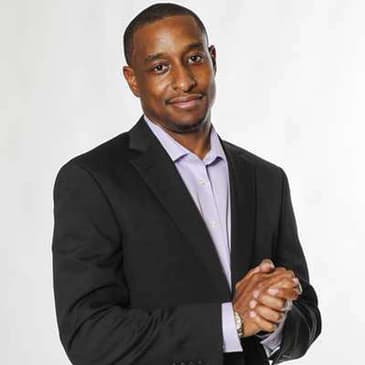
What happens when a successful college football recruiter hits rock bottom and embarks on a journey toward personal transformation? Join us for an inspiring conversation with Ahmard Vital, who transitioned from recruiting top athletes to motivating individuals worldwide. Discover the pivotal moments that led to his profound spiritual and personal development, culminating in the creation of his transformative book, "Awaken the Baller Within." Hear Ahmard's firsthand experiences and insights into resilience, personal growth, and the powerful principles that drive success both on and off the field.
Explore practical strategies for personal success as we discuss Ahmard's second book, "I Am More Than Enough," which champions self-confidence and the importance of self-reflection. Gain valuable perspectives from Ahmad Vital on navigating the real-world job market, the value of certain college degrees, and the necessity of practical skills for financial stability. Our conversation delves into mentorship's pivotal role and how facing career realities head-on can pave the way for a more secure and prosperous future.
We also highlight the extraordinary impact of community and mentorship in transforming young athletes into successful professionals and leaders. Learn how principles of discipline and teamwork translate into business achievements and personal fulfillment. Ahmard shares his stress management techniques rooted in faith, the significance of his name, and the profound positive feedback from his educational presentations. This episode concludes with a powerful message on personal transformation, storytelling, and the continuous journey of growth and empowerment, ensuring you walk away feeling inspired and motivated to pursue your own path to success.
Website: http://www.ahmardvital.com/
Facebook: https://www.facebook.com/ahmardvital/
LinkedIn: https://www.linkedin.com/in/ahmard-vital-6959464
Instagram: https://www.instagram.com/ahmardvital/
Twitter: https://mobile.twitter.com/ahmardvital
[00:00:02] Ellington Brown: Welcome. to SpeakUP! International with Rita Burke and Elton Brown!
[00:00:07] Rita Burke: As you know, on SpeakUP! International, we have enlightening organic conversations with people we call community builders. Today, we are going to be having that conversation with Amard Vittel, who is a motivational consultant. Meet Amard Vittel an international speaker.
He provides his audience with tools needed to achieve personal success. Mr. Vito boasts of a successful career as a college football recruiter. In addition, he has published two books. And there's so much more that I want to say about him or that we can say about him. But as you know, on SpeakUP! International, we believe very strongly that it's best if our guests tell their own story.
It's much more authentic and organic. And so today I introduce our listeners to Mr. Ahmad Vito. Welcome to SpeakUP! International!
[00:01:21] Ahmard Vital: Thank you for, for having me this morning. I thank you all for allowing me to be on your podcast.
[00:01:26] Ellington Brown: It's good to have you here! I thank you for your patience and understanding. What inspired you to transition from college football to recruiting and analysts to motivational speaking and writing?
[00:01:44] Ahmard Vital: Well, the two actually, um, sort of collided at the same time. And again, thank you all for having me on, uh, on SpeakUP! International.
Uh, there was a time when I was, uh, I was doing a college football recruiting analyst work for Fox Sports Rivals. Uh, scout dot com and those are all services that cover the process of young men going from high school football to college football. And so I was, I was, that was around the time when the Internet boom was kind of picking up where there were like, newspapers that weren't printed.
So this was like the start of the of the blogging that we know of today. And I got in on that pretty early and we were doing recruiting analyst work. Well, during that time, I was doing pretty well for myself. You're talking about late two0s, early 30s. Uh, living what you would call the American dream and I don't know where I, I bought a home, had a nice ride and it was like, Hey, maybe I can put all this together and, you know, start a family or whatever.
And lo and behold, the young lady I was with at the time called me out of nowhere a week after I bought the house and was like, this relationship is over. No discussion. No explanation. Nothing like we're done here. And it was like, Hey, you know, finally I'm taking a relationship serious and this is how it works.
And so obviously I went into kind of a crash and burn type of, uh, situation within my own life. And coming out of that, I remember sitting in this new house that I'm basically sitting in and asking God, like, God, what do you want me to do? Like this thing called life is just not working out for me. What is.
What is happening? And I remember the voice spoke to me and, you know, and reassured me that I'm his child. And so I woke up and I said, all right, if you wake me up tomorrow, I will start on a new path. And that new path involve spiritual and personal development. So obviously I'm reading the Bible more.
I'm reading books like they can grow rich, who moved my cheese, inspired destiny, and all of these, all of these great and amazing books. To give me the strategies needed to be able to do what it was calling me to do. I hired a mentor during that time. And what ended up happening is, is that I'm sitting here as a sports guy, but I've taken on all this personal and spiritual development and was like, how can I merge the two?
And so that's when I wrote Awaken the Baller Within, which is the same way Napoleon Hill wrote Think and Grow Rich, where basically I interviewed top performing college football players. But wanted to understand what was the mindset behind their success. Like you're doing all of these great amazing things on the field, but what is the mental that's going on for you to be able to perform at this level?
And so it ended up being where football was a metaphor for a greater understanding of life. You know, you're talking about setting goals, being a leader, being altruistic, being, you know, serving the needs of others, lifting others who who may need help. And of course, you know, there's the, there's the idea of, of.
Of building towards something bigger than yourself and all of that was included in there. And interestingly enough, you know, from that 1st book, many parents was picking it up and saying, hey, this book is not even about football. And it's like, it's not. And so how I transitioned out of that and going into and going into, Obviously, I've always been a writer, but then once I wrote my first book, I went to some guys who I trust.
I said, you know, I got this book. Now, I don't know what to do. And it's like, you know, if you want to help sell your book, you should speak. I was like, oh, okay. That's how this works. And so I remember selling my first book order to a school out here in Houston. Uh, and they bought 80 copies of the book and I said, I'll, I'll come by and speak to your guys.
And from there, it's, it's gone on to, to, to many great and amazing things.
[00:05:29] Rita Burke: It sounds to me as if the rest is history. I want to get a little deeper into that book as we go through this conversation, but I want to pause and say to you, what exactly do you do in your role as a motivational consultant?
Talk to us about that, please.
[00:05:47] Ahmard Vital: That role for me is more so working with a target demographic of young adults. So you're looking at anywhere between probably the ages of 17 up to about two8 years old, especially today, many of them coming out of high school and going into college or college into the what we call real world.
Most of them don't quite have a pathway. They have all the, they have all the knowledge, all the talent and all these different things, but they don't know how to apply it or to put it to use, to be able to be used in the open market. We know today there's more useless degrees on the streets than we can ever imagine that do nothing for these young people when they go into the, into the real world.
And so what I do is I come in and say, bring me all your dirty clothes, bring me all your mess, bring everything and let's sit down and we'll talk about this. So it's a motivational speaker. And a coach merged together. And so my, my international manager was just like, Hey, that's your motivational consultant.
I'm like, Hey, that works. And so basically I'm coaching them in a way, this very, this extremely fired up. We're we're, we're ready to go. And we're looking at this things we're throwing out, we're chewing up the meat, throwing out the bones and saying, okay, based on what you have here, this is where you can go to make something happen to where you can level up and begin a new path in life.
And so. My consultancy goes to helping, especially young men, uh, not to be productive and not be useless in today's society because we, we, we need to get sort of a, we need to reinvent who we are. It's almost like we need to go back to go forward. We need to go back to the days when we were industrious, when we were purposeful, when we were leaders.
Right. And not all this new age, uh, role flipping and understanding of tapping into something that's just, that goes against every idea of a man being a chosen leader in this world and going up and building the world in the way that he is called to do. So my motivational consulting work, uh, starts and basically begins there.
[00:08:04] Ellington Brown: Then you wrote a second book. I am more than enough. And this addresses confidence challenges. Can you talk to us a little bit about that book and how it moves individuals to success?
[00:08:23] Ahmard Vital: You know, I'm more than enough was written at a very, uh, at a time of duress. Uh, I can't remember if it was, if it was the death or the divorce could have been both.
Who knows? Uh, But during that time, um, I was really, I was really distraught, um, at the death of my father because, uh, a conversation I had with God didn't go the way I wanted it to go. Um, and so, whereas I, I asked for God to deliver my father and make sure that he could walk out of the hospital, um, he ended up dying the night after my 33rd birthday.
And I went into a total meltdown over that. And, but the revelation from that came is that God spoke to me and said that everything that your father represented is in you. So I want you to go out and live the way he and I have called for you to live. And so my thing was, is that my father was my moral barometer, right?
He was retired. Every time I called, no matter what time it was, he'd answer the phone and my father was an artist. And obviously I'm a journalist and a speaker and a writer. No matter what I can call on my father and my father just had just wisdom, maybe not wisdom in business, maybe not wisdom in the stock market, maybe not wisdom in, you know, international speaking, it didn't matter.
I could call my father and just be like, Hey dad, I'm, I'm in a situation to where there's two choices and neither of them are bad, but I'm not sure which one to take. And my father would always have the answer I needed. Right. It's like, hey, this isn't, you know, you need a person in your life who was going to give you like wise to give you wisdom because it's not necessarily some things that are illegal, but it's just not the right thing to do.
Like, he will say, like, if anybody comes away from this deal and anyone is not. being fulfilled in the way they should, then don't do it. That type of stuff. And so when he, when he left, I'm like, how am I supposed to run my business? When every time I'm at the crossroads of what should I do here? He's no longer here.
And so I am more than enough has sprung from the idea that I am more than enough to be able to take on the role that he played in my life. And if anything, It, it was a, it was a blueprint for what I need to seek in the men. I keep around me to pour into me and mentor to me because I thought they wouldn't, my dad not being there.
I'm like, okay, what am I supposed to do? And so I'm more than enough focuses on the idea of looking at yourself saying, Hey, you're one of God's child children. You can do this. You can level up, you can make things happen. And so. If we're all built in the image of him, then we can lack nothing from the standpoint of possibilities.
To be able to go out and do things and so I'm more than enough focuses a lot on on who you see when you look in the mirror, accepting who's in the mirror and also accepting the fact that that person in the mirror has a greater opportunity within them once you lean in and make something, some things like that happen.
So I'm more than enough. It's really a me versus me or a you versus you type of book. It's all about making sure that your mind is in the right headspace. You take the responsibility for everything going on in your life. You're old, nothing. You earn everything. And it's all about you. Taking what you need to do, filling your cup up so you can go pour it out for others.
[00:12:08] Rita Burke: You certainly beat me to the punch because one of the questions that I like to pose to our guests is who or what is responsible for the person you are today? And you talked about your father. We're going to leave that alone for a little bit. I want you to talk to us. Uh, about the tools you offer your audiences to make their lives better.
What kinds of tools give us, give us some specifics, please.
[00:12:36] Ahmard Vital: Well, for one, two, uh, first and foremost, uh, where are you going? Let's, uh, let's, I'll take a step back from that. Like you said, let's scale that back. Let's pause on where are you going? Where are you? Like, you know, uh, my newest book, we focused, the first thing you do is reflect.
You know, and I always say, you know, when you're in, when you're in a situation and you say, you know what, my house is absolutely filthy. There's a pile of dirty clothes over there. There's, there's an ant bed in my living room. There's kids screaming in the other room, talking about where are my pop tarts.
And you're sitting in the middle of all this mess saying, what am I supposed to do? Well, for one, how did we get here? How did that how did how did we get so many dirty clothes? How did you end up in debt? How did your marriage fall apart? What is what are we doing? And how did we get here? And so there's a there's a time of reflection to where you look down and say, all of these things going on in my life.
Not so much. What is the cause? But now that we're here and we need to identify and own the fact and take responsibility for everything on that piece of paper, even if you weren't the aggressor and putting you in that position, why? Because you are a participant, a participant of that. And we need to make sure and own up to those types of things.
And so the 1st thing, the 1st, the 1st thing I do is, like, we, we reflect. We reflect and say, Hey, how did how did we get here? And then from there, you say, Okay, it's pretty bad. There's a fire in my living room. Decide what do you want? Where are we? Where do you want to go? You're in. You're in. You're in the valley.
You're in the pit. You're in the hole and you're without a flashlight. Decide, do you want to get out of this hole? And once you get out of this hole, where do you want to go? And so that's, that's two of the, that's two of the five steps that I, that I, that I do. And then, of course, you need to plan like now we need to lay out where.
Where's the destination? Okay, I want to be this. Okay, good. That's a good goal. Now let's work in reverse and see what it's going to take to be able to get there. And of course, we move into action and the action steps are like, Hey, I want to be this. I want to start a podcast. I want to build a business. I want to change careers.
I want to go back to school to achieve this. And so now we start working reverse. Do we need resources? We definitely need the education. We need people around us who are going to help us, which we'll get into that into a second and just the whole. Every step every day is another step towards said goal.
And of course, the last goal, and that would be to seek. To seek counsel to seek mentors to seek resources to seek. Um, people who have traveled the journey. It can help you on the journey, so that's the five step process we use here. To be able to get someone from point A to point B, no matter how big or small it does work better for larger projects, but it can work for smaller ones as well.
[00:15:34] Ellington Brown: You are a motivational speaker. In the country you're in internationally. But I want to get into the style that you use to help. Individuals achieve personal and professional excellence. How do you go about? Doing that. What is your style?
[00:15:54] Ahmard Vital: That's an interesting question. What I wouldn't, I wouldn't say that.
So I will say this. My style is direct. Um, I'm pretty much known whether we're talking about schools, churches, nonprofits, small businesses, media companies. Um, my filter, I, I don't, I don't use profanity in my, um, in my talks, but I'm very direct. Um, I'm probably more pull the scab off. Let's not inch it off.
Let's rip it off. Uh, let it bleed and then we clean it up. Um, you know, I, I, I work on my teams in that same way. I always say, if somebody comes up to me, you want an answer and you want an answer now, because, uh, I'm pretty aggressive, uh, and in my approach, which I was told is not exact, uh, sometimes can be.
I don't want to say off putting, but at the same time, I come from the sports world. I come from locker rooms. I'm still I'm a jock who can write. And so we like to get right to the point and understanding where we're, where, where we're going and the fastest way to get there and the fastest way to get there is to address the elephant in the room and saying, okay, let's put our feelings aside.
Let's put our feelings aside. What is going to work? This, this may sting and that could be a very factual thing, but I, I'm, I'm, I'm direct. Pretty aggressive in my approach. And I would say that that would be the way I go about a lot of things. I always say if people have, you know, heard me or, you know, worked with me before and they come back, they know, they know exactly where we're going with this.
And I've had some of my clients I've had for five plus years and. That's, that's what they know about me.
[00:17:42] Rita Burke: We're speaking with Ahmad Vita, who is a motivational speaker and author. There's something that you said that I'm particularly curious about and I want you to expand on that for us, please. You said that there are a lot of useless degrees floating around out there. I'm not sure I fully understand what you mean. Expand on that statement, please.
[00:18:10] Ahmard Vital: Well, we, we have told people that the, the path to the American dream is to go to college. And, and I'm not saying that it's not what I'm saying is today. I'm seeing a lot of people who are going to college because. Unlike when I came, I went to college in spring of 98. Um, and so that wasn't that long ago, but now there's a lot of degree programs in school that when they get the degree, which we know college, uh, costs have ballooned up to many, many times to, you know, hundreds.
you know, over 100, 000 today, but they're, they're majoring in things that when you go into the real world, it has no real life application. So if you spend 1two0, 000, you spend 80, 000, you spend two00, 000 on a degree and it has no marketplace value. How are you supposed to pay that money back that you borrowed to get that degree?
There's not that many degree programs left. That have any real life value. I mean, if you ever want to just do a just a quick experiment, go, go to pick any college you want any four year university and look at some of the degree programs that are on there and you start reading through them and you say, like, What job does that correlate to?
And it'll probably rack your mind to be like, what, what is this? And how can it be used in the open market? And so when I say useless degrees, there's a lot of degrees out there where people have a ton of student loan debt, but they can't get a job in their field and they end up going into something else.
And so I tried to advise people before they go to college, but once you are in college, I'm like, hey, what are you doing in there? Because college is not college is not cheap. Not that it ever was, but, I mean, when I came through, I mean, I remember when I could save up twofive0 dollars and take a summer school class.
twofive0 won't buy you a batch of books today for the most part. And so I try to, I try to get people to make those types of decisions that are going to lead to a fulfilling career, or at least a job that's going to give them the resources needed to justify going to college for that particular line of study.
[00:20:29] Ellington Brown: Do you ever find individuals? Deflated after you say what you just said to them where they have now spent over $100, 000 in taking a, you know, to become a zoologist and now they can't find a job and then you tell them, well, you know, you're not going to find a job in in that area. It's, you know, it's a useless piece of paper.
And now we need to motivate you to looking into a different. a different area, do you? What, what is their mental state after receiving such truth? Because that's exactly what it is.
[00:21:14] Ahmard Vital: Well, I mean, they're there. I do run into those and they are deflated, but they were deflated before they got there because they've already been trying to look around for a job and it's not one available for what their line of study is.
So the life has already kicked you in the teeth. I'm just, I'm just telling you the truth. After the fact, you already know this because you're putting out it. Resumes all over the place. And it's just like, you know, the, the employer sitting there looking at this and saying, what am I supposed to do with this?
There's nothing here for me. And so if you come away from college and you have education and no skills, what are we going to do with that in the real market anyway, If you think about it like life is going to teach you that whether I tell it to you or not, I just get to the point quicker. I'm not going to massage you about it because I want you to get out there earning as soon as possible.
And I don't want you to be useless. And I don't want you out there screaming talking about somebody needs to pay for this. No, you're a big boy. You're a big girl. You pay. You went out there. You made the decision and own up to it. Live up to it. I'm pretty sure between the three of us right now, we could probably start a nice size, small business with the amount of mistakes we've made that have cost us financially, right?
I already know I'm in a six figure range with that. And I haven't even crossed, I haven't even, I'm not even into the back half of my life yet. And I've already lost hundreds, well over a hundred thousand dollars in mistakes I've made. That's called life. And so if they walk away deflated, great. Now we can be at a place where now we're open to trying to hear what the correction will be.
[00:22:44] Rita Burke: So I'm hearing that you have to break them to mend them. You have to break them to mend them. And that your style is in your face. And as you said, aggressive. Tell us about the inspiration for your first book, and how is it similar or different from your second book, please?
[00:23:11] Ahmard Vital: The inspiration for my, for my first book, Awaken the Baller Within, that, it really came from the idea that I wanted athletes, at that time specifically football players, to be well rounded.
I wanted them to I wanted I wanted to be able to usher in an athlete who can be very successful on the field, but understanding the mindset that they're using on the field and be able to transition that into the real world. All the young men I interviewed for Awaken the Baller Within. Um, yes. Many of them, they obviously had success on the football field.
All of them played at the college level, you know, a small percentage of them made it to the NFL, because obviously not a lot of people make it to the NFL. That's a tough place to crack into. But what I look back on now, because that book was written, I believe, in two011. What I look back on now is that all those, all those men, they're young men today, and I mean, some of them are, You know, pushing thirties now, they're successful in life.
They're awesome fathers and husbands. They're, they're, they're entrepreneurs. They have great jobs. They're, they're making a great income. They're, they're raising amazing families. To me, that's the success to where you can look and say that the mindset they used to be a great football player took them to be in, uh, great in business, but it also began to give them the most important thing was to be great in life.
Right, because to be to be a husband and a father is amazing for for for a young man to embark on and I'm very excited for the results. I've seen from them from that standpoint. I just saw 1 of my guys. He just had his 4th child. Uh, here recently, and his business is expanding into. A twond and 3rd state, and and I'm, I'm sitting back and I say, you know, I watched this guy make so many amazing plays on the football field.
And it was and it was. It was a, it was a beautiful thing to watch, but it's more beautiful to actually see what he's become as a man and as a pillar of our society and to be able to take care and raise and raise kids in a, in a nuclear family and go out and do the great things that he's doing in life and in business,
[00:25:33] Ellington Brown: You talked about an individual who is moving forward successfully with himself and his family, and it sounds like the guy has it together. I'm wondering if you can provide examples of companies and organizations that it's been inspired through your motivational speaking.
[00:25:55] Ahmard Vital: I work in a lot of schools, a lot of athletic departments. I actually have one coming up here in August.
I'll be out in West Texas. Thank you. Uh, pouring into those athletes, um, from the standpoint of not only commitment, but in the realm of leadership and we'll be working with the coaches as well. Um, so there's many school districts and I, to be honest with you, I have lost count of how many of those are, um, obviously we've done some, some stuff internationally.
I've worked with, uh, which is a, um, an entrepreneurial company out of the out of Zambia. I think it's operated out of Germany. And did some work with them. I've worked with Salvation Army. Uh, many of times, uh, did some, did some work with them through the chapel. Um, I think that the most recent and longest term work I've done here recently will be through the boys and girls club.
Uh, here near me, um, they, they actually took the book. I am more than enough and we turn that into a program and lo and behold, 1 of the biggest challenges I had to do was take. A book, uh, like I am more than enough focusing on, you know. Who you see, when you look in the mirror, personal responsibility, accepting yourself, making these mindful changes, taking those concepts and trying to translate that down to a five year old.
Uh, was a big challenge for me, but I was able to. Uh, get some good people around me, some of my Ph.D colleagues to help put that together and we were able to teach. Um, five, uh, basically K through five. Um, how to represent, um, the, I am more than enough principles. And we kept it simple. Um, we, we focused on three things, love, respect, and gratitude.
I say, you know, if we can start foundation, if I can, if I can teach this to a five year old from that standpoint, then, then we can definitely move forward. So, Boys and Girls Club, I've worked, I've worked with that organization for about five years, and there's, there's multiple companies and, uh, uh, across the country, um, whom I've worked with.
Um, but a lot of them have been, uh, colleges, universities, schools, and non profits. That's the main. That would say that would be the main hub of where a lot of my, uh, my motivation and my empowerment programs go through and it's been a great ride and we're, and we're seeking more of that as we're as we're coming along right now going into the back half of two0two4.
[00:28:15] Rita Burke: Love, respect, and gratitude. Three such critical pillars that we need so much. In our world, and to start with children, I think you obviously are building community and we talk to people on SpeakUP! International who are community builders. So, I certainly appreciate that. Tell us a little bit more about Guy Media, the Guy Media group, please.
[00:28:53] Ahmard Vital: So that guy media group is the corporation I founded to to basically house all of the different things. I do, like, you know, you listed off, you know, he's a, he's a coach consultant. He's a speaker. He's a writer. Um, you know, I do some, I do some podcast stuff and in this, in this, uh, in this arena as well, and it's just like, here's all of these different things.
So I wanted to make sure and have a corporation where I can house all of what. All of the talents and skills I possess to be able to sort of put out there and it just to put everything under 1 umbrella and just have multiple. Different skills under that was just cleaner from from an accounting standpoint to be able to put all of that stuff together.
So I founded that company. Um, to be able to to not only be able to do what I do now, but to be able to expand. Um, I would like to continue to grow and me as a speaker and have some other speakers whom I, um, help, uh, do some different things as well. I've had some people who are in different industries, whether it's fitness, whether it's education, whether it's, um.
Engineering and they're just like, you know, Hey, can I travel with you and do these different and, um, and speak. And so, as I grow into, as I grow more of my own business, I do want to be able to bring others along with me. And I think that got media group, uh, give me a good house, a good umbrella to be able to take care of the needs of others and provide services to those who will seek me out for that for that type of, uh, operation.
[00:30:28] Ellington Brown: I know that there has to be a level of stress. Maybe not much. Maybe sometimes it is more than you expect, let alone would want. But how do you personally deal with stress? How do you get rid of it? Do you run, jog, go to the gym, cook, talk to other people? You know, you have something that has nothing to do with your business and you're, and you're able to do that.
Tell us a little bit about that.
[00:31:01] Ahmard Vital: Well, I, I tell you what, Elton, we could have, we could have, we could have a whole podcast on that question alone, but I will, I will summarize as best as possible. For one, the foundation is my faith, um, my faith in Christ and what he represents in my life. Um, I would have crashed out many times, many times over in the worst way possible.
I'm not talking about just a bad day. I'm talking about like full burnout. Um, without that, um, I obviously have, uh, my morning ritual, uh, every morning is, uh, Bible reading and prayer that before, before I leave my room, that is required. I don't check my phone. I don't check anything else. I may check the time and that's about it.
And then I go into, I go into, to reading the word and, and, and, and asking God for, for clarity, for, uh, for, you know, for wisdom, uh, for peace. To, you know, take the, uh, take the anger out. And obviously, you know, uh, for any wrong I've done, please forgive me. All of that's done before I leave, before I leave my room.
So I would say from a stress standpoint, that is first and foremost, without question. Secondarily would be yes, I am a man of fitness. I'm a fitness instructor. I teach fitness classes and I'm a fitness junkie. So I, I came from a weight transformation of about 1two years ago where I was in a size 40 in the waist.
And I haven't seen that since, um, and so fitness is a huge part of my life, but it's also a huge stress reliever. Um, I like to, I like to, um, I like to keep good people around me. I know you y'all have used the worst community builders. That first word community. Um, I love that. I have some awesome brothers in Christ around me all the time.
Um, so when, when I'm, when I'm having a moment, I've gotten over time and I'm getting better with this about humbly telling them like today, I'm just not right. I'm not, I'm not feeling well. I've prayed, I've read my word, and I'm still spazzing out right now. And brother, I need you. Uh, you know, whether it's through prayer, I come through and get a hug from you.
Um, just some encouragement. And I have, and the beautiful thing is, is that I have a, I don't even know how many, but I have an army of men around me who go to fight battles with me. And sometimes, in some cases, fight battles for me. Like when, when situations have happened that have completely, you know, destroyed me.
And it's like, I fought, I've taken it to God. And I'm just, now I'm just exhausted and tired. And I got next to nothing left. I got brothers. I can call on and say, I need you. I need a word. I need your encouragement. I need your love. I need your support. And they're just like, Great. Let's go. And boom, I got three, four or five men around me at that point in time laying hands on me and bringing me out of that dark place and bringing me into the light using the light of Christ unto them and bringing that to me.
And for me, when it comes from a stressful standpoint, and because we list off all the things that I have going on, it is completely. necessary and valuable to have that community of men that have that community of warriors around me all the time. They, um, I think I'm grateful every day for those guys who pour into me in that type of way.
So when it comes to stress, those are the primary methods I use to be able to get out of that, to get out of that place.
[00:34:48] Rita Burke: It sounds to me. Mr. Ahmad Vital, that you are not afraid to be vulnerable and to seek support and help when you need it. And that is quite admirable trait. For people to have particularly a man, so I'm impressed now, tell us one thing, one little thing that most people don't know about you and I'm getting you to, to, to dig deep and to divulge one thing that most people don't know about you.
[00:35:36] Ahmard Vital: Well, um,
for one, Ahmaud Vital is not my birth name. A lot of people don't know that. I was born Emerson Ahmaud Moore. That is my birth, that is my legal birth name. And then when I turned 18, I changed my name to Ahmaud Emerson Vital. Um, because I have two fathers. The man who birthed me and the man who raised me, but as I got older, the combination of the two, I honor both of them.
If you open up most of my books, especially everything from I Am More Than Enough to Now What, I honor both of my fathers in those, in those books, even though one has been, you know, a rocky relationship with both of them. But I am the man I am today because of the combinations. Of the two fathers I have who have provided to me in ways that I didn't even realize until I probably crossed over 30s and realized that the role that they both play.
So, when I write my books, and it says Ahmaud Moore Vital, that is the two that those last two names represent both of my father's his last names. So, my pin name on my books is honor to both of my fathers. So that's, that's kind of where that comes from.
[00:37:08] Ellington Brown: I think that's a good thing and every time someone says your name, it kind of tunes you a little bit.
It kind of keeps you on track in terms of moving forward. Helping individuals, as you are doing right now, which I think is. It's great college campuses and universities. Have any of the
educational staff, uh, after you've given a presentation or a workshop. What type of response have you received from them?
[00:37:44] Ahmard Vital: I received a very favorable responses from, uh, from the colleges that I have you. I have spoken to many of them have brought me back for. Uh, secondary times, we're actually working on on a plan right now to to enter into more colleges right now.
And really and truly colleges colleges really need a bit of a shaking up. Um, you know, you watch. You watch the news, you watch television, and I'm not saying that I'm a subscriber to too much news, but I do pay attention enough. Colleges are really in need of a cleansing of sorts. I think that sometimes I've seen people come out of colleges and it seems like they were smarter coming out of high school.
Sometimes, and that's not a knock on the professors. That's a knock on more. So, um, the ideologies that are being pushed on to some of our young people. Um, that it's just not, it's not. It's not advantageous for them in life to, to operate in some of these ways to, to, to come out of college and think that you're a victim.
Of any sorts, um, that doesn't help them or our country as a whole or your community. Um, I'm a parent. Thank you all. I think you all can realize pretty quickly. I'm a personal responsibility, accountability, uh, kind of guy. Um, yes, your childhood could have been terrible growing up. Your, your mom might have been on crack and your father might have been in jail.
At the end of the day, you still have to look in the mirror and play the cards you were dealt. No, it's not fair because life is not fair at all. And I want that message to resonate with more people. And sometimes these colleges and schools will encourage people to take on a victimhood status and that helps no one, for one, no, one's coming to save you.
I know that there's just like, you know, all of these little programs, like all of that's going to eventually run out in the bubbles, going to burst at the end of the day, you got to look in the mirror and say, what am I going to do for myself and those whom I love period, end of story. And we see what's happening when we've been taking care of people in a way that doesn't bring them to a place of responsibility.
It's just more of an enabling. It's an entitlement, and it has not been good for society. We see we see that right now. Look at look at any election year, which we're in right now and look at what most people are complaining about. They're not complaining that like, Hey, you know, Hey, I need, I need some more factories built, you know, over here.
It's, it's, it's all, it's always like, you know, what are you going to do for me? No, what are you going to do to change for yourself? No one owes you anything. I don't know you. You all don't know anybody. In that way, you supposed to go out and earn and serve and give and love and provide. And so I think universities are going to go through a, a, a, a cleansing here probably in the next five to 10 years because what is being taught there is not sustainable long term.
So hopefully , some of them will see some of those things. I know I'm scheduled to, to hit a couple of colleges here. Mm-Hmm. , uh, coming up this fall. Uh, so I'm looking forward to that. Um, but I just want us to get back to a place. Um, well, we, well, we do things based on merit, do things based on responsibility.
[00:41:17] Rita Burke: To that, I will say that if our ancestors felt that everyone owed them something, we would not have been where we are today as a people. So based on what I understand from our history, our ancestors felt they were searching for opportunities and not excuses. And so. I like what I hear. I like what I hear.
I want you to pretend with me. Come along with me on this imaginary trip where you are addressing a group of youngsters who are truly fascinated with the way you present yourself. They want to learn how to become an effective public speaker, where and how did you learn that please share with our listeners.
[00:42:09] Ahmard Vital: First and foremost, um, I listened to a lot of public speakers and just took in the message and their delivery and their dress and all of those different things. And so it's, I, I, I listened to, I listened, I still listen to a lot of speakers today. And just really start looking at once you decide sort of what you're, I want to say your topics or your, your point of focus is going to be find the top five people in that industry and go listen to them.
Um, and that would, that would be the 1st start is to, to study those go in person. I'm not talking about just looking at YouTube. I do that as well, but I like to see, I like live presentations. Um, and, and, and take a mixture of all of it and see what is your personality, find those who sort of align with your personality and listen to some of them, but also listen to people who don't have your personality and just get the best speakers from many different industries and see how they do things.
Like, how do people who speak to engineers? Talk. How do people who speak to corporations talk? How do people who talk to medical professionals talk? How do people who speak to, um, sports and athletics and coaches talk and sort of get a, a, a, a round away, uh, a, a, a full circle of all of those things? Like I follow a, a, a number of guys who I like to model my, talks after.
I give a lot of, uh, I get a lot of props to a guy named John Gordon and a guy named Inky Johnson. Both of them, uh, for me, if, if, if my career could go in a way that I would want it to do, it would follow in the mold of them, you know, author, speaker speaks to, um, both, uh, both Christians, but they speak to a lot of sports teams, which I love.
They speak in a lot of colleges. And just there, the way they, the way they speak and operate is, is, is really, uh, really moving to me. So find who really kind of moves you from a personality standpoint and decide kind of what type of speaker you're going to be. Because there's, there's many different kinds.
But at the same time, you want to have some range and variety like you want to be able to tell your personal story and testimony, but you also want to have a level of humor. You also want to connect with people in a way to where they touch deep. You touch them at the deepest parts of their soul. Right?
The last, the last talk, the last conference I was at, I gave a story about a young man named RJ, who, you know, small, small in stature and big in heart. And I was like, and he realized that even though he was a small physically, his heart was huge. His effort was huge. His leadership was huge. And so there was a man, and this man probably was about between 60 and 70 years old, and he just came up to me and he was in tears.
And he was like, you were talking to me. I was like, expound on that, sir. He's like, I've been at my job and I've been wondering, do I bring value to this place? And I was like, well, absolutely. Of course you do. He's like, but I hadn't heard no one tell me that. I, that I bring value. That's what we do this for.
We do this for the, you know, you know, you speak to thousands, but when you really take it down to it, you're speaking to the one. I mean, that can go biblically as well, but it's like, you're speaking to the one, it's a group of ones out there. Yeah. And once you can kind of embrace that and say, you know, I'm going to be the messenger and I want to empower and I want people to love and walk away from this and say, I'm going to take one thing and do something different tomorrow.
That's what I would say for those who are aspiring is to is to start small to start where you are, you know, you come up with, you know, you come up with a little speech or whatever. Get four or five of your friends and speak in a living room. To this day, I still do that. When I'm getting ready, I pull out, I pull out this job.
I pull out a pad like this and I pace in my living room and, and speak first to air, and then I'll be like, you know, can I, you guys want to come by and hear what I have. I just want to share a couple of lines here and there. And so I do that all the time and I've been doing this for 1two years and I still, I still come back to the basics because, you know, Elton and Rita, at the end of the day, I still just look at myself as.
A young man from a small country town in Texas who has a pen in his hand and a dream, right? I'm, all those other accolades, I'm just, I'm just a guy trying to, trying to figure this thing called life out and What I figure I'll share with a couple other people and maybe, maybe we'll reach the world one day, you know?
[00:47:04] Ellington Brown: Hey, you know, I want to go back to you. So you mentioned the, uh, uh, pen. And so I want to go back to that, which brings me to your book again. Now what five steps to get up, create the most of your life. You're giving this. Live in person and maybe an individual at the end of the of your presentation, they come up to you and they tell you, okay, you know what, steps 1, two, not 3, 4, five works for me, I disagree with you with step 3, how do you deal with that person in, um, in a kind and loving way?
There we go.
[00:47:57] Ahmard Vital: I love respectful disagreements. Um, I welcome them. Not only does it help you, it's almost like a debate. It helps you solidify that you know what you know. Because if someone challenges that, whether it's something out of your book, whether it's something you believe, whether it's your value system, whether it's your politics, those, that's important.
I handle that from the standpoint of asking what What it is they disagree about and from what vantage point, um, do they see things like, what is your perspective on this? And so then we can have a healthy dialogue as long as it's respectful. I mean, I love it. I spoke earlier about the, the, the men I keep in my circle.
I disagree with some of them on some very, some very consequential and valuable things. And that's okay. I, I, I welcome into disagreements. I love when young people bring a question to me that maybe I don't know. And the beautiful thing is, is that if one of my concepts in the book doesn't work for you, I will say, well, what have you tried that does work?
Because maybe I have a blind spot and the, the, the, the strategy I put together is while it's It can be used by anyone. I like to know if there's more strategies in the arsenal so that I can put that in my tool belt and know that in context to where maybe it's not written in print, but maybe I can blog about it.
Maybe I can speak about it. Like, I, I'm, I'm open and willing to hear the advice of everyone I've been. I've been schooled by an eight year old before, and I welcome that. And so I don't. Um, I don't push back against that in a way I will be firm on what I believe, but I also respect the fight. I respect the idea that I could be wrong and I also respect your right to do things in a way that you feel is advantageous for you unless what you're doing doesn't work.
And then at that point, we can have another conversation.
[00:50:02] Rita Burke: So we're speaking with Mr. Ahmad Vital, who is an author, who is a public speaker, and who works very often with young people. As you know, on SpeakUP! International, we seek to inform, to inspire, and to educate. And I know for a fact that his story will do these things for our listeners.
I certainly appreciate what you're telling us at the top of this conversation. You mentioned the fact that you believe that people need to reinvest, reinvent who they are. I, I want you to expand on that statement, please.
[00:50:52] Ahmard Vital: Well, the bottom line is that, um, our bodies, our mindset, we are, we're in a constant state of transformation.
Thank you We cannot just sit around and be idle and what we're doing. We need to have a destination and to reinvent yourself as to every day for you to become greater. The current version of you has to die. Right? We learn this in nature. We learn this in life. We learn this in every, every, every aspect of our life comes with the idea of growth means the death of something else.
So when I say reinvent yourself, I mean, die of your die of the old self to grow into something new and really and truly, we probably need to be doing that daily. Don't we want to be better than we were yesterday? I would think so. And so to reinvent yourself is to know that there's a new self for you to grow into.
And that's why we have to stay writing. We have to stay, uh, setting goals. We have to stay, um, with intentions. We have to stay with, um, the affirmations of the day, uh, of, of, of what, what is our targets. Right. You, you have to be shooting for and that's something to make something new happen. And so the reinventing is the, is the idea of the death of self to grow into something new.
And again, that is, uh. I'm coming to that obviously from a, from a biblical and from a, from a spiritual back, uh, uh, standpoint, and that for us to be able to excel in life, um, the death and the resurrection of ourselves has to happen on a daily basis. And I think that that will bring fulfillment and bring purpose into your life.
That is, that is 1 thing that you, that you will see. When you have people who are, who are like, as they will say, down on their luck or they're, they're, they're, they're, they're not progressively moving forward. And it's just like, they haven't decided what they wanted because no one has told them that, like, there's another way, but you have to give this up to be able to do that.
Uh, do you have to give up your old ways? You have to give up an old mindset. You have to give up old habits. Sometimes you have to give up on other people who no longer align with your vision and it's very tough. Because sometimes in people who don't align with your vision, they have your last name. And so you need to, you know, separate, um, in a way that's going to be advantageous for you so that you can be the best version of you, which invariably will make you better for those who are around you, whom you serve.
And that's where this comes full circle.
[00:53:45] Ellington Brown: We have certainly had an interesting conversation with you, sir. You transitioned beautifully from college football into a motivational speaker, and then really picked up on your writing, something that you've always done. You've written two books, Awaken the Better Within, and then I'm More Than Enough.
You have expanded your network of organizations in terms of who you work with, who you motivate. You love working with children. Sir, you are a community builder. And because of that, we are. honor to have the opportunity to talk to you. And I'm sure our audience will enjoy and walk away inspired by your story.
Thank you so much.
[00:54:41] Ahmard Vital: Thank you all for having me.
[00:54:43] Rita Burke: Thank you so much. Thank you so much. Thank you so much. I will never forget the statement that you made that your father was your moral barometer. Thank you. And with Fathers Day coming up soon, I wish more men could say that about their fathers. So I appreciate, thank you.
[00:55:04] Ahmard Vital: Thank, um, thank you. I'm, I, I'm blessed. Um, and grateful in the idea that, like what you just shared, it did take me, it did take me, uh, many decades to, to realize that. Um, but that's, that's part of the growth. Uh, we have to, men have to, men have to become. And we have to go through a lot of things to be able to figure certain things out.
And I know that, um, they always say, like, you know, who's your role model. Um, I think almost everyone should say their parents. But, like you said, that's just not the case anymore, unfortunately. But I think there's going to be a restoration and a revival in this country is going to take over in a way that.
Is going to be groundbreaking because we've, we've, we've trended too far away. So traditional. Family values that built every aspect of society since the beginning of time. We've drifted away from that so much and I just think that the. Pendulum is going to swing in a way that's going to restore a lot of what we saw when we were much younger.
And even better, um, that's why I'm so invested in the youth. Because the revival is going to come through those, uh, the revival is going to come through. Those those young people, those people who are right now, probably between like high school and early college, there's an anointing on that generation and they're going to restore what we're talking about right now.
They're going to restore the family values that we need to rebuild this country in a way that is going to be needed and necessary for us to prolong and have long years of our lives.
[00:56:51] Ellington Brown: We could talk to you for hours on end. I can tell you have there's a lot of in you that you're willing to give to every and anybody who's willing to, uh, open up and take in what you have to deliver.
And again, I'm sure our audience is going to absolutely love everything that you've said this afternoon, this, well, this afternoon. And hopefully we have an opportunity to talk to you again in the future.
[00:57:29] Ahmard Vital: I'm more than grateful to be on your show and I'm more than grateful to come back and share with your, with your, with your great audience as well.
[00:57:37] Ellington Brown: Beautiful! Thank you so much!
Thank you for listening to SpeakUP! International. If you wish to contact Mr. Ahmard Vital, please be prepared to submit your name, your email address and the reason why you wish to contact Mr.. Vital to http://www.ahmardvital.com/.
Are you interested in the opportunity to be interviewed and have your cause promoted by SpeakUP! International? We invite you to connect to us by sending a message that includes your name, company or organization name, the valuable service you offer to your community, and your email address to info@speakuppodcast.ca.
Worried about your confidence as a interviewee Don't fret! SpeakUP! International can provide you with the necessary training so you shine during an interview. To receive training information and a 10% discount about the SpeakUP! International's Podcast Interviewee Trainee Program, email us at info@speakuppodcast.ca. You can also reach us using Facebook, Instagram, Twitter, and LinkedIn.
To connect to our podcast use Spotify or your favorite podcast platform and search for a SpeakUP! International. You can also find our podcast using our web address www.speakuppodcast.ca. Our logo has the woman with our finger pointing up mouth open, speaking UP!.
By joining Patreon, we can offer you an exclusive opportunity to become an integral part of the continued success of our podcasts. Your financial support will enable us to cover the costs associated with producing high quality content, such as equipment upgrades, hosting fees, and professional editing services. As a member of our Patreon group, you will gain access to a range of exciting benefits. We are working on providing you early access to our new episodes. The opportunity to suggest topics or guests for future episodes. Your contribution will not only help sustain the continuity of the podcast, but also allow us to enhance the overall listening experience for all of our dedicated listeners. Help us help you. Go to https://www.patreon.com/speakupinternational.
At SpeakUP! International, we aim to inspire, to inform and to educate.