
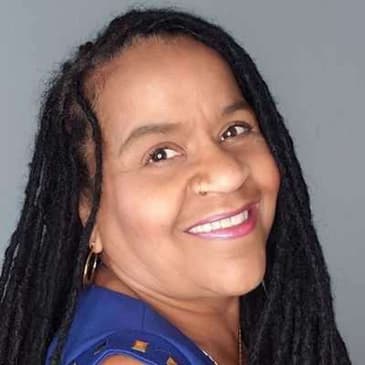
In this episode of SpeakUP! International, Ellington Brown and Rita Burke host Pamela M. Covington, a professional speaker, storyteller, and advocate for anti-poverty programs. Pamela shares her incredible journey from a comfortable middle-class lifestyle to experiencing unimaginable poverty within a week due to circumstances involving her husband's PTSD from serving in Vietnam. She recounts how this drastic change in her life led her to become an advocate for anti-poverty programs and a storyteller who uses her experiences to inspire others.
Pamela talks about how joining an anti-poverty group and participating in The Moth storytelling platform helped her hone her storytelling skills. She uses her personal journey to lobby for safety net programs, emphasizing the importance of programs like Section 8 housing and subsidized childcare in helping people regain stability.
She also discusses her memoir, "A Day at the Fare," which focuses on her journey through the welfare system and her transformation from poverty to success. Pamela now works as a women’s transition coach, helping others develop resilience and find opportunities amidst challenges. She emphasizes the importance of self-belief, a growth mindset, and the power of lived experiences in overcoming obstacles. The episode closes with Pamela sharing inspiring quotes and the importance of embracing unlimited possibilities in life.
You can reach Ms. Pamela M. Covington using the following platforms:
Website: http://www.pamelamcovington.com/
Facebook: https://www.facebook.com/thepamelamcovington
Twitter: https://twitter.com/pmcovington
Instagram: https://www.instagram.com/pamelamcovington
LinkedIn: https://www.linkedin.com/in/pamelamcovington/
[00:00:00] Ellington Brown: Welcome to SpeakUP! International with Rita Burke and Elton Brown!
[00:00:18] Rita Burke: Much like our name says, SpeakUP! International, we have the privilege of speaking with people from all over the globe. But somehow in the last couple of weeks, it seems like Atlanta is winning the race. Today we have with us Miss Pamela Covington, who is a professional speaker, storyteller, and advocate!
She's also a zealous promoter of resilience and transformation. Pamela brings a dynamic mix of lived experiences, humor, and captivating storytelling to everything that she does. She's also an expert at painting a vivid picture of triumph over diversity. So there's so much more that I could say about Pamela Covington. On SpeakUP! International, we prefer it if people told their own stories and so I welcome you to SpeakUP! International today, Pamela.
[00:01:24] Pamela M. Covington: Thank you, Rita. It is my absolute honor. I'm so happy to be here today!
[00:01:30] Ellington Brown: We're glad to have you visit us, Pamela. I guess the best place to start is what motivated you to become an advocate for anti poverty programs.
[00:01:43] Pamela M. Covington: All right. Well, here we go! Rewind to a personal experience. Thank you. Excellent question. Elton. Well, many I'm someone who many years ago went from living a very comfortable middle class lifestyle into unimaginable poverty in a week. And at that time, I had two children. Um, the reason for that being that, uh, my children's dad had, before we met, served in Vietnam, and upon coming back, had come back with PTSD. It was a really tough decision for me to make. It was the best love of a relationship I've ever had.
It, it was. 40 years later, no one ever could be the wonderful person that he was. I was so mad at the government for having taken this wonderful, talented, sensitive, yet masculine man and literally ruined who he was before he went to war. And, uh, but I had to make the decision to give up the comfort, the love and everything in exchange for the safety of myself and my children.
And to do that, I ran off, just became a refugee, the children and I, my boys were nine and one and a half, and it was tough for initially we were briefly homeless. And when I say briefly, I mean, we were sleeping and eating wherever we could from seedy hotels to inside the moving truck. I made a little pallet in between the 2 seats of the cabin for the baby to sleep and washing and McDonald's and, uh, it was rough.
We got help from some strangers. And, um, to have gone from living a comfortable lifestyle in downtown Savannah in a fully refurbished Victorian home, eating only the healthiest of foods, um, having made the decision in the relationship to have another child because of the security and the love and everything that I, I got.
Uh, it was, I went from living a wonderful life to living a life I could never have imagined for myself.
[00:04:07] Rita Burke: What a story, Pamela. A story that's worth a million movies and books, dare I say.
[00:04:17] Pamela M. Covington: Yes, ma'am. Yes, ma'am.
[00:04:19] Rita Burke: Tell us, please, when and why you became a storyteller.
[00:04:24] Pamela M. Covington: The storytelling came as a result of my joining an anti poverty group as an advocate.
I became one of their members of a cohort called Experts on Poverty, and that's exactly what we do. We lobby usually on issues related to poverty or safety net programs, and we part of that that we bring to it is the experience, because although these people have dedicated this organization for over 40 years to fighting poverty, many of those who are involved in the work don't really know what it's like.
And so, um, we had an opportunity to go through the, what the, the moth, I don't know if you're familiar with the moth, which is a storytelling platform internationally known. Um, we had an opportunity to take our stories and go to a workshop where we spent two, I mean, condensed days of learning the whole evolution of Storytelling involving giving the background, of course, giving enough details so people can relate to what your end piece is.
And usually you choose something as a topic that changed your life at that moment. And I certainly had a lot of moments, so I, um, I succeeded quite well in there. In fact, they made me the opening speaker to once they opened our, uh, Speaking engagements up to the public to come and hear us now that we've gone through the class and they made me first.
I'm like, oh, and later on, um, it would become to the point that the moth themselves in New York. They have what they call a community showcase where they'll bring in 5 individuals who get to appear in Brooklyn, on stage and tell a moth story. And it was very rare, if ever, they told me, that they sent for someone, because let's face it, New York is full of talent, but they specifically wanted Pamela M. Covington, and so that was a great honor for me.
[00:06:42] Ellington Brown: That was wonderful!
[00:06:43] Pamela M. Covington: It was my first time working with a producer value. Very valuable experience. She must she must have changed. We must have changed things around 12, 13, 14 times in a 24 hour period. So that was different for me, but, um, it was a wonderful opportunity.
And whereas I speak predominantly in conferences and what have you, where people are at the conference, regardless, here's a time where people are intentionally coming to hear myself along with four other persons and they're buying tickets to hear me do it.
[00:07:21] Ellington Brown: That is certainly a comeback from middle class to deep poverty to now, , in New York, , where people are actually paying money to hear you, present your story. So going through this transitions, how does these experiences Shape your current advocacy effords?.
[00:07:49] Pamela M. Covington: Oh, well, I'm going to make a confession when I live that comfortable lifestyle. I prescribe to all the same negative attitudes about safety net programs.
And I had nerve because I didn't even know anyone on public assistance. Right? But all I had seen was what I saw in the media, you know, all their free loaders are lazy and blah, blah, blah, big fat check. But then when fate knocked on my door. I'm like, where's the big fat check? So that put me in a good position to talk to congressional members who, like myself, chances are, were living very comfortably, had no poverty experience, and are sitting in positions making the decisions that affect the various safety net programs.
So when I lobby, I typically go in the group, and I serve as a storyteller, and depending on how much time we get, which is always limited. I, in 1 to 3 minutes, give them a synopsis of how, had it not been for things like Section 8 housing, they got my children and I out of substandard housing with no heat, no air, no kitchen appliances.
I mean, we just were off the street. That was it. Allowing me to stabilize my domestic situation enough that I could think about going back to school, which I did and successfully pulled it off. And discovered a new skill that otherwise I would never have known I had, but I could not have done it without subsidized child care, decent housing where I didn't have to take my 152 dollar a month welfare check on my 170 dollar apartment anymore that I could use that money for haircuts for the boys or shoes or, or cleaning supplies or bug killer or sanitary supplies.
It just was such a big liftoff to me, and there were so many more programs available then than there are now. I got something called the basic equal opportunity grant, which help pay for my tuition and my books as long as I attended school full time, my son got to attend daycare. For free every semester, I go in with my registration receipt and prove it.
And so what I do is I show to the congressional members. I tell people I go as a welfare success story because all they know is what to hear about the 2 percent of abuse that happens and I let them know right before I step out the door after I talked to them Oh, by the way, today I have two master's degrees, a bachelor's degree and two associate's degrees, but it all began while I was on public assistance.
[00:10:39] Rita Burke: Success story indeed success story. Indeed. Yeah. You kind of alluded to, you kind of alluded to substandard living accommodations and you've been talking a lot about your experience with poverty. I, I wanna invite you to elaborate somewhat on that experience with poverty Please.
[00:11:06] Pamela M. Covington: It was, it was unimaginable.
Now, granted, I lived in this wonderful, fully restored Victorian home in a very desirable part of Savannah, downtown Georgia in one of those circles. And I live right across from a 30 acre park called, um, . I want to say it's called Foresight Park and it's like the hub of the area and I had a second story veranda and I'd spend my evenings out there and the rooms are so spacious and all ornate black marble fireplaces, crown molded ceilings, doors that opened up and folded into forest pocket doors that opened a large room into a larger room.
And now. I'm in a place so small that I could barely put anything in it and there were no appliances. So on a good day, on a good day, mind you, I cooked Vienna sausages and grits. On a kerosene heater that I borrowed from someone that was on a good day. So I went from that to that in a week and I didn't know anything about the safety net programs.
I found out from another single mom about something called section 8 and she warned me. Well, if you're going to do it, you need to do it right away because the list is a year and a half long and you see the, the unit that we lived in was this one unit. Huge dilapidated cement tenement that took the whole block up.
It was on a dead end street right next to the railroad tracks. I mean, when I first got there and I saw that, my jaw dropped. The only thing that I could afford in my situation with my children and I was that. It had no air conditioning. Our bedrooms were up on the second floor. And because we were in a tenement where there's everybody's just lined up in units.
All we had was one window in the front and one window in the back. There were no side windows. So without air conditioning in your bedrooms upstairs in Florida, this is Jacksonville, Florida. I had fled from Savannah to Jacksonville. It was miserable. And then there, in winter come, there was no heat. There was ice on the windows.
So, to have gone from living a very comfortable lifestyle, where everything was just the way I wanted it, because that's the type of man he was. What color would you like the living room? We sent the furniture out to get custom reupholstered, and we ate only the cleanest, the best foods. I mean, everything.
And now, on a good day, I'm doing Vienna sausage on a kerosene heater that I borrowed from somebody.
[00:13:48] Ellington Brown: That, must have been mind blowing to say the least, but I want to move to a happier time. And the question is, what's the title of your memoir? And what is it focused on?
[00:14:04] Pamela M. Covington: It's called a day at the fair and that's F. A. R. E. That's a play on the word welfare. Of course. One woman's passage, and I call it the passage. Because that's exactly what the welfare system is meant to be. You get in there, you get what you need, you get the heck out. And though, because first of all, after I saw what living conditions that was providing me, I made up even though I was crying, even though I was heartbroken, even though I have been broke down, like, I had never been broke down before.
I always had to wear a mask because I couldn't let my children see that and I swore to myself that it was heartbreaking enough to have left him because I had guilt too that I left somebody who was ill but I left someone who was ill who could harm us because he would go into rages or withdrawals and it was scary.
Um, but. To have the gradual help. It took me three years. Exactly. I got on public assistance in January or February of 1984 and after those two years of community college, I proudly wrote a letter to them and say, take me and my kids off of public assistance. So, the good part is. What made a difference that affected me for 40 plus years of my life, and that is while I was in community college, I had a wonderful professor, amazing, and I wasn't sure what I wanted to major in, but I took his course and one led to another.
And before I knew it, I decided to do what was called math media back then. And. He was such a mentor to me that I followed any instruction he ever gave me. He always told us to call him Ron. He was just, he was just that informal, but he was highly professional. He used to be a producer with WGBH, Brother TV in Boston.
He had excellent credentials, but he has such a humanistic way of sharing everything. So one day, he tells me the moment I get into the class to please come and see him after class. I'm thinking the worst. My oldest son had been demonstrating behavioral problems at school, so I'm routinely going to the school.
The school's calling me. I'm having a tough time still picking out a living. I haven't made it into the Section 8 housing list yet, and so I, I was so scared about what he wanted to see me about after class. I couldn't remember anything he talked about in class. But when I got in his office, I slung in those, just shrinky, as small as I could.
Yes, it was about the last paper I'd written, as I had thought. But it was good! He turns to me with my papers in his hand and he says, Pamela, you've got a few weak spots here and there. No big deal, he said, but I'm going to be honest with you. And these are his exact words, quote unquote. You can turn words into dollars.
Now here I am, exporting toilet paper. Okay, I confess, I've gone to McDonald's and stole toilet paper. And somebody just told me that my ability to think and choose my vocabulary words in a manner that clearly expresses what it is I have to say or write. It's a gift! And when you know it, I followed his guidance all the way through and involved in my last couple of semesters taking two unpaid internships one of them where I did at a television newsroom station, and the second one was at a city lifestyle magazine. You know, you go to all the cities and they've got these glossy magazines. It always makes the water look blue and glossy paper and the average readership probably back then in the 80s, 70, 80, 000 a year was a lot of money to be making.
And so I did an internship there and one day, the editor calls me over to her desk after she hangs up the phone. And talks to me about an assignment that she wanted me to consider going on. A newspaper had called and said that they wanted someone to go and drive from Jacksonville to St. Mary's, Georgia. To write a piece about the impact that Ronald Reagan president at that time, President Reagan has signed that was going to finance the Trident submarine program in St. Mary's, Georgia, and they wanted someone to cover a story on the impact that that was going to have on the area. Now, here I am. I'm all public assistance. I'm driving this all poopy. I don't have fresh credentials. And back in those days, you could count the number of black journalists on one hand. And I'm like, I almost let fear mess me up.
So that was one of my big lessons. Don't let that happen. So I did it. I went up there and I was actually received quite well. In fact, the one gentleman, I said, who would know better about the impact than a realtor? So I went to a realtor's office first. And I get there and that plump Santa Claus of a man was so nice to me that I felt guilty for thinking I was going to be treated any other kind of way.
He offered me a nice cold Coke and told me that after I'm done walking the town, because I'm walking where all the shops are and talking to people, that I'm welcome to come back to his office and transcribe over the phone. That's what we did back in them days. And it was just amazing when I got. Back to home.
And I couldn't believe I really did that. And when you know it, that article turned out to be my very first ever published piece. And I've had 100s since in what was then a brand new newspaper named USA Today.
[00:20:41] Rita Burke: Wow! Pamela, on SpeakUP! International, we seek to inspire, to educate, and to inform. And there's absolutely no question that you are doing that for our listeners.
I wanted to talk a little bit about some of the strategies that you use, strategies you employ to promote resilience, resilience, ultimate transformation, please.
[00:21:13] Pamela M. Covington: Well, the first thing, essentially, when I engage in talking with somebody trying to get them from point A to point B is to get them to have belief in themselves.
Because I speak from personal experience on that, because I had to come to a realization that I wasn't all of those things I just lost. I wasn't that wonderful love relationship. I wasn't that gorgeous home or all that healthy food or never wanting for anything and everything being just my way that when all of that was taken away, what made the difference was my essential belief in myself.
Here I am cooking Vienna sausages on a kerosene heater and barely able to feed the kerosene heater every day. I'm walking to the store with change. I say from food stamp, intentional food stamp purchases so I can buy a gallon of fuel. But I made my mind up from day one that I was heartbroken. I was in a strange place.
And the bottom line thing that has stayed the same was myself. So I try to get people to do that. One of my favorite quotes is Ralph Waldo Emerson, who said "that what lies before us and what lies behind us are tiny matters compared to what lies within us". So I start by working with that person within themselves.
One of the things I always like to do. If I think it's applicable, whatever the case may be, is I get them to realize one thing that just naturally by birth, we were born odds beaters, the reason being the combination that got us here that we all know now. Okay. Now, the, the older generations of our people knew about it.
The individual aspects of only that person has that particular something, you know, hair fingernails or whatever. Now, we know that's all DNA science. And so what happens is what made us odd beaters by birth is in order for each of us to be here. We were one out of 250, 000, 000, 250, 000, 000 sperm cells at that moment.
had to unite with one of 10, 000 female eggs at that moment. And look at those magnificent odds. 250, 000 million to 10, 000 to one in order for each one of us to be the one. Unique individual that we are that now, scientifically, we know DNA proves that, hey, you could do a matching. It'll tell you that 99.
99 percent that that child is the offspring of that parent. And so, you see, you beat the odds just by becoming this human being on this physical plane, not the other 249. Million sperm cells you were the one out of the 250 million that made it. The other 200 or 49,999 didn't make it. And combine that with the 10,000 to one of the female egg that had to make you happen.
So you were born odds beater. And my argument is, so why would you stop now?
[00:24:41] Ellington Brown: I will say you are definitely a storyteller and I think a very effective speaker. Tell us a little bit about being the woman's transition coach.
[00:24:57] Pamela M. Covington: Ah, now, you know, again, all of my work is based on live experience. Going through something right now, but guess what? My previous experiences have helped me handle it better.
We all know that the one thing that we can control is our reaction to things. So when I first initially began working with a woman, um, regarding some unpleasant, unplanned major life changes, we know they all happen, um, I initially tried to get them to first of all realize what I just talked about about how much powerful we are, we are much greater than we actually know, then we give ourself credit for.
So I'll start them out with maybe some mindset cultivation to get them to understand that you've got to have a growth mindset enough to see yourself beyond the challenges and sometimes learn that opportunities, obstacles become opportunities. Now, had I not been in that poverty position, for example, that was my obstacle, but decided to not let the challenges that kind of at first made me hesitant about the idea of going back to school.
I'm like, I don't have money for tuition. I don't have anybody to watch the baby. My car won't, I can't really rely on. I came up with all these reasons. But once I was willing to adopt the growth mindset. Then I realized it's up to me to open myself up. So, I always like to drive home these few points and the first one is that when you're in a situation like that, it's very important for you to live in the present moment.
And doing that means having to prioritize. So, if you're working to be resourceful, you know, you're restarting over again. It's important to prioritize, to not just jump at what the instant gratification thing is, but to be able to look down that road somehow. That's one of the things that drove me as much as it did, because I'm looking down the road and you know what?
My road sign said, I didn't want my two black male children growing up with poverty becoming their definition of normal. So, I had to see that as an opportunity for me to show, by example, what could be done if you just stick to it, keep scratching it to dirt until you can get something out of it. So, I'd like to begin by seeing where their mindset is, so that we can make adjustments to help them involve seeing challenges as opportunities for learning.
Yes, there are obstacles, but If you're going to pay the price, you want to get the price that can come out of it. And in my instance was, had I not been in poverty, I might have never went back to school. Had I never gone back to school, I might not have discovered what became my career for the next 40 plus years!
And that is of communications.
[00:28:02] Rita Burke: Experience lived experience is rich, isn't it?
[00:28:07] Pamela M. Covington: Yes.
[00:28:08] Rita Burke: Experience is rich.
[00:28:09] Pamela M. Covington: Yes. Rita. I always say to experience is still the best teacher.
[00:28:15] Rita Burke: Yes. And so, you know, Pamela, that research tells us that many people in this world are afraid of public speaking, but you are an accomplished speaker.
Talk to us about how you developed and honed those skills that when you get in front of an audience, you are oozing confidence. Talk to us about that.
[00:28:44] Pamela M. Covington: Well, I wasn't always that way, and I'm going to be honest with you, and this is personal, but I like to share because with sharing lived experience comes personal.
I had a mother who constantly shut me down, who constantly told me to shut up and blah, blah, blah, and this and that. So for years, I never would have realized that gifts had credence because I was taught that it wasn't such a good thing as a child. But As time would go on somewhere down the line. Um, I took a job, and this was like in 1997 in a highly technical field that I never anticipated finding myself in, and I eventually was promoted.
I went as a Kelly temp, but I had a wonderful supervisor, said, wow, not only could she do that, she could do this. I want her. So within four months, he made the decision to hire me as a full-time employee. And with that, I got a full time job. I got benefits and I got a promotion. Then I superseded that. And guess what?
He did the same thing. He says, okay, I want you. I'm going to excuse you from all these duties because I want you to get into this nuclear engineering class. And I did it! I pulled it off! I'm in this class with, um, uh, others who are ex Navy nukes, and I, I pulled it off. I came in as a Kelly Tamp doing something totally different, but because this supervisor I had saw that I had all these other skills and talents, he pushed me to the max, and I responded!
So I tell you that because the next promotion I got was as a training instructor. And my speaking sucked! There's no way to put it. I'm literally at the podium. I got a book open and I'm literally reading them a bedtime story. And I was not pleased with that! So, because, you know, I had to be twice as good in that field.
There's not, there was not a lot of African American women. I can assure you. And if they were, they were in administrative positions. Transcribed So my same supervisor found a presentation class for me to go to and sent me to it and I started picking up on it. I did a presentation there and video when I saw myself on video like, oh, my God, then he supported me again when I went through that glass and, um, there was a Toastmasters not too far from the job.
So, but I needed time to get there and to get back if I used my 30 minute lunch hour, and he granted me that. So I began following through with Toastmasters. And of course, there, if either of you have ever been in the group, you know, you learn a lot of the basic things that are necessary. Oh, you relate to that?
You resemble that story, Rita?
[00:31:51] Ellington Brown: Rita and I are Toastmasters!
[00:31:53] Pamela M. Covington: Oh, alright!
[00:31:54] Ellington Brown: So we definitely relate to individuals who are looking to better their presentation and leadership skills. That is the place to go!
[00:32:08] Pamela M. Covington: Oh, great. Awesome.!
[00:32:10] Ellington Brown: You have worked with many people and you've given many presentations. I'd like to hear a success story, one of the women that you worked with and now have blossom.
Well, a young lady who was in a similar position as I was when I was in my mid twenties. And she has two Children, which is where I was in my mid twenties, and she didn't.
She just was lost. You know, she had made some bad choices or whatever, um, gotten to some relationships and it seems like they were being repetitive. Okay. She, she was basically exhibiting a pattern and got her to realize that and through getting her to first realize the essence of herself, giving her some accountability challenges.
Well, you know, next week when we talk, I'd like to hear you share with me such a, such a, this or that. Then driving home the principles of prioritizing, being resourceful, exposing yourself to unlimited possibilities. That's a must, because I tell people all the time, opportunity will not come knocking on your door.
The salesmen don't even do that anymore. And then, if they have children, I remind them in advance, while they're reshaping their world, to sculpt their children's world intentionally. And when I say that, I mean their definitions of life. Because I have to get them to realize that when you're raising your children, that's what you're doing.
You're giving them definitions of life. And so she followed through. She, she was real good at, uh, being prompt and following the exercises. She gave me a lot of good feedback. She would open up and share, uh, parts of her life with me as to where she's going. And now I'm, I'm so proud of her because yes, she still engages in relationships as any young person would at that age as she approaches 30.
But now she's at the point where if she has help in her life with the children and all of that, that's great. She'll accept that. But now she has learned that it won't determine how her and her children live. So she's back in school and she's enrolled for school and she's going to school now. And, um, and she's, she's, she's kind of being a different person.
I can, I can see that a lot of the things that she had doubt in herself. Uh, now is somebody who's speaking more forward. Um, she's not so reticent about things. Um, she understands now that after what she's gone through, she was able to stand back and get a new perspective about it and figure out what it was she was doing wrong.
And what it is she can do to right the situation. So, um, I'm just going to call her Cheryl, but Cheryl is doing really good. And now we're, we're, we're done with the number of sessions that we planned, but every now and then she'll touch bases with me and let me know how she's doing. And the reports have all been good
[00:35:43] Rita Burke: More than likely Pamela. I guess the length of time that you need to spend with each of the people that you work with would vary, but on average, how much time would you say you spend to get one person from point A to perhaps meeting some of their, their individual goals?
[00:36:08] Pamela M. Covington: Um, I like to. I'm trying to maximize them at 12 weeks, but that's 3 months and we're meeting once a week.
I tend to do 12 weeks and if that works. And they still want to go further than that, then we can do something shorter. I could do six or I could do four, but the baseline that I like to start at is 12 weeks because you figure 12 weeks. Hey, that's what 90 days. You know, we can implement change, give her a chance to, first of all, to assess her situation.
And like I said, that's where the mindset, that groundwork comes from. And then, um, slowly begin to initiate things. And then as she responds, I can see needs or whatever and, and take it from there. But, you know, it's a whole lot about a personal goal setting, .
[00:37:02] Rita Burke: Twelve weeks, it's one on one, would you say?
[00:37:07] Pamela M. Covington: Yes, yes, yes, 12 weeks of one-on-one yes, indeed. Absolutely. And I give homework. So, especially when it comes to things like the personal goal sets, because if you got to have a road map, if you know where, you know, you know, the destination, we can all come up with a destination, but we got to know how we're going to get again from point A to point B.
[00:37:32] Ellington Brown: You talked about unlimited possibilities.
[00:37:37] Pamela M. Covington: Yes!
[00:37:38] Ellington Brown: That phrase stuck. So how do you help, or channel, direct individuals so that they're in position to receive unlimited possibilities?
[00:37:53] Pamela M. Covington: Well, what they have to do first, they got to have the confidence and the courage to do that because to do that you have to open yourself up.
And I will often say, if the only things that can occur in our lives. are the things that our tiny human minds can conceive of, which are always based on past experiences or futuristic things we have anxiety about. That's pretty limiting. That's putting it in a very small box. But, if you, I believe that our job, should we choose to accept it, Is to find our way, prioritize, be resourceful, open yourself up to those unlimited possibilities and discipline yourself.
Now, I could have got all the help in the world to go to school, but if I didn't discipline myself, if every time I did hit a bump in the road, I could have used my awful road. Poverty stricken heartbroken situation as I can't do this. This is all just too hard or whatever, then I might not have gotten to the point where.
Things lined up uncannily for me the way that they did. So, again, I stress the point that, well, if we had the answers to everything, we probably wouldn't be in a predicament in the first place. Right? So, there again is what I'm talking about. That if we believe that we have to change that belief, that the only things that can happen to our persons Are those things that are tiny little human mind can conceive of and I tell them, listen, I don't know about you, but rather than me put X, Y, Z condition on this, if this, then that, and then I'll do this and, and it's also very small and so limiting, or if I'd rather just keep my butt in check, be resourceful, find out what it's going to take for me to do it.
Set a map and some goals to do it and then discipline myself all along the way, then open yourself up to, that's opening yourself up to unlimited possibilities. Now, I could have stayed shuttered in the ghetto, at the dead end street. In their little apartment, and got complacent, or I could have declared as I did from day one, Oh, hell no, ain't no way me and my children gonna continue living like this.
I'm not gonna have my boys growing up and thinking that's normal.
[00:40:31] Rita Burke: Do you know Pamela, someone I spoke to recently said that our ancestors did not look for excuses. They look for opportunities. And what you're telling us, it sounds to me, is this is how you, you're, how you're guiding people to look for opportunities.
And that is quite an amazing approach to life and to challenges. Now, is there ever a time, and you talked about having to leave your relationship with your husband.
[00:41:05] Pamela M. Covington: Yes.
[00:41:06] Rita Burke: So, apart from that, is there ever a time when you had to say, enough?
[00:41:12] Pamela M. Covington: Well, I can say enough all I want to, but like I used to tell my daughter sometimes, when she was just going all on haywire about something because something happened and she was still dealing with something else.
Life don't work that way. You can't throw your hands up and say, Wait a minute, I'm not done solving this crisis yet. You got to learn to walk and chew that gum. You know? I mean, because the only person who does not have stuff going on in their life is a person without life. And we like life!
[00:41:55] Ellington Brown: Life is complex. I will, I will definitely uh, agree with you when you mention that the complexities of life tend to distract people from their goals the things that they want to achieve. Because they are overwhelmed with their situation. I don't want to call it a problem, but their situation. And I think that having some type of general steps that one would use to more or less get them out of it.
From the sounds of it, a lot of the individuals that you work with are women who found themselves in the same predicament as you were, and that can be overwhelming. All of a sudden you wake up and you're in this dingy place how in the world did I wound up here?
I didn't ask for this and so how do you comfort and support individuals that find themselves caught, or either they've slipped through the safety net?
[00:43:14] Pamela M. Covington: Well, I try to give them something that is simple, that they can apply in any situation, that again, I've experienced myself or has become a habit for me.
Because, hey! My life hasn't stopped either, and what works for me is meditation. I have to have a certain point every day that, get off the computer, quit worrying about fixing the car, so what if you mowed the front yard but you didn't get around to the back, or the money, or so on, and blah blah blah, at some point you have to cut that off.
But you see, one of the things that I have discovered is that a lot of people are afraid to be with their own minds. They don't want to take that time to allow themselves their own thoughts. And confusion breeds confusion. You're not going to get clarity from a state of mind. So first thing you have to do is get them to calm down.
And again, I'm going to relate that to something that happened to me with my second, or my second marriage fell apart. I was a basket case. I made some of the most horrendous discoveries about this man that I had devoted my life to that would be any wife's nightmare. And I was such a basket case when I got to the attorney's office.
They couldn't do anything with me. They're like, Miss Covington, we got somebody we need you to go see before we can proceed. It wasn't that bad. So it's kind of the same way. First thing I have to do is to get them to calm down because you can't be receptive. You know what I'm saying? When your adrenaline is kicking your butt, your perspectives, your measurement, your judgment, your everything is off.
So it's all about clarity. So even if we can have a discussion, they're not a meditator yet. But even if I can have a discussion with them that gets them to calm down and to realize that this is not the end of it. It's the beginning of something else.
[00:45:41] Rita Burke: Calm down! I like that. I'll remember that from now on. I'll remember the importance of, but I like something that you said. You said that the only person who does not have stuff going on in their life, does not have a life.
[00:45:59] Pamela M. Covington: The person who doesn't have life.
[00:46:00] Rita Burke: That is profound. That's profound! Now is there anything that you want to share with our listeners that we did not ask you?
[00:46:11] Pamela M. Covington: I'm gonna share a few quotes 'cause I like quotes. You know, you can hold on to 'em or pull on 'em when you need 'em. And the first one, I don't know who said this one, is, um, On the day of victory, no pain is felt. So you have all this angst and what have you going on during the kerfuffle? But guess what? Fight a good fight. Be disciplined, be resourceful, expose yourself to unlimited possibilities, prioritize, fight a good fight, and I guarantee you that on the day of victory, you will feel no pain.
And then the second one is a P. A. M. ism, and I tell them all the time that the shape of your life depends on whether you choose to be the sculptor or the clay,
[00:47:11] Ellington Brown: So far these, sayings, these powerful sentences really speaks to everyone. I don't think it's male or female. It's very universal. And because of it. You can't side on one versus the other, you know, man versus a woman.
[00:47:36] Pamela M. Covington: That's right. That's right!
[00:47:37] Ellington Brown: How do you see yourself when working with men, Now, I know I've made an assumption there, but it just can't all be women that find themselves in this situation.
[00:47:50] Pamela M. Covington: Well, it is predominantly women. And I've only chosen that because in the whole biological thing that the life cycle of women and being the one out of four households in the United States being headed by a single parent mom, it has been on that.
My experience with males, believe it or not, has been with incarcerated males. That I once was visiting on a regular basis a maximum security prison. And I must admit the first time I went, I had no idea what to expect. It was extremely draining emotionally. When I got inside, I initially spoke to a group of about 125.
It was a group in the prison who had contacted me because at the time I was publishing a small black newspaper and this particular, uh, group. Group was having a graduation ceremony for members from its black history group, and they wanted to know would I come and speak. So I got myself fingerprinted, went through all the whatchamacallit, and I go, and lo and behold, I did not expect to be speaking to 125 brothers in prison.
So what I did was, um, uh, I, I gave them a, a, a good motivation. Motivating talk the first hundred and twenty five, and then we broke the group down to maybe about thirty, thirty five of us, and they were the members of the black history group, and they wanted to put on a demonstration of their knowledge for me, and they were amazing.
They were absolutely amazing. They had been saving their paltry earnings in the prison that they were making and build a library of their own. And then the third part of my visit, uh, probably down to 15, I had them in a room and we did meditation. It was so It was so, initially, the reason why I said I could never have prepared myself for what I encountered.
When I first got there, and I look and I see these men, I'm like, Wow, he looks just like Uncle Red. Hey, he looks like Julius that I went to school with. So I'm seeing these unfamiliar, familiar faces, and I'm getting all emotionally welled up, and it's just, it was just so striking. And then there were some amazements with it.
One of them was that I could tell what I call every faction of blackness that the brothers belonged to. You could tell the Rastas and the Moors because of the way they wore their hair. In some way, some of them in their dialect. You could tell the brothers from the Nation of Islam because somehow some way they managed to have creases in their shirts and their pants and everything is crisp, even though they're all wearing the same denim clothing.
So that was amazing. How, and then, you know, something you were saying earlier about distractions. The most draining part on my first day was after I spoke to the 125 and they all lined up single file to get an opportunity to talk to me as I sat at a desk. It was so spiritually overwhelming. I wanted to do so much.
And when I saw them pouring out their talents and their skills, some of the things they have made. They had made, and I kid you not, you know how kente cloth is, that the design is created by every thread? Well, of course they weren't allowed to have sashes for graduation, so you know what they did, being ingenious?
Now that all the distractions were gone away, and all the talents had started coming out? He got pieces of eight and a half by eleven paper, cut them in strips, taped them together to the exact size, and pinned and inked each stitch on those things that you wanted to feel it and see if the stitches were real, and they made paper stoles that were so authentic to real kente cloth.
[00:52:43] Ellington Brown: It just goes to show how you can make something from nothing, and that just ties right into you, and how you were living in, you know, middle class, you know, everything is set, beautiful home, everything that you could possibly desire, you were set. And then out of nowhere, life decided to take you in a different direction.
And then you wound up deep and in poverty and you more or less figured a way through your professors and. Through your, uh, interactions with other agencies to get the education that you needed so that you could pull yourself up by using your, bootstraps to become the storyteller and to become the speaker and to become the support for many women who find themselves In these particular situations and being able to talk to men who are in a situation that they can't right now can't get out of because they're jailed, but they can relate to your message, which is extremely important and your message is relatable, your woman's transition coach, you're just allowing, I'm going to use that, your phrase again, unlimited possibilities.
[00:54:19] Pamela M. Covington: Yes, yeah,
[00:54:20] Ellington Brown: And that is something that you should be very proud of and on top of all of that.
You have your memoir and we want to thank you so much for joining us today and having a conversation with you, which is basically it's been quite different. Then other conversations that we've had with other individuals, which is exactly what we want, because we know that, there's thousands of paths available to us, and we at SpeakUP! International want to capture as many of these stories as possible, just like we were able to receive yours. And I wish you a great afternoon
[00:55:08] Pamela M. Covington: And thank you Elton for having me.
[00:55:13] Ellington Brown: Oh, thank you.
Thank you for listening to SpeakUP! International! If you wish to contact Ms. Pamela M. Covington, please be prepared to submit your name, your email address, and the reason why you wish to contact Ms. Covington at https://agelesspassionatelove.com/playbook. Ms. Covington that has other social media platforms you can use to connect to her that will be listed in the description section on Spotify and other social media platforms.
Are you interested in the opportunity to be interviewed and have your cause promoted by SpeakUP! International? We invite you to connect to us by sending a message that includes your name, company, or organization name, the valuable service you offer to your community and your email address to info@speakuppodcast.ca.
Worried about your confidence as an interviewee? Don't fret! SpeakUP! International can provide you with the necessary training, so you shine during an interview! To receive training information and a 10% discount about the SpeakUP! International's Podcast Interviewee Training Program, email us at info@speakuppodcasts.ca.
You can also reach us using Facebook, Instagram, Twitter, and LinkedIn.
To connect to our podcast, use Spotify or your favorite podcast platform, and search for SpeakUP! International. You can also find our podcast using our web address, www.speakuppodcast.ca. Our logo has the woman with our finger pointing up mouth open, speaking UP!
By joining Patrion, we can offer you an exclusive opportunity to become an integral part of the continued success of our podcast. Your financial support will enable us to cover costs associated with producing high quality content. Such as equipment upgrades, hosting fees and professional editing services. As a member of our Patrion group, you will gain access to a range of exciting benefits! We are working on providing you early access to new episodes and the opportunity to suggest topics or guests for future episodes. Your contribution will not only help sustain the continuity of the podcast, but also allow us to enhance the overall listening experience for all of our dedicated followers.
Help us help you! www.patrion.com/speakupinternational.
At SpeakUP! International, we aim to inspire, to inform and to educate!