
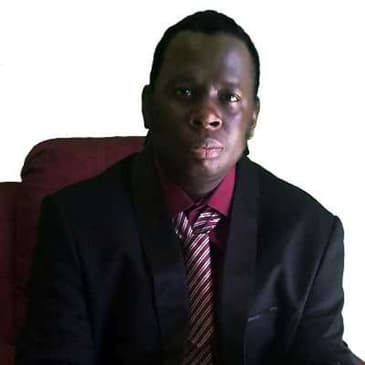
What inspired the creation of the diverse character Bugsy in the early 2000s, long before diversity became a buzzword? Join us on Speak Up International as we welcome Mr. Prince George, the spokesperson for Warzone Comics and the charismatic host of the Prince George Show. Broadcasting from LA, Prince George takes us through his expansive journey in the entertainment industry, which began under the mentorship of Cassidy DaVinci on the King Chef show. From his roles as an actor, filmmaker, writer, and artist with Warzone Comics, to portraying Bugsy in the upcoming film "Bugsy the Becoming," Prince George's story is a testament to creative entrepreneurship and community building.
How did Prince George transition from television to radio and create a new musical genre in the process? This episode examines his innovative adaptation of the Prince George Show for KLAS, 89.7 FM in Hollywood. With elements from his musical background, Prince George discusses his involvement with Warzone Records and the creation of the Rap Rock Renaissance genre. We also learn about his significant contributions to events like Black Writers on Tour, where he emphasizes the importance of supporting authors and business owners. Prince George's journey is filled with fascinating anecdotes and insights, showcasing his commitment to mentorship and fostering diversity in the entertainment industry.
Ever wondered about the scarcity of African American characters in mainstream comics during the '90s? Prince George reflects on this period and the inspiration behind creating diverse characters like Bugsy. He reminisces about high school days when comic strips sparked his passion for storytelling, eventually leading to his unexpected entry into television. Mentorship played a crucial role in his career, guiding him from behind-the-scenes work to creating his own TV show and securing a product placement deal with Coca-Cola. As we explore Prince George's multifaceted career, we uncover the enduring impact of his creative endeavors and his dedication to community building and mentorship.
Here is Prince George's social media connections:
Website: https://www.warzonecomicswzc.com/
Instagram: https://www.instagram.com/warzone_comics/
Twitter: https://twitter.com/warzonecomics
Facebook: https://www.facebook.com/warzonecomicswzc
LinkedIn: https://www.linkedin.com/in/warzonecomics/
[00:00:00] Ellington Brown: Welcome to SpeakUP! International with Rita Burke and Elton Brown!
[00:00:17] Rita Burke: On SpeakUP! International, we just walk the world! We speak with people from Brazil, from England, from South Africa, from the United States of America, from Canada, you just name it! Today, we will be having a conversation with Mr. Prince George, who is currently in L.
A. Prince George is the spokesperson for the company called Warzone Comics. He's also the host of a talk variety show. called the Prince George show. Prince George is the voice behind the podcast, the number one Prince George show of the Airwaves podcast. Note also that Prince George is set to star in the movie, Bugsbee the Becoming.
Based off the Bugsbee comic books. To our listeners to our audience, I present to you, Mr. Prince George. Welcome. Welcome. Welcome!
[00:01:34] Prince George: How you doing?
[00:01:37] Ellington Brown: We're doing all right. we can't complain. A special good morning to you, sir, for getting up so early.
If I can put a little, a couple of pins in a couple of things the podcast is called the number one Friendship of Their Ways.
Okay. Anything else? The movie is
[00:01:56] Prince George: called Bugsy, They'll Be Coming.
[00:02:00] Ellington Brown: I'm glad we got that all off the chalkboard now. Thank you again for coming, , connecting with us this morning you are part of the entertainment industry.
So I want to know, how did you become involved in the entertainment industry? And when did you first gain recognition?
[00:02:21] Prince George: I was, I'm I was a part of, initially I was a part of I've always been a part of Warzone Comics. Warzone Comics, now, as an official company, has been around for 22 years. Since, basically, when I was 19 years old.
And then before then, I was a part of a show called The King's Show by a producer by the name of Cassandra Vinci, who's my mentor, who's been since 1997 about 14 years old. And he's helping out the King show. He got introduced to the entertainment industry. As far as doing TV shows and things of that nature and then evolve to the other parts of entertainment as far as like radio and and things of that nature and then movies and then progress.
[00:03:15] Rita Burke: Sounds as if you've been doing that for a mighty long time. So I guess entertainment and that kind of work is probably really marked on your DNA. You know what you're doing. Now, you're the spokesperson for a company called Warzone Comics. Please tell our audience about that company and your involvement.
[00:03:39] Prince George: Warzone Comics is a comic book entertainment company that started in March 3rd, 2002. And with it, I'm one of I'm one of the actors, filmmakers, actors, filmmakers, writers, And artists as a company, and as well as spokesperson for our Warzone comics. And I was happy since its conception. And that's what I tend to do at Warzone comics.
Oh, by the way, and I also play the character Bugsy, in upcoming movies. Bugs becoming,
[00:04:14] Ellington Brown: Hey, you weren't supposed to say that because that was my question. So how did you become, or how did you decide that you needed to play that specific role in this production?
[00:04:30] Prince George: I didn't originally this is our, this is the , this version of the movie project is our second iteration of the project of book the the project.
Initially in, was it 2004, 2005, we started shooting the original version of the project when it was originally called Bugsy, originally. And our company, because we were new at the time, we hired Professor Da Vinci originally as the one of the directors of the project, the original project Bugsy.
And in casting for the, we started casting all of the roles of, for the original movie project. and was lacking a the character Bugsy initially. And we had a conversation about us as a company and Mr. Da Vinci had a conversation about who was going to play Bugsy. and because I helped create the character Bugsy along with George Oswald Eesley we, it was decided that I will technically play Bugsy in that version of the Bugsy project. So when we technically decided to revamp the the movie, this time without Mr. Da Vinci aboard the project from the King's show, I just technically, automatically, I was decided again that because I have more community with the character that I played him the first time that I continue to play the character in this version as well, too.
[00:05:57] Rita Burke: You also have a podcast.
[00:06:00] Prince George: Yes, I do.
[00:06:02] Rita Burke: Tell us about that. Elaborate on that fact.
[00:06:05] Prince George: It wasn't originally a podcast originally. It was a, Radio show from 2003 to present actually. Originally it was a radio show on KLAS 89. 7 FM based in Hollywood, California. And so it was it was originally based off of us doing the Prince George show, because originally we had a show called the Prince George show, which we still have, which we're relaunching on Amazon Prime.
And because the Prince George show was like the people can see us on the TV show aspect, because it was actually the Prince George show was actually a TV show on television. And so when we got the opportunity to do radio, we technically took the same basic concept that we were doing on television, and we took it to radio.
And we modified our name, we modified the name initially.
[00:07:07] Ellington Brown: So why did you modify the name?
[00:07:09] Prince George: Because our affiliate, because the first we have our own brand, but was also part of a, I was also signed, not only do awards on comics, but also, I was also signed to King's show and the producer of the King's show is King Seth DaVinci and I'm Prince George, right?
And my myth, we have other people who are offsprings of the King Show as well too and stuff. And distinguish myself from the other offspring from the King Show, right? We just tend to let everybody know I was the first, one of the first offsprings or offshoots of what the King Show is. So we just use it that's why it's, that's why it's the number one print show of Airways.
[00:08:04] Rita Burke: Well, SpeakUP! International, we interview, the format is we interview people who we consider to be community builders. What do you do on your podcast? I want, I really want to hone in on that.
[00:08:19] Prince George: Our podcast is is music, it's a variety show so it varies by the show itself.
Some shows are more music based, and basically the music that's played on the actual podcast is out of our company as well, too, and stuff. Because we tend to do music as well, too, and stuff. We do a music genre called rap rock renaissance. And some of the shows Our music based where we're breaking music from our own company, our own label.
Is the nature and different artists from our. Company and stuff, and then if it was specified, just request, and we'll play other music. That's. Not affiliated to us, and then we also interviews of different. different people from different walks of life. Like we did interviews from actors from the project, What Keep You Coming.
We also did interviews from, we did a couple of things called the Black Writers on Tour. And the lady where it is like a convention where business owners and writers and authors and publishers can get together and be in one venue and display their wares to every their customer family.
And so the lady who runs the that event, we interviewed her on the actual podcast, we interviewed different types of people from different professions.
[00:09:47] Ellington Brown: So this genre, sounds it's a very fertile area for networking between a lot of people . There's an exchange of ideas. What type of ideas are exchanged at these meetings?
[00:10:05] Prince George: Oh, you mean the Black Rose and Tour, correct? Yeah. Okay it's, what it is that it's like a market, it's basically a marketplace. So in a sense, when it originally, when it really came, the first ones I, that I, the ones I attended when I was one of the lead writers on, at the on the posters for the Black Roslyn tour when you press get there, the venue itself is free.
For people who want to come into the venue, but normally they have all the business owners on one side, and all of the writers on the other, but when we last when I last attended it, it was commingled. Everybody was everywhere. Basically, if you are want to come in and you're into religious books, we got, they have authors for it.
If you're into sci fi, there's authors for it. If you're into comic books there's authors for it etc. But if you're technically into that community, the community kind of thing, or you want to find out the next best thing in the community, or area, or the state, or from all the things that's there, there's people for that as well, too, and stuff.
So you get a chance to Bring attention to people who may not may have or haven't got the attention they needed for their business to survive. Everybody's at one place. So basically co mingling customer fan bases.
[00:11:39] Rita Burke: So there's no question Prince George, that you are a community builder and on SpeakUP! International, we seek to entertain and to inform and to inspire, and I think your story is going to do that for our audience.
You are a musician. Talk, talk to us about when that started and what exactly do you do in that role?
[00:12:04] Prince George: Back in junior high and high school I started with a group called Modesty. As basically I was originally a singer back in, back, way back when. I occasionally do it from time to time, but not as much as I probably used to.
But then when that group disbanded I became part of a a rap group called N. A. L. And and then which Warzone Comics was behind both groups, but even when we were younger. And then and then with that when that kind of went away I stayed along with Warzone Comi Warzone Comics.
And basically, I write some of the music, along with Joyful PC writes some of the music, some of the soundtrack. Some of the music, some of the scripts within the company, along with other writers and other musicians and things of that nature. And we built soundtracks and movies and albums and things of that nature.
Like right now, if you go online to Walmart, like walmart.com you'll see there's two products from Warzone from Warzone Records, which is a subsidiary of Warzone Comics inside Walmart. You'll see the BabyGCQ album, which is my album, which I'm signed to Warzone Warzone in two different facets under my given name and then my stage name. So under Warzone Comics, I'm signed under my given name Prince George and stuff like that. But under the subsidiary Warzone Records, I'm signed as Baby G, which is the acronym. And so if you go to Walmart, you'll see Baby G. C. Q. Album, but this face.
And then you also see the Bugsy becoming soundtrack, which we're currently working on, which we, which is released next month.
[00:13:57] Ellington Brown: You are busy you're all over the place. I think there's another artist there are a lot of artists, but one artist that comes to mind that also distributes their music, I think through Walmart is Beyonce. I think she also uses that platform to get their, music across, You're a writer, you're a producer, you write music, you're in all these genres, what is your audience? Who are the people that listen, or gravitate to you?
[00:14:32] Prince George: You know what, to be honest our point originally with Warzone Comics, initially, we originally started as Warzone Comics. Our fan base initially was people like yourself we was catering to radio stations catering to stores to libraries to different places.
But over the years, we ended up grabbing a whole fan base basically before dating ourselves, but before social media came about. So all of our fan base. Live our fan base off social media. We have a fan base. on social media as well too and stuff, but our fan base, it ranges. It ranges from 13 and up to the most part.
[00:15:17] Rita Burke: So Prince George, talk to us about the name Prince George.
[00:15:24] Prince George: Prince George is my name. It's my name. What do you want to know specifically?
[00:15:31] Rita Burke: You were named by your parents, Prince George.
[00:15:36] Prince George: It's a government name.
[00:15:37] Rita Burke: . Okay. Gotcha. Gotcha. Gotcha. I got you. I got you. So what would you say to a teenager who is wanting you to mentor them? What kinds of things that are important for you to share with them?
[00:15:53] Prince George: Currently, because we, I have, I do mentor teenagers. Because through we started just before the pandemic of 2020, I think February 2020, just before the pandemic happened. I started a nonprofit called Prince House for the Abused Children and the Homeless, right? And we partnered with the Big Brother Big Sister organization.
During the whole pandemic, with mentoring a teenager through the Big Brother Big Sister organization, we were And with within print and also print out and basically the philosophy is this, we try to get to know the child and what the interest is first. It's not really simply trying to you got to know the child before you can start imparting your wisdom.
Cause then in a sense, it could exceed the purpose if they're not into what you're into. And so once you figure out what they're into. Then you can help them or show them how to do it better. It's not realistically trying to just trying to steer them in the right direction for the most part.
To, because I get like a lot of people try to mold children, which is, it's just cool I guess. But you got to find out what the interest is. I said, I find out the interest this way.
[00:17:11] Ellington Brown: I agree with you. Molding a tree can be difficult. But if you catch it when it's like a twig, it's easier to bend. But you also have to allow room for it to grow. So I totally agree with you on that. And by the way, I used to be A member of that, of the Big Brother, Big Sister organization in, in, in California, and I found that to be quite rewarding.
We didn't do what you did, which is actually you grab kids and you take them, you want to know musically what are you interested in and then try to guide them to, to that specific area so that they are successful. But we did things like going bowling, going to the zoo with these kids. Because the big brothers were because the kids, the young boys did not have fathers, and so we stepped in to help that so I applaud you for working with the Big Brother, Big Sister organizations, because I think that is extremely important, especially for our people.
What is your music style?
[00:18:30] Prince George: It's it's a music fusion. Most people know what rapid and most of what we know what rock music is. But if you look at renaissance music is from like the 1920s, and before of the present. So it's a blend of a lot of different genres, for the most part, and so our albums are unique in their own way. They're put together in range because like you may get a song that's
Gospel, maybe a gospel, maybe a complete gospel song completely, or you may get a gospel rap, you may get rock, rap, you may get different variations of types of music, stuff that we pretty much grew up on and things we liked and things we sampled and then too we've got influenced by by people from your generation, or my mom's generation, or my, our grandparents.
Our grandparents introduced us to the Motown sound or different genres that we grew up on. We me personally, I can tell you I grew up on country music initially my grandparents are from the country, so they introduced me to country real, introduced us to country real quickly, right?
But then, my mom introduced us to, the Motown sound, and Francis, the boy bands, and et cetera, et cetera. So when you hear our music now, it's it's not, it's a fusion of different things we liked, and things we grew up on, and different sounds, and messing around with sounds, and stuff.
[00:20:00] Ellington Brown: Country music what type of country music do you like?
[00:20:05] Prince George: I like old school country as well as new school country. I like country all in general all around. So it's music in general. I grew up, me personally, I grew up on Reuben McIntyre the Kenny Rogers Dolly Parton, all the old school, all the old school country.
And then also I'm integrated with the new school country too. So and then all the other genres as well too. It's. It's a big just a cosplay show, different music.
[00:20:33] Rita Burke: I said that entertainment was in your DNA, but I get that music is in your blood, Prince George. You like your music.
So do I. And I like any music that I can tap my feet to, I like. So then, in your bio, it says that you'll be starring in a movie. You alluded a little bit to it. Could you tell us some more about that movie, please?
[00:20:59] Prince George: Bugsy Becoming is based off a comic book series called Bugsy Coming is the first comic book.
Out of the comic book series, right? Which I helped to write as well, too, and stuff. Again not to realistically play a same as plug, but all of the products that I will probably tell you about, there are on places where people can get them. The Prince George show is on Amazon Prime.
The Numbers Today Wave is on Apple Podcasts. People want to know more about the Bugsy Bugsy movie project or Bugsy comic books. Both projects are in Walmart as well too and stuff. But to give you more specific about what you're asking about the movie project, Bugsy Becoming, it's based off the Bugsy comic book series.
The character basically it's his, the character's first day first day or first week. As becoming the hero, right? And if you're into comic books or you never knew anything about comic books, you know how Superman was born a hero, right? And how Batman chose to be a hero based on his circumstance.
Our character did it, was, our character was chosen to be a hero. He didn't choose to be a hero, and he wasn't born a hero. He was chosen to be a hero. That day or that week that all the chaos ensued. It was like the idea of figuring out the idea of the mechanics in a sense.
Bringing reality, to superhero, but bringing the reality to a comic book series. And all those experiences that we as people go through, but also bring it in the comic book field to me,
[00:22:42] Ellington Brown: I remember something that we, talked about, and there was a question that you said that no one's asked you through, and you've done many of these podcasts, but there was one question you said that people didn't ask you, you asked us to ask you that question.
I can't think of what it is now.
[00:23:02] Prince George: The question was, why did, why see, the thing is, why did I be, why did we start, why did we start war on comics and why the character that we technically have has been Bugsy?
[00:23:16] Ellington Brown: Okay? So you wanna answer it?
[00:23:17] Prince George: Absolutely! Back when we started comic books and we started doing, we was in high school creating characters there wasn't that many, not to be crazy, but there wasn't that many African American characters displayed on screen as there are now, or as diverse characters. as they are now, right?
Because you can go now and you can look at many different diverse characters that Marvel is bringing out right now or whatever the case is. But back in 97, 98, there wasn't that many characters that were technically that was talked about. At the time there were like three Blade movies, if you know the character Blade, what's his name, Blade.
There was one okay movie that, about a black character. That Sack played called steel. And then, of course, that storm from the X Men, but she's a side character, right? And so if you want to put that in perspective, we wanted to. You know how they how now the words inclusion is thrown around a lot, right?
How it's thrown around a lot in entertainment, the entertainment industry about how you want to include many different races, many different people, different walks of life. Basically, if you want to say what I'm saying, it was basically inclusion before The word was even thought about many years before it was even thought about.
For the most part. It was like the idea of wanted to be seen, wanted to be heard, wanted to be known, and things of that nature. Because the character, Bugsy is an African American character. If you ever see the character, the pictures of the character, he's a, he is a, he's African American, but he's not just African American.
He's a lot of different things. But that was one of the principles, one of the things we wanted to technically bring to light as far as characters is concerned.
[00:25:26] Rita Burke: So where and how did you develop that interest and that inspiration for writing scripts, for entertainment, for acting? Where did that come from?
[00:25:42] Prince George: As far as music is concerned, my mother is a songwriter and a songwriter as well too, I think. She was a writing arranger when I was a kid. So when I was a kid, my mother used to write and arrange.
And so I probably, most likely I got it from her when I technically, it was inherited from her. As far as writing actual scripts and things, it was trial and error. As your, As a comic book artist, when you were born a comic book artist, you wanted to have your own character.
You experiment with drawing everybody else's character, everybody else's story. Yada, and getting fascinated as a fan, right? But, we always used to write paragraphs of characters and stories and concepts and building characters and things of that nature. It just took what we did for fun, messing around with friends.
You know how you sit around in the classroom, right? And pass notes between each other in school, in class. Instead of us, me and my, me and Jordan and friends and stuff, instead of us passing these regular notes between ourselves, we should draw a little comic book strips and draw characters in the comic book strips, asking questions about math questions.
Or english questions and things of that nature between us. And if people got a chance to if we sent it to each other, people would probably never have seen our comic books or comic strips because it was between us. But, you get people would sit between you and you got to pass a note between you and your friend that's sitting two seats from you.
And the person between you gets to know and they look at it and start laughing. They start laughing at it too and to enjoy what's the interaction between you guys that kind of what started the idea of doing okay, we're good. We're good at this. Everybody was enjoying the comic strips.
And then the what the logo that became our logo was to draw on the blackboard. We should draw in how the teacher had two blackboards in the classroom. We just draw our logo on one of the blackboard and the teacher at first, the teachers in our class used to be like, Who drew this and erased it off the blackboard and blah, blah, blah, and then we ended up starting drawing on the blackboard, like just being not head kids, drawing our logo on the blackboard, and to the point where teachers were like, screw it, I'm not even going to erase it, and put it back, and put it down, and started using the other blackboard.
We just joked at it like, oh I guess we make an impact. People like the people are digging the characters or the comic strips. People digging the logo, and so we just drew, people knew who we were. Like the, like I have a Facebook page. I have a Facebook page, and before even put my name on my Facebook page or anything on the Facebook page, I put the, we put the character Bugsy up on the Facebook page.
And all the, like some of the fan pages, the first few people who piled into the Facebook page was like, we know who that is. We know exactly who that is. We know exactly the character. We know who it is. And it's only gonna be one or two people that it will put that up on, on a Facebook page. And when I realized it was me, it was like, Oh, it makes sense.
Like we get it. We get who that is and, it was like a calling card. They already knew it.
[00:29:15] Ellington Brown: That is exactly what a logo I think should be. It should be able to totally represent a company or a movement. In your case, it was a comic book star and everyone seemed to know it.
So I think that is wonderful relationship. Tell us a little bit about your relationship with Time Warner.
[00:29:41] Prince George: Back in the day, back when I was okay. Like I said, I was with my mentor for 14 years. Back when the television program, the stations themselves were like Continental, Adelphia, Media One, et cetera, et cetera.
Which we consider back then it was public access television, but it was television nonetheless. And when I got to be 18 years old hanging out with my mentor at a show, we was doing a boxing show on on television. But walking into the TV, walking into the TV station, before we started doing the boxing show, I was carrying some poles, and like the poles that would make the boxing ring.
I was carrying them in my hand and my mentor told me, he says, don't hit the walls of the fold because you scratch it. I'm going to have to repaint it. I'm going to have to fix it and paint it or fix or pay for it or something. And I was like, okay, fine. And I walked into, as soon as he walked into the studio, I did eventually tap the wall, but it didn't even dent or anything.
And I hit the wall with the pole, tapped the wall with the pole, and as soon as I tapped the wall with the pole, I got a, on my shoulder.
Okay, yes. The lady said, Hey, come and see me. Come and see me. And initially I thought I was in trouble. And so I went into the studio, put the pole down and walked into her office. I told him, Mitchell, I'll be back. I gotta go see this lady. And I was like, he was like, what did you do? Tap the pole at the tap the wall up the pole.
And I'm like, gimme a second. And when I went into the studio. It wasn't what I thought. She, the lady, what she said to me was that she had seen all the shows that I had did for several years with the King show, on the King show. And not just what I was doing in front of the camera, but what I was doing behind the camera to help with the show itself, right?
And she said how you ever thought about having your own show? And I was like, No, not really. I haven't really thought about it. I haven't really thought about it in that way. I've thought about because initially our goal wasn't thinking about having a show initially. Our thing was to technically promote what we were doing as Wars on Comics, the comic books.
The comic books and the things of that nature that we were technically working on at the moment. But by our experience helping out The King's Show and what they were working on The King's Show, The studio like Time Warner Delphia, Comcast, a lot of other stations followed suit and was like, Hey, you should do, you should have your own show because your own, you're good at what you do.
And I was like, and it was a discussion like, yeah, I'll try it out. And I don't, I'm not really sure if I want to, but I'll try it out. It gives more exposure for what we're technically doing. And when we tend to get excited out. I went to have hanging out with the rest of the producers, I am getting big by the bug, and it was funny, like, when I got a bug, I was like, great this is weird I, I'm writing a lot more, and that's, I think, realistically where the original first script of Bugsy came from, out of, when we were, On the tv show set it was two projects that came out of it outside of the tv show we started writing the bugsy movie, which we released and we revamped recently and also We wrote a tv sitcom which got a product placement deal by coca cola recently In recent years, they were scheduled to produce as well too and stuff produced by Time Warner, which at the time was Warner Brothers.
[00:33:30] Rita Burke: I have two burning questions for you. And here they are. First of all, you've talked a lot about your mentor. So I need to know who this person is that has had you walk by their side and they've shown you stuff and taught you stuff.
Who is this person?
[00:33:52] Prince George: Professor Da Vinci, if you're Sesame Street is my mentor. And if you were, if you look at the Amazon Prime show, right? It's a trailer on Amazon Prime. We're up uploading more shows, but what you'll see on Amazon Prime right now is the trailer in, in that trailer, in that particular trailer that you tend to see on Amazon Prime.
You'll see my mentor, da Vinci, me interviewing Da Vinci and a couple products with them. You'll get, you're getting introduction to Da Vinci is you get a chance to meet my protege Vicki Hernandez, who's actually in the show as well too. Where she's interviewing me and I'm interviewing her about projects or whatever the case.
You'll get a chance to meet other actors that's part of the Boogie Becoming project itself. We cover that whole base. But, to sum it up, my mentor for Seth DaVinci is,
he's a little everything. Every he's a little everything. He's an artist, a sign man, a business owner, producer, writer, director. He does a little everything for the most part and that is I would say that he encouraged the idea of my production my production sense. But also I have another mentor named Larry Newsome, who is also a writer, and who taught me encouraged the writing part as well, and horticulture.
And between the two of them, birth, Which Like the idea of the interest in writing. So it was cool.
[00:35:42] Rita Burke: So you're an entertainer. Here's my second question. I get that. You sing, you dance, you make movies, you write scripts, you play in movies, all kinds of very exciting things.
But would you also call yourself a businessman?
[00:35:57] Prince George: I would say I would say so. But the business parts, I let I can say have my moments to tend to do business. I love doing, I do love doing business, but I have my moments in doing it. And and that's why I I buy my business sense with helping other people.
[00:36:21] Ellington Brown: Helping other people. appears to be your thing as well. You talked about you being mentored and then you mentoring someone. So it's like a stepladder effect that you've created. So that as you're moving up, there's someone else that's coming in immediately to take your place, which I will say is admirable. How did you get started in filmmaking? Did you study for this academically or did pull yourself up by your own bootstraps?
[00:36:57] Prince George: No, it was trying to, it was I got thrown in, you know how your parents, when you wanted to learn how to swim, your parents would do it in the swimming pool and it was like, hey, either you're going to swim or you're not going, or you're going to drown?
[00:37:08] Ellington Brown: Yeah.
[00:37:09] Prince George: I was pretty much put in that way with professor Seth Ritchie. I didn't technically get the hands on lesson, per se. It was, I didn't get a study book saying, Hey, this is how you produce and this is how you write and this is how you do. It was we produced my mentor produced a show, like I said, the Calvin King show.
It was a writing show. And it was unscripted. From day to day, if you're on his show, you just come in and ready to go. It wasn't. scripted. There was no lesson plan. There was absolutely nothing like so like you may have hypothetically you may have 10 people on the coming to the studio that day, right outside of him.
So nobody knows who's playing what character, we'd have without character names, we don't have ideas identity, absolutely nothing. We walk into the studio is a completely blank slate. It's pretty much improv, basically. We didn't have anything. So what happens is we may, he may come in and say, okay, we're going to do a show called.
This right and so he'll have a bag of props of like rather it be jackets or pop guns and everything else all this other everything else and you got to figure out who's the bad guy, who was the good guy who's doing what who's going to shoot who? And why and who's teaming up to be with who and you figure it out on a spot. So whatever character you come up with or you're giving that on that show You're going to be that character until the show that particular series ends so it may not end right away like innocent.
So say for instance If I was going to do, we do two shows in that day, right? And I said, both of those shows are the same show. So between these two episodes, you're this character, right? And say, maybe the next time we do a show somewhere else, we might not be even doing that. So we become, we may come with a different character.
You something else doing something else and a whole different project. So whenever you come back to this project, you've got to you've got to remember what you did in the last one, because you're not, You don't have a script in your reference to what you did in that show.
[00:39:35] Ellington Brown: The key word there was memory and you're doing these shows. And I'm sure some of them were probably really good. Did you guys record it? Did you guys have transcripts at the end?
[00:39:49] Prince George: Okay, this is the thing. You know how I'm in the entertainment industry, correct? So is Possessive Da Vinci. My mentor as well, too, is, too, and stuff.
Back in 2004, 2005, we both had pending projects within SAG, now SAG AFTRA, right? With our own individual production companies. Which the company I rep with through Wars on Comics is a Saturday Wars on Comics is called Trinity Vision Entertainment. So it's Trinity Vision Entertainment and Wars on Comics, right?
And my mentor has a company called Kingshell, which is universally everything. Like he does music, movies, television, things with it. , right? So if you look up, if you look up King show on online or on YouTube or something you probably get, you got, you probably get glimpses of his, some of his stuff he worked on.
So he got recognition internationally as well too. All of the shows that he did were great shows. Like they got recognition in the studios that helped. To help produce this his the shows that awards how we get up and the state, how you hear about these TV shows get awards for their best camera and lighting nature.
We got awards for those. We got awards for our show. So we're like the number one and number two producer on the network we were on when we were technically producing and writing these shows. And we were writing about our head. We wouldn't write them on paper.
I must say that your journey is certainly impressive and I want to start off with the thing that I found most impressionable is the fact that you are definitely a community builder and I love the fact that you gave time to individuals, to kids, to mentor, to interact with big brother, big sister.
I think it's still called Love America, if I remember correctly. You have your own comic book series. You have your interactions with the music industry. Obviously, if you've got several packages. For your client base that's in Walgreens and how you've collaborated with other individuals for your humanitarian efforts your interaction with Time Warner. You're like, almost like an octopus. Your fingers are everywhere. And I am so happy that we finally got to do this. Boy, did we have to do a lot of hop skipping and jumping to, to get this, but you are definitely a busy individual. And we did not mind having to run behind you and say okay, come on.
[00:43:00] Rita Burke: Let's throw the lasso and get you, sir. Prince George, but I'll tell you what sticks with me because I find it hilariously funny is the birth of the comic in your classroom with you writing notes to each other. And the middle person laughing as they read what you've written. I think I could picture that in my head.
And guess why I'll say something that I've never shared before. When my daughter was little and we were in church to prevent her from speaking to me while church was going on, we wrote notes to each other. We really wrote notes. We don't do it now, but we used to write notes. So she'd write something that came up for her and I had to respond and those kinds of things.
So I certainly could identify. Church is not. Good place to write notes, but I like the way the comics gave birth. You gave birth to your idea, to the concept of the comics in school. So I think that's very hilarious, but creative as well.
[00:44:05] Prince George: Yeah, because we didn't want to be bored.
You know how most majority of the time, and that's the next thing that gets recognized, but we took the idea that we're artists. So it was we created characters Within the notes. It was like, Hey and we give facial expressions or bodies or they'll pop in and pop out.
They'll pop in and pot pop out of panels and stuff, and you'd be like, so if he may pop in this panel and pop off the other. Went down, put it down the page and stuff and people were like, wait, so what's gonna happen next? And we're like, what are you talking about? It's a note. It's not a book. It's a note.
And they were like we want to see the next one. I'm like, we didn't do anything. We just said anything he did was communicating. Say maybe there may be a math problem. It may be a math problem. The teacher may give you a math problem that he wants you to have 12 steps to a math problem.
He was like I got three. I got three steps. I don't say I don't understand the other several steps. I was this math problem, but I got to answer a remainder, but I don't know how to get the rest of that. And so I may be like this and one of the characters would be like this in a comic book and a search.
So yeah, it was fun.
[00:45:17] Ellington Brown: We want to thank you so much for spending time with us early morning for you, and we really do appreciate that. And as soon as the podcast is ready to go, you will be the first to know it. And then once you get the link, you can just do whatever you wish. Go crazy. Write comic strips about it.
I don't know, but whatever, rings your bell. I say, go for it. You definitely have our permission
[00:45:52] Rita Burke: and the talent to do it. So write a comic strip about SpeakUP! International. I think that's funny!
[00:45:59] Prince George: Trust me, if I went and was that whatever is decided to pass, you do, I will tend to get the inform you and be like, Hey, we did that with, this is what we did with it.
For sure.
[00:46:10] Ellington Brown: Thank you. Thank you. Thank you.
[00:46:12] Rita Burke: Thank you.
[00:46:14] Prince George: Thank you. I do. I do have a
I do have a question, What made you guys come up with this actual podcast in this format?
[00:46:20] Ellington Brown: You want to tell them, Rita?
[00:46:23] Rita Burke: Yes. We are both Toastmasters. Toastmasters International is an organization that helps people to hone their communication and leadership skills. And there was a project and Elton and I took the project on and enjoyed it immensely and thought we were relatively successful and we thought.
You know what? There are so many people internationally who help to build their communities. We want to archive their stories. We want them to tell their own stories. So that, ultimately, when people are doing research and they want to find out about Prince George is recorded telling his own story.
And hence, SpeakUP! International.
[00:47:19] Prince George: You may hear something else, funny? I've heard of Toastmasters. Matter of fact, I was I had a couple guest spots at a couple Toastmasters meetings when I was younger as well as a student, matter of fact, the lady who runs the Black Riders, the lady who runs the Black Riders on Tour that I mentioned earlier in the interview, she's a Toastmaster.
[00:47:40] Ellington Brown: Okay thank you again so much, Prince, for joining us, and we will let you know when the podcast is ready
Thank you for listening to SpeakUP! International. If you wish to contact Prince George, please be prepared to submit your name, your email address, and the reason why you wish to contact Prince George at https://www.warzonecomicswzc.com/.
Prince George has other social media platforms you can use to connect to Prince George, listed in the description section on Spotify and other platforms.
Are you interested in the opportunity to be interviewed and have your cause promoted by SpeakUP! International? We invite you to contact us by sending a message that includes your name, company or organization name, the valuable service you offer to your community and your email address to info@speakuppodcast.ca.
Worried about your confidence as an interviewee? Don't fret! SpeakUP! International can provide you with the necessary training so you shine during an interview! To receive training information and a 10% discount about the SpeakUP! International's podcast interviewee trainee program, email us at info@speakuppodcast.ca. You can also reach us using Facebook, Instagram, Twitter, and LinkedIn.
To connect to our podcast, Spotify, or your favorite podcast platform and search for SpeakUP! International. You can also find our podcast. Using our web address. www.speakuppodcast.ca. Our logo has the woman with our finger pointing up mouth open. Speaking UP!
By joining Patreon we can offer you exclusive opportunities to become an integral part of the continued success of our podcasts. Your financial support will enable us to cover costs associated with producing. High quality content., equipment upgrades, hosting feeds and professional editing services. As a member of our Patreon group you will gain access to a range of exciting benefits! We are working on providing you early access to new episodes and the opportunity to suggest topics or guests for future podcasts. Your contribution
will, not only helps sustain the continuity of the podcast. But we'll also allow us to enhance the overall listening experience for all of our dedicated followers. Help us help you! https://www.patreon.com/speakupinternational.
At SpeakUP! International, we aim to inspire, to inform and to educate.