
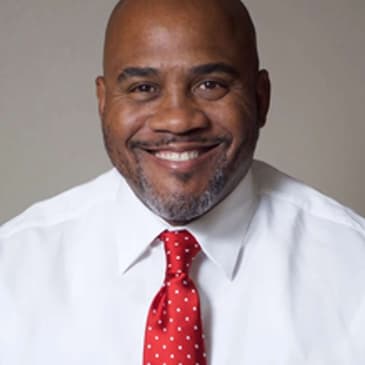
Discover the inspiring journey of Richard Jack III, the visionary co-founder and executive director of Ladies and Gentlemen by Choice, as he transitions from a 20-year Air Force career to becoming a beacon of hope and empowerment for the youth. Richard's story is a testament to the transformative power of personal development and the critical role of mentorship. He shares how his military background and personal experiences shaped his passion for creating inclusive programs that equip young men and women, particularly Black youth, with essential life skills beyond the confines of traditional sports.
Richard's innovative approach challenges the status quo, focusing on communication, emotional control, and leadership. By expanding his initial vision to include Ladies by Choice, he has fostered environments where both young men and women can thrive through programs established across multiple states. From the vibrant initiatives in Hawaii and Las Vegas to tackling financial literacy and etiquette, Richard's programs are designed to create well-rounded individuals who are ready to face modern challenges. His work at institutions like the Andre Agassi College Preparatory Academy further highlights the importance of community support and cultural understanding.
Join us as we celebrate the success stories that have emerged from Richard's efforts and explore his commitment to reaching a broader audience through online resources. Hear firsthand how his book, "The GBC Way," encapsulates his philosophy and the impact of these transformative programs. Richard's journey is not just about his own growth but a ripple effect that touches the lives of countless young individuals, paving the way for future generations to succeed.
Below are social media platforms you can use to reach Richard Jack III:
Website: https://gentlemenbychoice.org/
Facebook: https://www.facebook.com/GentlemenByChoiceLLC
[00:00:00] Ellington Brown: Welcome to SpeakUP! International with Rita Burke and Elton Brown!
[00:00:17] Rita Burke: On SpeakUP! International, we crisscrossed the world to find people we consider to be community builders. Today, we are in Las Vegas, talking with Mr. Richard Jack III. Now, he is the co founder and executive director of the of Ladies and Gentlemen by Choice.
His journey began as a school counselor, and today Mr. Jack calls himself a personal development coach for youth. He started working with boys. Now, young women are an integral part of his programs. Richard's passions are personal development and growth, and he finds immense joy in guiding young people towards realizing their full potential.
I would like to welcome Mr. Richard Jack III to SpeakUP! International!
[00:01:17] Richard Jack III: Thank you so much. Thank you so much for having me. How's it going this morning?
[00:01:21] Rita Burke: Very good indeed. Thank you. We've had our tea and our coffee and our water. We're ready to go.
[00:01:26] Richard Jack III: All let's do this!
[00:01:28] Ellington Brown: I guess it's a party then!
[00:01:30] Richard Jack III: Absolutely. Turn the music up and let's get going!
[00:01:36] Ellington Brown: Thank you so much, Richard. I know that it is like a little after eight this morning where you are. But then again, the city that never sleeps anyway, right?
[00:01:46] Richard Jack III: That's right. That's what it's about.
[00:01:47] Ellington Brown: So this is great. I, first of all, I want to say I, I tour your site and it's a pretty site.
I have to. I have to give you that. I really enjoyed spending time with you and the ladies and gentlemen.
[00:02:06] Richard Jack III: Yeah, thank you so much for that, when we think about building the site, one of the things that we really wanted to people understand is that there are a lot of youth organizations out there that there are mentors and coaches out there that are, that work with youth that are trying to, or that are actually coaches.
And when we built Gentlemen By Choice, we built it from a professional lens. So we're not mentors trying to be professionals. We're professionals that are actually doing the coaching and mentoring. And that's significant. That little bit of a difference changes the way we present ourselves to the world.
[00:02:39] Ellington Brown: So what was your vision and what is your motivation behind establishing this? Professional organization.
[00:02:48] Richard Jack III: Yeah, that's a great question. So my background is I did 20 years in the Air Force. I was an air traffic controller and when I retired, I got bored sitting in a control tower and I went back to school and got my degree in counseling school counseling, a particular and when I walked into the school environment, I was concerned about what I perceived to be a little bit chaos.
And I was more concerned about how our young men were relating to their female teachers. And to go a little bit deeper, I was more concerned about how our black youth, males, were being impacted by female teachers that were white. And it wasn't that there was this confrontation, but there was a lot of misunderstandings in my opinion, and I don't love for what our young men have gone through and what we experienced as a people, I wanted to create an environment where we taught them how to have that connection at an early age.
If you think about a young boy, who's in class, and he doesn't have the faculties or the skill sets to communicate effectively about how he feels and what he feels and you watch the dynamics between that child and a teacher, regardless of ethnicity, it becomes problematic because that child is being sent to the principal's office.
And it could be that the child is just being misunderstood. So the thought process is if we equip you and teach you how to have those conversations with adults, then you can fend for yourself. And at the same time, use the skill sets as lifelong learners to progress in life. And so we really went in with the strategic mindset that, hey, one, we love our youth.
We've been in four states. We started with young men and the biggest need is you have a lot of programs out there for young ladies, but you have very few programs out there for young men in particular in this area. Most of the things that we see for young men are sports oriented or entertainment.
Those are great skillsets to have. Not a problem with that, but here's the issue. If I only have that and I don't have the other skillsets, the soft skills, how to communicate, how to connect, how to talk, how to control your emotions. Then you may have a short lived career because your inability to connect and understand how to do that effectively and I was raised by a single mom and so I had a lot of love growing up and one thing that my family started with is if I love you enough, it's my responsibility to correct you if I love you enough It's my responsibility point in the right direction Some people call it rigid or discipline.
I call it a blessing right coming from a strong mom where you know she said what she said and she meant what she said and we stepped in line. That's not a bad thing and in the society that we're in right now, we need that more than ever. That's a long story to a quick answer.
[00:05:31] Rita Burke: I like that. I'm surprised, though, by something you said.
You talked a little bit about your going into the school as a guidance counselor and observing that particularly the young man didn't know how to express their needs. Could you expand on that thought for me a bit, please?
[00:05:52] Richard Jack III: Yeah, so one of the things I've learned is that when you ask a young man, in most cases, not all, that's a disclaimer when you ask a young person, a young man, in particular, how he feels, he normally will break down and cry because he doesn't know how to express his feelings.
And in a lot of the households that we've, a lot of the students that we've had, you go into environments where there might not be a dad in the house. If I don't see it, how can I become it? And so now you have to role model what that communication looks like. And how do I have my child or have a young man in my class?
How do I get him open up about his feelings and emotions in a healthy and positive way? A lot of our youth today are traumatized because they've seen things in the home or they've experienced things in the community that have impacted them. And then on top of that, a lot of times adults will cut a child off.
And when you cut a child off, especially a young boy, You emasculate them because now I can't talk to you about how I feel because every time I do, you're telling me how I feel you're correcting my way of thinking without really understanding that when you do that you're actually hurting me.
[00:06:53] Ellington Brown: I have to say I grew up in a single parent home That was my mom and I had to chuckle as you were saying, you know you had to get in line. I don't know about you But when I grew up my mother still beat you up behind It was none of this thing about go to your room and, think about it.
No, you got your behind whipped and you stayed in line. So yeah, I had to, that made me a chuckle and it did bring back some very fond memories of growing up with a strong woman.
[00:07:33] Richard Jack III: Yeah. And to this day, when I go home to see my mother, she lives in New Jersey. My both my twin brother and I, we honor that.
And it's still yes, ma'am. No, ma'am. It's still I need you to go to store. It's not about when I'm when it's convenient for me when she says, I need you to go do something. It means I need you to do it right now. So I don't need a lot of guidance in that perspective when she says, even at my age, she's hey, I need you to do this.
That's not a request. That is a directive. And it means that you need to
[00:08:03] Ellington Brown: I don't know about you, but when my mom was alive, even though when she was older, she said, I can still get up here and whoop your behind.
[00:08:10] Richard Jack III: Yeah,
[00:08:10] Ellington Brown: Who do you think are.
[00:08:12] Richard Jack III: She'll allude to that these days, or she'll tell me something like, if I was younger, you wouldn't get away with that. And I watch with my nieces and my nephews. And sometimes my brother and I got to laugh and say, man, if you would have known what I know 20 or 30 years ago, you wouldn't have made that statement. You know what I mean?
[00:08:28] Rita Burke: It's interesting that you say that. My mom used to be really fanatical about the language, English. And it didn't matter how old you were. If you put a were, where a was supposed to be, or an S, where you shouldn't put an S, she did not hesitate, it doesn't matter how old you were her child and she was going to correct you.
That was Amazing. Amazing woman. And we respected her for that. We respected her for that. You talked at the top of the show about being in the Air Force and then retiring and going back to school. Talk about the mindset, the thought, the feelings, those kinds of things that went into making that decision to go back to school,
[00:09:19] Richard Jack III: The military is one of the best tools for an individual to learn how to be in control of self. A lot of times it gets knocking for being too rigid or being too strict. But I'm on the other side of the fence that it exposes you to different ways of thinking, different ways of proceeding, different ways of engaging in life, it teaches you certain skill sets and tangibles, if you will, about leadership, about showing initiative, about showing drive, about forward thinking.
And so these are some things that in, in a lot of the places that I've been, we don't really discuss. And I've, it was very, it was discussed most often, almost on a daily basis with expectations in the military, that these are some principles that you need to succeed, whether in your career or in life. And so when I retired I had a job as an Air Traffic Controller in the contract tower and I'm sitting there and I'm, I started becoming an avid reader.
I started, I stumbled upon Napoleon Hill's book, Thinking, Grow Rich. And as I read that book, I was deeply moved by it. And I said, I can't stop here. I'm, even though I'm only 38 at the time when I retired, there's more for me to do. And so I'm big into, I love behavior. And so I read Think and Grow Rich.
And I said, I'm going to go back to school and get a degree in psychology when I got there, and they told me what it took to become to get a degree in psychology. I was like, let me try something else that might not take as much time, but I can have the most impact and I've been a football coach and I've been in arenas where I watched the role models on a football field not model the right behavior in my opinion.
I'm not knocking it, but it's just not something I think that young men and young women should really see if it's not positive and in the right vein. And so as I went back to school and learned, one of the young ladies that was my facilitator in college said, Hey, I think you'd be a great school counselor because your passion for you.
And I said, sign me up. It didn't take much for me to think about it. It was an instinctive, instinctual thing. Because I really respect and appreciate the upbringing that children have. And I grew up without a dad. So when I saw myself in these young men, when I got to school, that's how the program was birthed.
[00:11:35] Ellington Brown: Wow! That is definitely a fascinating story. Speaking of education, your professional background and how it influenced you going forward. Tell us a little bit about the Andre Agassi College Preparatory Academy?
[00:11:55] Richard Jack III: Yeah, that, that was a great experience for me. I went in as a school counselor. Initially, I was supposed to be the middle school counselor.
And then I turned around and I was K through 12 counselor my first year out of college into the counseling realm. And when I got to Andre Agassi College Preparatory Academy, I loved the environment, the staff, the youth, and I saw a lot of youth from the community that really needed support. And as that was my first year as a counselor, and as I was cutting my teeth as a counselor, I got more involved in some of the dynamics of some of the behavior issues that students were having, some of the standardized testing that was going on, and the co founder, Gentleman By Choice at the time, was a dean.
And he and I became really good friends instantaneously. And we sat and we would think about, okay, how can we have a greater impact on our youth? How could we be that positive presence in the community, inside the school? And so now rather than a student. Come in there to become, come into his office to become disciplined or receive discipline.
We flipped it and made it about less, less developed and let's take the time out to develop them. So now, as I looked at this from the lens of when I was in the military, every step of the way, I was receiving some type of education, whether it's informal or formal, to develop me into a well rounded soldier or airman a well-rounded person. And so I took my time trying to understand it, and I said that we can create the same model for youth where you can bond some of that military culture and structure and education you could produce. something special. And one of the things that people don't know is that we didn't go in there and select all the good students.
That was not the case. We went in and we strategically sought out students that needed support to put trhem through this process and it's a process.
[00:13:48] Rita Burke: But you started off this grooming coaching program. With young men, then you segwayed into including young women. Talk about the rationale behind that, that more inclusive approach.
[00:14:08] Richard Jack III: Yeah, so a couple things happened. In 2015, 2014, 2015, I moved to Hawaii. I was on Maui and we started the Gym Program, which is a part of German by choice brand.
And that was for all the boys at the school that I was at Princess Nahi in Maui. And as I began to do the program, they told me that I couldn't get the students to wear certain outfits. I couldn't get them to buy into the culture. And my motto was watch me work. And so I'm the only African American on campus.
I go on, I connect with the Hawaiian culture. I understood the culture. I learned about the culture. I obsessed about the culture to the point where I was going over to establish a program because I wanted to make sure that our program can work anywhere, anytime, anyplace. And as I did it the first year, we started with 60 students, no, I'm sorry, 30 students the first year, and we completed 30 students, with 30 students.
The following year, I came back I'll never forget this, I had about, Seven or eight young ladies, fourth and fifth graders, knocked on my door as a counselor. Mr. Jack, we need to talk to you. I was like, okay, who's in trouble and what happened? And they said, hey, listen, it's not fair that you have a program for young men and nothing for young ladies.
And we watched them receive all these different swag gifts. We watched them go into a gala that you hold. We watch you take them out to lunch for etiquette training and five star restaurants. We want some of this as well. And my mind said, okay I've never done this. But let me figure this piece out.
I work with children, but I've had more familiarity with boys than girls. And the young lady that I was was friends with. And at the time who actually invited me to Hawaii is Jerry Dean. She said, Hey, no, she was the school. The student success coach, I believe. And at the time she said, if you do this, I'll back you and support you.
So she understood that I would teach the class, but we had a female president to help guide that. And if there was any subject that I couldn't discuss or didn't feel comfortable discussing, I rolled her in. And so that year we stood up the Ladies By Choice program in Hawaii. aNd it was very successful.
And then when I moved back to Vegas, we bought the program here and we've been rolling every since.
Oh, one thing I want to share with you too is that in my opinion, what I saw in the young ladies was a lot different engagement than I saw for the young men. And that engagement allowed me to have greater impact with the young ladies because they wanted to do more. So we did special things for them like lunches and things like that where they can get together amongst themselves.
And we will invite guest speakers in from the community coming to talk and that was another bullet in our program that I thought was very effective because it wasn't just me talking and lecturing because I'm not really big into that, but was really exceptional about the program is that we've had female speakers come in and talk to the young ladies.
So now they're getting successful people put in front of them that they can emulate as well.
[00:17:15] Ellington Brown: Okay that extra piece that you just added. That's gonna cost you five dollars, right?
[00:17:20] Richard Jack III: All right. No worries, man. I got you.
[00:17:21] Ellington Brown: Okay. I just have to, I just have to bring that in there. Just for our audience.
[00:17:26] Richard Jack III: Yeah. Check us in the mail.
[00:17:27] Ellington Brown: The core components and programs that Ladies and Gentlemen By Choice produce. One of the components is an acronym and it's L.I.G.H.T. Can you explain what that acronym means and how is it impactful to the young ladies and gentlemens in the program?
[00:17:53] Richard Jack III: Yes, so in order for me to get there, I want to put it to you this way, so Gentlemen By Choice and Ladies By Choice now, one of the fundamental philosophies that we have is that we grow through exposure.
We grow through opportunities and engagement. We grow through connection. So as we built this program, we sat back and said, what do our young men at the time need? One. We know that I needed leadership. What does leadership mean to a child? A lot of times when I've been on the football field, someone would tell a child, Hey go be a leader.
But what does that mean to a child? So we said, okay, we'll start with life leadership. I'm going to teach you how your attitude and behavior affects your leadership and what a leader's attitudes behavior should be. That was the L. Then we got into etiquette. Etiquette was more than just setting the table.
It was how do you carry yourself and conduct yourself environments. I'm sorry. I was next it's life skills. So I was next. I is about image. How do you dress for success? How do you carry yourself? How does your image in life? How do people see you? When people see you a certain way, they're going to treat you the way they see you.
So we have to be careful what we're presenting out into the world. Then we got into F, financial management. A lot of our students know about money, but they don't even understand where money comes from or the power of money. And so if you look in these communities that we're in, and we're working in underserved communities, Very rarely does a child come in with the understanding and knowledge of someone sitting down and explaining to them about money.
And then we got into etiquette. Etiquette was more than just setting the table. It was how do you conduct yourself on a daily basis? How do you show up and have positive conversation? Are you being a gentleman by opening the door? Are you being respectful when you have communications with young ladies in particular or your mom or your teacher?
And that's where a lot of conflict happened in schools between the young men and the female teachers So we were very conscientious about what we're trying to present and how we want to do it. And then in 2016 We added personal development to the mix because one of the things that i've learned is that there are strategies on how to navigate some of life's challenges. But a lot of times we don't get taught these strategies until very late in life.
[00:20:05] Rita Burke: Sounds like a powerful life experience, I should say, that maybe all of our youngsters should be exposed to. I like that. Now why did the Andre Agassi College need to add an anti bullying component to their programs, why did they need anti-bullying?
[00:20:29] Richard Jack III: Didn't need it, but as a school counselor, anti bullying or bully prevention, if you will, and having that conversation with the students and with the students was very important to me, because a lot of times in the society today.
I Think sometimes students get it wrong about being bullied. I think we saw a lot of it on campus where it was a misunderstanding and we call it bullying. So to me, it was more about an education and prevention at the same time was part of my job.
[00:20:56] Ellington Brown: I just want to tip back to something that you mentioned earlier, and it was all in the same paragraph where you talked about respect having gentlemen know how to respect. women. I think when we grew up, it was like already built in because, living with a very strong woman who will keep you in line, whether it's by giving you that look, that look I'm talking about, right?
Okay.
[00:21:28] Richard Jack III: I'm so familiar with
[00:21:30] Ellington Brown: because if she gave you the look, you knew when you get home, you will get your behind whipped. Having that in place, that instant response. You didn't have to think about it. You knew whatever you did was wrong. And so meeting women, that kind of rolled into that, into it. You introduce yourself to a nice lady. You are very respectful. It's already built in. It's already been ingrained, which is something that's not happening now.
And I think your organization really hones in on that and help men and women. Be a very respectful not only to other people, but respecting themselves. So I think that's really great. So now we have, we've talked about impact. I'd like to know now are some of the success stories that you can tell us based on your program and how it's been applied and how do you see the participants come out on the other end?
[00:22:44] Richard Jack III: That's a great question. And when we talk about our impact of the program, we've been in four states simultaneously. Tacoma, Washington, Las Vegas, Nevada, Maui, Hawaii and South Chile.
And success stories are the students that graduate the program because it is a rigorous program. And when I say rigorous, I don't mean rigid. There's a lot of opportunity for flexibility in there, but we do have a system in place that we use. To create a transformation in our youth, and that's really significant because a lot of times the assumption is that students are being taught mannerisms.
They're being taught these intangibles that will help them succeed in life. And then when you go ask a child and say, Hey, what do you know about this? Most of the times the answer is going to be. I've never heard this before. I know I'm supposed to say thank you, but maybe I don't understand the significance of saying it on a consistent basis.
And so what we try to do in our program is number one raise awareness. We talk about impact. We have had situations where We had a every year we do a black and white tie gillette at the end of the year And I remember vaguely when we first started we were There is 200 people in the room. Our young men were dressed in black tuxedos.
They're dressed in white shirts. And we've made it free for the parents. So now, if a father was going to attend and never wore a tuxedo, we worked it out with the local tuxedo shop that they get a discount or we pay for it. And then the moms would get dressed up in fancy. A lot of our students and parents have never really experienced anything like that.
And so I remember one year in particular that I was sitting in ear shot of a student and he just, he was in awe of how good he felt being there. And he thought about, I could hear the conversation with his dad and he's reflecting, dad, I know last year I didn't do these things.
I didn't take care of myself the way I should. I didn't I didn't prepare myself, but look what this program has essentially done for me. And I love seeing you in a tuxedo. I've never seen you in a tuxedo. And the dad looked at him with a proud smile, and he said, Son, I'm happy to be here to support you, and I've never wore a tuxedo.
And when you see conversations like that, where, moms walk into the room and we do the gala and they've never seen their babies in tuxedos or dads have never seen their young ladies in gowns and we do the mother and son dance and all of a sudden moms are standing there crying or boohooing because now these young, People that they've never seen in the light that they're seeing them where they're acting more mature.
Their conversation is more mature. They're conducting themselves more mature. We have the young men when the moms come in, they're supposed to stand behind their mom's chair and pull off the chair. And let their mom sit down and we go through all of these steps to teach them these basic skill sets that I think has gotten away from us as a society, but they're so essential, they're so important and so essential in making connection and improving the mood.
I remember when we were in Hawaii and there was a young man and he was Filipino. And I have to say that because their culture sometimes comes across as very shy and not engaging. And when I first got there, this young boy he was probably about 10 years old, very shy, wouldn't connect, was very reserved, and every time I would speak, he would get a little nervous.
And so when I was in Hawaii, I built a community of advisors. And one of the advisors worked at Sheraton his name was Lee Ortegoro, and he worked with me, and he and his team support us 100%. At the end of the year, we did the gala in Hawaii, and as Lee was leaving the next day or two days later from work, he comes out and he sees one of the employees that worked there, and he said, Hey, how did your son enjoy the gala?
How did you enjoy it? And how did you enjoy the program? And the father stopped and he looked at Lee and he started crying with tears in his eyes. And Lee was like Hey, I'm not trying to offend you. Is everything okay? And the father said, my son has always been very shy and he's never really had a lot of friends, but because it is program, I've seen my son blossom, I've seen him build relationships and build connections he's never had before.
So when I think about the work that we've done and why we do it at the level that we do it. It's because I believe in my heart that our youth today deserve more than what we're giving them. I believe that our youth deserve to see, to have people around them that love them unconditionally. I believe that our youth deserve people that will correct them and guide them.
And I believe that our youth deserve to be elevated because times are picking up, right? We're moving at a much faster pace in life now, but yet the education system in most cases is still antiquated. The way we're approaching our youth hasn't really changed in terms of schooling and education. So I think there's some things that need to be done.
And G.B.C. tries to be a catalyst in that, that, in that transition.
[00:27:48] Rita Burke: I read, I see, I hear. I hear the importance of confidence in our young people in order for them to succeed in the world. I read, I hear I see the word self esteem. And I'm always wondering in my head, without even saying it out loud, how do we teach young people to build self esteem?
How? How? What are some of the steps? Do we follow to help them to build their esteem?
[00:28:21] Richard Jack III: Yeah, that's a great question and I'll put it this way. I don't really have the answer. I can tell you what we try to do that. One, we start with if I love you enough. to teach you about self love of self and you'll be able to blossom.
We focus on not what you're doing wrong, but what is your identity going forward? A lot of times in life. I think our youth lack identity because of a, there's too much stimuli coming in right now. You got social media, you got expectations, you got peer pressure, all these things will shape our youth's identity.
We're not careful. But if you can teach a child how to love themselves and how to stand up for themselves in a positive way, that's on their identity. Not where you're at, b through this process. When and when think about Gentlemen by Choice, a lot of them have never heard some of the terms that we use but we believe that we cultivate the mind through consistent demonstration and congruency in our words and our actions, you'll be able to or they will be able to grow and develop.
And that improves their self esteem. A lot of times, one of the biggest feedbacks that we get is how our youth have evolved in the program. We had a young lady last year, a couple years ago. She was a little obese. But she struggled with her identity and her confidence I called her mom as we do checkups with parents.
Hey, tell me what's going on. Is your daughter enjoying the program? And in that conversation, she revealed to me that how quickly her daughter evolved and became confident with the program, because we talked about loving yourself. And here's some strategies and techniques that remind you of your identity.
And this young lady came in class, she participated in every class. She never missed a class. And more importantly, she took the educations and lessons seriously, so it can be done. We our method is to talk about self love. Let me give you the skills and the tools that you can help identify what that means to you and then focus on your identity on who you want to become.
And when we've done it, we've seen tremendous success in our youth.
[00:30:25] Ellington Brown: Wow! Impressive story. Just goes to show you with a little love and encouragement, miracles happen. Can you talk about specific financial educational programs that you offer? I know that you talked about helping, the young ladies and gentlemen have these, I want to say, I'm not prom outfits, but tuxedos and to have the gowns on.
And you mentioned that, some of these kids family they didn't have the kind of money, and you helped them, you supported them financially so that they would be able to truly experience this situation. So are there any other programs where you financially support the ladies and gentlemen?
[00:31:23] Richard Jack III: No, we've we're a 501 C3 nonprofit organization.
So anything that we make in the program, it goes back to our youth and our community and our families. From a financial perspective, we don't really do a lot of scholarships. We do scholarships, meaning that we go to school in most cases in Nevada, and they cannot afford the program, or they're not willing to pay 100 percent of the program or scholarship the program, or we'll give the program to the schools for free as a 501 C3.
We do have operational costs that we have to take into consideration, but for the most part, the programs have been free to the students since the beginning when we talk about inside the program in terms of teaching financial management. Or the components of financial management, we understand as an organization that in most cases, our students come to school without any concepts of money.
So help me understand something. I want my child to be successful. I know they need money to succeed, but I'm not going to engage them in fiduciary responsibilities or financial management at all. So you're setting them up for failure. And one of the things that Gentlemen by Choice and Ladies by Choice is.
It's a foundational program. It's the beginning, not the end. We want to spark that conversation of, do you know how to budget your money? Do you know where money comes from? Do you know what a bank institution is? Just some basic, do you know how to budget? Do you know what compound interest is? So we try to give them some basic information to help them set them up for a future success.
And just recently, we launched an online course. Where people from across the country or from different communities can go on and actually get some of these lessons in an animated cartoon for youth that they can log on to our website, gain access to that and try to educate their child about money.
Maybe there's a parent out there who doesn't have time, but what if you can pop in a video and have your child take a course that will allow them to become educated on it. And COVID proved that's possible, that online education is possible, right? at a high level. So we're trying to get into that arena as well.
[00:33:24] Rita Burke: We are talking with Richard Jack, the third, who is currently in Vegas. Now, I'm particularly interested in the I from the acronym life. You said it's image. How important is image in success in people's life?
[00:33:51] Richard Jack III: I'm spoiled because I was raised with a family where my grandfather wore a shirt and tie every day and he was, he looked professional.
There was an expectation of how you carry yourself in community as well. I remember one time I was out on the street playing basketball and I was dribbling the ball at my grandfather and he looked at me and he said, hey, come here. And my grandfather didn't really give a lot of direction, but when he did, you listened.
And I had I said, Pop, what's wrong? I call him Pop. I love my grandfather to death. And he said, Hey let me ask you a question. I said, What's that? He said are you going backwards in life? So I had this puzzle look like what do you mean going backwards? He goes you got your hat on your head backwards.
So I want to know you're going backwards in life. I said, No, dad, I'm not going backwards. He said turn around, put your head on and so leaving the house looking a certain way, presenting yourselves a certain way. Was very important. Now, when we talk about image have you ever put a tuxedo on a child and see the expression on their face?
We've never had it image, right? Have you ever seen a child walking with a shirt and tie and they get compliments from people and they feel good about themselves when the young ladies come out and they've never had a gown on or they never put on a skirt and blouse and they have to or shirt they have to come into school because we change their uniforms and programs.
Most. Mhm. Most programs, they allow the students to wear whatever they want. And ladies and gentlemen, by choice, we ask you have them dress up and business professional tire. They get white shirts, black slacks a tie or a white shirt, a pattern skirt and a bow tie to match for the day. And that's their business outfit.
That's their business dress for work. And we try to get them in a mindset of when you put that on, how do you feel? And most of the time it's, I feel differently. I feel better. I like the results I get. I like how people respond to me. Now you take that feeling and you make it consistent. And now they become aware.
Of how they're dressing, how they're showing up, even when they're not in uniform. So we embedded that in our program because we recognize that if we do this enough, self esteem will improve, they'll carry themselves different, and they'll become what they said they wanted to become when we started the process.
[00:36:04] Ellington Brown: I can't agree with that more because I think it's really important that their mindset is in a state where they're going to be successful.
[00:36:18] Richard Jack III: Absolutely.
[00:36:18] Ellington Brown: They don't have that mindset. It's going to be challenging for them. I remember my grandfather telling me that if they, whatever job I want, you have to dress for part.
[00:36:31] Richard Jack III: Right.
[00:36:33] Ellington Brown: So if you want to be a manager, then you got to go in dress like, a manager and people will see that and maybe that's going to help you get the job that you want. So I definitely agree with that mindset.
[00:36:52] Richard Jack III: Absolutely. Absolutely. And it's really interesting, right? Because. A child is in the classroom, and if you go in some of these schools that I've been in and you watch the way the teachers dress where's the division at?
How did, where's the separation in terms of what is or isn't? I'm not knocking the teacher's dress and appearance. What I'm saying to you is how is that, how is the modeling of that behavior, how is that helping our child? We expect them to ascend to new heights or to grow and develop, and I think, for me, I try to set the example with our youth by dressing appropriately, by holding myself in a much different way, and then have them watch that attitude of behavior and then try to emulate it. So image is very important to success.
[00:37:35] Rita Burke: Your bio, Richard, says that you are trained in neuro linguistic programming. I understand what that means, because I met someone way back, In the early 90s, who also was trained in neurolinguistic programming, and she explained the value, the benefits for the benefit of our audience, for the benefit of our listeners.
Could you talk a little bit about that, please?
[00:38:05] Richard Jack III: Yeah, neurolinguistic programming to me, and I'm not sure what the exact definition is, but what I've learned and what I feel it is for me has been. The ability to take multi sensory situations and learning and growing from that through different techniques and strategies.
And it's really remapping your mindset on how you see and perceive things on so many different levels. And a lot of times the way we think is not who we really are. So we have to change that or connect it in such a way that it's a positive impact, if that makes sense to you.
[00:38:38] Ellington Brown: Makes sense to me.
[00:38:40] Richard Jack III: Okay. That's all it matters.
[00:38:43] Ellington Brown: Yeah. Hey, there you go.
[00:38:44] Rita Burke: Makes sense to make sense to me. Thank you. Thank you. Thank you,
[00:38:47] Richard Jack III: I apologize
[00:38:48] Ellington Brown: I can't believe it. Rita, you still haven't talked about those white shoes.
[00:38:52] Rita Burke: We're gonna get to that at the very end. I, you think I've forgotten? No.
[00:38:59] Ellington Brown: Can you tell me what role you play at RJ3 consultants? Tell me what this RJ3, what does that mean?
[00:39:10] Richard Jack III: RJ3 Consultants is my personal development program for adults. Again I have a story for you. In 2016 17, I picked up a book called High Performance Habits by Brendan Bouchard.
I was always, I was already doing the JANT program in multiple states. We had already had connection but I went to, I read the book, High Performance Habits by Brendan Bouchard, and it turned out that's, that year there was a seminar in Arizona during my summer break, I'm sorry, during my spring break, and so I had committed to going and I walked in and it was like, I found my tribe, right?
I was excited to be there. And the material and information and frameworks that they were putting out about personal development, about taking control of your destiny, about understanding self in a healthy and reflective way, it really sunk deep inside of me. And because I have been working with the youth, I came back from that program and I said, hey, I'm gonna be a coach.
I'm gonna be a coach, not just for youth, but for adults. And so I started RJ3 Consultants as my own brand to really focus on youth. And the reason why that's important to me is because, sorry, on adults. The reason why that's important to me is I have a wealth of knowledge, right? I have a 20 year Air Force career that's been heavily documented in leadership principles and concepts.
I have a master's degree in business and in counseling. I'm taught in neuro linguistic programming. I'm a high performance coach certified and I'm also certified and mind power coaching by Stephan Shea Shefidal. So personal development has been, to me, a huge evolution in my understanding about self and growing and developing and helping individuals around me grow.
And so RJ3 consultant lets me do that with adults. At a very high level and we've been able to take that information. I've learned in personal development important to our youth program as well. Even though people know me from my youth programs. I'm very effective in working with adults as well.
And that's my consultant firm that allows me to do that.
[00:41:23] Rita Burke: So you still have time for life with all of the things that you're doing?
[00:41:27] Richard Jack III: I do. I am, listen, I'm an entrepreneur. I like to go in my lab as I call it and create the online academy that we launched a couple of months ago. It has the GBC frameworks in there that y'all can go on, log in and learn information.
Another thing that we just launched. A separate brand is called the Collective Collective Community Culture Academy, CCCA, and that academy is designed to take the lessons I've learned in Gentleman by Choice, put it in a framework that I can go in and work with teachers to teach them some of the strategies and concepts that we use.
To build connection with youth. This is very important. A lot of times I think people think that teachers don't know what they're doing. In my opinion, a lot of teachers have the right thought process on wanting to connect with the students. Sometimes they don't know how. When they're coming from different backgrounds, sometimes there's a little bit of a bias of expectations of what a student should have coming to school, but not all students are coming from the same backgrounds that the teachers have come from.
Not all teachers understand the needs of different students based upon their challenges in life. And so the constructive community culture academy, it allows us to come in and facilitate that training, help them understand. And here's some connections that you can make. And more importantly, how are you showing up as a leader in your classroom as a teacher, because the students are following you.
And so that's another thing that we've done that I really enjoy and appreciate. So to answer your question my work is my life, right? I enjoy it.
[00:43:02] Ellington Brown: What you said is the most important part of all of this. Is the fact that you enjoy what you're doing if you are it's so I've heard the same and I'm summarizing this saying, you enjoy what you're doing.
It's not necessarily looked upon as work because you love what you're doing. You enjoy what you're doing. So what are the future goals? And expansion plans for Ladies And Gentlemen By Choice?
[00:43:38] Richard Jack III: That's a great question. Our goal has always been to be a national program where we are a specialty in many ways.
What program out there do you know of that combines life skills training, leadership training and personal development for youth? All right? We're very precise on what we're trying to do. And we think and believe that our program is, would be essential in any community to make a difference when you're talking about youth.
And so our goal is to make the program national. Our goal is to continue to build the online academy so that any child or any student can get on there and learn some of the things that we're talking about. And if you're a parent and you don't have time, or you don't know how to talk about money to your child.
I want to take the finance course and watch Richard Charlton and see what we're talking about. So our goal is to continue to expand, to improve, and to elevate our program to the next level.
[00:44:32] Rita Burke: We are talking with Richard Jack III, and he is telling us some truly fascinating things, ideas, concepts, He includes to help young people to grow and to actualize.
So I'm wondering if we had the opportunity to talk to one of the graduates from your programs. Tell us three words they would use to describe you?
[00:45:04] Richard Jack III: Me?
[00:45:06] Rita Burke: Yes.
[00:45:07] Richard Jack III: They'll tell you that I'm very loving that I'm disciplined and their words strict and that I hold them to a high standard. I remember as a child, am my mother's child and I'll go back to what I said at the beginning.
My mother said, when she, I'm doing this because I love you. And she would say, this is going to hurt you more than, it's going to hurt me more than hurt you, but I have to correct you. And so I believe that when we hold our youth at a standard. When we communicate the standard and we do it in love, then you produce good things.
And so I love it when my students say, Mr. Jack, we was a little bit nervous when we met you. I want you to understand that I take your life seriously. I want them to understand that the lessons that we're teaching you is going to benefit you down the road. And I remember when I was in the military, a girlfriend of mine said, keep living, you'll get it later.
I don't know what that means. But I kept living and I got it later. And so I've been around a lot of great men in my life influences. One of my greatest mentors and friend he was, he raised to his name is Mr. Elliott Sanders. His presence was also, he used to tell me I'm gonna teach you what I want.
I'm gonna tell you what I want I'm gonna teach you how I want it and I'm gonna hold you accountable and that stuck with me so when it comes to me, I love it when the kids understand. I love them I love it when they understand that I'm gonna be I'm gonna hold them accountable for the behaviors. And I'm going to insist, not demand, I'm going to insist that they meet the standards because I think when you do that, it's for their benefit, not mine, right?
So I love when I hear acronyms, you're a little tough. Yeah, I can be, right? But it depends upon how you look at it. Am I firm or am I hard, right? Let's put hairs a little bit on these conversations. And from a child's eyes, Someone saying, Hey, I'm going to hold you to a standard to them.
It might be you're too strict on me to my mind, my knowledge. And the way I was raised that me being strict on you is being shown you, I love you. So it just depends upon what lens you look at. And they're kids. Or young men and women. So they're learning, don't get it later.
[00:47:16] Ellington Brown: Now, I don't know about you, but that line that you said earlier about, it's going to hurt me more than it's going to hurt you. How come I didn't understand that while I was getting my behind whipped?
[00:47:28] Richard Jack III: Oh, that's a great question because I've often had that same conversation with myself. But I do know that being one of four in a household, my mother had to work, two jobs to make it work. And being raised in somewhat of a under the poverty line.
I learned why she said it very early on in my life, right? She said, Hey, listen, I'm raising two of you twin boys and I can't afford to lose one of you. And so I'm going to make sure that you get this message loud and clear quickly. And it's going to hurt me to have to give it to you the way I'm giving it to you, but it's for your own good.
And so we've questioned it as adults, but as we've gotten older, we understood what she meant now. And at the time it was like, I don't like this, it's because of her and God's blessing that I'm here. So I got no complaints!
[00:48:17] Rita Burke: I'll tell you something that I will never forget that you said today.
Everything you said for me. is important. It's valuable. It's beneficial. But you said if you don't see it, how do you become it?
[00:48:33] Richard Jack III: Yes, ma'am.
[00:48:34] Rita Burke: That is that captures a lot in just that very basic rudimentary elementary statement. If you don't see it, how do you become it? I appreciate that so much.
[00:48:48] Richard Jack III: Thank you.
It's funny because whether you're a child or an adult, whether you're in business or not in business, it applies right now. Give you a prime example. When I retired in the military, I've never owned my own business. I never knew what a non profit. But in saying that I recall when I first joined the military air traffic controller, And one of the things that they gave us was a thing called the 71 10 65 point 65.
It was our air traffic control guidelines. It was our Bible. It was all of the things you need to become successful as a controller. And whenever I showed up and I didn't go back and do the research or I showed up in training and I didn't know the answer. And. My boss would look at me or my trainer would look at me and say, I'm not going to give you the answer.
Know where it's at, go look it up. That conditioned me to take everything that I do and say, if I don't know it, it's my responsibility to go out and find it. And so when I look at our youth today, there's a, there, there's a distinct difference between teaching and training. A lot of times our students are being told what to do, which is a teaching method.
But they're not being shown how to do it. They're not being cultivated or coached through that process. And so to me, that's training. So for us at gentlemen by choice and ladies by choice, one of the big things is that we believe that you have to show them the way and use a combination of both strong training principles and strong teaching principles, which is demonstrating the behaviors and attitudes that we expect them to have, which really cultivates their learning.
[00:50:20] Ellington Brown: Richard, I just want to thank you so much for spending some time with us today. We have been waiting so long for this interview to happen. We're talking a series of months before we stop dancing and actually put on the formal wear and be able to have this conversation. So I am happy that we were able to do that. We talked about how the inspiration and the founding of the. Ladies And Gentlemen, it's by choice and the professional background yours and how it influenced the beginnings of Ladies and Gentlemen By Choice. We talked about core components, which I think are, the pillars of Ladies And Gentlemen By Choice, which you gave us some really beautiful success stories that will resonate with our audience. I certainly found them to be emotionally stimulating.
[00:51:27] Richard Jack III: Thank you,
[00:51:27] Ellington Brown: Your professional development and your expertise and how you poured all of that back into these programs, the financial support that you provide to these young ladies and gentlemen, so that they have a firm foundation.
I'm moving forward and knowing how to communicate and to interact and to sit at a table and know what fork and spoon they're supposed to be using as they're moving through maybe up a four course meal, which I think. Absolutely wonderful and means a lot more than just having to sit at a table and say, thank you.
And please, there's a lot of other things that goes on during that, including conversations, which you did that you did talk about. Please come back to us.
[00:52:20] Richard Jack III: Absolutely
[00:52:21] Ellington Brown: Want you to come back to us when you turn that chapter and you start yet again another program for Ladies And Gentlemen, By Choice or for adults, whatever, please just come back and SpeakUP! International we'll take you back with open arms.
[00:52:38] Richard Jack III: I'm looking forward to you. Thank you so much for having me.
[00:52:42] Rita Burke: I see you. I see a book coming.
[00:52:45] Richard Jack III: I actually already have one out.
[00:52:47] Ellington Brown: Oh, why don't you, what's the name of the book and how can people get it?
[00:52:51] Richard Jack III: It's called the GBC way. And it's on Amazon.
Beautiful. And the book takes you on the journey of how the program got started. What was the concepts behind it? It talked about the framework and how we evolved into a non profit. Very easy read. A lot of key information in there. Explains the philosophy of the program and what went in behind it. And I think anyone that gets it, that's really into this space will hopefully be inspired to do their own thing.
[00:53:19] Ellington Brown: Thank you so much for your time and Rita, and thank you so much for being able to take some time out of your busy schedule and join us.
[00:53:31] Rita Burke: Thank you so
[00:53:32] Richard Jack III: very much. I got one question, because Rita never told me about the white shoes.
[00:53:36] Rita Burke: Oh, yeah! We have to stop recording before I get there.
[00:53:40] Ellington Brown: Oh, my God. So that she's going to leave.
[00:53:43] Rita Burke: Maybe perceived as biased, and I don't want to be perceived as a bias.
[00:53:47] Richard Jack III: Okay,
[00:53:49] Ellington Brown: Thank you very much. And that concludes this session of SpeakUP! International.
[00:53:58] Richard Jack III: Thank you so much!
[00:54:00] Ellington Brown: Thank you for listening to SpeakUP! International. If you wish to contact Mr. Richard, Jack, III. Please be prepared to submit your name, your email address and the reason why you wish to contact Mr. Jack III at https://gentlemenbychoice.org/. Mr. Jack III has other social media platforms . You can use to connect to him that will be listed in the description section on Spotify and other social media platforms.
Are you interested in the opportunity to be interviewed and have your cause promoted by SpeakUP! International? We invite you to connect to us by sending a message that includes your name, company or organization name, the valuable service you offer to your community, send your thoughts to info@speakuppodcasts.ca.
Worried about your confidence as a interviewee? Don't fret! SpeakUP! International can provide you with the necessary training so you've shined doing an interview. To receive training information and a 10% discount about the SpeakUP! International Podcast Interviewee Trainee Program, email us at info@speakuppodcast.ca.
[00:55:38] Ellington Brown: You can also reach us using Facebook, Instagram, Twitter, and LinkedIn.
To connect to our podcasts, use Spotify or your favorite podcast platform and search for SpeakUP! International. You can also find our podcast using our web address: www.speakuppodcast.ca. Our logo has the woman with her finger pointing up mouth open speaking UP!
By joining Patrion, we can offer you an exclusive opportunity to become an integral part of the continued success of our podcast. You are financial support will enable us to cover the costs associated with producing high quality content, such as equipment upgrades, hosting fees and professional editing services.
As a member of our Patrion group, you will gain access to a wide range of exciting benefits. We are working on providing you early access to new episodes and the opportunity to suggest topics or guests for future episodes. Your contribution will not only help sustain the continuity of the podcast, but also allow us to enhance. The overall listening experience for all of our dedicated followers.
Help us help you! https://www.patreon.com/speakupinternational
At SpeakUP! International, we aim to inspire, to inform and to educate.