
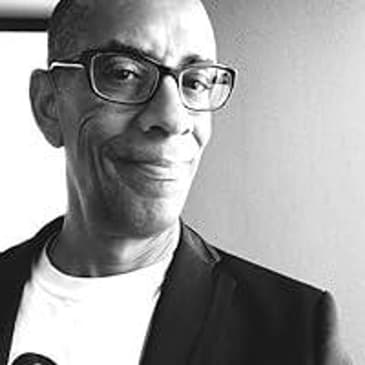
Celebrated author Ronald L. Smith joins us to share the enchanting world of "Project Mercury," where childhood curiosity meets the mysteries of military life. With a heartfelt reflection on his own experiences growing up on Air Force bases, Ronald crafts an intriguing narrative following Ike and Isha's adventures. This episode promises listeners a taste of the magical storytelling that weaves his personal journey into compelling tales of fantasy and science fiction, offering an exclusive excerpt that captures the imagination.
Listeners will learn about the significance of representation in children's literature and its profound impact on young minds. Ronald opens up about his transition from the advertising world to becoming an award-winning writer, driven by the realization of the lack of diverse characters in the stories he cherished growing up. We explore his creative process and his inspirations, from African folklore to iconic works by Ray Bradbury and J.R.R. Tolkien, as he discusses the importance of young readers seeing themselves reflected in the heroes and heroines of the books they love.
Ronald’s insights into nurturing writing talent and overcoming creative blocks provide invaluable advice for aspiring authors. He shares his experiences with the superhero genre and the joys and challenges of crafting original stories within Marvel's Black Panther universe. Through his journey, we uncover the power of community in supporting diverse literature and resisting censorship. This episode is a rich tapestry of storytelling wisdom, offering both inspiration and practical guidance to anyone passionate about writing for children.
You can contact Ronald L. Smith using the following social media platforms:
Website: https://strangeblackflowers.com/
Twitter: https://x.com/RonSmithbooks
Instagram: https://www.instagram.com/ronsmithwriter/
[00:00:00] Ellington Brown: Welcome to SpeakUP! International with Rita Burke and Elton Brown!
Ronald L. Smith, is a award winning author celebrated for his captivating novels that blend fantasies, science fiction, and a rich African American storytelling. His work has resonated with young readers worldwide. Bringing complex characters and imaginative worlds to life. Today Ronald, we'll share an exclusive excerpt from his latest novel Project Mercury! Mr. Smith, the virtual floor is yours! Let's dive in!
[00:01:00] Ronald L. Smith: Thank you both so much. It's a blast to be here. I'm going to read a little bit from my latest book, Project Mercury. It's a book about two kids living on an Army Air Force base in the United States, Ike and Esha.
And the passage that I'm going to read is Ike discovering something in his basement. Both families have just moved to a new military base, and Ike and Esha are very curious about what their parents jobs are. They think there's something mysterious going on the Army base. And this is Ike as he searches around in his basement.
He just opened a footlocker. The medicinal smell of mothballs rose up to greet him. He wrinkled his nose. It was a funny smell. What were mothballs made of, anyway? He remembered his grandmother had an old chest that smelled the same way. Looking at all of the things stuffed in the trunk brought back a flood of memories.
Old survival manuals. Metal pots and pans that folded up for camping, a Swiss army knife that he took out and put in his pocket, and one of his mother's old military uniforms. He even found his childhood stuffed animal, Hector the Protector, a giant dog with floppy ears. His mom had bought it for him when his tonsils were taken out when he was nine.
Another box to his right drew his attention. It was marked with big bold letters, SW Radio. Ike had never seen it before. He opened up the flaps and peered inside. What's this? He pulled it out. It looked old, like something they used way back in the 90s. Dials and little meters were under a glass display.
The front had lots of knobs marked with different letters and numbers. SW1, SW2, SW3. There were also other labels like textile marker and band spread dial. The word voice was above a little screen. A microphone? Mike blew the dust from the cover, then sneezed as loud as a cannon burst. He couldn't put his finger on it.
But he felt as if he had just stumbled upon something very important. Upstairs in his room, he plugged the radio into the wall socket and set it on his desk. A small, dim light on the meters grew in brilliance until it was a bright yellow. Static suddenly filled his ears. Where's the volume? He asked himself.
The noise suddenly turned into a high pitched squeal. Ike fumbled with the buttons and turned one of the little black knobs to the left. The screeching noise faded. Phew, he said aloud. The little glass pane was yellow with age. Small red daggers jumped to attention as he turned the biggest knob to SW1.
It was the tuner, he assumed. A voice in an unknown language wafted from the speaker. It was like something he'd heard once in school when they were studying different cultures. Russian? He continued to turn the dial. Now there was someone speaking in French, now German. He switched the dial to SW2, carnival music.
He had a sudden memory of when he was little, riding on a carousel with gleaming teeth horses. Strange, he whispered. But then a voice spoke in English, broken by bursts of static. 3, 9, 2, 3, 1, 4, 0, 7, 14, 38, 12, eyes only. He gasped and leaned in closer. Report Kilo. Report Kilo. The voice and music vanished as suddenly as it had come, leaving only ghostly static coming from the speaker. Ike sat frozen. His ears rang. eyes only? Kilo? What did it mean? A tingle rose up his spine. Whatever it was certainly mysterious, and there was nothing he liked more than solving a mystery.
[00:04:41] Rita Burke: As Elton said at the top of the show, the voice you just heard, it was coming from Ronald L. Smith, who is an award winning author of several middle grade novels, including the Black Panther series. Ronald L. Smith grew up on Air Force bases. As a boy, Ronald loved to read. And before becoming a full time writer, he worked in advertising and wrote television commercials for big companies.
These days, Ronald L. Smith sits in coffee shops writing because sitting in a quiet room makes is creepy for him. We welcome Mr. Ronald L. Smith to SpeakUP! International. Welcome, Mr. Smith.
[00:05:41] Ronald L. Smith: Thank you both so much. Thank you. I'm happy to be here.
[00:05:45] Ellington Brown: It is such an honor to have you with us this morning, Ronald. I know that your family traveled a lot because your family was part of the military, you got to live in so many different places. How did this experience shape your worldview, and in turn, your writing?
[00:06:10] Ronald L. Smith: Yes, I grew up in the military. My father was in the Air Force for 40 some years. I was born in Maine, New England. We lived in Japan when I was a little kid, although I was much too young to remember, but I see pictures of me, although I don't remember very clearly, but lots of different states.
And as a kid, it was a bummer because You had to change schools all the time, every two years you'd move to a new your parent would get stationed someplace new, and that's a fact of life, of military life, and you'd have to leave your little friends behind, you'd have to go to a new school, make friends again.
So as a kid, it was a bummer, but looking back on it as an adult, it was a great way to grow up because I got to see so much. I wasn't just stuck in one place. So I think it opened my eyes to the world very early on seeing different people, different locations, different states, different cultures, so I think it really helped expand my idea of what the world is instead of just a place being in one place. So it was a great way to grow up in retrospect.
[00:07:13] Rita Burke: I suspect then that in itself, just traveling the world, one could say is an education in itself because you met people who were different. You spoke with people who were different and those kinds of things. Now, if we were to buy into stereotypes about reading, very often we hear that Boys don't like to read, but you said that you liked reading as a child.
Talk to us about that, please.
[00:07:48] Ronald L. Smith: Yeah when I visit schools, I say there are no boy books, there are no girl books, there are only good books. So I say to a boy, I say to a young boy, hey, if that book has a girl on the cover, you can read it. And I say to a young girl, the same thing. It's, for me it's it's very simple, Growing up the way I did moving from place to place.
I always wanted to find some sense of a center to all of this. So I found that reading was what really helped me escape from the idea of leaving friends, and leaving what you know. It always brought me back to I can always pick up a good book, and I can fall into that book, and I can read it, and I can be any place in the world.
That's why when I would go to these new schools, the first place I would go would be the library, because librarians, or teachers, are my favorite people. And the librarians would say this is a young boy who likes to read. Let me recommend, the Narnia books, or the Lord of the Rings, or whatever.
The Hobbit trilogy, the Hobbit. Reading was just a part of my life from the very beginning. I don't remember reading picture books or anything like that, but I do remember reading, chapter books and middle grade books. And at that time, I don't think we called them middle grade books.
They were just kids books. These classifying categories didn't come till much later, middle grade, YA, so on and so forth. But I just read whatever I could get my hands on. I like stories of adventure, science fiction, fantasy some biographies. I just feel like it's always been as far back as I can remember.
Part of my life reading has been, I don't know how I was turned onto it. I just think somehow it really hit me and I, it just stuck with me. It just struck a chord.
[00:09:24] Ellington Brown: Okay, so you like reading books. That's obvious. So what authors influenced you, during your childhood?
[00:09:33] Ronald L. Smith: During childhood I read a lot of different books.
I was really drawn to fantasy and science fiction. I loved tales of escapism and adventure. And one of the authors I really loved as a kid was the writer Ray Bradbury. People may know him for Fahrenheit 451 or the Martian Chronicles or Something Wicked This Way Comes. Those books I loved so much because they were science fiction books that just had the most thrilling tales.
There was an anthology, Ours for Rocket. Another one was called Essence for Space. And I read those stories and loved them and painted the picture of these stories in my mind. And I just thought he was such a brilliant writer. I lived in Chicago for a long time and Ray Bradbury lived there before he passed away.
And I could kick myself because I know that there was some way I probably could have met him if I'd really tried, but unfortunately that didn't happen. But yeah, Ray Bradbury J. R. Tolkien, the Lord of the Rings, I was a big Lord of the Rings nut, that's what turned me on to fantasy. Those, reading those books in middle school was a revelation.
I just could not believe that something could be so well realized, something so thought out, and it's not real, it's, it was his imagination, of course, when I read those books, I didn't realize that I didn't see any people like me in those books. I'm just reading a story. I didn't realize that Where are the black people?
That never occurred to me at that time. I was a kid and living a very kind of insular life, in a way, on Air Force bases, and that didn't hit me till much later that those books that I loved so much were, even though they're great books, they did not represent All of the different faces of America, of the world, really.
I didn't realize that until much later. That's why when I started writing, I wanted to put in characters that look like me. And kids being the heroes that look like me. That was a learning that was something that I learned as I got older.
[00:11:27] Rita Burke: It is truly Fascinating, amazing, wonderful that you brought that concept of representation up because most people that I speak with let's say 30 and up in terms of age will say, I didn't see myself in books.
And many of them have decided to write. And I'm much like you in that I didn't think about that when I read. I loved reading as a child, but as I grew older, I realized it's important. Talk to us about the importance of representation in books.
[00:12:07] Ronald L. Smith: It's so important. Unfortunately, we're in a place now because so much work has been done by so many great educators, librarians, and writers, and teachers, That we are beginning to see some change.
It's, there's still under representation, believe it or not. The Bulletin for Children Center has graphs and stats that you can put out that see that books featuring people of color are still in the minority. But we have made a lot of progress thanks to people like Ellen Oh, Donyell Clayton, We Need Diverse Books.
They've done immeasurable work in seeing that every child should be able to see him or herself in a story. It's so important, to go into a classroom, to have young black and brown kids see me. I'm not a basketball player. I'm not a football player. I'm not a rapper. All those are great, wonderful professions that I love.
But to have them see me as a writer that looks like them, and I'm writing about kids that look like them, I can see it in their faces how much it means to them. So everyone should be able to see him or herself in the story, their selves, themselves. It's, when I first started writing fantasy books, I was writing blonde elves with pale skin and the hair blowing in the wind.
I didn't realize that I was writing these white characters. Because I said that's the way it has to be. Those are, that's like the books I read. Yeah, but the elves look like this and the dragon, and then I was like wait a minute. What? Why? There are tons of mythology and folk tales in African culture.
Can I use those?
[00:13:45] Rita Burke: And then you woke up. And then you woke up.
[00:13:48] Ronald L. Smith: Yeah.
[00:13:48] Rita Burke: That's right. It's quite an awakening, isn't it? And then you woke up.
[00:13:51] Ronald L. Smith: Absolutely, yeah. And it took a long time. It took a long time to realize that. Yeah. Because, the writers I was reading, are based on the European idea of, European folktales and myths, from King Arthur to, to, to Gandalf the Wizard to, to whatever.
But we have hundreds of stories, folktales, mythology too, that we can grasp and tell those stories. And it was a good thing to to finally realize that and discover that. So yes it's very important for people to see themselves in stories, for every person.
[00:14:24] Ellington Brown: It's amazing that you realize just drawing these white people, they don't have to be white people, and now we see where they are taking characters that have We've always seen them as white and having black people actually playing these characters and you know this and what's wrong with that absolutely nothing because the characters for the most part are fiction anyway.
Why can't it
[00:14:54] Ronald L. Smith: be so true,
[00:14:55] Ellington Brown: Be a black individual. I want to talk a little bit about you, who worked in advertising and writing TV commercials. How did that career influence your writing style and your approach to storytelling?
[00:15:16] Ronald L. Smith: That's a great question. We were talking a little bit before the mic started recording about my career in advertising, but yeah, I spent many years working for big corporations selling American Airlines, McDonald's, Procter Gamble, all kinds of big products.
And I will tell you one thing about advertising, as a writer in advertising, you have to be very succinct. You have to have an economy of words. You've only got so many seconds or minutes to get your message across to a consumer. Your grammar has to be impeccable on the page. That's what helped me with fiction.
I was able to take those things that I learned in advertising. And apply it to my own work in fiction because you don't want readers bored, especially kids. You don't want kids bored. You don't want them being preached to because they can spot that a mile away. I think the way it helped me was preparing me for the world of writing fiction.
It's just that economy of language, getting to the point, getting the message across. Having a conclusion, having a conflict. It was very helpful in that regard. And I really, appreciate that. For many years I worked in advertising and even though I really grew disillusioned with it after working for so long in that industry, because I felt like I wasn't contributing anything to.
To the greater good but i'm glad to be writing books now, but I look back on those years It was a lot of fun while it lasted but i'd much rather be doing what i'm doing now than selling another, ad for cheeseburgers
[00:16:51] Rita Burke: No more Mc Donald's, huh?
[00:16:53] Ronald L. Smith: No, afraid not. I think those days are over,
[00:16:56] Rita Burke: You said something That took me to Maya Angelou, and she said, I don't know if I read it or heard her saying it about the economy of words. And whenever she wrote, she had a thesaurus beside her because it was so critical for every word to fit in the right place with the right meaning.
And I think that's what I heard you saying there when you talked about economy of words and your choice of words. Now, on average, how long does it take you to write a book?
[00:17:35] Ronald L. Smith: Get contracts and we have a, a date for a first draft and a second draft and then, editor feedback and so on and so forth. But usually, it's usually around a year per book, my Black Panther series, the first book in that series is called The Young Prince.
And Marvel Disney wanted that first draft in three months, and I was like what? But fortunately, I was able to do it with the help of my agent and editor, and I was able to get a first draft done in three months, which is only 90 days. Middle grade books can be anywhere from 30, 000 words to 70, 000 words, and I think that first Black Panther book is probably around 45, 000 words.
Most of my books, I think, are in the sweet spot of between 40 and 50, 000 words, because you hear a lot of teachers and librarians asking for shorter middle grade books. A lot of middle grade books are doorstoppers. And if they're good, that's great. If the kids love them, that's great as well.
But I like telling the story of, with the story that I need to tell, I think are a bit shorter in length. And I think that's my sweet spot. But yeah, that's, that's about it.
[00:18:53] Ellington Brown: Rita, I was going to ask, I was going to ask that question about the economy of words, but you beat me to it. That's not fair. Your novel, Hoodoo. It was, from what I gather, it was set in the 1930s in Alabama I want to know what inspired you to write it. Write that book. I know that you lived everywhere and I wanna know, how did you come to decide, this is the time period I wanna write this in, and the cultural significance?
[00:19:32] Ronald L. Smith: Yes. That's a good question. That was my first novel. Hoodoo. A boy named Hoodoo Hatcher, who's 12 years old. He lives in Sardis, Alabama in the 1930s. His whole family can use Hoodoo, but he cannot. And one day a threat comes to their town, and he has to find a way to find the power within himself, find that Hoodoo within himself to save the town and his family.
Basically, my parents grew up in Alabama. In the deep South in the thirties and forties, I know the area because one of my brothers was born there. And we used to travel there every summer to visit our family, a grandmother and their family, extended family. And I just know that world really well.
If you're part of a group, be it wherever America, Canada, whatever, a certain culture very well for me, it was, kind of Southern Baptist African American culture, from the food, from the language to the weeping willow trees. To the hot, to the mosquitoes in the summertime.
It's just all there. It's already there. I don't have to research it. It's just there. So that book is a tribute to my mother and father who have passed on. I'm glad they were both around to see it published. That was beautiful. And I said, I want to write a story with a little black boy as a hero, I don't know why it didn't turn into fantasy.
I just, I think once I stumbled upon what if I wrote a book about the 1930s and, African American folk magic. It's such a rich cultural world. And once I started down that path, I thought, okay, I'm really on to something here. So the inspiration really was my own family the history of different folk traditions and beliefs in the African American community.
When I go to schools, I always tell the kids I say that Hoodoo is not voodoo. 'cause sometimes they look at the cover of that book and they'll gimme the evil eye like Uhoh. I don't know if I should read this. And I say Hoodoo is a West African religion, so yeah, du is an African American folk religion and Voodoo is a West African religion, so I said I don't practice hdu myself, but I had to research a lot to understand it because it is a real belief system. I wanted to make sure I got it right. And I tell them that if they're going to write anything that they don't know, they better get it right. So that's really it in a nutshell.
I wanted to write a book about the Deep South, A Little Black Boy is a Hero, a tribute to my mother and father, and fill that world with all of the wonderful cultural references and touch points that that we all know.
[00:21:59] Rita Burke: Absolutely beautiful. Absolutely beautiful. And who better to do that than someone who's experienced that?
Who's lived experiences reflected that. But you talked about writing a book with the little black boy as the hero. And I sell books and I write books as well. And what I hear from people very often is that You don't see many books with little black boys as heroes. Everybody chooses to write about girls. What are your thoughts about that?
[00:22:31] Ronald L. Smith: Like I said earlier, I think we're seeing it more and more. I think that there are a lot of books that focus on young girls, young African American girls. They need the support just as much as the boys do. But I think they're both equally important.
And I think there are a lot of great writers working today that are really featuring Black Boys, my friend Lamar Giles, Jason Reynolds other names are escaping me at the moment, but I want boys to read those girl books and I want girls to read those boy books, I think that's very important.
But I think today we are getting a really good. breadth of books for boys, for young kids. Actually, I've got some on my shelf. There's tons of them here. Yeah. So I just think it's, I think it's very important to, to tell young kids, boys and girls that your stories matter, too.
We see you. We see your lives. We see the things you're going through. And it's really important. I'm really honored to help be a part of that.
[00:23:34] Rita Burke: And I totally agree with you, truthfully. I don't believe they're boys books than girls books. They're good books. But sometimes it's hard to, for people to buy in, parents to buy in when they're buying a book for their children.
But, I think time will tell with that one.
[00:23:53] Ronald L. Smith: Yeah. Yeah. I someone once told me a story where they were over overheard of mother and I think the child in a bookstore and the little white boy picked up a book with a black kid on the cover and the mother said, No, put that book. You don't want that book.
Why don't you take this book? And I thought that was just heartbreaking. Here's the book the boy wanted to read because he liked the cover and his mother said, Oh, that's for black kids. Oh, that's for black boys. That's just that's terrible. We have to get away from that kind of thing. I often find that boys are also a little bit more reticent to admit they like reading, because it's looked at as oh, you're not tough or whatever.
Why are you reading books? I remember getting teased as a nerd for always having my nose in a book, and sometimes, the little kid who's quiet in the back of the classroom during one of my school visits. They'll be the ones who stick behind after everyone is gone and then they'll come up to me and talk to me and say, wow, I really like this.
How do I become a writer? So they just may be too shy, they need a little guidance, a little push and get them into reading in whatever way possible, whether it's poetry or graphic novels or comic books. It doesn't matter if it's a comic book. You shouldn't be reading it in school, but, there's, get them into reading, and then they will graduate to fiction.
And nonfiction and biography, it doesn't matter if it's rap lyrics, if it's poetry, if it's a graphic novel, if it's a comic book, they are engaged with something that's on the page. And that's what we have to remember, once we get them into that world, it opens up the bigger world of more things to read.
So encouraging reading is one thing and not shaming them for reading something is certainly not a good way to go about it.
[00:25:38] Ellington Brown: You won the Coretta Scott King John Steptoe Award for Hoodoo, which is huge! And what does this recognition mean to you, then, as a new author?
[00:25:56] Ronald L. Smith: Yeah, that was quite a moment.
I was really excited To get that award. It was my first award I've ever received for writing a book or debut novel. And it was really pretty amazing, the American Library Association was holding their conference in, I think it was in New York, Boston. I'm not aware of where it was that year.
And I just released this book. I wasn't really deep into the world of publishing. I didn't know how everything worked. I didn't know that this ALA was coming up, because it's usually a big event, as you guys know. And I got this phone call, and I didn't recognize the number, so I didn't answer it.
I think they called again. I didn't answer. And then finally my editor called and said, Ron, you just won this major award. I was like, oh my god, okay. So that was fantastic. Then I got to go to New York and accept this award at ALA. And it was really great. It was a nice validation.
Wow, I guess I am a writer, wow, I won this award. So yeah it means a lot. I was honored to win that award. And it really kick started my writing career. The first book, Hoodoo, along with The Mesmerist. My first two, my first book deal was for two books. The first one was Hoodoo, and the second one was The Mesmerist.
So those, that was my first book deal, and then I went on to get other book deals as well. It really jump started my career, and I, I really thank the American Library Association, and the libraries and teachers who voted for it. And it was a dream come true.
[00:27:19] Rita Burke: As on SpeakUP! International, we have conversations with people that we refer to as community builders.
And today we're speaking with Mr. Ronald L. Smith, who is a well known award winning writer who is currently in Baltimore. I need to ask you. What I consider to be a very important question. What's the best piece of advice have you ever been given?
[00:27:54] Ronald L. Smith: You
know, one day I'm going to sit down and think about that question. I'm being honest. I want, because, people do ask it and, then you search your brain, but I think I'm one of these, I'm going to really sit down and think about that. What I can tell you is things that I, good pieces of advice, finish what you start.
Because if you don't finish your work, no one's going to see it. If you don't finish your work, you can't revise it. You have to get something on the page. Butt in chair, we call it, butt in chair, it's not going to happen by itself. Take your work seriously, because if you don't, your friends and family won't either.
You have to take it seriously. No, I can't go to that movie because four to six is my writing time, and I have to write, I think sharing your work is a very important thing as well. Sometimes we get so precious, and it's oh my god, no I can't. But you have to share your work with people you trust, who possibly write in the same genre or category.
Not your mom, unless your mom's a librarian or teacher or reader. Everybody's a reader. I don't mean that as an insult. You want people to read your work who are familiar with the type of work you're writing.
So those are a few things, stay in the chair, revise your work, take your work seriously, believe in yourself. Don't let anyone tell you that you can't do what you want to do. I tell kids like if you want to be a writer. or whatever it is you want to be, don't let anyone say that you can't do that, unless you're doing something terrible.
If it's something you love and enjoy, continue to do it. Because when I go in these classrooms and I ask everyone, who likes to write? A few hands go up. Who writes to draw? A bunch of hands go up. What happens as you get older, I tell them, you lose that. Like somebody told you, oh, you're not that good at drawing.
Maybe you shouldn't draw. When you're a kid, you're drawing, you're illustrating, you're doing all this stuff until somebody says, you're not that good at that. Don't listen to that! Do what you want to do that gives you joy, and get better at it, and practice at it, and then maybe one day your hobby can become your job, is what I did.
Your hobby is writing and it becomes your job. So that's my two cents, or five cents, or however long I went.
[00:30:21] Ellington Brown: Or ten cents.
[00:30:22] Ronald L. Smith: Ten cents.
[00:30:23] Ellington Brown: No, no one's counting. I Can guarantee you that. You as an author, I'm sure hundreds of ideas roll through your head, week in, week out.
Have you ever started a book? And it seemed like it was really going well and all of a sudden you hit this, I don't want to call it a roadblock, but you had to more or less put that book away and say, you know what, I'm going to come, I'm going to get back to this when my head is back into this space, and maybe you have two, maybe three of these books that are waiting for you to either go back in time or either in the future or into a specific setting.
Have you ever found yourself in that situation and. If so, what have you done to break that cycle?
[00:31:26] Ronald L. Smith: Wow. That's a good question, Elton. Yeah, that's absolutely something that's happened. I think it's probably happened to a lot of writers as well. Sometimes you start a book, you've got 50 pages, you've got 75 pages, and then you go, oh, where is this going?
What am I doing? And you set it aside and come back to it. I have a very precarious way of writing. I have to. And to have post it notes and outlines and all that stuff. I wish I could be one of those writers. I'm not. I'm, I fly by the seat of my pants. You're either a plotter or a pantster.
I fly by the seat of my pants. I start out with an idea. I see where it goes. And I'm just navigating. I'm planting a seed here, planting a seed there, seeing what will grow. And sometimes you got to backtrack and you say I can't do that because I already said this. So it's organic the way I look at writing.
But as far as putting a project down and picking up another thing, I've certainly done that. One of my books, Where the Black Flowers Bloom, I had two kind of narrative ideas for it. And I couldn't figure out which one was best. So I had to write several chapters on each, in each area to figure out which one was this right story.
And that was really tough because I liked both of the, and the differences I'm talking about are the world building. What kind of world is this and my main character. So I really, I had to write a few chapters in each area to know which one worked best for me. And so yeah, it's a very common thing that happens.
Sometimes it's not the right time. I just submitted. Book to my agent that I wrote several years ago and put down because I wasn't really ready to write it and I just revised it and sent it off. So that's something that that's an example of that finding the right time to to tell a story.
So it's very important. It's very real.
[00:33:19] Rita Burke: I want to hang on to something you said earlier about no book, no boy books, no girl books, but good books. How do you describe a good book?
[00:33:34] Ronald L. Smith: A good book is a story that makes you fall into the page. And that means that everything else drifts away. The room you're sitting in, the TV blaring in the corner, your little brother and sister nagging you.
You've fallen into the story. And the only time that's going to stop is when you close it and take a little break. That's a good book. Falling into a story. Being able to relate to a character. You don't always have to relate to a character, but being able to relate to a character is also helpful. You're telling a story that has the same desires, hopes, and fears of a young person.
They can relate to that. But any, and every good book is different for every different person. We all like different types of books, so it's really the reader as well. Sometimes kids say or parents say he doesn't like reading or she doesn't like reading. No, that's not it. They just haven't found the right book yet.
That's what it is. Because if you're reading a book that really sparks, then that's a really magical thing. That's what I try to do. So I think you want a story that, that you can relate to and fall into. I think that's a good book to me.
[00:34:44] Ellington Brown: You say that you can't write in a quiet room because it gives you the creeps!
I guess that falls back to that saying about sounds can be deafening. And I guess maybe you're. Using the noise to miraculously pick thoughts from the airwaves or something. Can you describe that writing process and I guess inspirations?
[00:35:13] Ronald L. Smith: I have to say these days, the past few years, I've been writing more at home. And those first several books I did write in cafes and bookstores. I felt like I needed the buzz of energy and electricity around me somehow. I just needed that. Because, like you said, silence is deafening. A silent room is oh my god, what do I do? For a long time, that was part of my routine.
I'd get up, I'd go to the coffee shop, you've got the whir of the espresso machine, you've got somebody talking over here, and I would just block it out, but it was like this kind of white noise, that just helped settle me, center me. But, I have to say, since the pandemic, I started writing inside all the time, and I just stuck to it now.
Although I've gone out a few more times, but the problem with going to coffee shops is you're in there working, and once everybody gets to know you, they want to come up and talk to you. Oh, there's that guy that's writing. Oh, yeah, he's here all the time. And then, he's Oh, no, I can't go anymore.
People want to talk to me. So you got to find a new one. I don't know if I should say that or not. But too late now. But speaking about silence, I had a friend who lived in New York City. And she went to one of these famous writer colonies, MacDowell or Yaddo, or one of those big writer's colonies. She's wow, I finally published a book.
I can try to get into one of these retreats. So she got into one of the retreats, and she's like in upstate New York or something, and it's a big old house with wood floors and birds and nature and creaky wooden floors. And everybody's drinking tea and everybody's quiet. And she sits down, she goes up to her room, the fireplace, everything's nice.
And she cannot write a thing, because it was too quiet, and she was used to New York City with the ambulances and people shouting on the street, and she realized when she got there I don't need to be at this famous writer's college. I need to be back in my little one bedroom apartment with the the shouts of the neighborhood.
So I thought that was really interesting. We all have different ways of getting the muse to speak to us.
[00:37:17] Rita Burke: You're so right. It tells us that we live in a world with so many different types of people whose needs are so different. Now, you are an award winning writer, and I know that you wrote advertisements before.
But where did you learn to write children's books?
[00:37:41] Ronald L. Smith: Wow, good question. When I was working in advertising before working in advertising, I was writing like literary short stories. I thought I was the next James Baldwin or whatever, I didn't really think that, but I was writing literary short stories and I would send them to.
The New Yorker, the Paris Review, all of these literary journals around the country. And I'd always get fine feedback, not for us, nice try. And and then once, years later I realized, maybe I should be writing the kind of books that I liked to read when I was a kid. These books about fantasy and science fiction and adventure.
And once I realized that, that's when I started going, Oh, this is what I should be doing. Not this navel gazing literary fiction. I should be writing stories for kids that are fast paced, adventurous, and once I realized that, that's when it clicked for me. And I always liked fantasy and science fiction, as I said many times, so I already had a lot of books.
Some books by for younger readers as well. There were a lot that I bought, like Philip Pullman's books. And I just started looking into the world of children's literature. That was around 2015, and I discovered SCBWI, the Society of Children's Book Writers and Illustrators. I'm sure there are chapters in Canada as well, and they're an organization, they are an organization that nurtures writers and illustrators for the children's book market.
And once I discovered them, I started going to their conferences, I started meeting other writers, editors, agents, publishers. And I discovered there was this whole world of children's literature from middle grade to young adult. I found a group of writers online that we clicked. We started sharing stories and that's how I got into the world of children's with just learning as much as I could about the industry.
Seeing what was published, who was published, who was, who the publisher was. And that was, ten years ago. Now, what I see today a lot are a lot of people online that are wondering, How do I get into kids books? How do I do this? And I'm like, it's all right there on the internet. You gotta just find it, find your own your people, they're, it's at our fingertips. I'm sure you guys know as well, like, when you were growing up, you had to go to a library and open up a book for a writer's market. You had to do all these, like, how can I write it? I don't even know who, how do, who do I write to? But it's all there for us now.
There's no excuse to not know how to find an agent or know how to, what's a scam and what is not a scam. It's all there. You just have to be really careful and understand what you're looking for.
[00:40:15] Ellington Brown: You have a book called the Mesmerist?
[00:40:19] Ronald L. Smith: Yes.
[00:40:20] Ellington Brown: And the Owls?
[00:40:23] Ronald L. Smith: The owls have come to take us away.
[00:40:24] Ellington Brown: And so you love to explore themes of magic and mystery, fear.
So what draws you to those themes and how do you make them accessible to young readers? How do you write them so that they will gravitate towards them?
[00:40:46] Ronald L. Smith: I've always had a pen here for the strange and fantastical, from movies, books, films. I don't know why. I don't know when that started. I'm trying to think back sometimes what were the first movies I watched or books that I read that had that kind of theme, but I don't know.
I'm always drawn to the fantastical. Sometimes I'll try to write a story that's a straight contemporary story, but then a monster shows up and ruins everything and I have to write them in the story. What do you think you're doing? We need a monster in here. But actually, my latest book, the one that I told you guys about that I just sent off to my agent, that's the most contemporary thing I've ever written with one little hint of supernatural element to it.
I can't really talk about it at the moment, but I don't know, I guess I'm just drawn to those things, drawn to what we fear sometimes and, we're influenced by other movies and books. I like the Twilight Zone when I was a kid, the Outer Limits that kind of thing.
I think all those things contribute to the, my love of the fantastical. And as far as writing it for kids, you just have to know when to draw back and when to, my, my first book, Hoodoo I think there are a few things in there that my editor said, no, I don't think we want that in a middle grade book.
Okay. Another publisher did not want the book. They wanted the book. The book went to a literary auction, which is also a blast. But 1, 1 publisher wanted me to tone down certain themes. And I was like, okay. And then my agent was like, no, we're not doing that. I didn't know anything at that time.
I was like, wow, they want my book. Sure. I'll do whatever they want. So he's no, they want you. You're you can decide, who you want to go with. Cause several people were interested in the book. He said, no, we're not changing anything. You just have to know what's too far, no one wants to scare, and I tell kids, I say, who likes scary books?
And then everybody's hand goes up and some kids look at a book and they go, Nope, , not for me. Nope. But they're reading this in the safety of their own home with a caring family. And it's all make believe the good guys are always gonna win at the end, usually in these middle grade books. So it's a way to face their own fears as well, and learn how to navigate that.
So books are safe, it's a way to test out your limits of what scares you, what's too scary. And I was reading Stephen King books when I was a teenager, which was way too scary, but I read them anyway. So yeah, you just have to have a, you have to know where to draw the line.
[00:43:04] Ellington Brown: We're like in this area now, so I might as well get this question in while I can. So how do you choose themes or the subjects when you're writing for an anthology?
[00:43:14] Ronald L. Smith: Yeah. I don't really, you ever look at a theme. I can usually figure out a theme once the book is done, and then you can, you know this reader, you can look back and say, Oh, I didn't know this was all about, grieving the loss of a pet.
You don't always know, it's in your subconscious and you write a whole book and you go, Oh, wow, that's what I try. And then an interviewer such as yourself says, Why did you write it? And then you go, I didn't know. That's why I wrote it right then. Yeah, you realize it right then. So I don't really think about themes.
I just think about ideas and situations. What would happen if, what would happen if there was a boy who could read minds? What would happen if someone found a magical ring? What would happen if there was a boy in school who wanted to be a magician and started a school for the dark arts, whatever it's a what if, so I don't think about theme or subjects as much as a character and an idea, the theme is what kind of begins to weave itself in the story itself.
Without you really knowing it, I think, sometimes. At least that's for me.
[00:44:21] Rita Burke: Do you know, we could never end this wonderful, soothing conversation today without me throwing a couple of words at you. And here are those words. Black Panther. I just want you to talk. Black Panther.
[00:44:41] Ronald L. Smith: That was amazing. After I wrote Hoodoo and the Mesmerists, my agent got a call from the folks at Marvel / Disney to write a book about the young Black Panther.
That was before the first film came out. Was coming out. It was already in production, but they didn't tell me anything about the plot. So I was tasked with coming up with a story for the 12 year old T'Challa. What would he be like? An original story about the Black Panther as a kid.
And I had fun writing those three books. They're a lot of fun. Obviously, I knew Black Panther from when I used to read comic books, but I didn't know it so much that it was intimidating to write. It was intimidating because I knew that the character and the whole superhero universe is really well loved, but I was just wondering, how can I take this character and create something new?
So in that first book, the first thing I did was to get young T'Challa out of Wakanda. And put him in Chicago, in a school on the south side of Chicago, like how, cause he has all this privilege in Wakanda, what is he like as a regular 12 year old kid, when no one knows who he is? So that's that's what started that.
The whole thing was a real blast. I'm really proud of those books. I really enjoyed writing them and it was great to work with Marvel/Disney and going to Comicon in New York. And, it's all dream come true kind of stuff. I never thought I'd be writing those books, but I certainly wasn't going to say no.
[00:46:00] Ellington Brown: I wouldn't have said no either.
So what advice would you give aspiring writers? Particularly those that are interested in writing for children and young adults?
[00:46:14] Ronald L. Smith: Read as much as you can in the category. Because sometimes people go, I want to write a kid's book. Okay, great. Ron. How did you write the kid's book? I'm like you've got to sit down and write it.
You go, I have an idea. Okay get back to me once you've written the book, it's what I said about earlier, when I was talking about sitting down and writing and taking writing seriously and finding a critique group, we talked about that a little bit, but I would just say, I'm like, yeah, that's Take your crap seriously.
Try to write every day. It can even be 50 words. It doesn't matter. I gave a speech lunch at SCBWI, the Society of Children's Books Writers and Illustrators, about how to write a first draft in, in 90 days when I was talking about the Black Panther book. And I think it was something like 350 words a day, added up to 30, 000 words.
I forget the exact numbers. But try to get something on the page because you can revise. You can't revise a blank page. So my bit of advice is learn as much as you can about the industry, not just the authors, but how publishing works, what an agent is, what an editor does, which publishers publish which kinds of books.
Publishers Publishers Lunch has a free email called Publishers Weekly, and it lists, deals, excuse me, of who's publishing what. So try to immerse yourself in the industry, don't pay anyone to publish your book. The money always flows to the author, as we say, they get paid when you get paid the publisher.
So be aware of scams, but really just try to find a community of writers. Look into SCBWI, which is great for people writing KIDLIT, and share your work. And don't be afraid to put your thoughts on the page.
[00:47:59] Rita Burke: You have leaned in, and you have written an entire book for us through this conversation today. So I'm wondering, Mr. Ronald L. Smith, if there's anything that we did not ask you that you would like to leave with our audience, with our listeners?
[00:48:18] Ronald L. Smith: I just want to thank all the teachers, educators, librarians you guys yourselves, SpeakUP! International, doing the great work you do, all the teachers and educators out there fighting book bans.
Which is really terrible, who would think that in this day and age, we would have books being removed from schools. Some of my Black Panther books were removed from schools, which is crazy that we have to continue to fight for children. Their ability to read writing the kind of books that we need to be written and we can't let them stop us.
So so I think that's on all of us. To do your part, go to school board meetings, right? Elected officials do everything you can to stop this trend this dark period where we're in where books are certainly where books are suddenly dangerous things. That's we know that leads to ruin and Ray Bradbury wrote a whole book about it called Fahrenheit 451 and now that's what's really happening.
We have to really stand strong against this wave of, censorship.
[00:49:21] Ellington Brown: What I find interesting in this book banning thing, it seems that right as Black authors begin to come out with their books where people, where books look, where the characters look like them, all of a sudden now we're having this book banning thing.
It almost seems maybe it's just me, but it almost appears that, it just happened at the same time when Black writers begin to feel comfortable writing books about Black stars and all of a sudden now, Oh, they're going to ban them. Now they want to ban that stuff because I guess it's like that woman that you said was that store with the kid and the kid saw this, he was a white kid and saw this black book and he wanted that.
And the parents said, Oh no. We don't want you, reading anything about that. So that, to me, is a very sad thing. And it just, this is the reason why the world is where it is now. Because, we are not allowed to investigate, to explore other cultures, and to find, What's, this common denominator between cultures, and if we were able to do that, I think it would allow us to get along much and much better world would be in a better place.
I would say. I want to say thank you for this afternoon. We got an opportunity to talk about your early life and your career transitioning from advertising to writing. I wonder if you ever miss, this is, you don't have to answer the question, but I wonder if you ever missed having a hamburger from anyway, we talked about your, I don't
[00:51:25] Ronald L. Smith: miss that
[00:51:26] Ellington Brown: he said, I answered that
[00:51:28] Ronald L. Smith: Sometimes we would, when you're on a commercial shoot, the agency would put you up in a great hotel and you'd have an expense account and you'd eat really good food. But I don't even miss that. Really. I prefer my own cooking these days. But no, I don't miss that world at all. I'm glad of what it did for me, as I said earlier, ing me to a better rider. But I'm glad to be doing what I do for kids today.
[00:51:51] Rita Burke: You're lucky Elton didn't ask you what you cook and what you eat, because he usually will ask that over again.
Oh, so you missed out on that one? Or maybe we missed out on hearing that.
[00:52:00] Ellington Brown: And that was that I was so caught up in his accomplishments. So I totally forgot about the personal side of the conversation and like your debut novel voodoo and what that what this that was the catalyst. Yeah, your career. And we got to talk a little bit about that, the writing process and how you're inspired, whether it's in noisy rooms or not.
And writing anthologies, and collaboration, and then all of the awards and recognitions for your work that you have produced. And I don't know, I'm sure I can speak for Rita in this, we can't wait to find out about this other novel that you just submitted.
[00:52:57] Ronald L. Smith: Yeah, I will let you guys know.
[00:52:59] Ellington Brown: You can't tell us anything about it, but that's okay.
We can wait. We want to, but when this new book come out, promise that promise us that you will get back to us and allow us to have another conversation with you about your latest and greatest news. Novel, which I'm sure it will be that's coming out in the future. So thank you so much. Certainly will.
[00:53:24] Ronald L. Smith: Certainly will.
[00:53:25] Ellington Brown: And I don't know, Rita, do you have anything that you want to add to that?
[00:53:29] Rita Burke: It certainly was a pleasure, a privilege. to be in your company like this today on SpeakUP! International. And you know what, the older I get is the more I learn. And I've learned a lot of things from your story. I really appreciate your being here with us.
Books are not boys books or girls books, but they're just good books. That resonates with me.
[00:53:56] Ronald L. Smith: Thank you so much. It's been a real pleasure and I will definitely send you guys my new book when it comes out. Keep my fingers crossed. Hey, you'll be getting a copy.
[00:54:07] Ellington Brown: Thank you so much. All right. We will definitely treasure it.
[00:54:13] Ronald L. Smith: All right. Thanks for everything you do guys. I really appreciate it. I enjoyed it!