
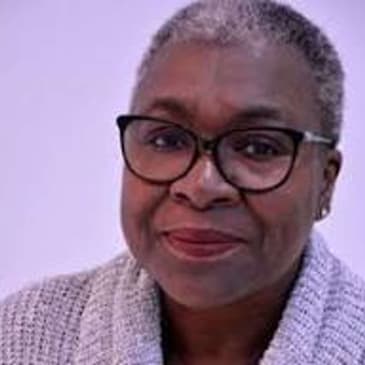
What happens when a young girl from London, England, finds herself in the starkly different landscape of Canada at the start of high school? Marcia Smellie B.Ed. transports us to her early days of assimilation, tackling the Canadian winter, the shift from an all-girls school with uniforms to a co-ed school without them, and the challenge of fitting in with a Cockney accent. She paints a vivid picture of the isolation she felt as the only Black student in her grade and how she began to carve out a space for herself, making friends and adapting to her new surroundings. Marcia’s tale is one of resilience and the strength required to navigate a new country as a young immigrant.
Marcia’s journey didn't stop there. She shattered glass ceilings by becoming a pioneering Black teacher in her high school. The curiosity and reactions from students and parents were just the starting point. Marcia made it her mission to steer students away from limiting stereotypes, encouraging them to see the world of opportunities beyond sports and entertainment roles. Her story underscores the importance of representation and mentorship, revealing how the support of other Black educators and community leaders helped her impact the lives of many young people. Marcia’s collaborative efforts have left an indelible mark on her school and community.
Beyond the classroom, Marcia's community involvement is equally inspiring. She has been a cornerstone at a children's mental health treatment center and has played pivotal roles in the Multicultural Center and the Crime Prevention Council. Her advocacy led to the creation of Run for Office Waterloo Region, which successfully guided diverse candidates into local government roles. Through Marcia's narrative, we see the power of using one’s voice to address community-specific issues and the critical need for Black voices in political arenas. Don't miss this enriching conversation with Marcia Smellie, who exemplifies the spirit of community and advocacy.
[00:00:00] Ellington Brown: Welcome to SpeakUP! International with Rita Burke and Elton Brown!
[00:00:16] Rita Burke: True to its name, SpeakUP! International do the rounds of countries. Last week, we spoke to people in several states in the United States, and today we're back in Canada. As a matter of fact, we're in Kitchener. We're speaking with Marcia Smellie.
Who was born in London, England and came to Canada with her family at the beginning of high school. Marcia attended TMU for her undergraduate degree and also obtained her teacher's degree from the University of Toronto. She taught for many years and became the department head at Galt Collegiate in Cambridge.
Marcia became involved in anti racist work in her community and joined the Congress of Black Women, Congress of Black Women's Organization, and she's been with that organization for over 30 years. There's so much more that I could share about Marcia Smellie, but she is going to tell us What she wants us to know as we progress through this conversation, welcome to SpeakUP! International Marcia!
[00:01:30] Marcia Smellie: Good morning and thank you very much for this wonderful invitation and I'm looking forward to our conversation this morning. Thank you!
[00:01:39] Ellington Brown: That makes two of us. The sun is shining! The weather is beautiful. We're doing this conversation. They say good things come in threes. So I'm going to whoever said that I'm holding him to it. And thank you for joining us today. When you moved to Canada at the beginning of high school, what challenges did you face?
[00:02:04] Marcia Smellie: Hmm. Well, I, I came to Canada, um, um, in the beginning of a December, uh, um, and, uh, I have to tell you, the climate here is very different than the one that I was used to in London, England, and I came to a place, um, I came by a ship. It was the last ship to leave England and it came up to St. Lawrence as far as New Brunswick and then you had to get on a train to come to Montreal and then Montreal to Toronto where we met my father.
So we came in the winter and that was quite the eye opener and I'd never seen that much snow in my life either. Yes, you get snow in England but not to the extent that we had here. And then. Um, going to high school in the January because we came in December and it was the holidays, um, or at least we had holidays until January when school started up.
And then school was very different than what I'd experienced in England. I'd gone to an all girls school, um, and we wore uniform. And I came here and it was a co ed and, uh, you didn't wear a uniform. And, um, so I started grade nine and, um, of course I had this English kind of cockney accent. And so needless to say, I didn't want to speak too much because the kids would turn around and laugh.
And, um, of course I spoke English just like they did or a different version of English to them. And of course I look different because all the kids in my class were white and I was black. Um, there were a few other black students in the high school, but they were in grades higher than me. So it looked like I was the only black in grade 9 at that school.
And it was an interesting experience because I was used to walking to school. This, to get to this high school, I had to get on a bus and take, you know, public transit and get there. You know, leave there and come back home. So I have to tell you, it was, uh, there were so many things that were different. Um, even though I understood what the people were saying to me, I think I was in a state of shock because things were very, very different.
And my younger sister, who was four years younger than me, she had to go to a local elementary school. And I think both of us were kind of in a bit of a fog for the first few months. So we didn't say much in school, either one of us. Um, needless to say, I think the teachers let my parents know both let the teachers know about my sister and me that they weren't too sure what was really happening with us because yes, we were sitting there, but we weren't really participating.
Okay. So I can imagine now. Um, now that I'm this educated teacher and had these nearly 30 years of experience teaching kids, I think I understand now what a lot of kids go through when their parents move them from one place to another. Um, and I, I would think it was incredibly compounded if you don't speak the same language, and the cultures are vastly different.
I can imagine the state of shock that they would be in, and how long that shock might last. So that's how it was for me. Did I make friends? Yes, slowly. I started to talk to people and people started to talk to me. But again, it was, it was quite a challenge. Um, and that, you know, I really only completed like the half of grade nine.
And, um, I was glad when the summer came and I didn't have to go there. I wasn't so sure I wanted to go back in September either. Um, but, um, that's just the way life is. And you, you kind of, as they say, you suck it up and you move forward right?
[00:05:45] Rita Burke: Fascinating story fascinating story!
[00:05:48] Marcia Smellie: It was not easy, but compared to some kids who I've met in my career, mine was relatively easy, um, But again, when you're the different kid and you come from a place where you've had a different set of routines and traditions, it does not make it easy at all.
And, and I have to tell you, it was quite the adjustment for my parents too, even though at the time I didn't notice it, right? Because I'm too busy wrapped up in my own, but it was a change for them as well. Well,
[00:06:18] Rita Burke: You spoke about a few things that caught my attention. As a matter of fact, everything you've said, Marcia, caught my attention.
First of all, you came to Canada on a ship from England. My husband followed the same path. He came here on a ship from England. And, uh, you talked about looking different in your school and sounding different. Tell us how you coped with that difference.
[00:06:49] Marcia Smellie: I think one, I remember one One thing that I, I, I guess, I, you know what, as I said, I think you, you, you find yourself on autopilot.
You do what you're supposed to do because you really don't want to bring too much attention to yourself. So, um, I think somebody asked, if I remember correctly, asked a girl in one of my classes to take me around so that I would learn, you know, where the cafeteria was and so forth and so on. And I remember that person, and she was indeed a very um, pleasant young woman. Her name was Maureen. And, um, we stayed friends, uh, you know, throughout a good number of years in high school. Um, and, um, she really helped, um, me manage. Okay. Um, and as I said, you know, uh, it was a challenge. Um, I remember history class, um, we were studying, I think it was World War I and, and whatnot.
Well, I'd already come. I just studied that in England. So it was like, wait a minute. Why are we doing this all over again? You know, and I knew the answers to all kinds of stuff and that kind of thing. Um, I remember in geography class, we're studying Africa. I come from a system where we'd already just done that.
So, in many cases, things were repeat for me. So, I wasn't really learning anything new the English class. I wasn't happy with. You know, sometimes you get this, this, this sense that people don't like you or, you know, like, why are you here kind of, and I got that sense from the teacher in the English class.
So I just kept my head down and did what I absolutely had to do. And that was it. Maureen and I were in a couple of classes together because you're in a rotation, right? So, um, but, um, and I don't know, I didn't take French in grade nine or did I? I can't remember. Um, yeah, um, I remember taking family studies and the family studies teacher was, was, was quite pleasant.
Um, yeah, it, it, it, I mean, it was a, it was a relatively new school. So it was a kind of spanking new compared to where I'd come from. Um, this was like, Whoa, this was amazing in terms of the facility and, um, how open it was and all of that kind of stuff. But again, it wasn't what I was used to. And in a way I missed what I was used to.
Um, and I think my sister did too. Um, you know, we didn't really talk too much about it. I think, you know, as I said, you're on autopilot, you're still kind of in a state of shock, I mean, to a new place. As a young child, and you just do what you're told to do. And, you know, I was that kind of kid. Anyway, you know, did what my parents told me to do and try not to be too much.
[00:09:35] Ellington Brown: You talked about the fact that you have problems making friends.
[00:09:40] Marcia Smellie: Yeah,
[00:09:41] Ellington Brown: You kept your head down.
[00:09:43] Marcia Smellie: Yeah
[00:09:43] Ellington Brown: But then, you did make friends,
[00:09:46] Marcia Smellie: Right it was one that
was given to me, right? It wasn't that it was of my choosing, but she was, she was an okay person. And, um, she told me a lot about her own family.
And, um, she didn't live that far from the school, so we could walk to her house and then actually, in fact, she invited me to her house and I met her parents and stuff like that. And, um, yeah, it was, it was an interesting kind of friendship, um, that I had with Maureen.
[00:10:13] Ellington Brown: Oh, that sounds, that sounds great. That sounds really great. So you had these experiences, you did not have a friend. Now, you have a friend and so we're going to move forward.
And talk about what happened after you received your undergraduate degree. And how were you able to take those experiences when you were younger and use them to help students of today.
[00:10:39] Marcia Smellie: Okay. Well, I'll tell you, we'll just back up a little bit when I was at TMU, which is what, which was Ryerson. Um, I had a unique experience. I joined the Ryerson Afro Caribbean Association. And so I managed to be around a lot of other people from the Caribbean and from Canada who are black. And that was an incredible experience.
Um. I, I'm not really a social butterfly. I started off being that way in grade nine, but by the time I got a little older, I had more friends and I was more outgoing. I knew what I knew how the lay of the land worked. So I just kind of jumped into what it was that I was interested in. But when I got to Ryerson, um, and with the Ryerson Afro Caribbean Association, better known as RACA, we, the conversations there about being black in Canada and being black in the world were really enlightening to me.
Okay, the things that we talked about, the meetings that we would have the social events that I would attend with others. And, um, 1 summer, we needed, we all needed employment and we had happened to have a man who was director of student services. His name was Tom Sosa, and he was originally from Trinidad.
And so. We felt we could approach Tom about creating an employment opportunity, uh, for ourselves using Ryerson's facility, which was often vacant over the summer and create. An opportunity for newly arrived Caribbean students, uh, to the Toronto district school board, um, because in our group, there were a whole group of people who knew all kinds of things going on in the community.
And we knew that the programming for newly arrived students, um, to Canada was, something that was important and being one myself, I was just like fly to fly paper to that whole idea. And so we approached the Toronto district school board with the help of Tom Sosa, and we applied for money to the federal government for money from the federal government, and then the money would channel through Ryerson to pay us and pay for the program.
That first summer. We were able to help 134 young people who are newly arrived to the Toronto area. We would even go as far as to meet them at subway stations. Where their parents would meet us, and we would bring them into downtown Toronto, to the Ryerson facility, and we would do our programming. There were two things that we did.
Number one, we did remediation in the morning, and the afternoons was full of fun, sports, and learning about Toronto. That is what made me want to become a teacher.
Sounds to me, Marcia, as if you started your advocacy at a very, very early age. And that is truly wonderful.
[00:13:33] Rita Burke: And then you became a teacher. Am I hearing then that you were the first Black teacher at that school? Then what was it like if that's the case?
[00:13:43] Marcia Smellie: Well Again, you know, like I think there's sometimes I think there's a path that's chosen for someone and I think I've just taken the path. Okay. Um, going to that high school was, uh, an eye opening experience.
I was the first, um, black teacher there. And, um, I, I used to keep my, my, my classroom door open and I noticed that all of the kids black or white or whatever color they were, they would always kind of take a peek. Uh, to see this new person and I remember my first parent teacher interviews, um, um, which was usually like around October, middle of October, maybe sometimes just before Thanksgiving or around Thanksgiving time and the lineup of parents that I had to come and see because maybe none of them, their, their children had gone home and told them that they have this black teacher and, um, they wanted to come and see her for themselves.
So, um, I was a bit of an oddity for the kids and, um, I remember, um, the look on some of the black kids face to see me there. I think it made them feel a little better. And I know I did speak to some of them, um, over time. Okay. And, um, especially. If I saw some of them doing what I thought was uhuh, you're, you're, you're border lining on doing some things that are not really gonna help you down the road, down down the road.
Um, and we, we don't need you to fall into some of the stereotypes because teaching has those people who, who, uh, you know. Who take in stereotypes and proceed to behave in certain ways, um, both the students and in the teaching profession. So, uh, wherever I could help students not fall into any traps, I would do that.
Whether it was before school after school, or during school, um, I, I would make sure that that was what I would do.
[00:15:44] Ellington Brown: Were you able, to see the benefits of the children that you were able to steer or put up guardrails so they wouldn't go flying off the cliff. Did you see, think how it benefited things?
[00:15:56] Marcia Smellie: Yeah, I did. I did see give, I did see a few can give.
[00:15:59] Ellington Brown: I did see a few Can give us an example. Can you give us an example?
[00:16:02] Marcia Smellie: Yeah. I, I, there was some kids in the school, um, prior to me being there. I think there was one young person who had applied to be on student council. Okay. And student council, you know, the leadership, student leadership of the school and stuff.
And so I think. You know, after I joined the school, we, we started to see more students who were of minority backgrounds apply to be on student and student leadership. So, I think the very fact that they see others in leadership positions, then they think that it's possible for them. And then you try to, you also, you know, try and nurture them as well through speaking to them and saying, hey, why not?
It's not just through sports that we could achieve, which is often the case. People are presuming that kids are going to play football or play, you know, soccer and basketball and all that kind of stuff. Well, no, I want kids to see that there's a full range of things that you can do and that you should try.
Right. And so that's how I would speak in my classes. And, um, anybody, you know, anytime there was like student leadership campaigns coming up. I would try and say, hey, have you thought about boom, boom, boom, give it a try kind of thing.
[00:17:13] Rita Burke: It sounds to me as if you were born with confidence in your DNA, you came here and you went to high school.
And yes, there were a few issues, but you managed, went on to university and you managed, and then you transitioned to becoming a teacher and you were the only black teacher.
[00:17:33] Marcia Smellie: Yeah.
[00:17:34] Rita Burke: What were your, what were your peers like?
[00:17:37] Marcia Smellie: Um, well, interestingly enough in the community where I found myself. I wasn't the only black teacher and, and somehow the other, when you're one of the few, you seek each other out.
And so there were a couple of other black teachers in the school board, not my school, who found out that I was there. I found out that they were there and we met in the community. And as a matter of fact, I was mentored by an incredibly, um, he was in the school system at least. Three or four years before me, um, God bless him.
He's no longer with us. He's gone now. Um, but an incredibly, um, bright and capable, uh, teacher, uh, trained in Jamaica, came to Canada, got some training and then, uh, became a teacher as well. And so did his wife and both of them worked in the same school system. Uh, originally, as I said, from Jamaica, just an incredibly brilliant, brilliant teacher.
Personable, um, God fearing kind of guy, and he was a great person to have as a mentor. The other person that I had the privilege of meeting was, uh, Rita, you know her, Miss Chloe Callender, who worked in the Catholic board, because I worked in the public board. And that was one of the brightest days of my life, to meet that person.
She has been a mentor ever since I had the pleasure of meeting her. And, um, in my role with the school board, The outside of the classroom as a consultant human resources officer, um, responsible for the sexual harassment policy and the race relations policy. It was great to know that in the, the adjoining board, the Catholic board, there was somebody else doing the same kind of work on behalf of that board.
So we did a lot of things together, especially that were student focused. Even though, um, working with teachers was slightly different because each board's mandate is different. Um, but wherever possible, because we knew the kids, no matter whether the Catholic or not, um, interact in the community. We tried to organize activities that would engage both groups of students.
And I think we were highly successful at that. And, uh, to this day, I know that we, we, we changed the lives of lots of young people.
[00:19:47] Ellington Brown: Congratulations.
[00:19:48] Marcia Smellie: Yeah, we did. And we know where some of them are today. So it's great. Yeah.
[00:19:53] Ellington Brown: That's wonderful. You were a human resources officer. Tell us a little bit about that, please.
[00:19:59] Marcia Smellie: Well, um, that role was created, um, I think at least six years before I got to it. But when I got to it, um, the policies from the Ministry of Education had slightly changed. Um, and, um, There was each board was expected to implement a race relations policy, which meant you needed to help the staff understand, you know, the changing demographics of this country.
And, I mean, it's been forever changed, even though it's only recently that they've, Acknowledge the fact that we've had this, uh, uh, an incredible group of people who were before this quote colonial settlers. So though that was the beginnings of that kind of work to help schools and students understand, um, that, you know, then there needs to be room at the table for everybody, not just certain people.
Um, and that the stories and the lives of all of the people who have made up Canada need to be acknowledged and everybody deserves to be treated in a just. Uh, way, so that's part of what my role was. Um, I, uh, really spent a lot of time working in the community, helping the various communities, um, come to the board or come to the school board table and sit and talk about the issues that they were confronting, or that their children were confronting in the schools.
So that was the beginning of, um, Community, uh, tables at school boards. I know Toronto board and York region board and so forth. I've been doing that before, but it was new for out here in Waterloo. Um, this wasn't something that, um, they really had that much experience dealing with. Yes. There was a multicultural organization in the community.
Um, Which, you know, I ultimately sat on the board of, um, but at the school board level, they weren't bringing together groups of people who are diverse so that they would learn what those issues were, what those challenges were for those new, especially the newly arrived immigrants, um, wait, maybe where English was not the first language and so forth.
So part of my role was to, was to bring some of that consciousness into the minds of administrators, principals, vice principals, and therefore, Ultimately affect their training because they needed to be aware of these things and how this would ultimately affect the climate of a school.
[00:22:25] Ellington Brown: Now you received all of this information, you were able to pull these people in from the community, get them talking to you, among themselves, which was, I'm very sure that was a positive experience. So once you had this information.
[00:22:42] Marcia Smellie: Yes.
[00:22:43] Ellington Brown: What did you do with this information , how were you able to come up with a checklist. Yes, more or less a checklist because you're saying okay, I'm getting from community Z said, they're having these problems over here and community H, they're having the kind of the similar, they're similar problems.
How do we. , pull all this information together to come up with one document that's going to support the community. So how were you able to do that?
All right. So two things. One is that when, when I found myself in this position, I also needed to make sure that I had, um, some background information, um, some additional training and so forth.
So the school board was, was, um, smart enough to make sure. That there were resources to send me on various kinds of training opportunities. So I did that. The other thing that I was, um, able to do partly because of who I knew from my TMU days and University of Toronto days and Western Ontario and all the different people that I knew.
I found out who some of the, the, the leading minds in this area were. And one of them was a woman by the name of Enid Lee. And Enid Lee, uh, worked for the Toronto district school board and she had a team of people that worked with her. And so I was able to convince my school board.
I'm sorry. What was Ms Lee's first name?
[00:24:12] Marcia Smellie: Her name was Enid Lee
[00:24:15] Ellington Brown: And how do you spell that?
[00:24:16] Marcia Smellie: E N I D Okay. That's her first name. And last name is Lee. And she's originally from Antigua. She is one of the most brilliant minds I've ever met in my life. Um, Enid doesn't live in Canada anymore, which is Canada's loss.
Uh, although she still maintains a place here and she comes and goes, uh, but she, in those days, Enid was one of the most brilliant minds in the area of, you know, anti racist education, anti black racism and so forth. And I had the privilege. Of, of maneuvering to get myself one on one training time with Enid and Enid, then put me on to other people.
And I went to other places. I went to training in Boston. I went all kinds of places during my time in that role with the school board. So, um, and then I also met. All of the other people in other school boards in southwestern Ontario, who've been given the similar mandate. And so we would spend time we create there was a network that was created known as amino.
Um, and actually I got to chair amino for two years, which was really amazing. And what I learned. Uh, you know, is, is, is what keeps me going today and keeps me still involved in this whole social justice, anti racism, anti Black racism. Uh, it, it was because of the seeds planted with people like Enid and in that network of people, uh, cause they were incredible advocates.
Um, met all kinds of people. Harry Lalla, who was with the Toronto board, um, um, and his, uh, his partner and, um, a number of different individuals, um, that have really, uh, helped me learn and Dr. Karl James, uh, I mean, phenomenal with, uh, I can still count him as one of my, my mentors and buddies. Um, and so you, you continue to learn and, and, and come to terms with some of the challenges.
So, much of what I was trying to implement in, in this school district. Along with Miss Chloe, trying to do it in her school board was not original work. What we were doing is, is learning from what the others were doing and implementing some ideas and strategies that had worked in other jurisdictions, and we were attempting to implement them here.
And, um, I'm glad we did. Uh, because as I said, I see the fruits of what we did with some of those young people who passed through our hands, let's put it that way, and where they are today,
[00:26:54] Rita Burke: You're glad you did.
[00:26:56] Marcia Smellie: It was the best time of my life.
[00:26:57] Rita Burke: I'm glad that you were able to work in collaboration with people like Enid.
Yes, Harry. Dr. James, you've done some marvelous work for education and in your community, but you also co authored some resource documents for the board.
[00:27:15] Marcia Smellie: Well, actually they weren't for, they weren't for the school board. They, um, I got the opportunity to do those two resource booklets. They were done for the Ontario Secondary School Teachers Federation.
Because back in those days, they would hire. Teachers during the summer break, um, to focus on areas, curriculum, resource areas to support a classroom teacher. So that's what I did. I worked with a couple of other teachers, one to do a book about nutrition, because that had been one of my areas while I was at Ryerson.
And then the other one, which was one discrimination on human rights and so forth and so on, because. One of the things that we knew back then that there were very little resources. Remember, this is before the Internet, um, uh, was available to teachers, uh, in a big way and to students. Um, so teachers needed relatively new resources to keep them up to date and to support what they were doing in the classroom.
So that's what I volunteered to do. One summer I did one on nutrition. for having me. And eating disorders, and then the few summers later, I did the 1 about human rights and discrimination. So I just volunteered to bring together resources, not necessarily anything. You know that I, I created, I just called a whole bunch of things that I felt were relevant.
And that would be useful to a classroom teacher and gave them some strategies about how to use them. And I'm not sure if OSCF still does that, but I would imagine that they do it. You know, maybe they don't produce the booklets anymore, but they put the information online. But again, they're still encouraging educators to share what resources and expertise they have with their peers.
So that's what I did. And it was a really good learning experience. Yeah.
[00:29:08] Ellington Brown: You are a collaborator , without a doubt.
[00:29:11] Marcia Smellie: Yeah.
[00:29:11] Ellington Brown: And you dealt with a lot of communities and, Interfaith groups. Can you tell us a little bit about your tenure at WRDSB? And could you start by saying what that acronym means?
[00:29:27] Marcia Smellie: Well, it stands for the Waterloo Region District School Board. So that's what brought me to this region in 1982, which is when I started here, being the first black teacher at Kitchener Waterloo Collegiate, which is the old, one of the oldest high schools in the region. Um, and so it's a board back then, Um, it was, you know, it probably had 50 something thousand kids.
Um, now I'm sure it's got, you know, maybe 80 or 90, 000 kids and, um. Has a whole lot of schools and a whole lot of staff. It's probably the largest organization in the region. Um, it's a public school board. So it has a public mandate to serve all of the different groups that are here. And of course, we have a Catholic school board, and we have a public French school board and a Catholic French school boards, we have four of them, plus a whole lot of private schools in the region.
Waterloo region is one of the fastest growing areas. In the country, um, um, we have, uh, two large universities, one called the Waterloo University, which is probably the MIT of the north. Then we have Wilfrid Laurier, uh, which is a humanity and arts. And business university, and we also have kind of stoker college.
So this region is a hub for a lot of international students. A lot of, of, of, uh, people from very backgrounds. Um, and as I said, it's a very, very fast growing community. So the schools are. You know, there's not a year goes by that they don't opening a public school, um, and the Catholic school system is a little smaller, but I would say for the last five years, the school board has been opening schools.
So we elementary schools at the very least. So it's a very fast growing area. Um, and, um, about 100 kilometers outside of Metro. So, a lot of people land initially in Toronto, and then they have to, you know, decide where else they're going to go if they can't find a spot in Toronto or can't find a job. And this is 1 of the areas that people come to.
So, as I said, it's an area that's become increasingly diverse. And now we are seeing far more. Uh, diverse teachers here. Thank goodness. And, and, and several more black teachers, probably not as many as I'd like to see. Um, but, um, again, uh, the teaching profession has, um, I think always struggled to bring in, uh, black teachers.
[00:32:01] Ellington Brown: What do you think we need in order to bring more people, black people, for that matter, people that look or represent the individuals in the community. How do we get more of those people to go to Waterloo to live in the communities and teach the children that are going to these schools.
We've talked to his first name is Jawad. And I know that he is very instrumental right now in terms of dealing with Waterloo's challenges. I'm asking you, what do you think needs to be done? Handled in order to have more minorities teaching in Waterloo?
[00:32:50] Marcia Smellie: Well, we know that, um, the, the teaching profession, right?
You know, it, it, it has pretty, pretty strict guardrails in place. In terms of who gets in and who doesn't get in and what you have to have and so forth and so on. So now, if you want to become a teacher in Ontario, you need to have a master's degree. Whereas before you didn't, you need to have an honors degree and do one year of teacher training.
Well, now it's two years of teacher training. So that in itself, you know, the rigors of trying to get an honors degree, then To go on and do a master's degree, um, is, is indeed, uh, can be a bit of a challenge. Not only, um, in terms of, um, you know, if that you, you kind of have to decide that's the destination that you want.
Um, and, and if you are, then you have to be prepared to put in those six years, alright, in order to get it. Now, that's not necessarily easy for some individuals. To, to, to, to see that that's the goal that they want. And to be perfectly honest, I think the best people to be in a classroom are those who genuinely wanted to be there.
That was their destination. Teaching should not be a second. Vocation or a second choice, in my opinion, because the people who do the best in the classroom are those who want to be there. It's not just knowing your subject area. It's genuinely wanting to be with the children, whether they're the little ones, the in between ones or the big ones.
You genuinely need to want to be there. Because that's. To me, kids know the difference between those who are there because it's a job and those who are there because they love it. Okay, they know that they can tell the difference no matter what level kid you're talking to, whether that's a child with special needs, they all know.
The real ones versus the ones who are only there to get a paycheck. So to me, that's number one. We need to develop in our communities, whether, you know, no matter what community it is, the black community, you know, the Asian community or whatever. We need to develop, uh, those kids who really seem to have an interest in being with other children or working with them.
We need to nurture that. And sometimes that happens as early as being in elementary school, um, you know, encouraging kids to help other kids, and then seeing them take that kind of leadership and nurturing that. So we as a community need to do that, because we can't wait on quote the systems to do it, because they may not, again, they've got their own baggage.
Okay. You know, they've got their own stereotypes and, and borders that they put around people and boxes that they put around people. So we have to help ourselves by helping those young people see that this is a viable, uh, career. And I have to tell you, I didn't, yes, that Ryerson experience helped me, but the people that my parents exposed me to also helped me to understand that teaching was a viable career and a, and a meaningful career.
One that you could. Do something that made a difference and you could also take care of yourself because it paid for you to create a good standard of living. So I learned that early and I just reconfirmed that later on. So I think it has a lot to do with what we, how we expose our kids to certain things.
And I'm all for making sure that kids get as many opportunities as they can to learn from people who are not necessarily in their family sphere. Um, sometimes you have to take your kids outside of what you know. Um, and God bless my, both my parents who did not complete high school knew the power of education.
Because they had friends who had gone beyond high school for whatever reason. Um, but I mean, that's a whole other immigrant story, uh, that I could tell you about for England. Because, uh, the Caribbean community in England was phenomenal in terms of how they helped each other to survive. And, um, my parents were part of that because they went to England in 1950.
Okay.
[00:36:54] Rita Burke: We're speaking with, we're speaking with Marcia Smellie, who is currently in Kitchener, has been an educator and a trailblazer for the community. I want you to share with our listeners some of the community work. You've alluded to it kind of indirectly that you've been involved with since you've been in that neighborhood.
Okay. Thank you.
[00:37:21] Marcia Smellie: Well, you know, um, as I said, I, I, I became a bit of a busy body because I wanted to know how things worked here. And, um, so, yes, I was involved in the school and yes, I did in extracurricular things with the school, but I also was a part of a church community here. And, um. I had an incredible mentor in my school.
The woman who was my department head was a very, um, outgoing kind of person. And she knew that I didn't know very many people here. Um, and until I met Vincent and Chloe and various others in the community, so she would invite me to go with her to various things. So, she was involved in certain things, so I went along with her and then eventually I realized I could do some of these things by myself and off I went.
So, I joined, um, I became involved in various community organizations, one, which was, um, a children's mental health treatment center. Um, uh, while I was in that role at the school board again, because I was out checking out the community, I managed to, uh, come upon this place called, um, It's called Notre Dame, which was a name given to it by an order of nuns and a Catholic priest, but they ran a children's mental health treatment center.
And I managed to join the board of that organization and stay on it for about 12 years. And through that involvement, it took me out into the rest of the community. And I began to see how the levers Work in a community, both at the municipal level, um, and at the regional level, because we have 2 tiered government here.
Uh, we have a city government, uh, a township government and we also have regional government. So that helped me understand how much of that work. So I volunteered for a number of other organizations. I sat on the board of the multicultural center. Um. I did a time with the Crime Prevention Council and, you know, again, doing a number of different things because I had the time and I had the interest, um, again, when I found the Congress, which I found early, um, we started to work.
Miss Chloe was the president of the Congress when I joined, and we did a number of things we did some fundraisers in the community. Um, and we began to realize that there were a lot of families here that needed help. Um, they needed to help. Advocating for themselves and for their children at the school board level and in the community sometimes because indeed, unfortunately, some kids, um, may have found themselves in, in, in, uh, trouble with police or otherwise.
And so we had to try and help those families with those issues as well. So being out there has been part of what I've done since I got here. And, um, When I retired, um, I retired, both my parents came to live with me, uh, a few years before I retired and ultimately both of them are gone now. Um, but they came to live with me because, um, you know, they liked the community that I'd made my home in.
And so they came to live with me. And, um, so I had to kind of slow down a little bit in terms of community involvement, um, when they came to live with me, because they had some health issues and so forth. Um, Uh, but I still kept the Congress and a few other things and, um, And again, once you know certain people here, you get invited to things.
So you continue to go and you keep your ear open and your eyes open to what's happening. And so that's how, um, I have gotten to know a lot of things in the community. And so, um, in 2020, when we had the shutdown, um, And we knew, um, that there was going to be an election shortly after, um, at the municipal level, at least, that a group of us sat and chatted online, just like we're doing now and said, you know what, we need to do something about this because guess what, we don't see any people like us on this, you know, the municipal level government and the regional government, how come, you know, like, we have to do something about that.
So we started a conversation online and it turned out there were some people in our community who were thinking the same thing, but we just hadn't talked to one another. So it was a good thing. We started to talk and a good thing that we kind of connected some of those people who are interested with other somebodies.
And sure enough, by the time we had the municipal election. In 2022, we had a number of people run at the city level and at the regional level. There was one particular young lady. Her name is calling James and Colleen had worked at both the city level government and at the regional level. So, when she decided to run for regional council, okay, she knew exactly what she had to do! She had been doing her homework slowly, but surely quietly and consistently. So when she decided to run a campaign, boy, she knocked the socks off of some of the other candidates running in the city of Kitchener. And she got to be regional council counselor, excuse me, for the city of Kitchener because there are, uh, Um, two of them and she's one of them.
And, um, we also had a colleague of mine. She ran to be school board trustee. She was a former teacher and elementary principal. And again, I joined her team. I'd never been a part of a campaign team before. Yes, I talked to people and whatnot, but actually being on a campaign team and having to be organized and systematic about it.
It was an incredible learning experience. She to her seat. And then we had a young Nigerian young man who ran for city council in the city of Kitchener, another man run in the city of Waterloo for for for city council as well. So now we have a number of we people in those rooms. And we are telling our community by our organization called run for office, Waterloo Region we're in a bit of a down phase right now, but we'll pick it back up because, you know, next year is another election, but at the federal level, um, and, um, we need to talk to people about, that we need to make sure that we're talking about the issues that affect us, not just affect the mainstream, but also affect us as, as black people.
Because there are unique challenges that we have we know now that people are starting to collect statistics. You know, although we know statistics can be used to do all kinds of things. But we can also use some of those statistics to advocate for ourselves. And that's what to try to do. And encourage people to, to yes, to vote, but also to learn to speak up, not to stay quiet.
When you see things that are not right, or you see things that are, uh, that you have a strong feeling about that, you need to use your voice, um, whether it's to vote or to do otherwise. I think. That's that's really why we started run for office, um, is to have the conversation, um, and to encourage people who are interested in running for office to run for office.
So that's a, that's just a part of what, you know, I'm, I'm staying involved with that kinds of things. I'm saying about the Congress, um, because we've been doing some good work, scholarships and things like that over the last, uh, 20 something years. So I, now that I'm retired and both my parents are gone, I have more time and I'm still interested in keeping my ear and my nose in what goes on in the community, you know,
[00:45:05] Ellington Brown: You have talked about so many milestones in your life. We're coming near the end of this conversation. So, is there something that you would like to talk about that maybe we had not asked you?
[00:45:24] Marcia Smellie: Well, I think when I, if there's anything, um, you know, I'm, I'm one of those people I did not did not have a family of my own. And I'm blessed with having, you know, niece and nephew and grandnephews and so forth.
Um, And I live in a community where I think. Um, if, if you, if you live in a place, you need to find out what happens there and not only how it's impacting you, but possibly others. So now that I'm at this, you know, I'm a senior citizen. Now, I'm also part of a seniors network, right? And looking at some of the things that affect people as they grow older, whether that's healthcare, that's transportation or that's housing, those three come to mind.
So I think we have an obligation if we, you know, if we can. And you're inclined, we need to keep our eye on the ball, whether it's affecting our own lives or those around us. Um, and so that's all I'm asking people to do is if we were to do that more often, right? Um, and to use our voice. I think that we'd be a lot further forward than we currently are, you know, um, and, and I, I see things happening.
Um, and, you know, I keep myself abreast of what's going on in, you know, the mainstream media at least. And, um, you know, it's some of it's really disheartening what I see happening. Uh, what I see happening to the black community. I mean, you know, I I'm saddened by the fact that Cher magazine is gone, you know.
Um, who's gonna, who's gonna step forward and replace that. I'm not saying
[00:47:05] Rita Burke: I hear you,
[00:47:06] Marcia Smellie: You know, we need more ways to communicate with one another, not less. Um, and so if there's anything that you could do in that regard, then, um, I think, you know, by doing what you're doing is helpful. Um, and, and, uh, we need, we all need to do that.
[00:47:24] Rita Burke: We talked about speaking up and using your voice and that came through that can came through consistently during this conversation, but in order to speak up and to use your voice, I'm sure you would agree with me that you need to be confident. And there's no question that from the beginning of this conversation, this interview, you sound to me as if you're a person who's confident.
How does one gain that gain that confidence so that ultimately they could speak up and use their voice?
[00:47:52] Marcia Smellie: Well, you need, well, I, I, I think I have to thank two people who are gone. Those my mother and father, because they always said to me, you know what , it's okay to speak up, do your homework before you speak up, make sure you've got some facts on which to base, whatever it is that you're going to say.
Right? Um, and you know, be prepared to be humble because somebody may know more than you do. And that's fine. Um, you don't need to know everything, but what you do need to know is that, you know, get, get some, at least some, some data before you proceed to talk about something. Um, and, and, um, And do it with some conviction.
Um, and, and, um, the other thing is surround yourself with people who are positive. Don't surround yourself with people who are going to drag you down or not, or you're not going to learn anything from. I mean, so I have to tell you that my Ryerson days taught me, uh, about being around people who are incredibly bright and passionate.
Um, we just lost one of my, uh, one of my all time mentors, Roger McTeer, uh, one of the most brilliant people I, again, I have, I had this privilege of meeting these brilliant people, you know, Enid Lee, Roger McTeer, uh, Carl James, whoa, you know, so you, you need to, don't be around people who are not, you're not going to gain or learn anything from, or you can't give anything to, you know, um, it doesn't, doesn't make sense.
Um, this life is short as far as we know. Right. And, uh,
[00:49:20] Rita Burke: There's no question, Marcia, that our community, our community has produced some wonderful, amazing, brilliant, hardworking, committed people.
[00:49:32] Marcia Smellie: Right.
[00:49:32] Rita Burke: Some of them, some of them have passed on. . But the gems that they've, the gems they've left behind. With us, we can take those concepts, those ideas, those notions and that hard work and continue, continue to run with the baton.
And I see you as one of those people that's continuing that. And I certainly appreciate everything that you've done and that you continue to do really appreciate that. Thank you.
Thank you very much. I appreciate this opportunity to share. Um, and if it can motivate someone to, to do likewise and better, then that's great.
I thank you again. And, um, I look forward to seeing you soon. Rita
[00:50:11] Ellington Brown: Sooner than later!
[00:50:13] Marcia Smellie: Yes.
[00:50:13] Ellington Brown: She's always running from one part of the. city to the other, it's hard to keep up with her. We've talked about a lot of things within 45 minutes, believe it or not!
We talked about you moving to Canada. We talked a little bit about your, , journey towards getting your undergraduate degree and then the additional , sheep skins that you were able to acquire, which allowed you to interact with a lot of organizations, including the Waterloo Region District School board.
You also were dealing with the Ontario Secondary School Teachers Federation. You also got to, , deal with Anti Racism Multicultural Educators Network of Ontario. You talked a little bit about that and , your life's work has been I'm going to steal a word from Rita. Fascinating.
We really hope that you continue doing the good work because it is definitely needed.
And in the future, we're hoping that you'll come back to us with a new chapter in your life to inspire individuals to do the good work!
[00:51:33] Marcia Smellie: No problem. Uh, I look forward to another invitation at another date and I also look forward to listening. So, thank you very much. And, uh, I hope you enjoy the rest of the day, and I guess we're done.
[00:51:46] Ellington Brown: Thank you for listening to SpeakUP! International! If you wish to contact Ms. Marcia Smellie please be prepared to submit your name, your email address, and the reason why you wish to contact Ms. Smellie. To linkedin.com/in/marcia-smellie-018757263.
Are you interested in the opportunity to be interviewed and have your cause promoted by SpeakUP! International? We invite you to connect to us by sending a message that includes your name, company or organization name, the valuable service we offered to your community, and your email address to info@speakkuppodcast.ca.
Worried about your confidence as an interviewee, don't fret! SpeakUP! International can provides you with the necessary training. So you shine during an interview! To receive training information and a 10% discount, about the SpeakUP! International's podcast interviewee training program, email us at info@speakuppodcast.ca. You can also reach us using Facebook, Instagram, Twitter, and LinkedIn.
To connect to our podcast use Spotify or your favorite podcast platform and search for SpeakUP! International. You can also find our podcast using our web address, www.speakuppodcast.ca. Our logo has the woman with our finger pointing up mouth open. Speaking UP!
By joining Patreon, we can offer you an exclusive opportunity to become an integral part of the continued success of our podcast. Your're financial support will enable us to cover the cost associated with producing high quality content. Such as equipment upgrades, hosting feeds and professional editing services.
As a member of our patreon You will gain access to a range of exciting benefits. We are working on providing you with early access to new episodes and the opportunities to suggest topics or guests for future episodes. Your contribution will not only sustain the continuity of the podcast. But also allow us to enhance the overall listening experience. For all of our dedicated followers. Help us help you. www.patrion.com/speakupinternational. At SpeakUP! International, we aim to inspire to inform, and to educate.