
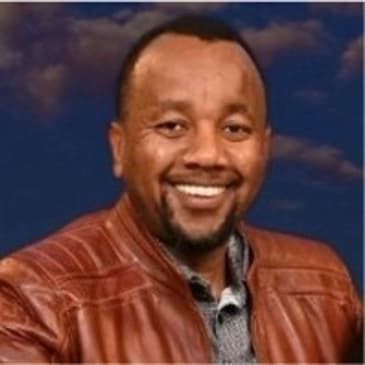
Discover the inspiring journey of Dr. Dionisio Nyaga Ph. D., an assistant professor at Algoma University, as he navigates the complexities of social justice education and tackles anti-Black racism head-on. Dr. Nyaga opens up about his personal encounters with various forms of oppression and the transformative power of community involvement. We also shed light on the historical injustices faced by Indigenous communities, particularly the harrowing legacy of residential schools, and the indispensable role of social workers in addressing these longstanding issues.
Unearth the hidden depths of ethical and moral philosophy through the lens of spirituality, particularly the concept of the third eye. Dr. Nyaga illuminates how spiritual insight can transcend physical perception, offering a profound understanding of justice and oppression within Black communities. This segment challenges the superficial application of equity, diversity, and inclusion (EDI) in predominantly white academic settings, advocating for a more culturally aware approach that genuinely values the unique experiences of Black individuals.
Lastly, we navigate the intricate landscape of being a Black voice in social justice and mental health, exploring the historical and ongoing trauma faced by Black communities in Canada. Dr. Nyaga critiques institutional approaches that often do more harm than good and underscores the importance of culturally informed and justice-oriented research methodologies. Through this compelling discussion, we delve into the potential of research as a tool for community building and the necessity of remembering historical injustices to work towards substantive change. Join us for an insightful and thought-provoking conversation that underscores the resilience and strength of Black communities.
Some of what we talked about are based on the three volumes, Reimaging Mental Health and Addiction under Covid-19 Pandemic volumes 1,2, and 3. The Covid-19 Pandemic Mental Health and Colonialism, which are coming out of the International Conference with the Springer publisher.
Website: https://www.dionisionyaga.ca/
LinkedIn: https://ca.linkedin.com/in/dionisio-nyaga-ph-d-48428331
Academia: https://algomau.academia.edu/DionisioNyaga
[00:00:00] Ellington Brown: Welcome to SpeakUP! International with Rita Burke and Elton Brown!
[00:00:11] Rita Burke: Well, we have been scouring the globe with our interviews. The last few interviews, we had conversations with people primarily in the States. But this show is called SpeakUP! International and so we expect to speak with people from everywhere!
Today, we're back home in Canada with Dr. Dionisio Nyaga, who has a Ph. D. in social justice education. He's also a, an assistant professor at Algoma University School of Social Work. Dr. Nyaga , He has co edited a book on ethical responsibilities and duties, researcher dubbed the critical research methodologies.
He's also a leading voice in mental health and addiction. There's so much more that I can tell you about Dr. Nyaga , but as you know, in SpeakUP! International, we prefer for guests to tell their own stories. And so I welcome you today, Dr. Nyaga , to SpeakUP! International.
[00:01:24] Dr. Dionisio Nyaga: Thank you so much, Rita and Elton for inviting me, uh, to this discussion.
I'm just so excited and feel honoured to be part of this. Uh, first of all, I think I would like to, Give thanks for, you know, those voices behind these, uh, uh, behind this conversation. Uh, they may not be present, but, uh, present in front of us, but I know there's a lot that has gone on for this to happen.
Thank you so much.
[00:01:49] Ellington Brown: Should always give thanks to those who have taken us to where we are today. So what inspired you, good doctor to pursue social justice education at the University of Toronto?
[00:02:07] Dr. Dionisio Nyaga: I think one other key thing about the focus on social justice is because we live in a society that, um, you know, keep repeating, uh, the kind of oppressions that.
You know, that appears so unique. And as a black man, I think I have faced multiple forms of, uh, you know, oppression and to be very clear, uh, question about anti black racism, anti African racism is so prevalent to people who look like me, and therefore, my work has always been to make sure that I participate actively.
Uh, in community work to make sure that, uh, my community and those who are connected to my community are, uh, you know, are taken care of, uh, but I also get to understand that it's not just about taking care of people. It's also about allowing people to speak. So social justice is about speaking out. I see your, your work is about speaking out, so that's why we, I would assume we get into connection.
So question about anti-Black racism is so prevalent. Uh, questions about, uh, uh, issues of sexism, of homophobia, uh, issues of, uh, disability are, are so, so-called to my, my, my, my, my wife. So I focus entirely on, uh, you know, justice work. Uh, and justice is a very interesting term. It's not just a, a singular term the way people speak about.
Justice looks different for people who are Black, and looks different for people who are Asians. Looks so different for people who are, uh, the two LGBT plus communities. And yet there is something that connects us. That is unique. The fact that we are human beings.
[00:04:07] Rita Burke: Dr. Nyaga , when I went to university, there was no such thing as a degree in social justice.
And that was a mighty long time ago. However, I'm wondering how could you encourage students or why should a university student study social justice?
[00:04:34] Dr. Dionisio Nyaga: I think one of the key thing is, uh, in the current framework, uh, I always say that the university is, uh, covered with the blood of marginalized communities.
Where I live right now and where I teach at Algoma University, it's, it's, um, it's a former residential school. And this is where you find that so many children died. And it was a work of, uh, you know, a system that believed that it could civilize people and in the process of civilizing them, so many people died, right?
So many communities died. So at face value, you see children died, indigenous children died. But at a broader context, I still remember a grandmother, an indigenous grandmother telling us that the death, the picking up of those children from their homes and the death of those children denied them the role of a grandmother.
So who took up that role? It's we social workers. I teach social work, and I always, uh, like to, uh, encourage students not just to, uh, be social workers, you know. Everybody can be a social worker, right? Uh, but it's a question about how do you call out essence of injustices? And those injustices most of the time, they're historical, but it's interesting that majority of time, uh, we social workers and those who train social workers, uh, we forget, we are so easy to forget, uh, those histories of, you know, colonization, for example.
Uh, and therefore For me, the question about being, um, a practitioner is the fact that we should remember. So it's a question about remembering. Remembering being a cognitive process, but also remembering being this aspect of bringing, the act of bringing people together. So it's a movement, right? You're bringing people together so that I know that I can't just help you, but I can work with others and you to bring forth a substantive change in our society.
So it's very, very important for students to recognize the fact that the issues we face today, you know, they are interlocked, they are intersected. And therefore, there's no way we can, we can bring justice, uh, in, uh, in, uh, as a singular individual. We will have to hold hands together and that holding hands together is about taking spaces, right?
Taking spaces, not for anything, but to bring justice together and that taking space means that I work with communities who are black, who are too LGBT. Um, because there's something that brings them together, and it's a question about, uh, being human and, uh, voicing, uh, you know, unique challenges as a group, right?
Yeah, I hope that helped to make sense.
[00:07:29] Ellington Brown: I agree with you, doctor, that holding hands is extremely important. One of the things that I've learned since interviewing a lot of people is the importance of leaving our silos. I think if we left our silos, even for a little while, what we accomplished in 10 years, if we come out of our silo, we could probably complete in 3.
Because it would be that giant push. It would be a greater sense of power. To get what we deserve from , the governments, including, , policy changes. So, how do you describe your role and responsibility as an assistant professor at the Algoma University School of Social Work?
[00:08:31] Dr. Dionisio Nyaga: Yeah, it's very interesting.
You're talking about silo, uh, Elton, and this is not the usual silo. This is a social prison. We get to be incarcerated. Even though we don't, we don't see like, you know, uh, you know, um, being tied, but there's, uh, there's a way in which we are incarcerated right from the point when we are born, the people who love us, they train us to be this and we are told we have to remain within those silos.
But for me, I don't look at them as just silo, but it's a question about the power, right? It's a question about control of populations, making sure that we are individualized, we stand alone. And therefore be produced to be human beings right to be human is a process of production. And for you to be produced, you have to be divided.
So it's like a long time use people used to say divide and conquer right and we live in that system. Uh, that divides to conquer, divides to rule, and it's, it's, it's, uh, it's, it's not just something that has started. It's, it's so historical, it's colonial, and it has been used over time, and even in the classroom, um, their system created to divide and rule, uh, systems like the way you evaluate students, uh, You know, system that make it, uh, that, uh, we, we give credence to the person who is leading and we devalue those who are behind.
And mostly those who are behind, um, uh, are left behind because the system is white and does not see them for who they are. It sees them as the black, uh, the woman, the two LGBT. Uh, and therefore that system is tailored very well to make sure that such populations are left behind. So it's a form of separation that is meant to give credence to to a white body.
And when I say a white body, I'm talking about a white male heterosexual body on the backs of those who are oppressed, among them black people. And therefore, as a professor, what I usually do is to make sure that whatever I'm teaching, give credence to the history of colonization and the ways in which a classroom becomes a space of incarceration.
For especially those students who are black or marginalized. And my role is, uh, to train students to be critical, to question their identity. Inside of the classroom and the ways in which that inside of a classroom acts as a microcosm of a very violent society out there. So I have to make sure that whatever they learn in the classroom helps to break boundary.
And that boundary is those, you know, the walls of a prison, right? To break the boundary so that we are not just discussing these things inside the classroom, but those things are heard by our community. And who does that? It's the students that we send out there who bring change into the community because they speak the truth.
We are living at a time when truth telling is so important, uh, but also reconciliation is so important. And when I talk about reconciliation, teaching and learning should be a question about reconciling those atrocities and histories of violence that have been meted on, uh, on different marginalized communities, more especially the black and indigenous communities.
So my role as a professor is to bring forth this conversation, as difficult as they may be, Um, they have to be discussed because truth telling is not easy, right? There are people who are not going to, uh, you know, believe what happened. And some of them, uh, they may have difficulties trying to imagine that that happened.
But that truth has to be told as difficult as it may be. That's why it's very important for any professor teaching in a school of social work to help students to remember. To remember cognitively that there, there is residential school, that there was, uh, there was slavery of black communities. Uh, that, uh, there, uh, you know, there is a 60 school.
Um, and that, that story has to be told in the classroom as political and difficult as it may be. That's the ethics of, uh, engaging with, um, the question of, uh, diversifying the classroom. So in a classroom, it's about calling out. Right. Calling out those histories of atrocities on, uh, on marginalized communities.
I hope I was able to give at least an overview of what I think about that.
[00:13:02] Rita Burke: That was a, that was a very amazing overview of that. And in your response to Elton's question, you talked about bringing forth those conversations. How are those conversations received initially?
[00:13:21] Dr. Dionisio Nyaga: It's difficult. It's difficult. Um, more especially for those students who have never heard about, uh, you know, slavery, uh, yeah, plantation slavery and how it manifests itself today.
It's difficult to speak to students about, uh, um, uh, about residential school. Um, I find that, uh, it's also difficult, uh, to have any conversation about those vi those forms of colonial violence in a classroom. But to say that it's difficult doesn't mean we can't talk about them. Uh, there's always a pushback, but if there's anything I think my grandma taught me is step by step, right? There are songs.
[00:14:02] Rita Burke: There's a song called that, you know,
[00:14:04] Dr. Dionisio Nyaga: Exactly! And to let you know, most, most of my classes, I start my class with songs. There's something about song, right? It brings that, uh, you know, energy that is not ready to accept this kind of history down. So I employ, most of my class, ask most of my students, they will tell you, they will be talking about that.
I start my class with songs because there's something about song that, you know, cools down, cools down the temper, right? Cools down the temper. And it's from that that I write with those songs. And make it easy for student to at least make sense of what I'm saying. Right. And I found that, of course, if whenever we talk about question about colonial history, there is no easy reception for that kind of conversation.
And yet the songs have enabled me to speak, uh, at a deeper, uh, deeper way about those issues of colonial histories and violence they've caused on our people.
[00:15:07] Ellington Brown: I have two questions.
[00:15:09] Dr. Dionisio Nyaga: Please.
[00:15:10] Ellington Brown: And one question is based on your response to Rita's last question, and that is the writing of songs.
[00:15:19] Dr. Dionisio Nyaga: Mm hmm.
[00:15:20] Ellington Brown: Do you write songs?
[00:15:21] Dr. Dionisio Nyaga: Mm hmm.
Actually, it's interesting, Elton. Um, I'll tell you what, um, songs, song does not necessarily have to be sung in a formal way, like the way it's supposed to be. I do have songs in my writings. If you read my book, most of my writing is very musical, very musical. Um, I pick up words and I play around with words.
I pick up words and, uh, because what I know is you and me, uh, we, uh, we exist words, we exist text. We are textual, right?
[00:16:02] Ellington Brown: Yes.
[00:16:02] Dr. Dionisio Nyaga: You, you can't be who you are if you're not a text. Text give you live. That's the reason why you are called Elton. That's why Rita is called Rita because that's a text and that name Rita is it's not just a name. It contains a level of, uh, you know, stories about Rita and the ancestry of Rita. It contains a long history about who Rita is that goes beyond the physical Rita. It's a spiritual, uh, term that brings life to Rita. That's the reason why Rita is known Rita, because Rita is a spiritual being.
And music for you to be able to, to, to, uh, you know, uh, make social justice, uh, work, right? Music has been used to raise up that spiritual being, so that we go beyond the physical body that we see. And therefore, even my writing, I try to write because I, I try to write in ways that are musical because I'm not just speaking to Rita as a person, I speak to Rita as that spiritual being, right?
And much of the work that I do is on, on psychic work. Psychic work is about opening the third eye. That's the spiritual eye. Because what is presented to us is so physical to the point where we can't see what is hidden when something is presented to us. So my work is to try and find that which is hidden.
How can I find that other than being musical and reaching out to the spirit? Right, Elton? I hope that makes sense.
[00:17:40] Ellington Brown: Yes, that makes, perfect sense.
[00:17:42] Dr. Dionisio Nyaga: Yeah.
[00:17:43] Rita Burke: It seems as if My apologies, Elton. Go for it.
My 2nd question is speaking now and in this light where, you know, individuals as spiritual, , beings and then opening up their eye that 3rd eye, dealing with those with the chakras.
[00:18:04] Dr. Dionisio Nyaga: Yeah, I call it back. I as well.
[00:18:06] Ellington Brown: How do you, integrate all of that, into your ethical and moral philosophy when you are doing your research? And teaching, I'm really interested in how do you wrap that spiritual part of it? Because most people are not, I don't want to say design, but they don't enter that sphere.
How do you wrap it, I guess, in such a way where you're able to deliver it and not have much push back?
That's a very interesting and, uh, a very interesting question, Elton, and I think I want to thank you for that question because when I talk about the that I, I'm talking about, uh, the I that is transcribed. It's always hidden, right? It has to be hidden from the physical world, uh, because its presence scares the hell out of, uh, out of, uh, the living human, right?
And therefore, my role is, uh, is, uh, is to, like you said, is to reach out to that eye. Again, like I said, When we talk about the psychic eye, right, the third eye, I like calling it the dark eye, and you know who is called the dark, right? It's that kind of eye that is never seen because it's in the dark, right?
And yet when we bring it up, it shall tell us what is being hidden when we are being told that there's justice. It helps us to open question about further, um, elaborating and demonstrating what is justice when it comes to black people. So when I talk about the third eye, I'm talking about the spiritual journey we have to take.
The third eye is the ethical eye. It's that eye that helps us to see that which is hidden when we are presented with physical, you know, with physical items that we can see and touch. And yet, they are spiritual things, right? They can't be what they are without the spirit, right? I always equip, uh, the question about, for example, Oxtail, right?
Whenever, for example, we talk about charity to black people, our people, it's always said, you know, if it's a food bank, give them Oxtails. There's that assumption that give them Oxtails, but the question they don't ask is, when you give them Oxtails, what do you think this, do you think this Oxtails is just Oxtails or this Oxtails comes from particular history and values and realities of people?
So to be psychic is to reach that aspect of asking questions of what's the history of this food? What is the reality about the way this food has come to be? How do we value this food, right? And what does it speak about the cultural aspect of black communities? So when I talk about the third eye is, uh, I always call it the dark eye.
It's about talking about my people. And I bring that into my classroom because it's important to bring, uh, these aspects of life, uh, into the conversation about the materials presented in a classroom. Because that classroom that we are in. is so white. So we are talking about whiteness in a classroom. So we are talking about white privilege in a classroom.
Why can't we talk about black people in the classroom? So when you talk about the third eye, it's about bringing the difficult conversation into the classroom. Of course, they call it difficult conversation. I wonder why it's called difficult conversation. It's a necessary conversation that must be present in the classroom when we talk about the ways in which.
Colonialism has decimated our community, more especially during COVID 19. We saw that. We saw that. We saw what happened to our community. And therefore, when I talk about the DACA, it's about, uh, you know, the ethical eye of asking beyond the two eyes presented to us. So you start seeing the differentiated, uh, aspect of ways in which people face oppression.
You don't just see oppression as singular, you start naming the particular oppression people are facing as much as those problems, those issues are intersected, but there's a way in which Rita will face a particular oppression so uniquely than I will face yet we are black people. So when you talk about the third eye is about that opening the eye.
To see the fact that I am connected to Rita, yes, but how we face issues is not the same, though it's similar. That's the question about the ethical eye.
[00:22:49] Rita Burke: Lots of similarities, lots of similarities, but yet lots of differences.
[00:22:53] Dr. Dionisio Nyaga: Yes, yes.
[00:22:55] Rita Burke: So my question goes back to the eye. This, this ethical eye.
[00:23:00] Dr. Dionisio Nyaga: Yeah.
[00:23:01] Rita Burke: Am I hearing you say then that this ethical eye sees beyond the obvious?
[00:23:09] Dr. Dionisio Nyaga: Perfect. You nailed it. Because the obvious lies to us. That's the reason why when we are given, when we are given, when we are told about, for example, the EDI, Equity, Diversity and Inclusion, be very careful, because that's charity from the white frame to black people. As a black person, I want to ask, yes, yes, give me that EDI, but be ready that I challenge EDI to start speaking my language.
To start speaking, uh, you know, my tongue to start speaking in black tongues, right? That's, that's, that's the ethical aspect of me questioning the presence of EDI in our community because it has to, it has to be open. Right. It has to be open for another form of, uh, you know, encounter because they who give us that idea is more of about we are being charitable to you.
So you should say thank you. No, I'm not saying thank you. I'm going to say this belonged to me, but you stole it. And I'm going to make sure that it speaks our time, because it was stolen. Well, I hope it makes sense.
[00:24:28] Ellington Brown: I've never heard, EDI from this perspective, which is definitely, opening my black eye, it's, it's interesting how. you brought that in and it was like a curve ball. So now you've opened up a can of worms here. Now I've got twice the number of questions I want to ask you about that.
But I'm going to get back to that later because there's other parts of you we would like our audience to know. And one of them happens to be about your critical reflective methodologies that you emphasize in work, and how do they impact your research?
[00:25:15] Dr. Dionisio Nyaga: Yeah, thank you, Elton. That's a very interesting, difficult question, let me say. Um, and it's a very broad based question, and it can take us like forever for us to be able to make sense of what I mean by being reflexive, uh, to be reflexive, you first of all have to pay attention to the question about self reflection, reflect on the self, reflect on the self is to ask who am I? I'm a black man.
Yes, I'm a black. Yes, I'm a man. And yet I'm black. So there's a sense in which because I'm a man, there's an assumption that I have privilege because of being man. And the other privilege gets to be taken away because I'm black. So I'm not a man in a world that is normal. Now, the question becomes, now that I know that I'm not a man enough because of my blackness, So what do I do as a social worker when I'm working with black community.
I have to recognize the fact that I can easily be carried away by this system because it's a colonizing system, and they can use me easily to decimate my own community, and then say, Oh, it's him who did that, not us.
[00:26:32] Rita Burke: Divide and conquer.
[00:26:33] Dr. Dionisio Nyaga: Exactly. So I have to be very careful when I do that. And I say this because most of the time there's an assumption that just because I'm black and African, I have the passport now to go and do research in my community.
And yet who I am is also the product of a very colonial system, the university, which has the blood of black people. So as a researcher, I have to be reflexive to recognize that fact that this same university, which is a research center, is actually implicated in the death of my community. And I'm not supposed to forget that even when I enter the space of knowledge production.
I have to always remember that. Remember, I have to bring that and my ancestors together to help me walk the journey of producing knowledge. So knowledge does not necessarily have to be me as an individual producing knowledge, which is a very Western perspective. Knowledge production has to be me with even people who are not present physically here.
They are the ones who are going to work with me. So knowledge production becomes a process of a journey. A journey that I have to take. It's a difficult journey because I'm gonna be tearing along the way as I open, you know, the graveyards,
[00:28:03] Rita Burke: As I know.
[00:28:04] Dr. Dionisio Nyaga: Yes.
[00:28:05] Rita Burke: Go ahead, please. Go ahead. Yeah.
[00:28:07] Dr. Dionisio Nyaga: As I walk this journey, it's gonna be difficult. And I'm gonna, I'll have to grieve. So grief becomes my part of giving an account of the loss of my people because research participated in that kind of violence against my people. So research for me as a black person cannot be just a simplified numerical form of engagement.
And it can't just be about just qualifying, you know, quantitative research, it can't just be about qualifying the number. If you look behind there, there is, uh, what I'm saying, one, two, three, uh, one, two, two, three, four. If you look at that, this is something that was given to me by one of my students when they heard me talk about numbers must grieve.
Because numbers are the reason why black community face these kind of atrocities. Numbers must grieve. And during COVID 19, people discussed, uh, we were talking about race based data. But what we wanted was to engage in that conversation is how can we make numbers agonize, cry, mourn, but mourning, when I talk about crying, I'm not talking about the tears coming out and you're measuring one tear, two tears, three, no, I'm talking about incommensurable form of grief.
Because for us, it's not easy to do research.
[00:29:43] Rita Burke: Does it ever go away? Does the grieving ever go away?
[00:29:48] Dr. Dionisio Nyaga: It's inconsolable mourning. You can't console it. It's ever present. It's continuous. And numbers cannot finalize that grief.
[00:30:03] Rita Burke: Even though we're smiling and laughing and we're being joyful, the grief is still lingering somewhere in our DNA.
[00:30:12] Dr. Dionisio Nyaga: Exactly. And we can't. The thing, the thing we live in a society that tries to commodify grief and trauma. And that's where my problem is because we live in a society of marketization, corporatization, financialization. So when somebody comes to us and says, Oh, black trauma, okay, I'm going to reconcile that black trauma.
And then they use, they employ the business, uh, you know, uh, the business, um, a balance sheet. To see us as liability and therefore they want to form us as assets and then sell us in the marketplace. Exactly what was done to our people then. We become now commodities, commodities of sale in the marketplace.
So for us as black people, we have to decommodify that, disassemble that kind of mentality. And the only thing and the only way you can be able to do that is to be psychic. You have to see beyond what is presented before your two eyes. I hope that makes sense.
[00:31:13] Rita Burke: Makes a lot of sense, sir. Makes a lot of sense.
[00:31:16] Ellington Brown: So, how do these psychic mythologies of care contribute to the research on African studies, Black masculinities, which is something that we talked about a little bit earlier, and spiritualities?
[00:31:36] Dr. Dionisio Nyaga: I think I'll, I'll, I'll go ahead and talk about what really is care. Rita, trust me, I may not have been there, but I'm very sure either your mom or your, your grandma may have told you about how we African people used to take care of ourselves a long time. Social work is not the only form of, uh, you know, a form of, uh, of, of, uh, the only form of, uh, of care.
Social working in the VCO is colonial. Right. And when I say social work is colonial, I'm saying for social work to be what it is today. Other forms of care had to be eradicated. We are talking about the mothers of those children who were apprehended and placed in a residential school, and they continue to be placed in the child welfare system.
And we're talking about even our own children, black children. There's high level of apprehension of black children in the current child welfare system. And therefore, When we talk about care, we have to be very, we have to be cognizant of the fact that care can also be violent. Somebody who comes to you to provide care, they could equally be violating you.
Somebody could come and give you food, but all what they want you to do is to shut up. Why? Because who wants to bite the hand that feeded them? So you have to shut up. So care could, in our two eyes, it may look a good thing, but in reality is a technology of trying to silence you so that you don't talk.
Am I saying that we should not provide care? Of course we can provide care, but that care has to be ethical care and ethical care means we hold hands. Are we going back together again? Yeah, we are going back to the question about justice in caregiving. We have to hold hands even with those people that we claim to help so that I don't have to have an helicopter dropping food to me.
But somebody can come down. We can sit down and eat the food that they brought to me. We share the food. So it's about reciprocity. And that's one of the African or Afrocentric perspective of care. We are not going to be individuals who stand in our silos. We are going to open or break away the walls. of prison and start holding hands and speaking to each other without being held by the system because the system today gives not because he wants to give to, uh, you know, give Uh, you know, uh, so that it, uh, you know, you, you, you alive, but it gives because it wants to incarcerate you.
[00:34:30] Rita Burke: That's a fascinating theory concept notion. We've been talking to Dr. Nyaga , who is a professor. in social work education. We've talked so far about equity, anti Black racism, we've talked about repris, repriscosity, I always say that word wrong, social justice. I still want to continue along those lines, but I want to shift just a little bit to mental health.
How did you become A leading voice on mental health, please.
[00:35:18] Dr. Dionisio Nyaga: That's very interesting. You say a leading voice, but I consider myself as an echo. Um, as you know, when I talk about when we talk about there's a privilege that comes to the voice, but I like being a part of the bigger echo echo echo is never. you know, you cannot numeralize echo. The issue with the voice is it has this aspect of being whitened for it to be represent people and I would rather consider myself as that echo that you know that echo that uh you must have heard about this is more uh uh, uh.
It's more of a theological, the voice that is shouting in the wilderness, you've heard about that, right? As a black person, I consider myself as that voice that is like shouting out there and sometimes that voice is all alone. It's all alone. It's just shouting and calling out. Right. Um, the thing with me is, like I said initially, I'm really focused on social justice issues.
And one of the things that I did recognize is the fact that I got into social work, not because of anything. Because of the issues, uh, our, our people are facing black community especially, and that, that the story of black community is very interesting, especially in the Canadian, uh, space. There's an assumption that can, Canada has never had issues of slavery.
There's that assumption. There's an assumption that, uh. Canada was a safe space for black people, but we know when black people arrive, they ask whose land is this? And they're told it's indigenous people. Right? Um, there's an assumption that there's, there's never been a colonization of, uh, of any, uh, you know, anti black racism in this, uh, world.
And as if we black people, we've never been here. Right? But we know that slavery, uh, slavery, uh, was alive and kicking. When we hear about, uh, slaves who, one of them, a lady who ran away from the master and was marked as having, uh, drop ammonia, a form of, uh, they said a form of, um, um, mental health that, uh, uh, uh, black people, runaway slaves would, uh, be marked with.
Right. So when I talk about black, when I talk about blackness, there's no way I'm going to forget the question about that kind of history. But also we cannot forget the fact that we as black people live with trauma, um, and trauma comes in, uh, in, in very interesting way. Being spotted by police and stopped.
There's, there's an effect of that, but that effect reminds you of what has happened prior to that encounter with the police officer. As a person who, uh, was born in Kenya, I, I would like to let you know that actually, uh, it's not clinical or whatever, but I had, uh, depression at one point in my life. And so I know how it feels as a black person to go through that, uh, because systems. are not meant to care for us. And when they look like they're caring for us, there's another formula of violence that is being operationalized in the process of care for Black people. And therefore, as a Black person, I always ask questions about how do we engage differently with these systems? And the only way is to voice out, right?
The only way is to voice out. What we face as a community. But these, these are the echo of me, me as an echo in terms of mental health and addiction came during and after COVID 19 when I started seeing students facing multiple, especially black student facing multiple forms of mental health and addiction.
I live in Sault Ste. Marie. Previously I was in, in, in, in, uh, Timmins. And the number of our, uh, members was rising when it came to mental health because at one point you have somebody who is affected or infected by COVID 19 and the numbers were rising for black people. Some of us were from Africa, uh, could not even bury, uh, honorably our dead because we have a way to do that.
And that had an effect on us. So trauma is all around us as black people. But it's made system systemic by these institution institutions of colonization. So as a person who is black, speaking about trauma, I'm speaking about mental health, and it has to be spoken in ways that are just but in ways that are psychic, so that we don't just see people coming to help us to resolve us as if we are mathematical equation to be solved.
But we work, especially students who are teach the work with black community means that are substantive. Right? In ways that are substantive. I think, I hope that makes sense.
[00:40:43] Rita Burke: It certainly makes sense, and I thank you for that. And before Elton comes with his next question, you, you, you, you said that they keep us out, but don't you think that sometimes we invite them to come in to do further damage?
Maybe without even realizing that we're doing it?
[00:41:06] Dr. Dionisio Nyaga: On the part of inviting them, I will tell you this, Who, that part you're saying we invite them. You should ask yourself, who is we?
Because colonization has gotten into us, we've internalized whiteness. So even when you say we invite them in, our physical eye looks like we are inviting them, but in reality, the, the, the note of invitation is theirs only that we are being used as instrument of that invitation. Is it making sense?
[00:41:43] Ellington Brown: Yes.
[00:41:44] Dr. Dionisio Nyaga: So it's technically speaking, it is not. We as indigenous, black indigenous, and I want it to be very clear, black people are also indigenous.
[00:41:55] Ellington Brown: Yes,
[00:41:56] Dr. Dionisio Nyaga: We come from indigenous lands. I come from Africa. I'm an indigenous from Africa. So when we say we are inviting them, the question now becomes, who is this we? You realize that actually it's your colonizer, but I don't want to walk in that or whatever colonizer colonized, right?
Because it's, it helps, it doesn't help us to, to see the blood part of between the colonizer and the colonizer. And that's where the psychic ethic or I is. That's why we need to pay attention to, for substantive change. So who is this we? We live, we live a very dual life. There is, there is the me who, who the we tries to control and finish it and drive it out of the living.
Right. But there's this we, which is very white, and that actually employs us as instrument to invite this white person to come into our land and encroach on our values and our cultures. So technically speaking, it's not us. It's them. And that's a form of violence.
[00:43:14] Ellington Brown: Yes. Subtle, but violent. Nevertheless. Okay. We're going to have a commercial break now. And that commercial break, basically. I want you to talk a little bit about the book that you co authored. Edited the Critical Research Methodologies, Ethics and Responsibilities. Can you tell us a little bit about that please?
[00:43:38] Dr. Dionisio Nyaga: Yeah, that's a very interesting, uh, a piece edited piece with Dr. Rose Ann Torres. Um, so. I've been teaching research for a couple of years, both, uh, here at Algoma University and, uh, uh, Toronto Metropolitan. I used to be a professor for research. And one of the conversations we kept asking ourselves is, How can we rethink research differently?
How can we think of research in ways that speak the language of Black people, uh, in their differentiated various ways? Right. And one of the things we realize is research is all about numbers because numbers are easily accepted by the policy. But we have asked ourselves, other than research being a number accepted by the policy, can research also be employed as a form of capacity building for black community capacity building and community development?
Right. And one of the things we realize is that for us to be able to do research in ways that. Uh, grounded on communities that are black. We will have to turn the you know, we will have to turn the face of numbers so that it can be able to imagine the pain of black people because the face of the number is it doesn't face us.
It faces the other side. So we'll have to push the number to face us and imagine us. That's where the psychic part of it is because if it's able to if the number is able to see my eyes. Right? My eyes become its mirror, the mirror that reinvents it to see the human in us as Black people. And what that means is the number has to imagine us differently.
They talk about the number understanding us. And when I say the number, I mean the researcher, that the researcher must be able to understand us, but we are not understandable beings. We are difficult beings. They can only understand us or imagine us. But not understand because the form of understanding the believe on is understanding to reduct the human in us so that they can sell us in the marketplace.
I always talk about the mincemeat, right? The mincemeat, you know, mincemeat grinder, right? So you have this big meat and then you put it in a in a grinder. Actually, it's summer now. So I hope this makes sense. And then you're grinding that meat. When you grind it, a couple of things happen. You have that, those small, small pieces of meat that are coming out.
Those are the ones that we say the number that is going to be taken by policymakers to make a policy that reflects black community. But those pieces, the minced meat is actually dead meat because what it's lacking, it's lacking is the water that comes out of that meat and the blood, the red part of it, which is the blood.
So it lacks the relationships. It lacks water, which is life. So we are having research that produces numbers, numbers that have no life that have no relationship in terms of blood. And those, those means meet are the ones now that are going to be used to change our life. That is manufactured form of what of, of, of, of operationalizing research for black community, because it's not going to bring any change to our community.
So I asked myself, so what can we do otherwise? One of the students told me, why don't we actually, uh, take this meat, miss meat. And mix it up with the water and the blood. And now students say, but the question is, why did we have to kill the animal? Why did we have to give the animal in the first place?
Right. So the different modalities of how we can do, uh, uh, black informed culturally informed, uh, justice, but the danger with this means meat is even when we return the water and whatever into the means meat, it's not substantive enough. But technically speaking, we social workers, that's what we do by being culturally competent and being culturally competent becomes a way of us reconciling the trauma we've caused on black and indigenous communities.
But that form of, uh, of reconciliation is market oriented. Is book based. So me as a social worker and a social work professor, I train students to go beyond the book to start giving an account, right, giving an account of the atrocities. And therefore asking the question, why did you have to kill the animal first in the first place?
I hope that makes sense. I know I was, uh, whatever, but I hope that makes sense.
[00:48:59] Rita Burke: And I would say, and I would say, why did you have to kill? And I leave it right there. Not just why did you have to kill the animal? Why did you have to kill? Go for it, Elton.
[00:49:10] Ellington Brown: Thank you! I know we're running out of time here. In fact, we ran out of time. I want to know your experiences as chairing the Algoma University International Conference. on mental health and addiction. I'd love to know what your experiences were during that period.
[00:49:32] Dr. Dionisio Nyaga: I think one, at a broader perspective, I think, uh, when we came to, uh, Algoma, it was difficult to sit back and watch, especially our community, you know, go through these COVID period and The number of mental health, uh, issues they continue to face.
And plus also, of course, the historical trauma black communities have faced. But when I talk about black, I'm talking also about, uh, the ways in which we are also connected to other forms of identities, like the two LGBT plus communities, those who live with disabilities. So black is not a singular term.
Uh, black and blackness is a, is, is, is a very, it's a various, uh, it's very various form of identity. It's not just singular, right? If we make it singular, then it becomes it's like we are not connected to other people. We have relationships and that's where the ethical part of it becomes a very important part of doing this work.
So one of the things that we did was Uh, one of the experiences I had is, uh, forming this committee and having diverse communities participate in it and, and part of the challenge was to invite people to come and present. Uh, remember, we were just around the period of COVID 19 and so people are still scared, uh, presenting, uh, and also the difficulties, technological difficulties as well, but also, um, uh, diverse voices, right? Diverse voices in terms of how they look at mental health and addiction. So one of the, uh, one of the biggest challenges to just, uh, you know, being present and listening to different stories that people are giving, uh, coming out of COVID 19. I think for me, it, it, it, it was, It turned to be not just a conference for, you know, mental engagement and all these things.
It turned to be a community form of grief as people spoke about some of the challenges that we're facing. And we, you know, crying together as a community and engaging, whether, whether it was, I mean, whether it was government stakeholders or community organizations, students, all of them coming together as a form of giving an account of what they faced during COVID 19.
I think that was the most difficult part of it, and, uh, but I, I, I want to, uh, thank all those who participated in, in the organization of the conference, because without them, I don't think we would have given that account. Uh, to reconsider how we think about mental health and addiction.
[00:52:19] Rita Burke: I have one last question for you, Professor Nyaga . And here it is. If you were to address a graduating class of teachers, educators, On social justice, what three gems would you want to leave with them, please?
[00:52:45] Dr. Dionisio Nyaga: I'll be very, uh, very, uh, um short,
I'll say always know that justice is justice when it's social. Social means holding hands. To hold hands is to say we have to take a space. So justice is about a movement of people who want to take space. in ways that are radically loving. So as a student who is graduating, you can't be afraid to hold hands with others for the sake of a just society.
[00:53:28] Ellington Brown: Good doctor! I want to say thank you so much for spending time with us this afternoon. You have definitely changed my perspective on many levels . I'll be thinking about this conversation for weeks on end! We talked about your experience as a social justice educator at U of T and talked about the responsibilities that you encountered as a professor at the Algoma University School of Social Work and how you integrate your philosophies and your teachings and that third eye, these very spiritual methodologies, how you roll them together and how you successfully present them to your impressionable students.
Which is absolutely amazing. I'm going to be walking around wide eyed for the next, , two weeks or so. And it was interesting to, hear another facet, which is you're co-editing the book for Critical Research Methodologies, Ethics and Responsibilities. I found that to be quite interesting!
And I love the question that Rita brought up about mental health and how all of this plays into, where we are today, Diversity , equity and inclusion. You have put a new spin on that because I never thought of it as, a white man's acronym. I always thought this was something that was done by, put together by us, not And so I'm hoping that everyone in our audience caught onto that because that is critical to our, progress.
I want to thank you very much doctor for spending time with us this afternoon and when you decide to write that book, that's in the back of your head. Please let us know because we would love to have a conversation with you again.
[00:55:44] Dr. Dionisio Nyaga: Thank you so much.
[00:55:46] Rita Burke: Thank you. Thank you. Thank you.
[00:55:47] Dr. Dionisio Nyaga: I just wanted to quick that there are three volumes, which are coming out of the international conference with the Springer publisher, so some of this conversation might be present in that
[00:55:56] Ellington Brown: Oh, good. In fact, we'll make sure that, information is relayed with your podcast. They'll be able to contact you to get that information through your, web address. There we go.
[00:56:09] Dr. Dionisio Nyaga: Thank you so much, Elton. and, , I hope to see you soon.
[00:56:13] Ellington Brown: Thank you for listening to SpeakUP! International! If you wish to contact Dr. Dionisio Nyaga Ph. D., please be prepared to submit your name, your email address, and the reason why you wish to contact Dr. Nyaga Ph. D.. to https://www.dionisionyaga.ca/.
Are you interested in the opportunity to be interviewed and have your cause promoted by SpeakUP! International? We invite you to connect to us by sending a message that includes your name, company, or organization name, the valuable service you offer to your community and your email address to info@speakuppodcast.ca.
Worried about your confidence as an interviewee? Don't fret! SpeakUP! International can provide you with the necessary training so shine during an interview! To receive training information and a 10% discount about the SpeakUP! International's podcast interviewee training program, email us at info@speakuppodcasts.ca. You can also reach us using Facebook, Instagram, Twitter, and LinkedIn. To connect to our podcasts, use Spotify or your favorite podcast platform and search for SpeakUP! International. You can also find our podcast using our web address, www.speakuppodcast.ca. Our logo has the woman with her finger pointing up mouth open speaking UP!
By joining Patreon, we can offer you an exclusive opportunity to become an integral part of the continuous success of our podcasts. Your financial support will enable us to cover the cost that's associated with producing high-quality content, such as equipment upgrades, hosting fees and professional editing services. As a member of our patreon group, you will gain access to a range of exciting benefits! We are working on providing you early access to episodes. The opportunity. to suggest, topics or guests for future episodes. Your contribution will not only help substain deep continuity of the podcast, but also allow us to enhance the overall listening experience for all of our dedicated followers. Help us help you by joining our Patreon site https://www.patreon.com/speakupinternational.
At SpeakUP! International, we aim to inspire, to inform, and to educate!