
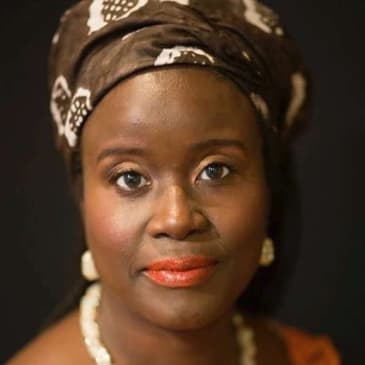
Ginelle Skerritt is an exceptional storyteller, and executive, boasting a remarkable track record of over three decades of leadership experience. With her current role as the Chief Executive Officer of the York Region Children's Aid Society in the non-profit sector, Ginelle exemplifies a unique blend of expertise in community-centred approaches and a deep understanding of the social determinants of health, all while championing equity practices. Additionally, she has a banking background and is a co-owner of a flourishing dream farm. These remarkable facets of Ginelle’s life fuel her passions and contribute to her well-rounded perspective.
Listening to Ginelle, one can gain invaluable insights into her experiences on the farm and how it further ignites her passions. Prepare to be inspired by Ginelle Skerritt and her remarkable journey as she continues to make a profound impact in the professional, personal, and storytelling spheres.
Welcome to SpeakUP! International with Rita Burke and Elton Brown!
Rita Burke:It is truly wonderful for us to have you as our guest today, Ginelle. Now Ginelle Skerritt is an executive with over 30 years of leadership experience. In the nonprofit sector, she is currently the Chief Executive Officer of the York Region Children's Aid Society. Her previous roles included regional director of UNICEF Ontario, and leadership roles at the Neighborhood Group. Warden Woods's, United Way of Greater Toronto, and Tropicana Community Services. Ms. Garrett's passion for equity advocacy and justice guides her leadership approach, which is focused on creating an environment of children's success, funded on neutral respect and engagement with the families and communities. She combines a community centered approach that considers the social determinants of health, but a strong grounding in equity practice. She is passionate. She's a passionate public speaker who focuses on connecting people to history and culture, an intimate and an initiate and teacher. In the Aiken Rights of Passage tradition, a published author on the topic of traditional savings and credit associations, a banker, lady and co-owner of a dream current farm. Ginelle leads programming for healing and cultural reclamation for children, youth, and adults, and when you think you've had enough, here's more about Ginelle Skerritt. Her leadership experience extends to several boards and committees. She's been recipient of numerous awards, including the Ontario Black History Society 2022, Daniel Hill Award for community Service. And the Canadian Forces Chaplaincy School Medal in 2020. She is one of the hundred accomplished black Canadian women of 2018 and was featured on the 25th anniversary, official Black History Month poster. Ladies and gentlemen and families, I present Ginelle Skerritt to you.
Ginelle Skerritt:Thank you. Thank you. It's very nice to be here. Thanks for the introduction and wow. It is long.
Elton Brown:You are a very accomplished woman. You have done so much. I would consider you a giver. You are at the York Region Children's Aid Society, you've done a lot of things at UNICEF. You're just all over the place! I wanna know, how did you feel every day when you left UNICEF after giving so much to so many people?
Ginelle Skerritt:I think it is really about inheriting that from my grandma. My grandma Iris was a giver for sure. And so I think I come by it naturally and I really don't think of it as in that way I'm learning to accept the things that people say when they describe what they see in me and not try to be over humble and try to re-explain. I accept it because I think that's what I saw in my grandmother. She would cook and say, always leave some extra in the pot cuz you don't know who might be hungry. And she fed people and she took them in and she took care of people even though she was a single mom with five, a widow with five children. And so it wasn't easy for her, but that's what she did. And I remember sitting with her and hearing stories about life during the time of the war when there were rations and they had to line up for food and yeah, it was, it just very humbling, very interesting. And even in that context, and even though we lived in a part of Trinidad, that is one of the it's now I guess it was at the time too, but it's now notorious as the ghetto. You don't go there if you're not from there. And that's where we lived, that's where we grew up in government housing at least for the beginning of my life. And my grandmother gave even from that space. So I think. I honestly come by it.
Rita Burke:I just wonder, Ginelle, how many people whose origins are in the Caribbean? If you spoke to them, how many of them wouldn't tell you about the influence of their grandmothers on their life? That's truly fascinating. Thank you for sharing that information. Now, in your bio, I talked about the fact that you were the CEO of the York Region Children's Aid Society. Speak about what it feels to be wearing that hat. Enlighten us please.
Ginelle Skerritt:It feels like an awesome responsibility and at the same time a great opportunity and the right one for me because I walked into a situation where, as you would know, and many people in our community talk about the fact that there's a disproportionate representation of black children in the care of children's aid. And that's for many different reasons. Layered through history, through the structure of colonialism, capitalism, all of those kinds of things. And of course, racism plays a role, but it's the type of racism where, I was just reading a quote in a book that, that it, I'm gonna, I'm gonna mess up the quote, I'm pretty sure. But it's something like the worst kind of tyranny is when people impose that oppression on you for your own good. They oppress you for their own good because they have the comfort of their own conscience. So it's, it I've really botched up the quote, but that, that has stayed with me since I read it cuz I thought, yeah, people that are justified in doing something which is harmful to you and they're not listening to you and they're not taking that in because they think they're doing it and they're comforting themselves, that they're doing it for your own good.
Rita Burke:Which Indeed is at the heart of racism, isn't it? And colonialism.
Ginelle Skerritt:It is in some, in many cases, and certainly it describes quite accurately how I think the attitude is within the children's aid movement that they're really committed lovely people, very loving when you think about it, because they want to protect the interests of children, but the racism is here, but it's invisible to them because it's part of the filter through which they see the world. So it's a very interesting. Issue to, to have to deal with and I feel though that I am the person at this time who gets to do it. I consider it an honor and a challenge at the same time. So yeah, that's how I feel like it's a awesome responsibility, a great opportunity, and a challenge all at once.
Elton Brown:Earlier you mentioned the fact that you were, you grew up in, the ghetto. I know about that familiar with that. I grew up in Philadelphia, Pennsylvania, and the part of the city that we lived in was another area that you did not go in unless you knew someone in that area. So with you working at the York Region Children's Aid Society, how do you deal with children that you see? Who suffer from poverty, hunger, loss of identity, lack of emotional support, all of these negative things that are against these kids. What do you do? What does your organization do to try to put a wall up between the child and all of this negativity?
Ginelle Skerritt:I don't deal directly, but what I try to do in terms of setting the tone in the organization is move us away from a very paternalistic view where we walk in thinking that we know what a family needs and we know what all of what you just described means, and instead listen to understand and to work with the family to identify. What are their needs. What are their strengths and move from there. Also, looking at the cultural lens and looking at, poverty. I'm not ashamed to say that I grew up in poverty. Even when we moved to Canada, this was the reality is that it was living paycheck to paycheck. It was sacrificing. It was buying I, I would say buying, but I remember knowing that. Things like chicken neck and back and wings were given away at the butcher shop initially. And then now they're gourmet. Those are the things and we made magic out of those things, I'm not saying we ate those things all the time, but we knew how to, and I still, to, to this day, know how to get by with little. And so I think that is something that we have to bring into the work because when we judge what is poverty and what does it mean to live in poverty, we might be looking at it through a lens of that is not quite what, what people are able to do for their children. Cuz I would say having grown up in poverty, it's not a reason. For children to be engaged in the welfare, in the child welfare system, I think families perhaps need help to get out of poverty. And so we need to start talking about, so you ask the question, what am I doing about it in a sense, right? And one of the things is trying to open our eyes to the fact that we have to address. All of the social determinants of health and not just deal with it as a problem for that family, that we need to now take that child or have a remedy that suits just that family. We have to look at systems level change and we have to look at transformation and so internally, we have to look at what are our assumptions when we walk into a home.
Rita Burke:Are you're saying we need to look at and we need to listen? Does that mean to a certain degree we have to disrupt the system in order to meet the needs of those children?
Ginelle Skerritt:We're disrupting the system. Cleverly, I think, the way I see it is that we need to have agitation. We need our people in my view of history have never really achieved justice by asking nicely. Yeah.
Rita Burke:But you are acting nicely now.
Ginelle Skerritt:Yeah. But there's a way that's been paved for me. To be able to execute that. And I recognize that the two, the three, the four, all of those approaches are a necessary part of our success and part of that disrupting and disman so I'm disrupting, but I'm disrupting logically and more gently,
Rita Burke:Intentionally it's by design?
Ginelle Skerritt:Yeah.
Rita Burke:Your disrupt is by design. And the bottom line is to meet the goals of the people that you work with, the children you work with.
Ginelle Skerritt:This is it. And also I bear a responsibility to represent my community as well because yeah I think any black person in any leadership position that really is connected to community in the way that I feel that I am. I feel it. I, when I say I feel that I am, I'm not saying it's a notion, I actually am talking about my feeling of that, right? It's very hard to work for money, right? So I'm always ready. Sometimes I'm even getting dressed. If I have a particularly difficult situation to face in a day, I'll say, okay, I'm ready. That if. If today is the day that I'm confronted with, no, you can't go that far, then I'm ready for it because I'm not going to work for the title or for the money or for all of those things. It really is to advance the struggle and also the triumph of our people, right? The victory that we need to overcome. So that's how I feel about it. Yeah,
Elton Brown:I think going into any position, especially being the first black CEO is daunting as enough as it is. There are pressures involved. We were talking earlier about how, you're representing your community, but you are representing black people as a whole because that's all they see is you. And they're going to equate based on your performance about a lot of other black people. So I can see how this job comes with a price. And that price happens to be always on when you are at work. I wonder when you were at the, at U N I C E F Ontario. Did you have the same type of qualities, the type of impact that you wanted to see?
Ginelle Skerritt:Yeah. United Nations Children's Fund.
Elton Brown:Yes.
Ginelle Skerritt:You know what it, here's what. I realize when they made such a big deal about announcing that I'm the first black person to have this position, I went back in my career and I was the first black person as the regional director of UNICEF. And then at Warden Woods I was the first black person to be the executive director and the first woman in that case. This concept of being the first black, I think it's quite embarrassing for the powers that be to have that situation occurring in 2021 when black people have been a part of Canadian society for years and years. Yeah and so I feel as though this is something that I have to be able to deal with practically and not get too heavy about being the first and thinking about the responsibility in that way. When I think about the fact that this is just hype, I think about being the fact, so I don't wear that with any more responsibility or any, it's, I'm really happen to be black, but I'm the CEO and so that's what I have to do.
Rita Burke:You have a job to do. You do the job regardless,
Ginelle Skerritt:and I do the job. Yeah.
Rita Burke:And you don't see yourself first as that first black person. Got it. Got it.
Ginelle Skerritt:No, but not to say that I don't recognize the significance of that so my husband and I talk about that all the time, that when I use that moniker, it is because it means something for the young people coming after me. It also does mean something to the elders as well, because, when they told me this, when they, I first was hired and they said, we think you would be like the first black person. I tears came to my eyes cuz I was thinking that my grandmother, my mom, my dad are going to be so happy about this. So it wasn't really something that I thought. Or think is an accomplishment, but I know that it means something in the scheme of things because it's about time and yeah. It represents so much more than just this like heady pedestal type of thing.
Rita Burke:So it's telling younger generations there are possibilities, there are opportunities that they can go after because this woman is in this position, the door is now open for you. Now, here's my other question to you. Do you believe that the needs of black families differ from the needs of other families that you,
Ginelle Skerritt:Yes,
Rita Burke:You care for? You provide for?
Ginelle Skerritt:Yes. I think, on some level we are all human, so we all have the same set of needs. In my previous job I worked providing food for people who were food insecure. And I learned through that and through the experience of my elderly father when he was ill and needed a special diet. When you go to either the food bank or when they're providing information about how to prepare a special diet. If it's from the perspective of people that prepare food in a certain way, then you have a different need. My father could not eat, like they the list of things that he couldn't eat, it was almost impossible to prepare our cultural foods with that list of things that he could eat. So we needed to go to another context and say, okay, but what do you do when the person is black and they and trini and they have a certain palate and they want to eat something different than what you have on this list? So in that way, culture comes into play and I think it's the same when you think about children. They need food, they need shelter, they need clothing, they need love, right? And not necessarily in that order, but then what does love mean in our cultural context versus another, like how we show love, right? What does eldership mean? All of those things have a particular meaning and they mix together. To make the unique circumstances that I think our children would need from a service like the one that we provide.
Rita Burke:Thank you. You have answered my question. I appreciate that.
Elton Brown:There are so many unique opportunities for us, as opposed to maybe 10, 15 years ago. When we were still hitting up against that quote unquote glass ceiling. And the one thing that comes up to mind, I think something there is some very up in the forefront on the News magazine articles is about the mental and physical health of our children, which is. Universal. It has, this has nothing to do with black versus Latin versus Australian. If this is something that just, it encompasses everyone. It is like a common denominator. How do you see the organizations that you've worked with combating or at least moving in a direction to harness these. Horrible things are happening to kids.
Ginelle Skerritt:Yeah. I think that we have to play a role in raising awareness about the extent of those issues, and I would say that although they affect all children, we know that they disproportionately affect indigenous and black children in a negative way. Across the board, whether you're talking housing, food insecurity, mental health general health and wellbeing performance in school. All of those, on all of those fronts, you'll find indigenous and black children, neck and neck. And then I heard a stat about Portuguese children within the school system and that was the only other that's showing up in those lower levels. So you know, when you look at it historically and you understand how colonialism plays a role in that, capitalism plays a role in that. So there's an economic imperative, there's an and there's a systemic issue that needs to be addressed. Having said that, I think that it is about raising awareness about these things, being able to support our positions with information, and then demanding that as a society, we come together and take responsibility for the children and our communities together. So I, we talk about this, it takes a village, that concept sounds very nice, when you're fundraising or when you're talking about lovey dovey stuff. But when you get down to the nitty gritty, what does it mean? It means that if we are not, if we're having those outcomes for some of the children in our community, Then it's our responsibility as the adults who are running things to address it across the board, doesn't matter. It regardless of race and regardless of stature. Because that's what tells you about the wellbeing of society as a whole. Yeah. Yeah.
Rita Burke:We're beginning to admit, we're beginning to put forward the argument that black children are born in a racist society. They come into a racist society, so they need to be cocooned and assessed and taken care of so I really like that. I wanna shift our thoughts a little bit, and I want to move to the farm that I mentioned when I introduce you. Tell us about the inspiration for the farm.
Ginelle Skerritt:Wow. So the inspiration came from a reggae group that my husband was a part of called Truths and Rights and it was a very popular reggae group in Canada in the seventies, and they would create songs that gave political commentary, but their motto as a group was to create in relation to the struggle of our people. Although I wasn't there at the time and wasn't part of that conversation, I understand that they had several conversations that involved buying a property and having a community access space that would be there for generations where we could build we could grow our own food. So the farm has three pillars to reclaim, build and grow. So we talk about reclaiming our cultural heritage. We talk about building institutions and physical spaces on the property, and connections and then we talk about growing food and growing as a community to ensure our long-term sustainability and the long-term sustainability of our cultural practices. Yeah, so that's what the farm is all about. So I'm just delighted that I walked into that because it resonates very well with me. It just so happens that. Not at the same time, because I'm a little bit younger than my husband, so I would say when I graduated university, one of the first things that I did was work with a group on a project called Our House, which was to build a cultural center and we made we went and made a presentation. Though this part is ironic. We went and made a presentation to the Carabaña board. And so if you could imagine a rectangular table, and I came in and I sat here and sitting right over here on the other side of the table was none other than my husband. We didn't know each other. It was the first time I met him and I came to present the idea for Our House, which is very much, it's very similar to some of the concepts within Adinka farm. He actually got a ride home with one of the other board members who happened to be my cousin and was talking to him and saying, that girl that came to the board meeting tonight, she seems really cool. I like her and my cousin did not say a word until my husband was getting out of the car and he said, that's my cousin. Oh. So I think our house and the vision that Truths and Rights had come together at a Dinker farm.
Elton Brown:At the farm you talk about three pillars. How does networking fit into this when you are at the farm? I think that it's like an open door kind of thing. Not revolving, but there is a difference but there is an open door kind of feeling there. How do you see the benefits of having such experiences at the farm?
Ginelle Skerritt:I think it is part of what we need to build trust in our community. Which is why we make the farm available and open. We need a place that we feel a connection to feel ownership to, not my family, but the community. And so it is important that we keep the invitation open to community members who need a place to come to sometimes people come up just to take a walk to get away, and I can tell you that when I first started Working from home here. It wasn't during Covid, it was before, cause it's quite a distance to get to Southwest Scrbo where I was working at the time. So I had to deal with my board to work two days from home. And three days at the office. And I remember sitting at the dining room table and we have a huge picture window that looks out onto a very green front lawn with birch trees and evergreens and flowers and I just, I thought, wow, I can't see a neighbor. I can't hear a police siren. It all, what I'm hearing is birds chirping and crickets even in the day, and you just, I just felt this weight off of my shoulders and just a relaxation that I don't think I had felt before. And then I thought, okay, so this is what freedom feels like. That's what I've actually thought in my head.
Rita Burke:So being out of the big city, Is to some degree healing, comforting, powerful really appreciate that. I lived in Peterborough as well for 10 years, so I fully understand the benefits of not being in the city, although sometimes people have no choice but to be in the city. Now, here's my question, if your life were a book, miss Ginelle, what would you call it and why?
Ginelle Skerritt:So really, I would call that book The View from a Tamarin Tree. And the reason being that I always said that my favorite place in the world would be a Tamarin tree during the season when Tamarin is in season, cause I would just eat the Tamarin. I would sit in the tree and eat Tamarin after Tamarin. Of course, that would make me, probably my belly hurt but I think that I approach life with a certain optimism and a faith. And I picked the Tamarin tree because it represents one of my favorite. Things to eat and it's very identifiably linked to my childhood to where I, my birth land and to my culture. So I would say that, that's why I would say the view from a Tamarin tree, because I would imagine that a Tamarin tree is the best place in the world to be.
Rita Burke:Interesting you say about the Tamarin tree. My son was in, I think it was Antigo last week on a bit of vacation, and he sent us pictures of Tamarine. Of course he was born in Toronto, but his dad has always brought those kinds of things home for the children to experience, so he sent us pictures of Tamarine and thought it was very funny. So thanks for talking about the Tamarine tree.
Elton Brown:Tamarin! You are a teacher of the Aiken Rights of Passage. Tell us a little bit about that.
Ginelle Skerritt:The pronunciation that I learned is that they are the Aiken people from the West African region. Yeah, Ghana. In particular,
Elton Brown:Thank you very much. And I the Dinka symbols I learned actually came from the Ivory Coast and there was a war between the Santi people and the the name Ashanti means the people that came together after the war, something like that. So the symbols, the ones that I'm wearing on my ear, the ones on this cushion here and those around are. All linked to different stories, and so that's. Where the name for the farm came from and how it connects to a can culture. I'm also Abna, which means born on a Tuesday in the name culture and in, in the cosmology. And there's a certain group of behaviors and characteristics that are associated with that. One of them is leadership. One of them is Empathy and working on behalf of your people. So I think I'm living up to the name happen in many ways and what I'm choosing to do. But when I was in my twenties and I had finished university and I was doing a lot of reading, cause to learn about your African heritage, even after you're educated in this system, requires your own self-directed education. So I was, yeah. So I was reading books like the Destruction of Black Civilizations, the Origin of African Civilizations Carter G. Woodson's book, the Miseducation of The Negro Eric Williams, capitalism and Slavery, Fulcrums of Change, Van Certima, just really. Absorbing a lot of information and learning about the history. It's only recently that I it's almost like I read that at that time. I studied that at that time and went through a rights of passage with the Intu Rights of Passage Institute from Cleveland, Ohio, which was doing adults Rice of Passage along with a group in Milwaukee and a group in California. That was something that was made available to Toronto based adults at that time in the late 1990s. So I did that and became an initiative, but it, I haven't gone through the second stage to officially become a teacher within the in two rights. System, but through my own studies and ongoing, I didn't stop there. I continued to learn. So now I've made a study more of the Dinka symbols, more of the traditions of Ghana. I've made some decisions about how like I do wear a combination as today, because I was driving all day. I'm wearing a combination of Western clothing and African clothing. But my commitment has been, I don't really shop for Western clothing because I think that one of the ways that I connect to that identity is through what I choose to wear. And I feel very comfortable in that regard. Yeah. So I've started to understand what happened after reading Of Water and the Spirit, Malidoma Patrice Somé. I really connected with the fact of our spiritual warfare. The spiritual warfare that has occurred against our people. And so it's not that I am not I don't practice any of the religions that were imposed, but I do understand them and I understand where they come from in the context of the continent and the practices of our people and that spirituality. So I'm now on a, on the part of my journey where I'm connecting more to spiritual leadership, which is which is why the types of things that I take on don't intimidate me because I connect to the divine order and intention for success.
Rita Burke:They certainly wouldn't intimidate you because what I hear is a lot of spunk and confidence and intentionality. Thank you for that. Now, as I mentioned earlier, The purpose, the reason why Elton and I host SpeakUP! International is because we want to inform, we want to educate and we want to inspire, and I know for sure that you're helping us to meet those goals this afternoon. You are aware, I'm aware. That the black community in Ontario, in Toronto, in Canada, we've made a lot of strides over the years. You've been in the community a long time, so have I. And by that I mean that many of the people that look like us are now sitting at the table, but as you are aware as well, We've only made those strides because of people who were willing to break the walls down, who were trailblazers, and they were willing to agitate for change and to the demand change. Tell me, is there any particular person that comes to mind, someone that you would like to thank for helping to move the needle in a positive direction for blackened agents? Let's talk about that person please.
Ginelle Skerritt:For me it would be Dudley Laws who I talked to personally and understood his commitment at a very deep level. And I think many things were attributed to his personality that were not true. About the motivation for why he was doing what he was doing. Yeah. So I have a deep respect for his commitment and the sacrifice that he made to, to endure all of that scrutiny and so on. And to stand tall. I also have to say that I admire the spirit of the Ram 11 who stood up to the To the museum and said that the, into the heart of Africa exhibit was racist and they called it for what it was and they stood to be, discredited.
Rita Burke:Yeah. It's a matter of fact there's a book about that situation, right? Right now. Yes. It was written by Brother OG, I believe. Okay.
Ginelle Skerritt:Cuz he was amongst the 11 that were arrest, arrested at the time. Then there, there's a woman that I met out here in Simko County. Jamie Cooper Wilson and she is working on behalf of her ancestors to restore their grave sites that have been mistreated, bulldozed, disrespected in this community. So those people I think about as inspirational.
Rita Burke:I'm certainly glad that you mentioned Dudley because Dudley's office was close to our bookstore and we would see him almost every day passing by in his braids, but the comments that were made about him initially were changed by the time he passed away. As a matter of fact, his funeral, I'm not sure if you were, there, was one big event in Toronto and the police offered to escort the hearse. Yeah. So things did change radically in the way people viewed and understood Dudley Laws. So thanks to mentioning his name.
Ginelle Skerritt:Yeah. When we had our renewal of our marriage vows. And because we got married quietly at City Hall at first. But Dudley was here and I remember one of it was the last public event I think that he did before he passed. But when there was a a police officer that work up here in Barry, he was invited because Quammie was working for the city. My husband was working for the city of Barry. And he was beside himself with wow, I can't believe that I'm getting to meet that, that the person here is Dudley Laws. So I think there were white officers and others who really respected him and the work that he did, even when he was alive and he sang he loved to sing, so he sang What a Wonderful World for us in that ceremony.
Elton Brown:I know a song, but I don't know who this person is. I'm definitely going to have to connect to this individual to round out my history of individuals that are influential or were influential. Working at the Children's Aid Society, did you find any direct, don't know how to say this racism there? When I worked at. Oracle in California. There was racism, but it always was done with a smile. And for, I think the first couple of months it threw me because all I saw was the smile, and that was like the deep left. Was the smile, and then all of a sudden I realized, Ooh, these people are, I get it now, what they're doing. So I'm wondering at these organizations, which are huge, that work at, have you ever experienced something that was maybe subtle? But you later realize, or you realize on, instantly that, wait a minute, this person is coming from a impure place.
Ginelle Skerritt:So what I learned about racism over the years is that it can look like a compliment about my head wrap. Oh, it can look like A compliment about my tan, my skin color, right? Yeah. And so I think that what I have learned also is that we have an idea that racism comes from a place of hatred or dislike or someone. I think that there are many racist people who love us. But racism is what keeps the society structured the way it is so that the majority of our people don't become CEOs and Oprahs and so on. And so they're comfortable enough with that. So that I would say that many people who don't even know they're racist. Are racist because of the way we think about racism. I think it was I heard Chris Rock talking in an one of those TikTok interviews with the South African, Trevor Noah. He was talking to Trevor Noah. And he said something like, I don't sure. I, I don't, I wanna sit at the same counter as you. It's great. But if you make it that the civil rights movement has been about whether or not we can sit at the same restaurant and eat or then, but if you want to If you don't want me to sit at the same restaurant, but you give me a, an equal chance at a job and a life, hey, that's cool. I don't need to sit at the same restaurant. So that's the way I'm feeling, is that I don't need to be loved and appreciated and smiled at and made to feel good and all that kind of stuff, but I just want my children not to face being killed by police are being shot when they go to the wrong door or when they decide to take a run in a neighborhood or something when they fit the description of the suspect. So those are the ways that racism is operating, and people feel like they're justified in suspecting every black person that's a problem. Yeah. So yes, I've experienced racism. I experience it on a daily basis. I've experienced it directly in opposition and resistance to my leadership. I've experienced it in questioning the logic of some of the things that I ask for as a leader that I know and I always have this phrase that, If you wouldn't ask that of the president of I B M, don't ask it of me. And then one day I met the president of I B M on the front lawn at the Manual Life Center as part of a United Way fundraising. I said, I talk about you all the time. And he had no idea what I was talking about, but that's,
Rita Burke:This is fascinating. As our interviews last for half an hour. And we've been going on much longer because you tell such a wonderful story about your experience, about your jobs, about your life, and so I have one little question left to ask of you, and it's a bit personal, so here we go. What do you do to show up as the best version of yourself given the load and the weight that you carry? What do you do to show up? As the best version of yourself.
Ginelle Skerritt:I have a new and improved answer to that since Covid because I realized that, I thought before that I knew how to love myself, but I've gone through a journey to find out what it actually means to love myself and that's what I do. I appreciate my boys, my family. And all of the people who have contributed poured into me. I'm thankful for that. I accept the blessings and when you introduced me and you read the profile and so on, I was, there's a part of me that would've cringed before, but I'm, now, I'm saying, okay, that is who I am. I did those things. I love me and I deserve to hear that about myself and to be appreciated. And it's not necessarily for me, but it is about me and I own it and I accept it. So that's, I'm getting much, much better at loving myself, listening to the music I like and yeah, so it's all good.
Rita Burke:And dressing the way you want to
Ginelle Skerritt:And dressing the way I want. Oh that's hugely important because regardless of what people have told me before, I've had people say, why are you having a bad hair day? I had a woman walk up to me because, when you go to these gala dinners, everybody dresses in black and I don't. I wear vibrant colors and so on. So I was wearing this, if you could imagine, in a sea of black dresses. I was, and there was one woman in a red dress. I was wearing this mint green shimmering African outfit with a matching shimmering African and a woman actually said to me, you are brave coming here looking like that.
Elton Brown:Ooh.
Ginelle Skerritt:And then, yeah, and I've had another woman at work tell me and she was a boss, type of thing that I am loving the attention of dressing this way. Yeah. Yeah.
Rita Burke:So Ginelle, you do Ginelle, you live Ginelle, you walk Ginelle. And I certainly admire that. Thank you.
Ginelle Skerritt:Thank you so much.
Elton Brown:I wanna say thank you so much for your stories. You are so authentic, which as far as I'm concerned, makes any conversation very relaxing with you. In fact. I had questions that I wanted to ask you. I pushed them to the side and just said, you know what? I'm gonna have a real conversation with Ginelle let's not restrict in any way and you were definitely comfortable enough for that, which made it wonderful. And I'm hoping that in the near future that we have another opportunity to talk to you. I'd love to know more about what goes on at that farm. I would love to come up to the farm and maybe photograph it. I would very much love to do that. I just hope that between you you and Quammie, you, both of you have a wonderful future together. Continue to do good things for the black community, and we thank you from SpeakUP! International.
Ginelle Skerritt:Thank you so very much!
Rita Burke:Thank you.
Elton Brown:Thank you for listening to SpeakUP! International. To request more information about our guests, Ginelle Skerritt please send your inquiries to adinkrafarm@gmail.com. adinkrafarm is spelled A D I N K R A F A R M. Do you have a service organization you would like to announce to our communities? Please send us your name, company, name, website, description of your organization and the service you provide. Including your email address to info@speakuppodcast.ca. To listen to more of our podcasts, you can go to www.speakuppodcast.ca or wherever you listen to your podcasts and look up, SpeakUP! International! You can find us on social media platforms, Facebook, LinkedIn, Twitter, and Instagram. Our logo has the woman with her hand pointing up mouth open speaking UP!