
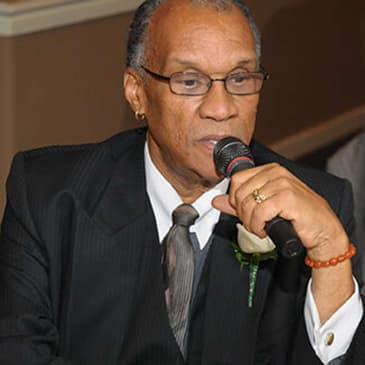
What if you could transform your organization's culture by understanding both its spiritual and psychological needs? Join us for a captivating conversation with Dr. Lloyd Williams,PhD., an industrial psychologist and consultant with a rich background in theology, psychology, and business consulting. Dr. Williams takes us through his personal journey from Tuskegee Institute to Yale, and how his unique blend of experiences as a priest, psychologist, and consultant equips him to foster trust, alignment, and systemic change within organizations.
Dr. Williams shares his groundbreaking insights into shifting from power-centric management to influence-driven leadership. Discover the importance of collaboration, trust, and effective communication as key components for successful organizational development. Listen as he navigates the complexities of creating cohesive cultures within large international organizations, tackling the challenges of cultural transitions, and the critical role of executive endorsement in motivating change. Dr. Williams also delves into the trauma employees often experience during organizational shifts and the necessity of aligning their internal values with new corporate cultures.
We also explore the transformative power of self-awareness and service in conflict management, and how Dr. Williams' multifaceted background informs his holistic approach to leadership. From role-play simulations that empower employees to actionable strategies for creating congruent organizations, this episode is packed with profound insights and practical advice. Finally, Dr. Williams emphasizes the joy of integrating faith and spirituality within his practice, underscoring the importance of passion and happiness in one's work. Tune in for a deeply enriching episode that promises to elevate your understanding of personal and organizational growth.
Gateway to Dr. Williams' Social Media Platforms:
Website: https://tc-university.org/about-transcontinental-university/faculty/lloyd-williams/
LinkedIn: https://www.linkedin.com/in/dr-lloyd-c-williams-ph-d-ph-d-d-min-b0b8306/
[00:00:00] Ellington Brown: Welcome to SpeakUP! International with Rita Burke and Elton Brown!
[00:00:08] Rita Burke: On SpeakUP! International, as you're aware, we seek to inspire, inform, and educate and that is exactly what we're going to be doing today with our guest, who is Dr. Lloyd Williams. He's an industrial psychologist and consultant to international communities. Dr. Williams is also a professor of the master's and doctoral degree programs.
He himself has three doctoral degrees and is also an ordained priest and author. And as we say on SpeakUP! International, I could say lots more about Dr. Williams, but I prefer if he tells his own story. And so I welcome you today, Dr. Lloyd Williams to SpeakUP! International!
[00:00:59] Dr. Lloyd C. Williams: Thank you.
[00:01:02] Ellington Brown: It is really good to have you here! There's some hop, skipping and a jumping to get you here with us, but I'm sure that it is going to be worth our while! Describe how your early academic and theological background influenced your transition into organizational and clinical psychology?
[00:01:29] Dr. Lloyd C. Williams: Sure. Um, I grew up in Tuskegee Institute, Alabama, a home of Booker T. Washington, George Washington Carver, Frederick Douglass, and my parents, um, were faculty here at the university. And my father was Dean of the School of Veterinary Medicine, and my parents, um, always told me that I needed to ensure that I provided a wonderful way for me to be me in in the world and to pay attention to everything that I was doing, and simultaneously recognize that society was doing a lot to try and make sure that I did not do everything in the world.
And that juxtaposition between doing and not doing, um, bred an interest in me in both theology and psychology. Um, my initial education was at Earlham College in Richmond, Indiana. It's a Quaker school where I majored in theology and psychology. And then I went to Yale to get a degree in theology and psychology in Southern Connecticut at the same time to get a degree in psychology and counseling.
My first doctoral degree is in theology. It was a Christian theological seminary in Indianapolis, Indiana. At the same time, I was ordained an Episcopal priest. And, uh, was made rector of St. Philip's Episcopal church in Indianapolis during that time. Uh, my Bishop John Crane consistently asked me to do things such as provide training and development.
Or church directors and priests, uh, for youth groups. And so I ended up developing this interest, both in theology and psychology at the same time. My second doctorate then was, uh, in, um, organizational, industrial organizational psychology, and while that was a wonderful degree to do and to learn different ways to engage in an interface with organizations, understanding how they work, what change would look like.
How to be strategic. It wasn't enough, but the reason it wasn't enough is because organizations are made up of people. So it's not just about the systems that exist. It's about the people within the organizations and the systems that exist within those people. Therefore, uh, I ended up getting a PhD in clinical psych as well.
Uh, because every time I was dealing with the corporation, I always ended up finding leaders and managers. Who were having psychological issues. Um, and so they, they were challenged in terms of depression, anxiety, fear, uh, the inability to change, not trusting, doing things to harm their employees. And so in order to fully help the corporation, I had to also help the people.
So that became really important and it's remained important because most business consultants don't do anything with the people they do things with the company. They do things with the company's strategy, but they forget that in order for that strategy to work, you have to bring the people along in the process.
So I ended up getting consulting contracts often where the big consulting firms have done a wonderful job in developing the strategy, but it didn't work because the people aren't brought along, so I'm. I'm called to help close that loop to assure that the people are brought along with what's done. Um, you asked about it from a psychological perspective.
I think, I think it's very hard for someone to be fulfilled without understanding the psychological tenets that drive them and hold them and push them forward. For me, that's also about their spiritual component. Too often, I find people to be disjointed. not connected. And that lack of connection has to do with their inability to recognize that they're not the end all, that there's something greater.
There's something that provides them with strength. and direction, and can be there to soothe the forgotten spirit. And so my work is often about the blend of business psychology and theology. Um, and it's been a wonderful life.
[00:06:34] Rita Burke: It sounds like an exciting, wonderful, as you said, life. There's a comment you made, Dr.
Williams, that in order to shift the organization, you need to help the people. How did you help the people?
[00:06:52] Dr. Lloyd C. Williams: Always by listening to them, always by looking at where they find themselves disconnected from the organization itself, always finding out where they feel mistrust within the organization, where the organization has been incongruent with their own statements. And so the employees with that mistrust don't provide everything they can to the organization because they're spending a lot of time protecting themselves.
So in listening to those employees, sometimes the work is executive coaching, sometimes the work is training and development, sometimes the work is providing them with buddy systems, ways for them to connect with each other. Sometimes it's helping them look at where they are misplaced within the organization.
They may have amazing skills. They may be great at synthesizing and pulling things together, but they're not detailed oriented. So sometimes the buddy process is to get somebody who is detailed oriented, connected to them where they are with it, that ability to see the picture so that they can work collaboratively to make things change to do that often.
It means helping organizations recognize. That you don't create change and you don't even grow if you're focused on power. If you're focused on influence rather than power, you're able to do a lot of things. Influence means you're collaborating. Power means you have control over somebody else. Control processes don't work in the long run.
Influence processes always work. So it's about helping them learn to be influential. That then fits into the construct of leadership, because leadership is about influence. Leadership is not about power. Management is about power. And so the problem is too many organizational leaders are managers. And they don't understand what it is to lead.
So a lot of what I do is to help them reframe and shift from managing to leading, and that's scary for a lot of them because it's brand new, it's different, it's not how they became the leader, but it is what's necessary to keep them being the leader. So it's, it's a real shift.
[00:09:30] Ellington Brown: That I definitely , can understand, doctor, because going right back to something that we were talking about earlier, which was, , organizational, , versus clinical psychology, it's a big leap in a jump, especially if you've been trained a certain way over the years and you get stuck , in that training of thought and not progress.
And it sounds like what you're doing is you're helping individuals to get above all of that and actually be able to. lead to actually get people to move in a certain direction so that not only the people but the organization is allowed to change and develop. So how do you integrate these principles of leadership and development and change management in your consulting practice?
[00:10:25] Dr. Lloyd C. Williams: Organizational psychology is about Uh, a picture of the whole and it's about the system that exists. So every organization, every corporation creates systems, and the systems are created to guide how they work, how they, how they create change, how they create outcomes, how they create products, or how they're creating service.
The challenge is that those organizations, those systems are made up of people. And so the clinical side is about how do you heal the rift that exists within the person and how do you heal the rift that exists within the organization? So my consulting work is about healing the rift between people and systems.
It's about how to get them to, um, collaborate more effectively, listen more effectively, share more, more effectively, trust in ways that they've not trusted before in order to push them to new heights, new paradigms, new ways of thinking and being. So
my work is, um, I guess it would be called deep work because it's not on the surface. It goes very deep within the organization. Um, it's about how to help them look at different aspects of structural change and where structure sometimes it's helpful and where structure sometimes it's not. It's about helping them look at what their internal population is like.
So, for example, in the 1940s and 50s and early 60s, everybody was a man. Uh, and then all of a sudden they started having women in the workplace. And organizations didn't know how to deal with that because they didn't know how to talk with women and they would say things and do things that would create problems rather than create synergy.
Uh, in the 70s and 80s, they started having more people of color. So they started having blacks and Asians in the workplace and then eventually Latinos, Native Americans, and finally, foreigners, persons from other countries, especially in IT corporations where most persons seem to be Indian. Um, but the challenge was that organizations designed themselves structurally for everybody to be the same and everybody's not the same.
So they didn't know how to Embrace, engage, include the differences and uniquenesses of people within the systems they created. So often they made things worse rather than better. So the phrase they use now is D E N I, diversity, equity, and inclusion. Um, and while that's an appropriate terminology, for me, that's not, that's not sufficient.
Because it is about disengaging power dynamics that exist in every type of culture.
[00:14:00] Ellington Brown: So are we talking about policy change?
[00:14:03] Dr. Lloyd C. Williams: We're talking about policy change. We're talking about, uh, people change. We're talking about, uh, systems change. We're talking about alterations between company and customer. All of those things are driven by the type of systems and policies that we create.
But too often policies will exist on paper, but not exist in practice. And so it becomes important to look at if this policy is going to be important, how do we take that policy and implement it throughout the organization? So let me give you an example. When one talks about change, one has to look at how information is transmitted throughout the organization.
The research shows that from the top of the organization to the bottom of the organization, There's a 75 percent dissonance between what the bottom of the organization ears or what the top of the organization say. So every level within the organization gets as a 15 percent dissonance from the next level, because the CEO will say something, the directors will change it slightly because they want to make sure that he gets in it.
It goes down to the managers and managers change it again slightly because they want to make sure their point gets in to the team lead, to the employee, to the janitor. Everybody hears something different. The challenge is the CEO at the top is saying, why is it that people don't understand what I'm saying?
The answer is they never heard what you said. So how do we go about infusing up and down the organization? clarity so that people can hear and make choices and do things in an effective manner. So part of what I do in consulting is to help them do that, to help them see, hear, and shift. to do things differently.
[00:16:12] Rita Burke: You are indeed doing deep work.
[00:16:15] Dr. Lloyd C. Williams: Yeah.
[00:16:16] Rita Burke: We're speaking with Dr. Lloyd Williams who is an industrial psychologist and consultant. You've made some very profound and dare I say loaded statements. I particularly liked one where you said that there's incongruence with how people behave. And what their mission is.
Could you elaborate a little bit more in that for us, please?
[00:16:48] Dr. Lloyd C. Williams: Sure. Um, I won't name the company. Okay. But I was asked by a company to go to Singapore and, um, the company had, the company was being run, it was an American company, but in Singapore, it was being run by mainland Chinese, however, the population of the company in Singapore was Singapore Chinese.
Indian Chinese, uh, Chinese Chinese, American born Chinese, and Mainland Chinese. And, of course, white Americans. And the company was losing business. And it didn't know why. The incongruence was that the Mainland Chinese manager didn't like any of the other Chinese. Because he felt he was better. So he therefore blocked everything that they did, including losing business because he didn't like them.
But he would provide work for the white persons within the organization as though that was going to resolve everything that he wanted. The company asked me to go and figure out what was wrong and then to help them fix it. When I got there, nobody talked with one another. In fact, People were very afraid to talk, so I had to disconnect the power of the mainland Chinese manager and said to him, You're no longer in charge until we work this out.
Instead, we have a group that's in charge. Oh, he was upset, furious, and I said, you know, the challenge is power does not work, and you're discovering that your power does not help you get things accomplished. So let's look at how we can get things accomplished. In the long run, we ended up building a positive team because we worked through the differences of culture.
It was culture that was critical. Once we got culture identified such that we created a new culture rather than the cultures they came there with, then we were able to do things differently. As such, we were then able to go back and shift some of the products and projects That were being done so that they could be infused with new values, new perspectives, new ways of hearing and knowing, and it made a difference in the work.
[00:19:35] Rita Burke: I want to follow up on something you said before Elton asked his question. You said in the long run. So how long would, would it take for you to bring about some kind of collaboration and team, as opposed to a post to the person who's exerting power?
[00:19:53] Dr. Lloyd C. Williams: If things are short, about six months. The things that are systemically difficult, uh, a year to two years.
Um,
we're working on one project now that's probably going to be three years and it's going to be three years because there are 500 leaders in the company, uh, in five countries. And so we have to look at what has to be done uniquely for those 500 persons. It's important because internationally, sometimes businesses can't operate unless they're not also connected to the government.
Whereas in America, that's not the case. So one has to understand what the government desires, in addition to what we desire, in order to make things work in a collaborative way. So it can take a long time.
[00:20:54] Ellington Brown: So do you find when you're working with these large international organizations, you're dealing with many different cultures and so you have to go in, as you said, and create a new culture, kind of like creating a common denominator that everyone now is going to use in order to communicate effectively.
So when you're making this transition happen, how much pushback are you getting from these different levels within the organization?
[00:21:29] Dr. Lloyd C. Williams: Initially so much you would not believe it would be sometimes where those managers and leaders would want to put me into a closet. And beat me up. Um,
and it takes time because it's about an issue of trust. It's about an issue of, am I going to get, take their job away? Am I going to expose them? Am I going to, uh, say that they're dumb? Am I going to say they're incompetent? Uh, am I going to prevent them from ever doing what they thought they were doing?
They got that to that height in the company and now it looks like they're going to lose it. And it's like so many of them got to Peter principle, where you reach the height of your incompetence. Um, so I think initially, there are some persons who trust, and there are many persons who do not. It works much more effectively if you at least And the CEO of the company saying, I have brought Dr.
Williams in to do blah, blah, blah, blah, blah, blah, blah. I expect everyone to participate with him to get that done. That expectation creates fear, unfortunately, but it also demands of them that they try. My job then is to help them by taking away the fear and helping them really learn to trust so they can create the change.
[00:23:07] Ellington Brown: Do you ever find that you have to ask maybe individuals or a team to leave because with the new culture they just don't fit in?
[00:23:22] Dr. Lloyd C. Williams: Yes and no. The yes part is yes they don't fit in and some persons may choose to say this is not the place for me to be. And then my job is to have HR help them find a job somewhere else. Not just dismiss them but to help them be successful somewhere else. Uh, the no part is often the employees who say, what would it take for me to be better?
What do I need to do differently? How do I need to change in order to fit more effectively within the organizational culture? Um, and if they're willing, they can learn and they can participate. You have to understand that the site is the psychological point. The psychological part is. When you try and institute change in an organization, what you experience from the organization and the employees is trauma.
So the challenge then is to engage and embrace and shift the trauma. So that means employees within the organ organization do what's called the fight or flight syndrome. They either want to fight you like man, or they wanna run away as much as they can. And that means running away from themselves and running away from you.
They don't want to hear, they don't want to see, they want to retreat. They want to become hidden. So the challenge then is to help them work through that trauma to learn to love and trust themselves. So what does that mean? It means that in order to be yourself, you can't always value the external, the organization's statements.
You have to look at who you are internally and how do your internal decisions and choices drive you and your actions? And do your internal choices align with what the organization is saying they're wanting to do? Can you shift to build and create what's necessary? And, and that's a, that's a major challenge, but it's doable.
And so that's what you're trying to do. So I guess that's why I'm saying that there's a beauty to the IO site and the clinical site together because those things are there. And IO site does not teach you about trauma. Clinical site does. Clinical site teaches you about the individual. IO site teaches you about the system.
When you look at that, then you recognize every individual is also a system. So you have to look at how do you work with that system of individuals to build apart a larger system of the company for everything to work effectively. And that's why, that's why I think the work that I do is, is so impacted because.
It is a balance of those two. Um,
and I guess if I were to add a piece to my work, it's industrial site, organizational site and cultural site together to create systemic and organizational systems change.
[00:26:58] Rita Burke: It sounds to me as if you are steeped in broad and wide and deep work for these organizations. You talked a little bit about fight or flight. So when the employees begin to fight, where do you get your balance? How do you ground yourself? How do you respond to their fights?
[00:27:25] Dr. Lloyd C. Williams: Well, that's a great question.
Um, the first is to be grounded within myself. So I have to know who I am and what my own triggers might be. So that when somebody does something, I don't get triggered. So, for example, I was in one organization where a leader called me the inward and another leader called me a boy. And, uh, I was older than both.
Um, but I had to look at me and say, what they're saying is not about me. What they're saying is about themselves. And what they do to try and gain control and authority. They try and belittle. So to what extent did they do that with everybody else? So I will often do simulations and role play situations so that people can look at what's going on and they empower themselves to say what they experienced.
And in so doing, they take away the power from the leader and bring it back on themselves. The leader then has to say, wait a minute, am I the reason they don't, they don't respond to me? And the answer is yes. So then the leader will, in executive coaching, say, Okay. What am I doing wrong? We start to work through what, what is effective about their work, what is not effective.
I don't have to say something is wrong. I just say sometimes it's just not effective. So then let's look at how do we become more, more effective and how do we become more congruent by doing those two things together? Change gets creative. And so, um, I guess that would be how I'd say I respond to that.
You smile, tell me what the smile is about.
[00:29:32] Rita Burke: Because you seem to be such a patient person. And not only patient, but I guess because you have been steeped in both spirituality and psychology, you have a strong sense of self awareness?
[00:29:50] Dr. Lloyd C. Williams: Yes, I do. Um,
A part of your training to become a priest, um, is a deep exploration of yourself. And
that is usually done initially before seminary with a priest and a psychologist, where the psychologist helps you look at what's really driving you to want to go into the priesthood and what's going on inside of you. And where the priest explores with you your constructs of faith. And your belief about who God is in your life, um, how God manifests himself in your work, your family, your community.
And what does that mean for how you choose to serve? And I guess that's the largest word for the work that I do. Um, both as a priest, as a psychologist, as a consultant, as an author, as a professor. Uh, my work is to serve. And I think because I look at everything from a. From a stance of service. Um,
I recognize it's not about power. It's about the engagement of the community you create with others to create systemic change and to create deep growth. Um,
it's also about helping them learn how to continue on their own. Some consulting firms, um,
do things so you have to continue calling them back and back and back and back and back. And while I understand that, I don't necessarily see that as ethical. The ethical piece of me says, uh, as the old Christian phrase is, teach you how to fish rather than give you fish. Um, so, my work is about helping you change, but teaching you how to change.
Teaching you how to grow. Teaching you how to become. So that you can do it after I leave on your own. Um, and if you do call me back, it's because something different has occurred, not the same thing has occurred. Um, I don't know if that makes a lot of sense, but that's the way I look at the word
[00:32:38] Ellington Brown: I want to, shift a little bit here. And I want to talk about the many, many, many, many, many books , that you've written on various topics, but the one that stood out for me was the, Creating the Congruent Workplace Challenges for People in The Organization.
It seems like that book is. What's how our conversations been based on what our conversations been based on. Would I be correct?
[00:33:14] Dr. Lloyd C. Williams: Um, yes, and no, it was the last book I wrote, and it was a combination of the 1st 6. Um, and it was about
organizations are not going to be successful if they don't build congruence. They just aren't going to make it, but they have to recognize that in doing that, they have to make it about not only themselves, but about all the people within the organization. So it's about how do you do that? How do you do that in decision making?
How do you do that in teamwork? How do you do that in program development? How do you do that in change management? How do you do that? In systems development, how do you do that in collaborative processes, processes with customers, with communities, with cultures, with governments? That all of those things require, uh, that you build a way to be congruent inside and out.
And so the work has been about that. Um,
you're correct when you say everything is ultimately about that. And it is, um,
the two of you, for example, have found a way to collaboratively work together to create not only this podcast, But your own sense of who you are and your work. And that is about finding the congruent space between the two of you so that you can collaborate in such ways to really change people through your podcast.
That's what creating the congruent workplace is about. Changes and challenges with people in their organizations. And that's what you're doing. And your podcast is ultimately about. Asking people to do that as well. Um, so you're setting the example for it in who the two of you are. The work that I do with corporations is the same saying, you say you want to do this, help me know how you're trying to do it.
And often they can't tell me how they're trying to do it. They can tell me what they do. They can tell me the transactions that they create. They can not tell me the transformations, if any, that occur their inability to tell me about the transformations. Tells me they're not doing the work. So it's about helping them discover the transformations and to shift the transactions so that they're different, more powerful, more empowering.
More impactful and more sustainable.
[00:36:21] Ellington Brown: So is this happening because of the way that they're communicating from the top down? Is that part of the problem?
[00:36:32] Dr. Lloyd C. Williams: Yes, most people, most people don't know how to talk with one another. If, if you just look at people around you in your own life. Consider how many persons talk with you versus how many persons talk at you.
I would suspect more persons talk at you than with you. The second piece is most persons don't talk wanting to hear the other person. They talk waiting for the other person to finish so they can continue to talk so they've never really heard anything They just want to talk
Too often that's what businesses are like
Nobody hearing anything and then they say well, why didn't that work? I told them that's the problem you told them You didn't do it together. So yeah, that's what, that's what occurs. The communication is critical.
[00:37:36] Rita Burke: I would love to hone in on something that you said earlier.
[00:37:41] Dr. Lloyd C. Williams: Mm hmm.
[00:37:42] Rita Burke: You said organizations will not be successful if they don't build, if they don't build conduits.
[00:37:51] Dr. Lloyd C. Williams: Mm hmm.
[00:37:54] Rita Burke: Where, where, where would leaders or would be leaders learn about congruence? Is that taught in the schools, in the business schools, in psychological classes? Where they, do you know, I, I worked in mental health for a long time. And congruence is one of the words that we used a lot in terms of people's behaviors and what they said and how there was a clash.
And here we are today we're talking about congruence in the workforce, where, where would people learn would be leaders learn how to be more congruent.
Oh wow.
One word. Okay, let's see. This is gonna be a long answer. Okay.
Workers in America. Predominantly untrained workers, uneducated workers, and let me explain what I mean by that. American business has valued experience. International businesses value education. So an American business. People only know what they've experienced, not what they've learned.
That creates the problem for congruity, because if you're only working on what you've experienced, you don't know anything about congruence. Congruence is recognizing who you are, what you say, and what you do must align. If they don't align, you're going to end up with challenges and difficulties. So part of the way they learn it now in corporations is through training.
Part of the way they learn it is through mentorship. Part of the way they learn it through is through buddy systems. Part of the way they learn it is through, uh, leadership development, management development, executive development. And to do that, personally, I think they need to have persons who have backgrounds in psychology and business.
Because business alone is not going to get you there. And psychology alone is not going to get you there. It's about the marriage of the two. And then, from my perspective, spirituality is what keeps you grounded in it. Um,
and I think it creates a challenge. I think most businesses don't know how to do that. And I only say that, Rita, because I continue to hear that from my clients. That yeah, they know what congruence means, but they don't know how to take it. And so it's about helping them learn to be themselves, helping them learn to be congruent.
And sometimes it means being congruent says what you're doing and where you are is not where you're supposed to be. So let's help you find someplace where you're supposed to be. I have an executive at Microsoft right now, who is amazing in software engineering. I mean, absolutely bloody brilliant. He hates his work,
makes multiple six figures, but he hates his work. He wants to go work in a nonprofit. He wants to touch the lives of people. He got his master's degree in public administration, public policy. He wants to get his doctorate degree in industrial organizational psychology. He said, I can't stand what I'm doing.
I'm so not congruent in what I'm doing. So it's been helping him look at how does it become congruent to who he is. Interestingly enough, his entire team, 12 people, they all feel the same way. They can't stand what they're doing.
So now it's about helping Microsoft look at what are you not doing in your business, in your structure of your organization? That disconnects people from who they are that doesn't that does not allow them to bring who they are to the workplace. Are you afraid if they bring who they are to the workplace, it will change the nature of your product?
Yes, the answer is it will. However, it might make a better product. So it means this major, major, major, major, major, major, major corporation needs to not be afraid of its people bringing who they are to work. It needs to trust and honor those people bringing who they are to the work, and they might end up with amazing, more amazing products that they never thought about.
Now I say that because one African country. One African country that I work with,
they've had to learn what it means to no longer be tribal, but to be national. Because being tribal meant they would fight. Being national meant they had to learn to get above being tribal and to be connected to everybody else. That took a year just for them to get that one concept. After they did that, then they were able to do lots of things.
So it's about
building congruence in different ways. within people to get different outcomes. Does that make sense?
[00:44:07] Ellington Brown: Yes, that does make sense we've talked to another individual, a while back and he worked at Microsoft and he had to deal with individuals in Africa to get them on board because they were not basically Included and because of that, I'd like to know how can organizations effectively integrate diversity, equity, and inclusion, the initiatives alongside with four business strategies.
[00:44:42] Dr. Lloyd C. Williams: The first thing they have to recognize is by being inclusive, it will change the nature of the business strategy. That's the biggest issue, and it's the biggest fear. Someone as large as Microsoft has put their strategy together. Someone as large as Microsoft has said, This entity is more important than the individuals, the cultures, and the communities.
Therefore, individuals, cultures, and communities take a second seat to our overall strategy. Well, that means you're bringing in, quote, Africans in after you've already made all your decisions. So you're saying to the Africans, forget who you are and become like us. That doesn't work. So it means you have to then go about the process of saying, As we include you in who we are, help us understand what about what we do does not work well with where you are.
How we need to shift our strategies, shift our product, shift our service in order for it to work. Well, why is that important? People need to understand most resources in the world are in Africa. The average age in Africa right now is 29 to 29 years old. There is more raw knowledge. technological brilliance and shifting and focus on AI in Africa than anywhere else in the world.
Americans want to say they're doing it, Africans have been working at it.
Americans want to say they know. Africa has been building relationships with China and other places, India, building what they need to do and they've been doing it for 15 years.
There's more stuff going on there that says, let's be inclusive,
but they have difficulty doing that. They have difficulty doing that, not from their side, but usually from Western corporations who say, well, you have to do it our way, but they don't understand doing it our way means it has to be inclusive. We have to have an inclusive strategy, not a dictatorial strategy, and it makes a difference.
So the person you talk to from Microsoft may or may not have understood that in order to get it to work in Africa, you have to include them, not just work with them, but include them. And if you don't include them, it's not going to work.
[00:47:38] Rita Burke: Include them in the strategic planning, having everything, include them at the table when the discussions are taking place.
Now, Dr. Lloyd Williams, on SpeakUP! International. We seek to inspire, to educate, and to inform. And I have a question that I will not end this conversation today without asking my question. Here it is. Who is God? in your life.
[00:48:10] Dr. Lloyd C. Williams: Wow.
God is the center of my life and God is the context for my life. Uh, I am able to do what I'm able to do because God provided me with the knowledge and the ability to be able to take on lots of different things. The best example I can give is when I was 15 years old, I said to my father, who is a brilliant, amazing veterinarian, dean of the vet school for 25 years, president of the American Veterinary Medical Association.
And I said to my father, daddy, I really like psychology and I like theology. I don't know how to choose. And my father said, did God give you an understanding of both? And I said, I hope so. He said, did he say you had to choose? And I thought, no, you said, then don't choose, do them both. And I thought, Oh Lord, God never gives you more than you can handle.
So if he's not going to give me more than I can handle, then I can do it. I can keep going. No matter what happens in my life, I'm able to keep going. I have two amazing sons. They're doing it. And I, I just marvel watching it. I have a grandson who is amazing. I have a cadre of friends with whom I speak every week.
All over the world, we connect in psychological and business issues all the time and we discuss them all the time and we're able to take what we learned from one another and implement it in our lives. God did that. Nobody else.
[00:50:10] Rita Burke: I'm feeling a little tearful as you speak, and I don't want to, I don't want to expand on that because it's so true.
[00:50:19] Dr. Lloyd C. Williams: Say more.
[00:50:20] Rita Burke: In terms of God grounding us, helping us, strengthening us, I feel a little tearful because you're speaking what I think
[00:50:31] Dr. Lloyd C. Williams: it's, it's, um,
it's what's my life has been about. Let me talk about it in a different way. Most psychologists, unfortunately, never want to talk about faith, never want to talk about spirituality, they don't want to. They don't want to address the fact that everything is not known, that they can't do it all. But a lot of times clients come because they want forgiveness.
A lot of times clients come because they feel shame, and they want to know that they're going to be all right. And in many ways, that's a spiritual experience. And so as a psychologist, my job is to help them experience that. Most psychologists would say, no, your job is just to help them understand it. And I'm saying, no, my job is to help them experience it.
They can understand it. Then it's about helping them learn how to go about touching it. How do you learn about going on and using it and having, helping it then reshape, reshift their lives. That's about it. That's about experiencing. Um, so my job is to help them do that. No matter what that takes, it's about helping them do that.
So that's what I do. Um, I think what I do
in terms of. Clinical psych, organizational psych, and theology is the best role in the world because I don't see it as work. I see it as my life. I see it as my joy. So, I don't ever plan to retire. I love what I do. Why should I retire?
[00:52:33] Ellington Brown: No it sounds like you are definitely enjoying, your passion.
And speaking of, passions, are you a cook? Do you actually, do you cook for yourself?
[00:52:44] Dr. Lloyd C. Williams: What made you ask that question! Yes, Lord, I do! I cook like you would not believe! I, uh, uh, I, I make dishes all the time and my children can cook too. I mean, we cook up a storm. Uh, like today I'm having salmon with, uh, cabbage and greens cooked together.
Uh oh. A little bit of rice, some bacon in the cabbage,
and I'm having a fruit salad to go along with it. And so where do you live? Tuskegee, Alabama. You flying down? Yeah, right now. All
[00:53:30] Ellington Brown: right. I want to get my, I want to get my knees under that table.
[00:53:34] Dr. Lloyd C. Williams: Hey, I understand. I understand.
[00:53:37] Ellington Brown: Do you do anything outside of cooking? Your work, it's, intense and I wonder, do you ever get to a point where you say, as much as I love you, I need to put you just a little bit over on the side so that I can do something else, maybe read books, go to a play, museum
[00:54:00] Dr. Lloyd C. Williams: I go swimming. Um, I do like to go to museums. My children make me walk, not with them a lot, but because I have a lot of pain in my lower back and everything. So, but I try and walk. When I can't walk, I get on my power scooter and continue to do everything I'm trying to do. I love to read. Oh Lord, I think I've read over 3, 000 books.
[00:54:35] Ellington Brown: That's a lot of reading!
[00:54:36] Dr. Lloyd C. Williams: And I read more than one book at a time. So right now I'm reading a book called Stories from an Hourglass and Chasing Cosmic Butterflies. Just saying.
[00:54:50] Ellington Brown: You and Rita could probably talk for an hour just over the books that you guys have read. I know Rita is a fiend when it comes to her reading consumption is over the top.
[00:55:07] Dr. Lloyd C. Williams: I understand. I understand.
[00:55:10] Rita Burke: But something else that you said, Dr. Williams, that I want to wager that Let's say generations of people below 50, I'm not sure that they can make that statement. You said it's not work that you're doing because you're enjoying it so much. In my last full time job, I would say to people, this is not work, this is play, I'm having such fun.
But if you were to talk to a group of people, I would say maybe below 50, below 40 They're going to work. It's a chore. It's a problem. It's a burden. So where does that happen? Why does that happen?
[00:55:56] Dr. Lloyd C. Williams: I think unfortunately, uh, TE communication, everything's told everybody that their job is to make a lot of money.
They've not told them that their job is to provide any real thing to the society. So they look at making money. So that's about work. That's not about providing a service and enjoying yourself and getting compensated.
People under 50 normally have five or six jobs in their life before they're 60 years of age. My father, my father's generation, um, people had maybe two jobs. My generation is a baby boomer. You've had maybe three, maybe, maybe four. My son's generation is saying three to four, their generation below them, six, seven to eight.
If you talk to young people, I'm right now coaching a young man who is working for a major corporation. And he said, I'm not making what I think I should make in terms of money, but I'm enjoying myself. I said, which is more important than enjoying yourself and making money.
He thought about that a long time before he said, enjoy myself. I'd rather be happy than be rich. I said, then you got your answer because being happy makes you rich. And he smiled and he said, okay, I got it. I think, unfortunately, we have a generate generations of young people who don't know what it is to be happy.
And, and I think what society needs to do is provide opportunities for people to be happy. And it doesn't do that very much.
[00:58:04] Ellington Brown: I think that a lot of the younger generations, there are goal oriented. They plan on retiring by the time they hit, you know, 45, 50. And so they just go for it. They don't really care about the job that they're doing, let alone liking it, but all they want to do is retire.
So they stay at this job to get the number of hours or years that are required, and then , they get out of it, and it's sad because you spend, a majority of your life doing this, and so why not be in a position where you are able to enjoy what you're doing.
We have enjoyed talking to you, Doctor, for the past hour or so, so much.
We've talked about your career path and influence, consulting expertise, your leadership and management. Philosophy, clinical psychology integration was another thing that we did touch on. And also global consulting experience was something else that we, talked about. Your conversation has been dense.
But we have thoroughly enjoyed it, Doctor, and we're hoping that we can have you back in the near future.
[00:59:40] Dr. Lloyd C. Williams: I would love it.
[00:59:43] Rita Burke: And I know what I would want to talk about if we have you back and when you come back. I want to talk about your role as an educator, as an adult educator, but we'll put that on the back burner for now.
[00:59:55] Dr. Lloyd C. Williams: Okay, I'd love that!