
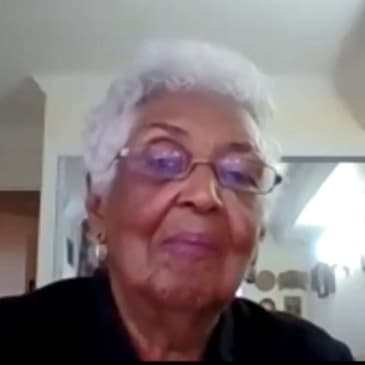
So, whether you're an advocate yourself, someone intrigued by stories of resilience, or simply passionate about the pursuit of a fairer world, Join us as we sit down with Miss Beverly Johnson to explore the power of activism, the essence of empathy, and the endless possibilities when it comes to defending the rights of all!
Welcome to SpeakUP! International with Rita Burke and Elton Brown!
Rita Burke:As on SpeakUP! International, we strive to inspire, to educate, and to inform. And to help us meet our mission today, we have an esteemed guest, Miss Beverly Johnson. Now, Beverly has served as a Human Rights Officer for the Ontario Public Service Employees Union from 1990 to 2005. Prior to that, she worked as an intake officer for the Ontario Human Rights Commission. She has spent her life contributing to the struggle for human rights in Canada and around the world. Beverly was educated at the St. George Williams University in Montreal and the London School of Economics. Now, it is with great pleasure that I introduce our guest today, Ms. Beverly Johnson!
Beverley Johnson:Happy to be with you.
Elton Brown:It's definitely an honor to have you with us today. You have done so much for the community, and I want to say thank you right off the bat for everything that you've done. Can you tell me... Our audience. What was the one thing that you accomplished that you are most proud of?
Beverley Johnson:That's a difficult question in some ways, but a very easy one in another way. I would say my two children. That, for me, is the greatest accomplishment, and to see them both grow, and my daughter especially, become so involved in community and the work that she's done over the years. That, for me, is the great accomplishment. Next to that, I would say the work that I have tried to do in community and in the labor movement.
Rita Burke:I am glad that you mentioned your children, particularly your daughter, because that's the one that I know. And I was going to say to you, thank you for allowing your daughter to be so actively involved in building our community. So I'm glad that you mentioned her. But I wonder, that's probably coming from your having so many meetings at your house, and having her eavesdropping and learning from a wise, educated woman. I'm sure about that.
Beverley Johnson:Frankly, she had no choice. Because I got the eye from time to time, but yes, I took her to all the meetings. So she was exposed at a very early and young age. But That was also a reflection of my own experience growing up, because my mother and my grandmother were both very involved in community. And so I grew up seeing that and learning that and yeah, Really wanting to be like them in some way, but the whole idea of community and the importance of community was something that was With me for from I was very young, so not accidental,
Elton Brown:You are definitely a leader! Without a doubt. And in that capacity as a leader You led the union efforts that were in 1990. And what was the outcome of all of the work that you did back then because of your leadership?
Beverley Johnson:The outcome, I would say that oPSU, which was my union, was the first, as far as I remember, As far as I know, with the exception of the Ontario Federation of Labour, because June Veacock was appointed the Human Rights Director of the Federation of Labour in the late 80s, and subsequent to that, OBSU was, I think, as I said, the first union to hire a lawyer. a human rights officer. So the work that was done, and I was the only one and responsible for the entire province. So it was a lot of work. I think subsequent to that, as education got done and members started making demands. Other unions began to employ human rights staff that I think pushed the unions. to begin to pay attention more seriously to the issues of human rights. And in those days, leadership of unions was mostly white and very male. And having the kind of position I had, it wasn't always easy to raise the issues and make the points that needed to be made. But I was fortunate because OPSU at that time had the only leader of color in the entire labor movement in this country. And so it was with his support and his vision that my union became the pioneer in the work within the structure of the union itself. So
Rita Burke:Beverly Johnson. We are speaking with a mover and shaker in the union movement, and I am so thrilled to be speaking with you. As I said earlier, we seek to inform, to educate, and to inspire, and I'm sure what you tell us will help us meet that goal. I'm also glad that you June Veacock, because we're trying to get her. On to this platform as well. She's agreed and work because June has been quite the community leader. There's no question about that.
Beverley Johnson:In addition, before You move on, in addition to the work that was being done within unions, there was work being done outside of unions with trade unionists and June was a huge part of that. June Veacock and the late Anne Newman were instrumental in organizing black workers in the various unions. To form what now exists as the Ontario chapter of the Coalition of Black Trade Unionists. So that was, that, that was happening around the same time. And the CBTU, which I think is fairly well known in the community now, also had a significant role. In pushing unions to pay attention to the issues of human rights and with specific reference to black workers and their black members, the parent body of CBTU is based in the States. And. The Ontario chapter is, in fact, the only international chapter that exists. So I thought it's important to make that point because there was work happening inside Thank you. Unions and outside put that pressure to make change.
Elton Brown:How did you specifically contribute to the struggle for human rights in Canada and globally? You talked about two pieces here where the union was was taken on one part to get us the recognition that we deserve. And then there was that other piece and then they came together. And they became more or less as one. How did you... You moved them together.
Beverley Johnson:To be honest, I'm not sure. It's just doing the work. Just doing the work. The other prong was community. Because I was always from the time I came back to Canada, because as you mentioned in my bio, I went to post secondary. school here left and eventually I came back here. And the very next day after my arrival, I was at a meeting at the UNIA Hall. And at that time, they were, the Black community in this city was organizing around a number of issues. One of the things that meeting was about at that time was the establishment of A community center and was a pretty interesting, pretty heated meeting that was my introduction to the community work in the city. Beyond that, I was also, I would say, a founding member of the Toronto chapter of the Congress of Black Woman, and the. Coalition of Visible Minority Women. Now the Coalition of Visible Minority Women came about from work that the Human Rights Commission and its Race Relations Division did with the Women's Bureau that existed at that time. And it was the organization itself grew out of a conference that was held. The conference organizer was the Race Relations Division hired Akua Benjamin. She was the person that organized. And we were able to bring the various communities of racialized women together to that conference. And coming out of that conference, the coalition was born. So there's the community piece, the labor piece, but coming from different angles. And I think for me, what I was able to do, certain in the time I was at the commission, was to explain. to community, how the commission worked and what they needed to do to bring issues forward. At the commission, I should say, I have quite a few firsts in my working life because at the Human Rights Commission, I was the first permanent intake officer that the commission had. And what that meant was that Individuals coming to the commission with their complaints. I was the person that they saw. And spending the time with them to find out what the issues really were and looking at the legislation and seeing whether their issues fit. Any of the provisions of the code, were
Elton Brown:You the first black woman or the first woman?
Beverley Johnson:The first person, woman, male, permanent intake officer. Prior to my arrival at the commission and what year was it 1973. The function, rotated with whoever was in the office. When I was hired by the late George Brown, that was the position I had. And it was my responsibility, as I say, to take all the complaints, make sure that they were valid complaints. So it meant gathering all the relevant information. And so part of the, one of the things I used to do is provide the community. with the information about how they could bring issues forward. And there were a couple of pretty major cases where it was a balancing act for me because you work with the government, so you need to be responsible to the ethical issues there but I'm also part of the community. And I felt it was important that I provide the community with the knowledge that it needed to bring their cases forward.
Elton Brown:Well, I think that's a Wonderful thing, having the education to take what you've learned and then give it to the community, teaching them how to use their voice.
Beverley Johnson:Yeah, essentially that was and there were a couple of one of the cases and June actually worked with the complainants from the community perspective is the nurses that filed a complaint against what was I think Northwestern Hospital, but there were a number of. cases like that, that came to the commission through community effort. And that was only possible in the Mid to late 80s when the commission the a review of the human rights code was undertaken and the provisions of the code were expanded to include a number of other protections, the LGBTQ community the ground of family status. Things like that were added and it the whole notion of systemic issues were also, at that time included in the revised code. So it provided avenues for complaints and hopefully change.
Rita Burke:So you've done some groundbreaking work. I don't want to say back breaking because you're still standing and standing strong. But on behalf of our community, I thank you for that. Now, in your resume, There's a term that you were able to help individuals and groups to change their attitudes regarding equity and inclusion. How is that done? How could you get people to change attitudes about inclusion? Share with us, please.
Beverley Johnson:Part of my responsibility at the commission and also at OPSU was doing education and I did quite a lot of that, not just for OPSU, but I also did that educational work facilitation, educational facilitation on human rights and equity. For the Ontario Federation of Labour and the Canadian Labour Congress, in addition to doing it for OPSIU. It was a lot of training and education. The other work that I was engaged in was in the late 90s, no, late 80s, sorry. With the late Wayne Roberts and, Justice, she wasn't justice at that time, but, Marika Omatsu and a couple other people. We were a subcommittee of sorts, looking at the whole issue of equity. And between... That group, we actually wrote a draft employment equity legislation. That draft became what I like to refer to as a talking point. And was circulated among other unions with community organizations. And eventually, in 92, when the NDP became the government, that draft evolved into what became the Ontario Employment Equity. Act. With the education, with that legislation, with the awareness that was being developed about the need to change systems, because that's the key, changing systems. It's all well and good to have people in positions, but unless the systems that govern those positions that govern those positions allow for action and real action. We're just spinning wheels, which is what in many places is happening today. We have the window dressing, but nothing, no real change is taking place. And if it is so minute and so incremental that it's not having the kind of impact that it needs to have. We have, I think one of the things that you were asking about was the difference in, in the labor movement then and now. Today, we have a lot of racialized people in positions of leadership at all levels, at the local level, at the provincial level, at the national level. It looks good, but in my opinion, having those individuals in the work and allowing them the space to do the work that's needed, providing the resources. to do the work that's needed isn't happening. And so it looks like you're making progress, but in actual fact, nothing significant is changing.
Elton Brown:That is something that we as a people, I think everyone on some level feels that way that they make, they're making progress but it's very little and it's usually too late. So I'm just so I wonder, you with your educational background and you are definitely an educator. Do you see using your education as a way of maybe steering the next generation towards the goal?
Beverley Johnson:You can't just, in my opinion, use one thing. This has to be a multi pronged approach. Education is critical. One of the things that I think is seriously missing today. is civic education for our young people. Few of them have a good understanding of government, how it works, why it works, and why it's not working for us. And I think that there is that education that needs to be done. There's also the human rights and equity legislation that education. That needs to be done.
Rita Burke:I see Ms. Beverly Johnson writing the curriculum for that course. I see Ms. Beverly Johnson putting that curriculum together for that course, because you've said it with such passion. And I know it's coming from a very good place.
Beverley Johnson:Rita, there are all kinds of good courses out there. There are all kinds of good courses out there. The issue is, who gets to be a part of that education? Who is delivering that education? The community recently has been going through such angst. With what has happened with the Ojio Institute, Kojo Institute. We can want to educate all we like. People have to be prepared to be open and listen and have the uncomfortable conversations that need to happen. I never forget many years ago when I was doing an educational for labor community, labor education center, and it was on employment equity. And I think it's, we were discussing equal and equity. What's the difference? And I don't know where it came from, out of the blue. There was an example that came to me, and I used the example to explain. And to me it, I didn't think it was that impactful, but it actually turned out to be extremely impactful. And the example was, I talked about a pond of water, fairly deep pond of water, with An elephant and chickens needing water. And my question to the class was, who was likely to have access more easily to the water? And of course, for the whole class, it was clear that the elephant would. And as I said, I didn't know how impactful that example would be. But the next day, And this was a class of a variety of different people. Several of them, mostly white students, came back to me and said for the first time they understood what we were talking about. When we talk about equity. So I give the story to illustrate the importance of finding ways of reaching the audience in ways that will make them listen and get the point. Because usually, when that happens, learning begins to grow. And when people begin to learn, they want to know more, and they want to get more involved. So I think that's really important.
Elton Brown:You served as a human rights officer for quite some time. And I would like to know what were you doing before you became a human rights officer?
Beverley Johnson:Before I became a Human Rights Officer, I worked, before I came back to Canada, I worked with the Jamaica government. In the Ministry of Labour, and I was the person, and the Ministry of Labour had two pieces, the Labour piece and the National Insurance piece, and it, at that time, was one of the larger ministries, and I was the human resources person for the ministry, which meant I was responsible for all the hiring of temporary staff because the permanent staff was hired by the Civil Service Commission, but temporary and like small contract staff looking after all their leave training all of that kind of stuff. And yeah, I also did work as the. executive assistant to the Minister of Labour when the People's National Party took over the government. I ended up being assigned as the Minister's Executive Assistant. Prior to that, I worked as a social worker.
Rita Burke:So you're grounded in meeting the needs of people from an educational perspective and an experience perspective. I'm really excited to hear that. But here's my next question to you. What makes you who and what you are today? I think you've alluded to that a little bit. I want to hear more.
Beverley Johnson:As I mentioned, I grew up in an environment where community and community service was important. My mother, to a lesser degree, because she also had a job, nine to five, with my father's business. But my grandmother, she was involved in just about everything, from the church, To everything. There was nothing that was happening in the community that she wasn't called on to do or to give advice on or just to be there. So it's something that I grew up with and came naturally.
Elton Brown:So where do you see yourself five years from now? What is your next goal? I know you've accomplished so, so much. And before we started this conversation, you talked about the fact that the work is never done. So what is it that you want to do now?
Beverley Johnson:Now, to be honest, I want to just enjoy my children and great grandchildren, and my grandchildren, and my great grandchildren. I have two of those. To teach them the importance of the things that we've been talking about. My great grandchildren are going to be amazing, young, bright, articulate women. I don't have any great grandsons yet, but in addition to that, I hope to be Available as I have been to advise, to guide, to support all the young women and men because there are some call on me for advice. There is one organization that I'm still actively involved with. I'm a member of the Jamaica Canadian Association. And I'm also involved with the Women's Shelter. But the organization that I'm more actively engaged with, I'm on the board of that organization, is the Harmony Movement. And they are doing amazing work educating young people. They're working in the schools for the most part with the school boards and doing the kind of education that I think is important and doing some traveling or continuing to do my traveling because I enjoy that and it allows me to see. How very similar we all are as people if we would just be willing to learn and share.
Elton Brown:So where do you want to go?
Beverley Johnson:Oh my goodness, there are so many, there are so many places that I still want to go. Antarctica is one. I have lots to do. More of the continent of Africa. I've done. I've done most of the North and South America, I've done some of Asia, but Africa, every time I have planned, there's been something Ebola, or the last time was COVID. But it's still on my list. I've done the South. And I've done some of the North. She's a world traveler. She doesn't, didn't talk about that. She is a well traveled world traveler. So
Elton Brown:Where have you been that you think, Oh, I could stay here for months on end?
Beverley Johnson:There are two places. One is Laos in Southeast Asia and the other is Brazil in Salvador, the city of Salvador. Where I don't know if but they have in that city, the oldest, sisterhood, black sisterhood in the world. These were enslaved people who were transported there. And eventually they left Salvador and they're based now in a smaller city called Cachurria. And I, when I went there. It felt like I was going home. It was a very strange experience, but... Yeah, I could have stayed there a while.
Rita Burke:I'm not going to let you go until I ask you this question, because it's been burning in my soul. That question is, what was going on in your life during the ages of 16 and 20?
Beverley Johnson:Oh my goodness. When I was 16, I was just about entering my, in what we call sixth form, which would be in this context grade 12 and very, and that was around the time when there was a huge political awakening in the Caribbean. So there was talk of independence and talk of a federation and all of those things were beginning. The rest of the world, of course, was the beginnings of not to mention what was happening in, in, in Africa with Maumaus. Supposedly killing off people and all of the unrest there. And of course, doing the things that 16 year olds do. Arguing with my mother about going to the movies. And then, at 17, I graduated from high school and went to work. And I worked with... our radio station in Jamaica. I worked there until I left Jamaica. It was about three, two weeks after my 19th birthday and came here to Toronto. On my way to Montreal, to Sir George Williams University, and at 20, I was enjoying university life. Prior to my 20th birthday, I came back to Toronto, worked for a little bit, and then I went home to celebrate my 20th birthday. And then I came back, and I worked here. In Toronto with a temporary agency, TOSI, it was called, TOSI Temporary Agency, doing shorthand and typing at various places across the city. That was what I was doing. And as I said, the rest of the world, Vietnam, there was all that political stuff going on at that time. And I was, of course, very interested in all that was happening.
Elton Brown:All I can say is you have lived such a fantastic life, one full of twists and turns, but yet and still extremely, interested. And I am so sure that your family is so proud of you till it, it hurts! Your contribution to the Ontario Public Service Employees Union, since around 1990, has definitely aided in the lifting the people, us, up, as opposed to out. And for that, I am going to be forever, ever grateful. I want to thank you so much for taking the time to spend with us, to talk about your service to our community! Thank you!
Beverley Johnson:I should tell you there are two other things that you know you might be interested in knowing. I mentioned that I have a number of firsts. I was also the first Jamaican woman to be chair of what was then Caravana. Thank you. Nobody talks about that. But when I was elected as the chair. I faced a lot of, I don't even know what the word is, because a Jamaican woman in charge. Yes, I was. And prior to that, I had been on the board for a couple of years. So that's something that I think you should know. And I, at the time. I had quite a vision and I'm very sad about the fact that vision is nowhere near being fulfilled. The other thing you might want to know is that while I was at the Commission and at OpsU. I also had a business. I had a catering business. And my friend, there were four of us that started and two didn't have the, I would say, the courage because... You have to spend to make money, and they got nervous, so it ended up that there were just two of us left. So my partner and I, Ifrit, we had the business doing weddings. Birthday parties, community events, or all sorts of people, christenings. Yes, and I, we also had a place in the mall close to where I live. Malvern. Malvern. Malvern Community Mall. Yes, I've been busy, but I've enjoyed every single moment of it and learned so much from so many people. And, that's what it's about. You have to engage with people and learn from them and help them and... Do the best you can.
Elton Brown:I'm definitely going to call you an Octopus, and I'd say that, lovingly your tentacles are everywhere. I'm sure that there are many things that you have not even begin to tell us your accomplishments. I appreciate the time that we've spent with you this afternoon. I see Rita over there. She's been just nodding her head. Yes. Yes. Is, in agreement. By the way to our audience, her daughter has wrapped her arms around mama and I want you to give your mother a hug from me and Rita.
Beverley Johnson:Thank you. Thank you both.
Rita Burke:Such a joy. As you spoke, I kept two words in my head, in my soul, excellence and joy. Thank you so much. That's what you brought to our program today. Thank you. Thank you.
Beverley Johnson:Thank you!
Elton Brown:Thank you for listening to speak up. Exclamation point international. If you would like to contact Beverly Johnson, Colleen, provide your name. And email address and send it to info@speakuppodcast.ca. Please stay in your email. You wish to contact definitely Johnson. Would you like to be interviewed by speak up exclamation point international? Please drop us a message containing your name, company, name, and the service you provide to your community and email address to info@speakuppodcast.ca. You can reach us using Facebook, Instagram, Twitter, and LinkedIn. To connect to our podcast use Spotify or your favorite podcast platform and search for SpeakUP! International. You can also find our podcast and using our web address. www.speakuppodcast.ca. Our logo is the woman with her finger pointing up mouth open speaking UP! At SpeakUP! International, we aim to inspire, to inform, enlightened, and to educate.