
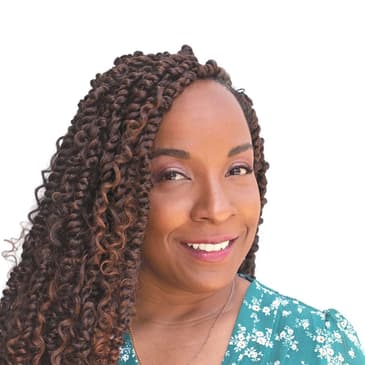
Ever wondered how a love of poetry can evolve into a successful career in the world of publishing? Yolanda T Marshall, a celebrated Canadian author, gives us a glimpse into her fascinating journey. She started writing poetry at the age of eight, which led her to self-publish her own book in 2008. This leap of faith launched her into the corporate world of publishing. Yolanda's astute understanding of the publishing process gained through tireless self-education, has been instrumental in her success. She's not just an accomplished author; she's also a recipient of the My People Award from the Blackhurst Cultural Center and the Loop Award from Loop News.
Her family and cultural heritage deeply influence Yolanda's literary works. She has a unique way of connecting nations through food, evident in her writings. One of her prominent works, "C Is For Carnival," is a vibrant celebration of Caribbean culture. The anecdotes she shares about her father's side of the family give us a glimpse into how they've shaped her as an author. Moreover, she advocates for Caribbean authors and has been making her voice heard through her podcast, Caribbean Storytime.
Not just an author, Yolanda is a passionate cook and a podcaster. Cooking has been an integral part of her life since she was 11 years old. She shares how she learned to cook traditional Kenyan and West African dishes and how she's passing on her love of cooking to her son. Connect with Yolanda and join us in this enriching conversation that celebrates joy, culture, art, and the power of words
To contact Yolanda T Marshall, visit her website at https://www.ytmarshall.com/
[00:00:00] Elton Brown: Welcome to SpeakUP! International with Rita Burke and Elton Brown!
[00:00:06] Rita Burke: Today on SpeakUP! International, we're back in Canada. As we've interviewed people in South Africa, in England, in Brazil, in the United States. All over the world because we're called SpeakUP! International. We're back in Canada as we host an award winning Guyanese born Canadian.
Her name is Yolanda T. Marshall. Becoming a mom inspired Yolanda to become a writer. Yolanda's bio states that She writes diverse, inclusive, and festive children's literature that represents the African slash Canadian diaspora. So glad to have you with us today, Miss Yolanda Marshall. Welcome to Speak Up International!
[00:00:58] Yolanda Marshall: Thank you very much. I'm very happy to be here to discuss my journey. It's such a pleasure to share it. Thank you!
[00:01:06] Elton Brown: We're so glad to have you with us, Yolanda, and we want to explore your life and career so that we gain a comprehensive appreciation for your contributions to the literary world. Yolanda, how did you first enter the world of publishing, and when did this happen?
[00:01:26] Yolanda Marshall: At eight years old, I love writing poetry. I'm a child of a jazz musician. When my dad would play the guitar, and sometimes I would play too I would make up these songs, these rhyming songs, and you're doing the vibe, and, I'm scatting along. I was a child writing poems at the back of my book.
And songs, so by the time I was in university, I was at U of T at that time and accumulated, of course, hundreds of poems. And there were, places on platforms online. I would share it here and there. And yeah, my friends were like, you really should do a book. And I would go to literary events on campus learn a good a sin.
And I remember. visiting one of her one of her launches at the University of Toronto around there. And it really inspired me. I'm going, I really should do a book. I really should. And in 2008, I did a poetry book on my own. It was self published and I, it came out really well. I printed like about 150 copies.
I had a successful book launch in this restaurant. It was packed. My friends and family came out. We had a DJ. It was great. And I read my poems and I wasn't a spoken word. I just wanted to share my poems in a book, sold out of my book, it was great. And that was my first entry into publishing. And because of that experience, it allowed me to work in publishing.
So at that point, I was working in the corporate office of Hudson Bay. I was an assistant buyer for fashion of coats and outerwear, a nine to five job. I loved it. I remember at that point, the office had moved to Brampton. So then I was working out of Brampton for two years. I was living in like Leaside, Toronto.
I was like, this is too much traveling. And I'm like, I need a new job. And I'm like, where am I going to go to? And I saw Nelson education had a job for an analyst. And I'm like, yeah, I can do analytics. I work in finance and analysts, of course, if you're buying in corporate, all this stuff.
So technically I. Match the profile and I go, you know what for publishing, they're like, yeah, we need someone that understands publishing. I'm like, yeah, I've self published a book. So I walked into that interview and we went through everything. I'm like, of course, I, I'm qualified to do the job.
And I remember the VP asked, with publishing, what's your experience in. experience there. I go I self published a book on my own. I understand the process of editing. I understand the formatting of the book. I know what an ISBN is. I know where it's sold, the platforms, the bookstore.
I know the entire business of it because I have to do it on my own. And I'm so proud of myself that I didn't just. Say, I'm going to self publish a book. I took the time to learn about publishing. What is publishing? How are, what are the different streams? What is traditional publishing? What is self publishing?
What's the timeline to these processes? And, I educated myself on it, so it made the process easier, less frustrating. So I sat in that interview and I said this is what I know about publishing. He went on his laptop, he looked it up and he goes, there's your book. Wow. And there you have a description.
It's perfectly represented. And I'm like, of course. And within one week I got that job. And I am so thankful because I know, from experience, I match the role, like I can do this job. But when you're in an academic publishing field, you just don't walk in there and willy nilly, they're like, You have to understand publishing from scratch.
What is a book, what, how many pages, what is a picture, what's trade versus, what's higher ed versus school. So it was I'm so happy that I educated myself and as a self published author, that was my entry into a bigger world of publishing. So that's how deep I am in publishing 15 years after.
[00:05:29] Rita Burke: Amazing, amazing story. You should write a book about that. Seems like we have quite a few things in common, Miss. Yolanda Marshall. I, too, attended University of Toronto, but in those days, my head was not in publishing. My head was in writing and bringing people's books to the community. So we have a lot in common.
You describe yourself as an award winning author. Talk to us about your awards, please.
[00:05:59] Yolanda Marshall: Yeah. One of my most recent awards will be the* My People Award*, which was handed down by the Black Hearse Cultural Center. That's by different booklets. I treasure that award. The reason why is because that's what I write for is African and Caribbean, and I'm a Black Canadian author.
If it's any place that would tell me who I am, and who I'm writing for, and that I'm excelling at it, it will be that space. So I am so thankful for that award. And I am also the award winner of the Loop Award. The Loop News, as is one of the biggest, if not the biggest, platform throughout the Caribbean region in terms of reporting news from the Caribbean, each nation, and around the world.
Throughout the years, I've had a lot of journalists write about my process, my books my progress. Every year, they've been I would say supportive, I'd wake up and it's there I am in the Caribbean news about my piece of Black Ink for Santa book and every time. And then one day they picked a lot of authors and placed us on a list and go, let's, we'd want to have a voting, like who are best authors and.
Showcased our books. I was on the list with some amazing authors. A lot of them I thought were great, and they were, I was only children's book author on there, a lot of times children's book authors are just put this aside, but I felt like, yeah, there's to be on that list alone was great.
And I remember the news I got and they go, you won. You won author of the year throughout the my Caribbean people and people here, but my career voted to say, Hey, we saw what she has. This is great. And I won and I was just like, that was absolutely amazing in 2022. And that means a lot to me because although I'm in Canada, I always kept a foot in the Caribbean.
I was featured in the West, the university of the West Indies journal. of writing. They have a journal that they released and I was one of the authors featured in there because, once you're Caribbean born, once you're born in a Caribbean nation they you want to be within that sector.
You want to show that, hey, I'm in Canada, but I'm writing about our culture. I was also, I also appeared in the Boca Festival, as we know, that's the biggest Caribbean festival held in Trinidad and Tobago, virtually and to be a part of that. It's a big deal for me. My books are in Jamaica in Barbados.
I was on Barbados TV. I live here, I represent my Caribbean diaspora, and I also make sure I show up for various platforms in the Caribbean. So the Loop Award was a really big deal. And then I've had like other acknowledgements smaller acknowledgements. Like I actually was one of the top 100 black women accomplished black women in Canada.
I've gotten the CBOE, CA. BWE, this is an award in 2017 for people, for women to look out for. These are women that are chosen they're saying that, look out for them. They're doing great things.
[00:08:57] Rita Burke: They're doing great things. They're moving. They're moving.
[00:08:59] Yolanda Marshall: They're moving. And that was in 2017, fast forward to 2022 and receiving like accomplished 100 black women.
And I, my, one of my books, I've gotten featured in many. Different list, but one of the best I had was for a book being listed on C.B. C. acknowledged it as one of the best picture books in Canada for 2020, which was good. So those little acknowledgements were great, but in terms of award, it was given to me by my Caribbean community within the Caribbean region, and of course in Canada.
Yeah that's, that means a lot. It's pretty much the people you write for, the diaspora you represent saying, we see you and you're doing great. You're excelling.
[00:09:42] Rita Burke: We like what, we like what you're doing. We like how you're representing us.
[00:09:48] Elton Brown: I wanted to say, first of all, congratulations for your accomplishments. You should be very proud of yourself. We certainly are very proud of you. What is the significance of my Soka birthday party with Jolof Rice and Still Paris?
[00:10:11] Yolanda Marshall: Yes. So that book means a lot to me. There wasn't, there are not a lot of books.
I actually, there's no books like that. I'll be honest now what that book means to me when I wrote that book. There was a book. It's a book I wrote after miles away in the Caribbean. It's my first traditional published book. That book got me into traditional publishing. The reason I wrote that book.
My biggest inspiration is my son. My son is Canadian, and he's the reason I write. He's born here. He is of Caribbean heritage. Me, Guyanese. My dad is Bajan side, so Caribbean. His father is Kenyan. Kikuyu Kenyan, 100%, right? Very cultured. He eat Kenyan dishes. He, there's Swahili there, there's, this kid is African Caribbean to the core.
And there weren't books to represent him, children like him, who are born here of Caribbean heritage or of direct African ancestry. And their social reality here. I find there were books where the kid is like in the U. S. or in the Caribbean, but it's like, what about our kids that are here?
They need to see themselves as belonging to this society. Because if you don't show them back from a younger age, they will always feel like they don't belong here. And there'll be looking for a tribe in only. God knows where, and we've seen where they've went to, and they want to be everything else other than Canadian, they're like imitating the American lifestyle and such, and not so much the positive representation of it.
And I felt a lot of parents really need to pay attention to this. Colonialism has a way of making our children feel. Like you don't belong here. Like your ancestors didn't build this, right? Didn't contribute to the foundation of this nation. So I wrote that book to show children of the African Caribbean diaspora.
The Caribbean itself is very diverse. So the book follows a little girl and it's her birthday. She loves soca music. She loves It played on steel pans. And as we know, Soka steel pans came from Trinidad, Tobago. She has Caribbean heritage as the book reveals, and she loves Jollof rice, a West African dish.
I have my son is like that. We go to festivals. We Jollof rice. We eat everything. We love cultural festivals, right? And her friends decided. They're not only going to give her what she loves, all these things that she enjoys, they're going to bring parts of themselves that's so special and it lends to that.
So you have a kid goes, yeah, I'm going to bring Palau and he's from Trinidad and Tobago. Another kid go, hold on. I'm from Tanzania. We have Palau too, even if it's spelled different or pronounced, Palau it's Hey, we have the same. And within those conversations, they're like, We have shared, food, it comes from the same places, so it's really good.
The kids go, see, I'm going to bring chicken biryani. I'm going to bring washe from Ghana. Washe from Ghana is rice and peas like Jamaica. And the kids are, yeah, Jamaica, rice and peas and the kids cook up rice from Guyana. That's what we call it. And then you have a kid is. Eat Indo Caribbean, another group that is so underrepresented in our community and they are in our community.
So she's bringing roti. We eat roti. So I wanted to highlight where did it come from India and guess what, in Kenya, they have chapati and they eat it. It is also from Indo Kenyans, right? So it's a bunch of kids in there that realize, wow, our cultures intersect. We have so much in common. We have a history. It is deeper than just this party. It goes all the way back.
[00:13:45] Rita Burke: Without saying it, Yolanda, it sounds like it's a book about inclusion without. And it's so important because I know for a fact that children in this country in the earlier days would take their foods to school and the other children would look at it and turn their nose up because it wasn't smelling the way they were accustomed to their food swelling.
So truly amazing book. So if someone were to ask you, which is your favorite book, which is the favorite book that you learned to Marshall wrote, tell us about
[00:14:20] Yolanda Marshall: that book. Oh, kids asked me that all the time while I'm reading. What's your favorite book and I'm like, I don't want to pick a favorite.
When a book comes out, it becomes my favorite, because I, the latest book I released, of course. It that's quite unique as the Christmas elves being themselves. So it's, it's like at that point it's like, Oh, this is my favorite, but Oh no, I still love this one. I still love, I love all my books.
I, I really do. And one of my favorite book. One that I really hold close to my heart will have to be Miles Away in the Caribbean, and I made that book free for everyone to read. The reason why is because I wanted a book, and back then there wasn't a book like that, now there are many other authors that have the same book.
But there wasn't a book like that. It took a Canadian kid into 15 nations, Caricom nations, and told a story what's unique to them. And it's also about a child named Miles, which is my son. And my Miles has been to most of those nations. By the time he was four years old, he's already traveled to 14 countries.
So my Miles have been to many of those nations. So it is very the word play of the name alone was, It is really cool. And people didn't know that my son's name was Miles.
[00:15:33] Rita Burke: The wordplay of the name is amazing.
[00:15:36] Yolanda Marshall: And there's a real Miles in my son.
[00:15:39] Rita Burke: We had my friend's grandson here last summer and we sat at the backyard and I got him to read it. We were reading in tandem and we got him to read it. Now his grandmother is from Guyana as well. And when we got to that spot, everybody got really excited. So it's truly a wonderful book. I like it. So are you saying that's your favorite book?
[00:16:01] Yolanda Marshall: I would say in my heart, yes. It's, I really hold it dear because it allows people to know, the fabric of my culture, the nations that are a part of the Caribbean community that make us feel proud to be Caribbean people.
And it's also about my son. In reality, it is about my son who visited, who has visited most of those nations.
[00:16:26] Elton Brown: Yolanda, I want to go back to one thing that has stood out for me. And that's when we talked about using food that connects nations. I think that is an amazing process. And I wish individuals look at that who are not familiar with Black culture as a door of opportunity where they get to learn about Black culture through food.
Can you mention some of the awards? And recognitions that you've received throughout your career. I know that you mentioned some, but if you could mention two more, that would be fantastic.
[00:17:10] Yolanda Marshall: I mentioned I for example, that book was on the recognitions on TD's top recommended reads this summer.
My Sooka Birthday Party, which I love, Rice and Steel Pants. And also, it was also featured on, CBC Kids, I got into a TV, television segment with that book, which was so great, and they aired it, and they aired it again around Caravan of Time, because it was culturally relevant. A Piece of Black Cake for Santa was noted as one of the UK's top ten.
Best diverse Christmas books because in our community, we don't do the cookies and milk. We have sorrel, we have pastel, we have gunga peas and rice. We have black cake, we have fresh flatbread. We have our various meals that we eat. And for a book to make that list was exceptional. And I gained a lot of recognition from many UK readers.
C is for carnival. Really does show the joy, the vibrancy, the richness, just the richness of our culture. It tells the history of wealth, but it's written in a way for a child to fully understand it and to reshape the minds of our younger generation. And that book is always. Listed in many ways to how it carries on our culture, especially making our Canadian kids, whether they're Caribbean or not, feel a part of that celebration, a celebration of emancipation.
But there have been many recommendations for books, a lot of places would write this is the best book I've gotten, best book, best Canadian books for about three of my books, Hot Cross Buns for Everyone. I've gotten it for. It's used for carnival and also a piece of black cake for Santa.
Yeah, just to, those are the ones I can think of other than the other awards.
[00:19:04] Rita Burke: Wow. Truly, truly amazing. I would say now you referenced your dad earlier. Tell us who or what would you say is responsible for the person you are today?
[00:19:18] Yolanda Marshall: I would say a lot of people around me, but more so my dad's side of the family. I'm a barrel kid. So when my mom and dad divorced, I was five years old and my mom stayed with us for two years and then she left, she went to India to study, came back and then left right away. She went to. She came to Canada. Most of my family at this point are in Canada, and I have a lot of cousins who are older than me that are born here.
So my mom came here and we became barrel kids, and we were left with, family members on her side, which, some of them just weren't too kind. But my grandmother, on my mom's side, she was good to us. And we, and my uncle, I have two or three uncles who were so cool.
And we learned a lot. We lived in a rural part. We call it the back dam in Guyana. It was rough. You walk around with a cutlass, mud to your feet, you're planting, you're learning a lot of survival skills there, right? You're dodging electric eels and snakes and anacondas it's And that doesn't toughen you up.
I don't know what does my dad's side of the family However, we were always happy to go there and there's a point where we got to stay there more my dad of course worked a lot and he was a jazz musician. So he was always busy out. So we stayed with my grand parents my grandparents on my dad's side are a great inspiration.
They were Christian, especially my grandmother is one of the best Christians I've ever known. She lived up to that role. A great aunt. They were all educators, majority of them on his side. They had lots of books. I always remember walking into that house and it just smells like books. So many books, I used to read a lot, they, most of them played instruments.
At eight years old, I started playing the guitars, learning, and they all, my grandmother played the harmonica, the guitar, my grandfather all the time, he played the guitar, my grandfather had the thickest Bajan accent. And that's why if I hear Bajan stuff, I understand because it's like right that side, they're Bajan and I absolutely love them, the art, the literature, my grandfather is a Pan Africanist who was blessed to have met Marcus Garvey.
So that book, My Soka Birthday Party, if you notice, is uniting of African nations and Caribbean nations. So the teaching and the learning from him really lent to forming that book. And even how I live my life. He was a huge fan of Jomo Kenyatta. And what's funny, my, my grand, my, my dad reminded me of my dad.
My dad goes, if he was alive and he realized you have a kid, you married a Kenyan who, Was of the same tribe of Jomo Kenyatta. And you have his, he has a grandson who is there. I go maybe it's in his making that happened. But my dad, my grandfather was a Pan Africanist. All that lends to my pride.
I know who I am. I was one of those Caribbean kids who knew my ancestry. I learned a lot about African nations. I learned a lot about where we came from. I. Also was exposed to the world in many ways, but I would say they lent a lot to that. My dad being a musician, you'll notice that music and song and joy is always in my book.
My dad used to read stories for us and he'll sing along. So that really fostered my love of literature and the arts, the other arts surrounding it. But I would say my dad's side. So my dad heavily and my grandparents who I thanked in Hot Cross Buns were the artisans and educators that molded me into who I am.
My mom is the business person. My mom came in here. She worked at Royal Bank. She also had a stall in a flea market for many decades. So in terms of like, when people go, how do you have your hustle? My mom, it comes naturally. We work hard. Yeah, those are the people that I would say influence me and they open doors for me to learn about other artists and politicians, the Walter Rodneys of the world Stokely Carmichael, the Marcus Garvey, all these people to learn from and many more now.
[00:23:29] Elton Brown: Yolanda, you are one of a kind. That your parents used to create you has been broken. There'll never be another one like you and in itself makes you so unique. I want to go back to something that you were talking about in the early part of your life, which was the poem writing.
And if you can think of a short poem that you've written, we would love to hear that! That would be so fantastic! And secondly, is how have you been involved in promoting the work of other marginalized Canadian authors?
[00:24:12] Yolanda Marshall: In terms of poetry, I wrote a poem. I really, as I said, I'm not a spoken word artist.
So I don't sit and I memorize my poems, that's for sure. But one of the poems that I love is called Obeifo and that was the name of my first book. So I'll talk about that one. The book is called Obeifo and the reason I named the book that is based on a poem. So one of the poems I wrote is about a woman who is an Obe woman and a real Obe woman that lived.
Around the corner from me. And it speaks about my shadow catching auntie. She would beat the drums and everyone would feel scared, wondering why. Who is she coming for, they're slanting, they're looking to catch a view of who, and they get scared. I wrote that because every time this drum, the beats the drum and she's dancing and my grandmother be on the stairs and I'll be dancing to it.
And she's get inside this place. You're going to catch spirits in your hair. You're going to, you're going to bring in the spirits. And I never understood that because I've read books about spirituality and I understand the concept of Christianity and spirituality and why many Africans are not spiritual anymore.
How colonialism played a role in that. And I'm like, what is there to share? What is there to fear? So I never understood that and I was I wouldn't listen and I would, every time my grandma's not looking, I'm out there and I'm dancing to the comfort drums, we would call it, right? And I wrote about this shadow casting auntie, the name Obeifo is a West African word a shanty word for a witch.
And these are the witches, if you've read a lot of folklores or, there are a lot of true stories where the old hide. would be a way to, or to succumb, that's the spirit that would just ruin the field of food. They eat a lot and they would ruin it. And they wake up at night and they turn into a ball of fire and they go in your house and they have these really bad stories of them, sucking a baby.
blood and such. So they felt that this woman was one of those. She was an Obaifo and everyone would be scared and she would leave food out on the back stairs for Papa Brown, right? She would feed her old man that died. That's the spirit of him to come back and eat. And that's something we do in our Caribbean culture on New Year's.
I remember growing up and every new old year's day, you leave out food for the ancestors. So these little things are still rooted in our spirituality. We've kept a lot of that, whether we want to accept it or not. So the poem just highlights that culture and this person we were taught to fear, but all she is someone that believes in her spirituality.
And if you do mess with her. And she will pray for you in her own way and whatever become of you leave that to the ancestors. And I just that was one of my favorite poems that I wrote and it's based on my younger life. And as a kid growing up, I really did admire this woman.
And every time I would pass, she would smile and we would smile and we'll go by. She was nice to us. Nothing to be feared. I remember one time my grandmother needed ice. Her fridge didn't work. And she goes, you need to go buy ice. No one had ice. Only this lady had ice. Of course I went there and I got the ice , then we had the ice and I didn't tell anyone where we got the ice from.
Oh, the headache. When they found out that I bought it from the O lady, I, when we already drank the ice
every time, sounds like a ice. And my grandma was okay with going there to get ice. So yeah, , that, that poem is one of my best ob.
[00:27:50] Rita Burke: I'll remember that. I'll remember that ICE and Obie Woman story. Now, Yolanda, on Speak Up International, our goal is to inspire, educate, and inform. And there's no question that your story is helping us to meet that goal.
Not only are you an author of children's books, but you're also a columnist. Talk to us about that, please.
[00:28:16] Yolanda Marshall: Yes. And that's my way of showcasing. So I remember before, before the pandemic way before, while I had my, when I was doing my books, I didn't get a lot of, there are not a lot of times platforms supporting you and sharing your work.
I started a podcast called Caribbean Storytime. It's still online. You can get it on Apple. You can get it everywhere. It's called Caribbean Storytime and I would interview Caribbean authors. whether they're in Caribbean nations or in Canada and black authors, and I would interview them and we'll talk about their books and they would talk about theirs and I would share it just to let people know that, hey, you can support these books.
It's written for your kids and whatnot. So I would. talk about authors and share their work. And I met some amazing people during that process on Caribbean Storytime. I would also feature my son reading at a very young age. He started at three. And then of course my books came out and I'm getting featured in the Globe and Mail.
And I'm like, this is so great. I'm on TV. My books are being featured. I'm in the star newspaper and I once reached out to the Toronto Caribbean newspaper and I don't know, she was like, I go, Hey, would you please feature my book? It's such a great book. And she was like, Oh, we already featured one last couple of months ago.
We're not featuring any now, this stuff take time. It's she's like all the best though. And I'm like, wow. Okay. Thanks. It says Caribbean newspaper. Like you would think books like this would be there. On a weekly basis. I open the Globe and Mail. There's a whole spread with books, recommendation books, description.
Author, and the publisher just that's it. And it's like everything I open, I can see literature, but I'm like, wow, they, guess selective feature who they want. And I felt really sad about that because I'm coming from where I feature authors on my podcast. And I'm like, we have a problem.
So what I did. I was talking to an author then. It was Nadia Ha. And I'm like, yeah, if you notice we're all over, but we're not in our Caribbean newspaper. And she's yeah, that's true. And we're going back and forth. So we're talking to Aita. And of course, I'm on the phone with Aita Sadu.
And I'm like, this is one of my frustrations, Aita. And I was like, I, we're not featured. And, I see the Caribbean camera. I don't see a lot of feature. There shouldn't be a page of books. She was like, Yolanda, if you want to make it happen. You call Anthony and you tell him how you feel and come up with a solution.
I was like, yeah, I'm going to do that. She goes, you talk to him. He's a nice guy. Okay. So I called up Anthony for the Caribbean camera. And I'm like, look here, I have so many books. I've been featured here and there. I would like to be featured in your book, but more so I want to show other books from other authors.
We need a page. We need to call him to get stuff done. And he's yeah, you have a point. That would be very nice. He goes, but I don't have writers for that. He goes, people have to dedicate their time for that. And I says, you know what? I will do it. You give me a page and I'm going to submit a news and that's my column.
So we sat there, I'm driving home. We're talking on Bluetooth. I was like, yeah, we're going to name it Lit Corner. We're going. And he goes yeah, this is good. And he goes, there, you have your page, you submit your stuff. We start next week. And that's it. Every two weeks it goes to print. And I was so happy.
I was like, Oh my God. And he goes, hold on. Your name is Marshall. Hazel Marshall, I go, yeah. He goes, I know your mom. Oh, that, that explains you. That's my mom, the hustler. So I went home. I told my mom, I got it. My mom goes, I hope you didn't rough up that man for that. I just said I needed a call, but he was so kind.
He goes, Yolanda, you write it there. You have it. And I did. And every time for the last two years, I've submitted, I shifted from the podcast and I submit. Books I featured, I feature five to seven books every, bi weekly in the papers of racialized black authors, mostly black Caribbean, Indo Caribbean authors that are in Canada for two years.
So that's to tell you how many books we have available for people to buy. And I will continue to do and I do it for free, I feature everyone that I can, and even if they know they're featured or not, to me, it's just having my community know that these books exist, and we need to see it, and we need to celebrate these authors.
[00:32:44] Rita Burke: Ms. Riolanda, my next question was going to be, have you ever had to say enough? But you just told us when you had to say enough with the Caribbean camera. Yes. So thanks for responding to that. Yes.
[00:32:58] Yolanda Marshall: Enough is enough. I was like, you need to make a change. And I also say enough to my son who keeps pinching the fat on my arms every day.
I read, why do you just say that? I swear every day I say enough, but I I try to do my best as much as I can. And yeah, I do. I am a, I am an author of boundaries. If something is too much, I will speak. Speak up. Yeah. But yeah. In terms of that, yes, it was enough. After years, I go, there's got to be a change.
And I was so happy that people around me were open to it and open doors for me to do and, I'm so thankful for that!
[00:33:32] Elton Brown: Do you cook? And whether or not you do, what is the dish that you love eating?
[00:33:41] Yolanda Marshall: I cook a lot. I have always cooked. I started cooking at the age of 11 years old.
The first thing I cook, I remember my uncle had a girlfriend then and she was like, you guys are going to have to learn to cook. Fine. And she goes, you're going to cook your favorite meal. What meal do you like? And I'll teach you how to make it. And I was like, I love roti. I learned how to make roti at 11 years old, paratha roti.
And then from then I cooked. I was 21 years old when I moved out from my mom's house and I cooked. I lived on my own. I didn't have a roommate or anything. And I just, you just learned to cook. I cooked. diverse meals. I, when I was in Kenya, I've been to Kenya many times and I learned to cook their traditional meal meals from scratch.
I love cooking West African dishes as well. Jollof rice and everything about that. My son, of course my, my ex husband he's Kenyan. So he taught me to cook a lot of their meals too. And even when I was in Kenya, I learned, I taught him how to make ugali. Believe it or not, he would always have a house help when he was growing up, make it or his mom.
But yeah I, and I make my son a lot of these traditional meals. So I love cooking. I cook almost every day in my home. It's just what I'm used to and what I grew up with. My mom always cooked every day after work. So we were blessed with an abundance of food in our home. I can turn up to her right now and sit down and eat a big meal.
I love eating my favorite meal is paratha roti and curry chicken or chicken curry. Yes. Sounds
[00:35:15] Rita Burke: like my favorite as well. As a matter of fact, I was thinking of making some roti today.
[00:35:19] Yolanda Marshall: Yes. Nice.
[00:35:20] Rita Burke: No,
[00:35:21] Yolanda Marshall: Yolanda.
[00:35:22] Rita Burke: Yes. Share with our listeners. Three qualities that describe your best self?
[00:35:28] Yolanda Marshall: Three qualities that describe myself is that, wow, joy.
Joy. I like to share joy. I really do feel, especially, and that's why I love writing for kids, I do feel that kids have to have joy. I know what it's like growing up and, you have a primary parent that's away, and you've missed many days of joy. And to feel celebrated. So every time I meet, I want to make sure someone leaves with a good experience from me.
And especially children. I like to live my life in a way, even if it's simple, but peaceful as it gets. But joy, I. Love my culture, as you can see. Absolutely love my culture. I like to celebrate my culture. I love everything about it. Every aspect of it. The diversity of it. I absolutely love that.
and I know, I love art. If you come in my home, most of the stuff I have in here is all hand carved. It's sentimental. Quite sentimental. And I love being around people who love the same things. I would say it's, it might sound Oh, it's like really simple, but yeah, I do. I love the fact that I mold my way in a happy life, joyful life, and I make sure I can give my son that I could share a lot about my culture proudly.
I love doing that. I'm passionate about it and I am very dedicated to art and I support all. Other people who are the same.
[00:36:54] Elton Brown: Have you, in your life, ever had any regret? Can you just name one regret? Doesn't have to be personal. Don't wanna...
[00:37:04] Yolanda Marshall: I, I won't say. I think a lot of times we get into things and we'll be like, Oh, I really regret this. And I spur in a moment how you feel like, I really regret this. It sucks. But no, absolutely not. I think if it's one thing that maturity, if you'd asked me that question in my twenties, I would have came up with 600 things I'm regretful for, but at this age, absolutely not. It all made me the person that I am, and I appreciate every one of them, because I survived it in some way.
It allowed me to see people for who they are, if it was bad, and if they were good and I didn't appreciate that, it allowed me to improve myself. So no, I don't have any. Regrets, because I'm happy with where I am right now, and I'm open to learning more. And one of the things that comes with learning more and growing is that you are going to run into more regrets.
You're going to be like, I regret not doing it, but that's okay. That's knowledge and you know how to do it better next time. So no, I, I don't, I, I. I appreciate everything, even if it was bad, it was, it made me into who I am and I'm proud of that. So it, to be proud of who I am now means that I have to accept what was done and make peace with it.
And learn from it and I'm happy for any lessons at all. But no and the whole thing now is to make sure I don't do anything to regret anything in the future. So that's my goal to make sure I do not have regrets. I want to die and be like, I don't regret a thing. Yeah.
[00:38:45] Rita Burke: No, before we wrap up. Is there anything that you wanted to say to our listeners that we have not allowed you to say?
[00:38:57] Yolanda Marshall: Oh, you've asked so many great questions. I'm so happy to be here. This is nice. I would just have to say that, please support your local authors, especially your Black authors.
And especially for many of us writing for children, we are the writers who will mold your children's minds in a way to make them feel seen, to give them a voice, and to make them feel celebrated in the first seven years of a child's life. If that child isn't loved, if that child feels abandoned, if that child doesn't feel seen in schools, in libraries, in society as a whole, it can greatly impact their mental health.
So when you see Black Writers out there when you see bookstores, when you see all the supporters are out there stepping up and saying, Hey, we've got to turn up for our kids, please support them. And I'm so about that life because I'm a mother of a young black Canadian boy and I live every day making sure.
That his future is going to be great as best as I can to make sure he has a great experience in the childhood and to be confident to face this society, and I'm also aware of the millions of other ways as a society will try to break him down. So there's a fair there. And that fear is what is really fueling me to stay on this path.
So yeah, really support us. We appreciate it. And read more books to colonize your bookshelf. your mind, be proud of who you are and dance. Oh my gosh, dance, put on soca music and dance and eat well, eat very well. Don't worry about the pals, but just live the best life that you can.
And that's a lot about what I stand for. And I hope that you do, but give your children a chance and, Make sure they're exposed to literature and make reading a priority. Your schools are not here to teach your children how to read. You are here to teach your children how to read.
One of my biggest passion and one of the things that really drive me is the fact is knowing that. In the Black community, we have low literacy rates, or children aren't reading as much as they should, and I really beg many parents to step up to the occasion and turn up in your libraries, there are many times I turn up in libraries, and I don't see a lot of Parents like myself there, and libraries are free, and that's a problem.
We turn up at literary fests like Toronto Festival, we have a platform, we're talking about books that many parents begged for, but we don't see those kids, and that is a problem. So I want everyone to look out in your community. We have so many platforms by a lot of young Black Canadians, a lot of Africans, who are making it easy for us to say, hey, here are places for us to take our kids.
And we should get a library card, read a book a week, but empower your children, empower a generation, and we can make a drastic change. So that's my obsession. Right now. I wanted to share.
[00:42:13] Elton Brown: Thank you very much, Yolanda, for having this conversation with us today. Throughout this conversation, you kept talking about foods, and there was one point where you gave us a long list of all of these dishes.
I am so hungry right now. Just from the thought of having any of those dishes, and I really do appreciate that. You talk about your poems when you were younger, a lot of your books that made you successful and recognized which is excellent. And I'm hoping that our readers will be inspired, especially those that are maybe thinking about writing children's books or just writing in general, for that matter, and how therapeutic writing can be.
So thank you so much for talking with us, SpeakUP! International. Rita and I hope to see you again soon on
[00:43:18] Yolanda Marshall: this channel. Yes. Thank you so much. Thank you so much, Rita. Thank you so much, Elton. It's such a pleasure to be here. Thank you for the invite.
[00:43:26] Elton Brown: Thank you for listening to SpeakUP! International. If you would like to contact rider Yolanda T. Marshall maker of classic books, visit her website at www.ytmarshall.com.
Would you like to be interviewed by SpeakUP! International? Please drop us message containing your name, company, name, the service you provide to your community and email address to info@speakuppodcast.ca.
You can reach us using Facebook. Instagram, Twitter and LinkedIn.
To connect to our podcasts, your Spotify, or your favorite podcast platform and search for SpeakUP! International. You can also find our podcast using our web address, www.speakuppodcast.ca. Our logo has the woman with our finger pointing up mouth open. Speaking UP!
_At SpeakUP! International, we aim to inspire to inform and to educate!_